Kirjojen hintavertailu – 12 859 818 kirjaa ja 27 kauppaa

Kirjailija

Bernard Shaw

Kirjat ja teokset yhdessä paikassa: 669 kirjaa, julkaisuja vuosilta 1968–2026, suosituimpiin kuuluu Herra Byronin ammatti. Vertaile teosten hintoja ja tarkista saatavuus suomalaisista kirjakaupoista.

669 kirjaa

Kirjojen julkaisuvuodet: 1968–2026.

Bernard Shaw and Barry Jackson

Bernard Shaw and Barry Jackson

Barry Jackson; Bernard Shaw

University of Toronto Press
2002
sidottu
Virtually ignored in histories of twentieth-century British theatre in favour of the more celebrated relationship of Bernard Shaw and Harley Granville Barker, the friendship of Bernard Shaw and Sir Barry Jackson is given prominence in this new book by L. W. Conolly. The collection of 183 letters, all but two of which are previously unpublished, sheds new light on a partnership that for Shaw was the most important of his later playwriting career, and for Jackson was central to his pioneering and acclaimed work in British regional theatre in both Birmingham and Stratford-upon-Avon. Also included are letters from Shaw's wife, Charlotte, and secretary, Blanche Patch, to Jackson. Headnotes with each letter set its context and provide a narrative of the continuing Shaw-Jackson relationship; further notations identify literary, historical, theatrical, and political references and allusions. Of interest to both the Shaw specialist and the drama generalist, this collection of letters represents a significant addition to modern understanding of Shaw and of British theatre.
Bernard Shaw and H.G. Wells

Bernard Shaw and H.G. Wells

Bernard Shaw; H.G. Wells

University of Toronto Press
1995
pokkari
Bernard Shaw and H. G. Wells are among the best-known and most controversial literary figures of the twentieth century. Both were rebelliously critical of the social and political, familial and sexual conventions and structures of their time. They shared broadly similar interests, but their lifestyles differed sharply - as did their views on many subjects, including those discussed in their correspondence: religion, socialism, science, war and world history, the theatre, the profession of authorship, and more. The letters are always forthright, often abusive and quarrelsome, sometimes suggesting that the relationship cannot last. They are also often warm, good-natured, playful, and generous - reflecting a fundamental mutual respect and similarity of outlook, however contrasting the temperament and style. The great majority of the two writers' correspondence is published here for the first time. This volumes comprises the personal correspondence of Shaw and Wells through the course of their friendship of more than forty years, and includes and introductory essay by J. Percy Smith. The letters are fully annotated, and are accompanied by information about the circumstances under which each was written, to enable the reader to follow the course of the frequently tempestuous relationship.
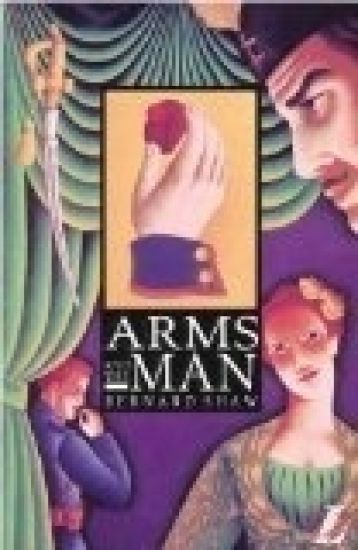
Arms and the Man

Arms and the Man

Bernard Shaw; Roy Blatchford; Ian Wilson

Pearson Education Limited
1991
pokkari
Part of a series of GCSE literature texts, this volume includes an introduction, pre-reading activities, notes and coursework activities. Also provided is a section on the process of writing.
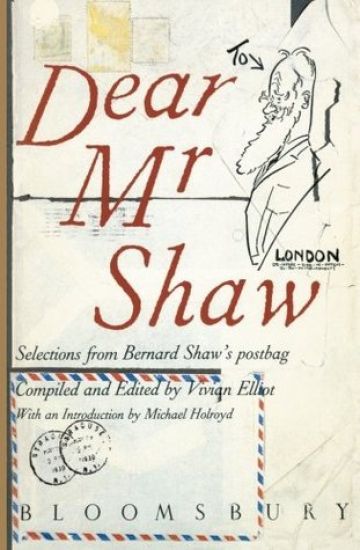
Dear Mr. Shaw

Dear Mr. Shaw

Bernard Shaw

BLOOMSBURY PUBLISHING PLC
1988
nidottu
A collection of letters from around the globe written to George Bernard Shaw together with his unpredictable and witty replies - to such requests as marriage proposals and pleas for advice on troubles both serious and ridiculous.
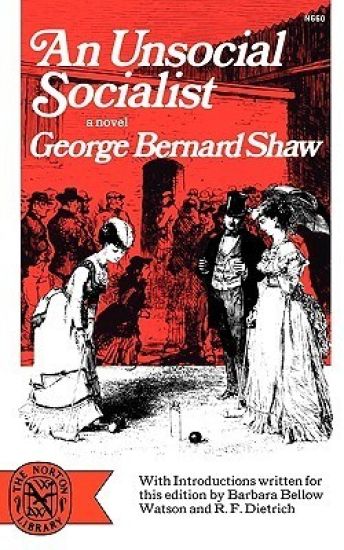
An Unsocial Socialist

An Unsocial Socialist

George Bernard Shaw; Bernard Shaw

W. W. Norton Company
1972
pokkari
From 1879 to 1883, before he turned to writing plays, Shaw wrote five novels. An Unsocial Socialist, the last written, concerns the activities of one Sidney Trefusis, a rich Marxist whom women find completely exasperating, or irresistible, or both, and who has definite ideas about reforming personal and political relationships. Shaw develops a plot that overturns the pieties of the middle class--including the expectations of the novel-reader--and in so doing suggests some new structures for both society and literature.