Kirjojen hintavertailu – 12 903 725 kirjaa ja 27 kauppaa

Kirjailija

Bernhard Lang

Kirjat ja teokset yhdessä paikassa: 12 kirjaa, julkaisuja vuosilta 2001–2025, suosituimpiin kuuluu International Review of Biblical Studies, Volume 54 (2007-2008). Vertaile teosten hintoja ja tarkista saatavuus suomalaisista kirjakaupoista.

12 kirjaa

Kirjojen julkaisuvuodet: 2001–2025.

Hebrew Life and Literature

Hebrew Life and Literature

Bernhard Lang

Taylor Francis Ltd
2021
nidottu
Bernhard Lang, known for his contributions over several decades to biblical anthropology, offers in this volume a selection of essays on the life and literature of the ancient Hebrews. The subjects range from the Hebrew God, the world-view of the Bible, and the formation of the scriptural canon, to peasant poverty, women's work, the good life, and prophetic street theatre. The stories of Joseph, Samson, and the expulsion from Paradise are analysed, and in a departure from the Old Testament, the priestly origins of the Eucharist are considered. Insight into the Hebrew mentality is facilitated by the arrangement of the essays, reflecting the three strata of the ancient society: the peasants, with their common concerns of fertility and happiness; warriors, their martial pursuits, and the divine Lord of War; and the wise - prophets, priests, and sages.
Sacred Games

Sacred Games

Bernhard Lang

Yale University Press
2013
pokkari
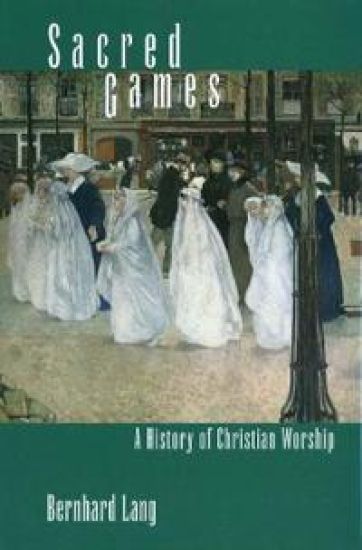
When contemporary Christians worship—be they Catholic, Protestant, Orthodox, or Pentecostal—they engage in a variety of ritual acts whose diversity and complexity may at first puzzle the observer. A closer look reveals that worship incorporates a limited number of major components that when repeated form the backbone of the ceremonies Christians enact when they meet on Sundays. This book focuses on six essential ritual forms: praise, prayer, sermon, sacrifice, sacrament, and spiritual ecstasy. Bernhard Lang argues that the meaning of Christian ritual is embodied in these six elementary forms, all of which have their roots in ancient, pre-Christian ritual life. Each has its own constituents, dynamics, meaning, and distinct story. Accordingly, the book is divided into six interpretative sections that, using sources in French, German, and English and contrasting past experience with the present, European with American, and Catholic with Protestant, explain the meaning of each. Lang uncovers their ancient biblical roots and follows their course through history with special emphasis on biblical, historic, and contemporary forms. This is a pioneering book and a major achievement: the first full-scale history and interpretation of a collective spiritual act fraught with meaning. Well illustrated, written in a readable style, and geared to the general reader as well as to students and scholars, it should become an indispensable addition to the broader study of Christianity.

Jesus - en jødisk kynikers liv og lære

Jesus - en jødisk kynikers liv og lære

Bernhard lang

Forlaget Univers
2012
sidottu
Hvem var Jesus egentlig? Bernhard Lang giver her et svar: Jesus var en jødisk udgave af de græske, kyniske filosoffer. Kynismen var en af de retninger inden for græsk filosofi, som gik tilbage til Sokrates. Men i modsætning til tilhængerne af Platon, Aristoteles og andre var kynikerne ikke optaget af abstrakte spørgsma°l. De var livsfilosoffer; de mente, at man kun kunne opnå et autentisk liv ved at give afkald på alt det, som mennesker normalt begærer: rigdom, seksualitet, familie, social status, god mad, bløde klæder. Tilbage til naturen, til det enkle liv – det var kynikernes budskab. ’‘Kyniker’ vil sige ‘hundeagtig’. Den mest berømte af alle kynikere, Diogenes, ville netop leve som en hund. At Jesus skulle være inspireret af kynikerne, er en kontroversiel tese. I bogen her argumenterer Bernhard Lang omhyggeligt for, at Jesus faktisk var en slags kynisk filosof. Men Jesus var det på en særlig jødisk måde: I traditionerne om profeten Elias havde jøderne deres eget forbillede for et liv i magisk, lykkelig askese. Jesus – en jødisk kynikers liv og lære viser nye sider af Jesus. Bogen er samtidig en indføring i den kyniske filosofi i antikken; den giver også eksempler på kynisk inspiration i moderne filosofi, fra Diderot til Sloterdijk og Foucault.
The Hebrew God

The Hebrew God

Bernhard Lang

Yale University Press
2012
pokkari
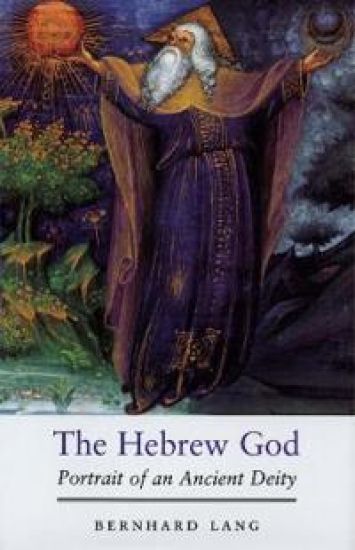
Originally worshipped by the people of a small and politically insignificant eastern Mediterranean community, the Hebrew God rose to become the monotheistic deity of the entire Western tradition. In this absorbing book, well-known biblical scholar Bernhard Lang provides for the first time a full portrait of the ancient Hebrew God. Drawing on all available evidence, including ancient Near Eastern and Egyptian texts and art, Lang offers a comprehensive view of the Hebrew God that is both fascinating and surprising. Lang’s portrait shows the Hebrew God in five images. He appears as lord of wisdom, lord of war, lord of the animals, lord of the individual, and lord of the harvest—a God whose rule extends to all areas of life. Lang illuminates the completeness of this God’s leadership with insights derived from modern religious, anthropological, and cultural studies, and he argues that Israel’s monotheistic God, far from being simply opposed to other gods, actually echoes and incorporates much of the ancient polytheistic experience of the divine. The worldview of the ancient Semites did not differ from that of the Indo-European peoples as dramatically as others have assumed, Lang contends. Written in an accessible style, this appealing volume stores a wealth of information for general reader and religious historian alike.
Meeting in Heaven

Meeting in Heaven

Bernhard Lang

Peter Lang AG
2011
sidottu
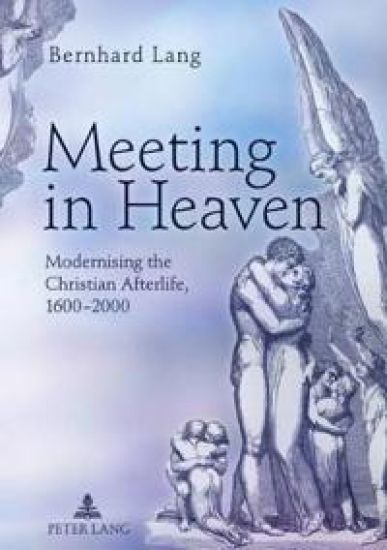
In heaven, we will meet our friends: this was one of the most conspicuous expectations Christians had, and continue to have, of life after death. While the theme as such is almost as old as Christianity, it came to flourish only in early-modern times, peaking in the eighteenth and nineteenth centuries. This book explores how the rediscovery and development of the ‘meeting again’ theme by authors such as John Bunyan and Emanuel Swedenborg and by the artist William Blake created a specifically modern heaven. Giving priority to an eternity of continuing earthly passions and family ties, the modern notion of heaven contrasts with earlier, God-centred notions of an eternal saintly solitude spent contemplating God in ‘beatific vision’.
International Review of Biblical Studies, Volume 54 (2007-2008)
Formerly known by its subtitle “Internationale Zeitschriftenschau für Bibelwissenschaft und Grenzgebiete”, the International Review of Biblical Studies has served the scholarly community ever since its inception in the early 1950’s. Each annual volume includes approximately 2,000 abstracts and summaries of articles and books that deal with the Bible and related literature, including the Dead Sea Scrolls, Pseudepigrapha, Non-canonical gospels, and ancient Near Eastern writings. The abstracts – which may be in English, German, or French - are arranged thematically under headings such as e.g. “Genesis”, “Matthew”, “Greek language”, “text and textual criticism”, “exegetical methods and approaches”, “biblical theology”, “social and religious institutions”, “biblical personalities”, “history of Israel and early Judaism”, and so on. The articles and books that are abstracted and reviewed are collected annually by an international team of collaborators from over 300 of the most important periodicals and book series in the fields covered.
Hebrew Life and Literature

Hebrew Life and Literature

Bernhard Lang

Ashgate Publishing Limited
2008
sidottu
Bernhard Lang, known for his contributions over several decades to biblical anthropology, offers in this volume a selection of essays on the life and literature of the ancient Hebrews. The subjects range from the Hebrew God, the world-view of the Bible, and the formation of the scriptural canon, to peasant poverty, women's work, the good life, and prophetic street theatre. The stories of Joseph, Samson, and the expulsion from Paradise are analysed, and in a departure from the Old Testament, the priestly origins of the Eucharist are considered. Insight into the Hebrew mentality is facilitated by the arrangement of the essays, reflecting the three strata of the ancient society: the peasants, with their common concerns of fertility and happiness; warriors, their martial pursuits, and the divine Lord of War; and the wise - prophets, priests, and sages.
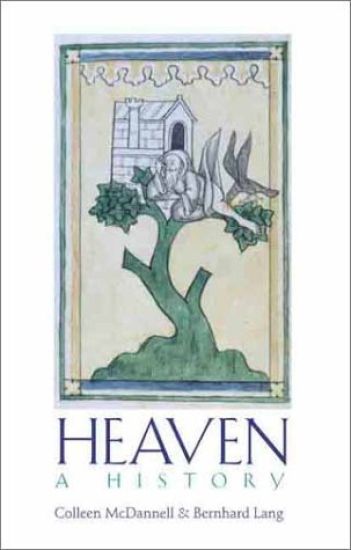
Heaven

Heaven

Colleen McDannell; Bernhard Lang

Yale University Press
2001
pokkari
What do Christians believe they will experience after a virtuous life? What will an eternity in the hereafter be like? In this copiously illustrated, lively book, Colleen McDannell and Bernhard Lang describe and interpret the ways in which believers—from biblical authors to medieval mystics, from Jesus to present-day religious thinkers—have pictured Heaven, not just in doctrine but also in poetry, art, literature, and popular culture. In so doing, they shed new light on both the private and public dimensions of western culture. This second edition includes a substantial new preface relating the book to changing views of life after death in the new century. Praise for the earlier edition:“[A] fascinating new study. . . . It is a rich and provocative subject and the authors use it as a springboard from which to examine shifting attitudes toward man and God, within the Judeo-Christian tradition.”—Michiko Kakutani, New York Times“The next best thing to going.”—Carlin Romano, Philadelphia Inquirer“Heaven: A History offers a whistlestop tour, thoroughly researched and engagingly written, of the extraordinary things Christians and others have believed about life after death. . . . A compendium of fascinating finds from the past.”—John Barton, London Review of Books“A fascinating survey of Western culture and a delightful tour of the histories of art, literature and theology.”—Christian Century“Heaven: A History provides a rich opportunity for theological reflection. This book can help in constructing a language for the hereafter that will encourage the best hopes of the living and, heaven knows, perhaps guide the reader to a vision of eternal bliss.”—St. Anthony Messenger