Kirjojen hintavertailu – 12 903 724 kirjaa ja 27 kauppaa

Kirjailija

Bernhard Poerksen

Kirjat ja teokset yhdessä paikassa: 6 kirjaa, julkaisuja vuosilta 2004–2026, suosituimpiin kuuluu Communication as an Art of Living. Vertaile teosten hintoja ja tarkista saatavuus suomalaisista kirjakaupoista.

6 kirjaa

Kirjojen julkaisuvuodet: 2004–2026.

Communication as an Art of Living

Communication as an Art of Living

Bernhard Poerksen; Friedemann Schulz von Thun

TAYLOR FRANCIS LTD
2026
sidottu
How can we listen better to each other? How can we offer criticism without being hurtful? Why do communication recipes never work? In this book, Friedemann Schulz von Thun and Bernhard Pörksen, two prominent representatives of communication psychology and media studies, provide an introduction to modern communication psychology. Written in dialogic form to be both humorous and serious, the book explores questions round communication and relationships, and communication and the inner self. It presents easy to understand and practical communication models that can be adapted for a variety of settings from coaching, teaching and mediation through to consultancy. Designed to help people communicate more successfully, this engaging book will be useful for therapists, counsellors, coaches and professional groups wanting to improve communication for them and their teams. It will also be of interest to students of communication psychology and communication science.

Communication as an Art of Living

Communication as an Art of Living

Bernhard Poerksen; Friedemann Schulz von Thun

TAYLOR FRANCIS LTD
2026
nidottu
How can we listen better to each other? How can we offer criticism without being hurtful? Why do communication recipes never work? In this book, Friedemann Schulz von Thun and Bernhard Pörksen, two prominent representatives of communication psychology and media studies, provide an introduction to modern communication psychology. Written in dialogic form to be both humorous and serious, the book explores questions round communication and relationships, and communication and the inner self. It presents easy to understand and practical communication models that can be adapted for a variety of settings from coaching, teaching and mediation through to consultancy. Designed to help people communicate more successfully, this engaging book will be useful for therapists, counsellors, coaches and professional groups wanting to improve communication for them and their teams. It will also be of interest to students of communication psychology and communication science.

Digital Fever

Digital Fever

Bernhard Poerksen

Springer Nature Switzerland AG
2022
nidottu
Terror warnings, fake news, spectacles and scandals in real time – the networked world has wound itself up into a nervous frenzy, where everything has become visible: the banal and the terrible, the uninhibited abuse and the anonymous attack. Translated for the first time into English, Digital Fever analyses the patterns of outrage and agitation that have come to define social media and the Internet, exposing their devastating impact on our notions of truth, debate, authority and power. In this endless cycle of outrage, Poerksen argues that the intelligent use of information must become part of the general education provided by schools: the digital society must be transformed into an editorial one. In order for democracy to survive, we must as a society achieve media maturity. A blazing tour of the contemporary landscape of fake-news, echo chambers, disinformation, manipulation, and the turbulence that democracy is undergoing, this book not only analysesthis digital economy of outrage, but serves as a guiding light to overcome it.
The Unleashed Scandal

The Unleashed Scandal

Hanne Detel; Bernhard Poerksen

Imprint Academic
2014
pokkari
In an age of ubiquitous digital media and permanent mutual observation scandals are omnipresent. Everybody can release them, everybody can become their victim. Videos on mobile phones terminate careers, Twitter messages generate outrage, and SMS messages turn into evidence. Documents of embarrassment and public disgrace today display a novel kind of lightness and agility. They can be copied in no time, spread very quickly, resist all censorship — and in the extreme case stir up worldwide indignation. The consequence: the reputation of the powerful and the powerless, of enterprises and states, can be destroyed in record time. In order to illustrate these considerations the books describes recent case-(hi)stories, discussing public figures such as Tiger Woods and Anthony Weiner, the powerful and the helpless that suddenly find themselves in a worldwide pillory.
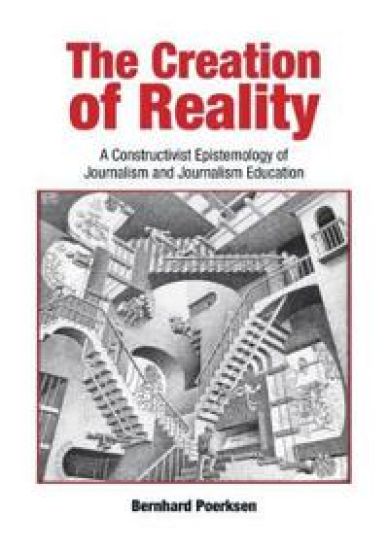
The Creation of Reality

The Creation of Reality

Bernhard Poerksen

Imprint Academic
2011
pokkari
Constructivism has been traded as a new paradigm by its advocates, and criticised by its opponents as legitimating deceit and lies, as justifying a trendy post-modern "Anything goes". In this book, Bernhard Poerksen draws up a new rationale for constructivist thinking and charts out directions for the imaginative examination of personal certainties and the certainties of others, of ideologies great and small. The focus of the debate is on the author's thesis that our understanding of journalism and, in particular, the education and training of journalists, would profit substantially from constructivist insights. These insights instigate, the claim is, an original kind of scepticism; they provide the underpinnings of a modern type of didactics oriented by the autonomy of learners; and they supply the sustaining arguments for a radical ethic of responsibility in journalism.
Certainty of Uncertainty

Certainty of Uncertainty

Bernhard Poerksen

Imprint Academic
2004
pokkari
Nothing that can be said is independent of us. Whatever can be said is coloured by our dreams and aspirations, by the way our brain works, by human nature and human culture. Whoever claims to know or to observe is - according to the central constructivist assumption - inescapably biased. This book presents the views of the founders of constructivism and modern systems theory, who are still providing stimulating cues for international scientific debate. The conversations of Heinz von Foerster, Ernst von Glasersfeld, Humberto R. Maturana, Francisco J. Varela, Gerhard Roth, Siegfried J. Schmidt, Helm Stierlin, and Paul Watzlawick with Bernhard Poerksen, display a kind of thinking that steers clear of rigid fixation and reveals the ideal of objectivity to be a myth. The conversations turn on the results of brain research, the breaks through of cybernetics, the linguistic determination of thought, and the intrinsic connection between epistemology and ethical practice. Throughout, the central figure of the observer is examined with sophisticated wit and just enough irritating grit to create the pearl in the oyster. Constructivism thus emerges as a philosophy of possibilities that keeps generating new points of view, insists on fundamental scepticism with regard to certainties and dogmas, and provides the foundation for an ethics of perception: Each and every one of us is responsible for their view of things.