Kirjojen hintavertailu – 12 859 818 kirjaa ja 27 kauppaa

Kirjailija

Bernhard Waldenfels

Kirjat ja teokset yhdessä paikassa: 15 kirjaa, julkaisuja vuosilta 1975–2024, suosituimpiin kuuluu Beiträge zur Wissenssoziologie, Beiträge zur Religionssoziologie / Contributions to the Sociology of Knowledge Contributions to the Sociology of Religion. Vertaile teosten hintoja ja tarkista saatavuus suomalaisista kirjakaupoista.

15 kirjaa

Kirjojen julkaisuvuodet: 1975–2024.

Geburt des Ethos aus dem Pathos

Geburt des Ethos aus dem Pathos

Bernhard Waldenfels

Mohr Siebeck
2024
sidottu
In seiner Preisrede erläutert Bernhard Waldenfels, dass responsive Ethik davon ausgeht, dass wir in all unserem Tun und Lassen wohl oder übel auf etwas antworten, das uns zusammen mit anderen widerfährt. Antwortend erfinden wir, wie wir antworten wollen, nicht aber, dass wir es tun. Selbst die Antwortverweigerung wäre eine Form des Antwortens. Dabei vollziehen sich Pathos und Response nicht pari passu. Durch Fremdes beunruhigt, unterliegen wir einer unwiderruflichen Zeitverschiebung. Wir kommen zurück auf das, was uns zuvorkommt. Die Kluft zwischen Pathos und Response gebiert eine Kreativität, die erfindet, indem sie Funde verarbeitet. Sich erinnern bedeutet, wie Kierkegaard betont, sich nach vorwärts erinnern. Das Ethos der Sinne klingt im platonischen "Siehe da, schau hin." ebenso an wie im biblischen "Höre Israel". Die "Sachen selbst" öffnen Wege in eine nähere oder spätere Zukunft.
Roland Fischer

Roland Fischer

Bernhard Waldenfels

Hirmer Verlag
2017
nidottu
Roland Fischer was inspired by the current political and social events relating t o the topic of refugees to create a collective portrait consisting of over 1,000 separate photographs. Central questions about identity and solidarity, which are the subject of discussion in the socio - political debate, are raised and treated in an artistic manner. The term “refugees” is removed from its abstract context and real people appear in the viewer’s field of vision, complete with name. As regards motif and topic, a collective portrait like this one, for which the artist mounted 1,000 individual por traits, hovers between the individual and the collective. While refugees and migrants are perceived primarily as an abstract collective and an indeterminate mass, especially as a result of the reporting in the media, Roland Fischer and his art project poin t out that this collective is comprised of many individuals with personal, individual fates.
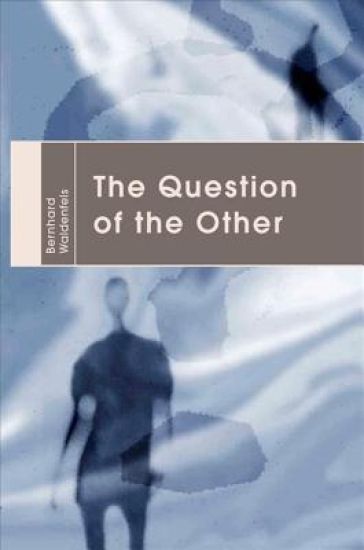
The Question of the Other

The Question of the Other

Bernhard Waldenfels

State University of New York Press
2016
pokkari
Introduces the phenomenology of the Other, taking into account the work of Husserl, Merleau-Ponty, Levinas, Schutz, and Derrida, but mostly going back to things themselves. Drawn from a series of lectures that Bernhard Waldenfels delivered in honor of the Chinese philosopher Tang Junyi, The Question of the Other is a collection of seven papers introducing what he calls a new sort of responsive phenomenology. This means that our experience does not start from our own intentions or from our common understanding, but from something that happens and appeals to us, disturbing our projects and forcing us to respond. We only become ourselves by responding to the Other. Hence otherness is not restricted to the otherness of the Other or to that of another order, it rather penetrates ourselves. We need a peculiar logic of response which includes items like singularity, inevitability, and asymmetry, and which transgresses the limits of common rules. This general perspective will be specified by dealing with crucial issues such as: the power of events which precede our own initiatives; a special kind of time lag which separates what strikes us from our responding; the intertwining of selfhood and otherness within our bodily experience; and violence as an extreme form of refusing and violating the Other's demand. At last it will be shown how otherness penetrates the spatial structures of our lifeworld and how hospitality shapes our being in the world. Otherness means being never completely at home.
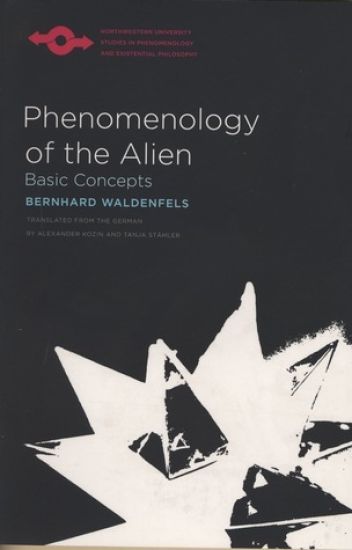
Phenomenology of the Alien

Phenomenology of the Alien

Bernhard Waldenfels

Northwestern University Press
2011
nidottu
Tanja Stähler and Alexander Kozin’s elegant translation of Bernhard Waldenfels’s Phenomenology of the Alien (Grundmotive einer Phänomenologie des Fremden) introduces the English readership to the philosophy of alien-experience, a multifaceted and multidimensional phenomenon that permeates our everyday experiences of the life-world with immediate implications for the ways we conduct our social, political, and ethical affairs. With impressive erudition Waldenfels weaves in xenological themes from classical philosophy, contemporary phenomenology, literature, linguistics, sociology, and anthropology to address the boundaries of experience that unite and separate human beings, their collectives, their perceptions, and aspirations. While the debate has long raged in German-speaking circles, Waldenfels’s work is largely unavailable to the English-speaking audience, with the only other translation being The Order in the Twilight (1996). Phenomenology of the Alien is a superb introduction to both xenological phenomenology, and the the question of the alien as it has been unfolding in contemporary thought.
Question of the Other

Question of the Other

Bernhard Waldenfels

THE CHINESE UNIVERSITY PRESS
2007
sidottu
Drawn from a series of lectures that Bernhard Waldenfels delivered in honour of the Chinese philosopher Tang Chun-I, this title is a collection of seven papers introducing what he calls a new sort of responsive phenomenology.
Grundmotive einer Phänomenologie des Fremden

Grundmotive einer Phänomenologie des Fremden

Bernhard Waldenfels

SUHRKAMP VERLAG
2006
sidottu
Was kann eine Phänomenologie des Fremden sein? In pointierter Form werden in dem neuen Buch des herausragenden deutschen Phänomenologen Bernhard Waldenfels ihre zentralen Motive vorgeführt. Die Schlüsselthemen lauten: Ordnung, Pathos, Antwort, Leib, Aufmerksamkeit, Interkulturalität. Als Außerordentliches taucht Fremdes in Form von Störungen, Abweichungen und Überschüssen an den Grenzen der Ordnungen auf. So stellt sich die Frage, wie wir auf Fremdes eingehen können, ohne ihm den Stachel zu nehmen. Daraus erwächst eine responsive Art von Phänomenologie, die über alle Intentionen und Regelungen hinaus von Widerfahrnissen und Ansprüchen ausgeht. Ein antwortendes Selbst stellt sich dar als leibliches Selbst, das nie ganz und gar bei sich ist. Die Fremdheit beginnt im eigenen Haus. Sie beginnt bereits bei der Aufmerksamkeit, wenn uns etwas auffällt. Und sie endet nicht zuletzt bei einer Interkulturalität, die auch für die Philosophie zur Herausforderung wird. Ein globales Denken ist dabei weder zu erwarten noch zu wünschen. Der Versuch, Grenzen zu überschreiten, ohne sie aufzuheben, gehört zu den Abenteuern einer Fremdheit zwischen den Kulturen. Es sind Autoren wie Bachtin, Freud und Mauss, wie Calvino, Kafka, Musil und Val?ry, die der Phänomenologie des Fremden ihre besondere Würze geben.
Order in the Twilight

Order in the Twilight

Bernhard Waldenfels

Ohio University Press
1996
sidottu
"Whoever distrusts the barking of watchdogs, however, does not immediately have to begin howling with the wolves."—Bernhard Waldenfels In this seminal work, acclaimed philosopher Bernhard Waldenfels deals with the problem of the nature of order after the "shattering of the world," and the loss of the idea of a universal or fundamental order. Order in the Twilight unites phenomenological methodology with recent work on the theory of order, normativity, and dialogue, as well as structuralism and Gestalt theory. Philosophically stringent, it expresses a more optimistic attitude than much modern philosophy, especially deconstruction. Waldenfels passes the question of order through numerous defining aspects, and concludes that there is not one global order, but rather various conflicting domains of order. Whenever the boundary of a vital or experiential domain is crossed, a discourse speaks at the boundary, not about it, and across a threshold without abolishing it. The rest is rationalization, i.e., an attempt to find a place in the respective order for what is to-be-ordered. But why, the author concludes, should a theory be more unambiguous than reality? Order in the Twilight is an important book at this time, because it may help lift the humanities out of the skeptical, relativistic disarray in which they have been embroiled in recent decades. Waldenfels does not attempt to dictate what reality should be; rather, he is open to any valid evidences. His book offers a solid footing to the human and social sciences as they seek to escape from deconstructive irrationalism.