Kirjojen hintavertailu – 12 859 829 kirjaa ja 27 kauppaa

Kirjailija

Beth Akers

Kirjat ja teokset yhdessä paikassa: 3 kirjaa, julkaisuja vuosilta 2016–2021, suosituimpiin kuuluu Game of Loans. Vertaile teosten hintoja ja tarkista saatavuus suomalaisista kirjakaupoista.

3 kirjaa

Kirjojen julkaisuvuodet: 2016–2021.

Making College Pay: An Economist Explains How to Make a Smart Bet on Higher Education
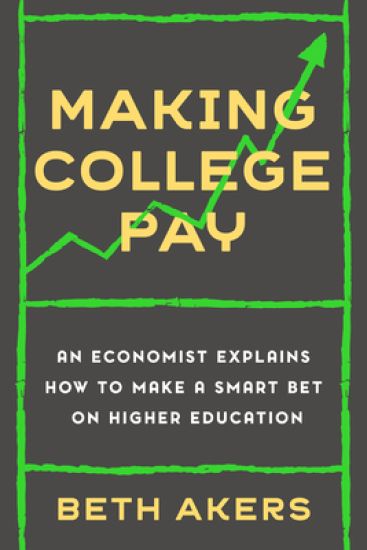
A leading economist makes the case that college is still a smart investment, and reveals how to increase the odds of your degree paying off. "Full of easy-to-understand advice grounded in deep expertise and research."--Martin West, William Henry Bloomberg Professor of Education, Harvard University The cost of college makes for frightening headlines. The outstanding balance of student loans is more than $1.5 trillion nationally, while tuitions continue to rise. And on the heels of a pandemic that nearly dismantled the traditional college experience, we have to wonder: Is college really worth it? From a financial perspective, says economist Beth Akers, the answer is yes. It's true that college is expensive, but once we see higher education for what it is--an investment in future opportunities, job security, and earnings--a different picture emerges: The average college graduate earns an additionalmillion dollars over their career (compared to those who stopped their education after high school), and on average, two- and four-year schools deliver a 15 percent return on investment--double that of the stock market. Yet these outcomes are not guaranteed. Rather, they hinge upon where and how you opt to invest your tuition dollars. Simply put, the real problem with college isn't the cost--it's the risk that your investment might not pay off. In Making College Pay, Akers shows how to improve your odds by making smart choices about where to enroll, what to study, and how to pay for it. You'll learn - why choosing the right major can matter more than where you enroll- the best criteria for picking a school (hint: not price, selectivity or ranking)- why working part-time while enrolled might set you back financially- why it's often best to borrow, even if you don't have to- the pros and cons of innovative alternatives to traditional college- how to take advantage of new, low-risk financing tools Full of practical advice for students and parents, Making College Pay reminds us that higher education remains an engine for opportunity, upward mobility, and prosperity.
Game of Loans

Game of Loans

Beth Akers; Matthew M. Chingos

Princeton University Press
2018
pokkari
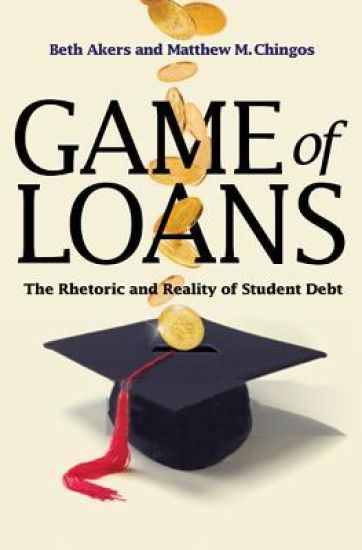
Why fears about a looming student loan crisis are unfounded—and how they obscure what's really wrong with student lendingCollege tuition and student debt levels have been rising at an alarming pace for at least two decades. These trends, coupled with an economy weakened by a major recession, have raised serious questions about whether we are headed for a major crisis, with borrowers defaulting on their loans in unprecedented numbers and taxpayers being forced to foot the bill. Game of Loans draws on new evidence to explain why such fears are misplaced—and how the popular myth of a looming crisis has obscured the real problems facing student lending in America. Bringing needed clarity to an issue that concerns all of us, Beth Akers and Matthew Chingos cut through the sensationalism and misleading rhetoric to make the compelling case that college remains a good investment for most students. They show how, in fact, typical borrowers face affordable debt burdens, and argue that the truly serious cases of financial hardship portrayed in the media are less common than the popular narrative would have us believe. But there are more troubling problems with student loans that don't receive the same attention. They include high rates of avoidable defaults by students who take on loans but don’t finish college—the riskiest segment of borrowers—and a dysfunctional market where competition among colleges drives tuition costs up instead of down. Persuasive and compelling, Game of Loans moves beyond the emotionally charged and politicized talk surrounding student debt, and offers a set of sensible policy proposals that can solve the real problems in student lending.
Game of Loans

Game of Loans

Beth Akers; Matthew M. Chingos

Princeton University Press
2016
sidottu
College tuition and student debt levels have been rising at an alarming pace for at least two decades. These trends, coupled with an economy weakened by a major recession, have raised serious questions about whether we are headed for a major crisis, with borrowers defaulting on their loans in unprecedented numbers and taxpayers being forced to foot the bill. Game of Loans draws on new evidence to explain why such fears are misplaced--and how the popular myth of a looming crisis has obscured the real problems facing student lending in America. Bringing needed clarity to an issue that concerns all of us, Beth Akers and Matthew Chingos cut through the sensationalism and misleading rhetoric to make the compelling case that college remains a good investment for most students. They show how, in fact, typical borrowers face affordable debt burdens, and argue that the truly serious cases of financial hardship portrayed in the media are less common than the popular narrative would have us believe. But there are more troubling problems with student loans that don't receive the same attention. They include high rates of avoidable defaults by students who take on loans but don't finish college--the riskiest segment of borrowers--and a dysfunctional market where competition among colleges drives tuition costs up instead of down. Persuasive and compelling, Game of Loans moves beyond the emotionally charged and politicized talk surrounding student debt, and offers a set of sensible policy proposals that can solve the real problems in student lending.