Kirjojen hintavertailu – 12 903 725 kirjaa ja 27 kauppaa

Kirjailija

Beth Fowkes Tobin

Kirjat ja teokset yhdessä paikassa: 5 kirjaa, julkaisuja vuosilta 1999–2016, suosituimpiin kuuluu Picturing Imperial Power. Vertaile teosten hintoja ja tarkista saatavuus suomalaisista kirjakaupoista.

5 kirjaa

Kirjojen julkaisuvuodet: 1999–2016.

Women and the Material Culture of Needlework and Textiles, 1750–1950

Women and the Material Culture of Needlework and Textiles, 1750–1950

Maureen Daly Goggin; Beth Fowkes Tobin

Routledge
2016
nidottu
Rejecting traditional notions of what constitutes art, this book brings together essays on a variety of fiber arts to recoup women's artistic practices by redefining what counts as art. Although scholars over the last twenty years have turned their attention to fiber arts, redefining the conditions, practices, and products as art, there is still much work to be done to deconstruct the stubborn patriarchal art/craft binary. With essays on a range of fiber art practices, including embroidery, knitting, crocheting, machine stitching, rug making, weaving, and quilting, this collection contributes to the ongoing scholarly redefinition of women's relationship to creative activity. Focusing on women as producers of cultural products and creators of social value, the contributors treat women as active subjects and problematize their material practices and artifacts in the complex world of textiles. Each essay also examines the ways in which needlework both performs gender and, in turn, constructs gender. Moreover, in concentrating on and theorizing material practices of textiles, these essays reorient the study of fiber arts towards a focus on process”the making of the object, including the conditions under which it was made, by whom, and for what purpose”as a way to rethink the fiber arts as social praxis.
Women and the Material Culture of Needlework and Textiles, 1750–1950

Women and the Material Culture of Needlework and Textiles, 1750–1950

Maureen Daly Goggin; Beth Fowkes Tobin

Ashgate Publishing Limited
2009
sidottu
Rejecting traditional notions of what constitutes art, this book brings together essays on a variety of fiber arts to recoup women's artistic practices by redefining what counts as art. Although scholars over the last twenty years have turned their attention to fiber arts, redefining the conditions, practices, and products as art, there is still much work to be done to deconstruct the stubborn patriarchal art/craft binary. With essays on a range of fiber art practices, including embroidery, knitting, crocheting, machine stitching, rug making, weaving, and quilting, this collection contributes to the ongoing scholarly redefinition of women's relationship to creative activity. Focusing on women as producers of cultural products and creators of social value, the contributors treat women as active subjects and problematize their material practices and artifacts in the complex world of textiles. Each essay also examines the ways in which needlework both performs gender and, in turn, constructs gender. Moreover, in concentrating on and theorizing material practices of textiles, these essays reorient the study of fiber arts towards a focus on process”the making of the object, including the conditions under which it was made, by whom, and for what purpose”as a way to rethink the fiber arts as social praxis.
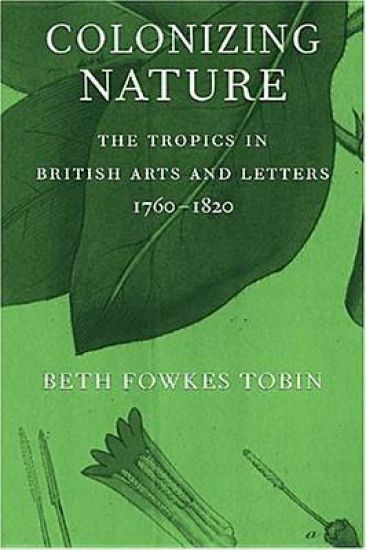
Colonizing Nature

Colonizing Nature

Beth Fowkes Tobin

University of Pennsylvania Press
2004
sidottu
With its control of sugar plantations in the Caribbean and tea, cotton, and indigo production in India, Britain in the eighteenth and nineteenth centuries dominated the global economy of tropical agriculture. In Colonizing Nature, Beth Fowkes Tobin shows how dominion over "the tropics" as both a region and an idea became central to the way in which Britons imagined their role in the world. Tobin examines georgic poetry, landscape portraiture, natural history writing, and botanical prints produced by Britons in the Caribbean, the South Pacific, and India to uncover how each played a crucial role in developing the belief that the tropics were simultaneously paradisiacal and in need of British intervention and management. Her study examines how slave garden portraits denied the horticultural expertise of the slaves, how the East India Company hired such artists as William Hodges to paint and thereby Anglicize the landscape and gardens of British-controlled India, and how writers from Captain James Cook to Sir James E. Smith depicted tropical lands and plants. Just as mastery of tropical nature, and especially its potential for agricultural productivity, became key concepts in the formation of British imperial identity, Colonizing Nature suggests that intellectual and visual mastery of the tropics-through the creation of art and literature-accompanied material appropriations of land, labor, and natural resources. Tobin convincingly argues that the depictions of tropical plants, gardens, and landscapes that circulated in the British imagination provide a key to understanding the forces that shaped the British Empire.
Picturing Imperial Power

Picturing Imperial Power

Beth Fowkes Tobin

Duke University Press
1999
pokkari
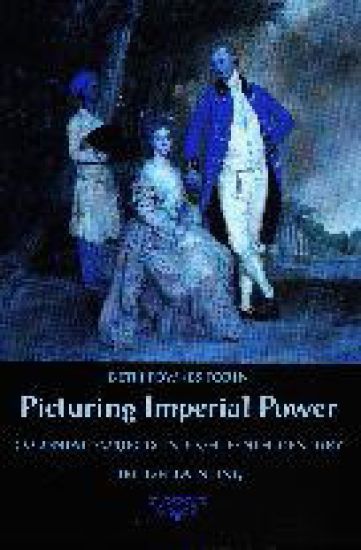
This study of colonialism and art examines the intersection of visual culture and political power in late-eighteenth-century British painting. Focusing on paintings from British America, the West Indies, and India, Beth Fowkes Tobin investigates the role of art in creating and maintaining imperial ideologies and practices-as well as in resisting and complicating them. Informed by the varied perspectives of postcolonial theory, Tobin explores through close readings of colonial artwork the dynamic middle ground in which cultures meet. Linking specific colonial sites with larger patterns of imperial practice and policy, she examines paintings by William Hogarth, Benjamin West, Gilbert Stuart, Arthur William Devis, and Agostino Brunias, among others. These works include portraits of colonial officials, conversation pieces of British families and their servants, portraits of Native Americans and Anglo-Indians, and botanical illustrations produced by Calcutta artists for officials of the British Botanic Gardens. In addition to examining the strategies that colonizers employed to dominate and define their subjects, Tobin uncovers the tactics of negotiation, accommodation, and resistance that make up the colonized’s response to imperial authority. By focusing on the paintings’ cultural and political engagement with imperialism, she accounts for their ideological power and visual effect while arguing for their significance as agents in the colonial project. Pointing to the complexity, variety, and contradiction within colonial art, Picturing Imperial Power contributes to an understanding of colonialism as a collection of social, economic, political, and epistemological practices that were not monolithic and inevitable, but contradictory and contingent on various historical forces. It will interest students and scholars of colonialism, imperial history, postcolonial history, art history and theory, and cultural studies.
Picturing Imperial Power

Picturing Imperial Power

Beth Fowkes Tobin

Duke University Press
1999
sidottu
This study of colonialism and art examines the intersection of visual culture and political power in late-eighteenth-century British painting. Focusing on paintings from British America, the West Indies, and India, Beth Fowkes Tobin investigates the role of art in creating and maintaining imperial ideologies and practices-as well as in resisting and complicating them. Informed by the varied perspectives of postcolonial theory, Tobin explores through close readings of colonial artwork the dynamic middle ground in which cultures meet. Linking specific colonial sites with larger patterns of imperial practice and policy, she examines paintings by William Hogarth, Benjamin West, Gilbert Stuart, Arthur William Devis, and Agostino Brunias, among others. These works include portraits of colonial officials, conversation pieces of British families and their servants, portraits of Native Americans and Anglo-Indians, and botanical illustrations produced by Calcutta artists for officials of the British Botanic Gardens. In addition to examining the strategies that colonizers employed to dominate and define their subjects, Tobin uncovers the tactics of negotiation, accommodation, and resistance that make up the colonized's response to imperial authority. By focusing on the paintings' cultural and political engagement with imperialism, she accounts for their ideological power and visual effect while arguing for their significance as agents in the colonial project. Pointing to the complexity, variety, and contradiction within colonial art, Picturing Imperial Power contributes to an understanding of colonialism as a collection of social, economic, political, and epistemological practices that were not monolithic and inevitable, but contradictory and contingent on various historical forces. It will interest students and scholars of colonialism, imperial history, postcolonial history, art history and theory, and cultural studies.