Kirjojen hintavertailu – 12 903 725 kirjaa ja 27 kauppaa
Kirjailija
Bettina Bien Greaves
Kirjat ja teokset yhdessä paikassa: 9 kirjaa, julkaisuja vuosilta 2005–2015, suosituimpiin kuuluu Ludwig von Mises on Money and Inflation (Large Print Edition): A Synthesis of Several Lectures. Vertaile teosten hintoja ja tarkista saatavuus suomalaisista kirjakaupoista.
This little gem is a complete economics education for high-school age students. It provides lessons, study questions, activities, and an excellent list of readings for each topic under consideration. Bettina chose well because the readings all hold up, even though the syllabus came out in 1974. It still works as an excellent course in economics. It is meant to be used alongside the book of readings also available from Mises.org. Together the set will put any student on the road to a lifetime of economic understanding. Bettina Greaves was Mises's secretary and assistant but also an excellent economist in her own right.
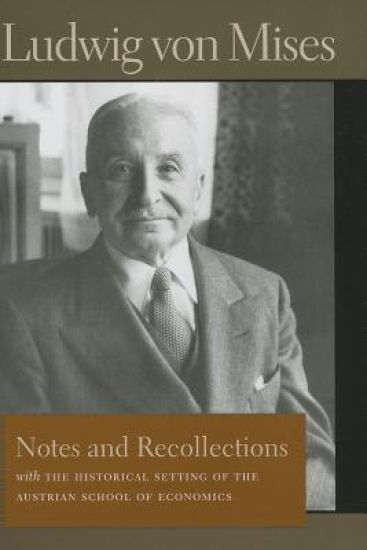
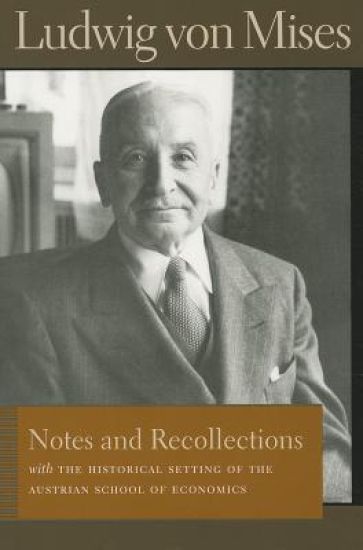
Published for the first time together in one volume is Ludwig von Mises's Notes and Recollections with The Historical Setting of the Austrian School of Economics. Written between 1940 and 1941, shortly after he arrived in the United States, Notes and Recollections is in effect Mises's pre-1940 intellectual autobiography. This work reveals how Mises developed his theories, wrote his books, lectured, and taught; it describes his life in Vienna and the people with whom he worked. He also discusses his activities as an adviser to Austrian government officials and his frustrations in attempting to keep inflation and communist and Nazi ideas from destroying the Austrian economy. The Historical Setting of the Austrian School of Economics is an essay originally published in English in 1969 that reveals Mises's intellectual development in the context of the origins of the Austrian School. It serves as a good introduction to the theory and history of the Austrian School. As Mises explains in these two works, his viewpoint that modern economics is based on subjective value and marginal-utility theory separated him from classical economists such as Adam Smith, David Ricardo, and John Stuart Mill.
Published for the first time together in one volume is Ludwig von Mises's Notes and Recollections with The Historical Setting of the Austrian School of Economics. Written between 1940 and 1941, shortly after he arrived in the United States, Notes and Recollections is in effect Mises's pre-1940 intellectual autobiography. This work reveals how Mises developed his theories, wrote his books, lectured, and taught; it describes his life in Vienna and the people with whom he worked. He also discusses his activities as an adviser to Austrian government officials and his frustrations in attempting to keep inflation and communist and Nazi ideas from destroying the Austrian economy. The Historical Setting of the Austrian School of Economics is an essay originally published in English in 1969 that reveals Mises's intellectual development in the context of the origins of the Austrian School. It serves as a good introduction to the theory and history of the Austrian School. As Mises explains in these two works, his viewpoint that modern economics is based on subjective value and marginal-utility theory separated him from classical economists such as Adam Smith, David Ricardo, and John Stuart Mill.
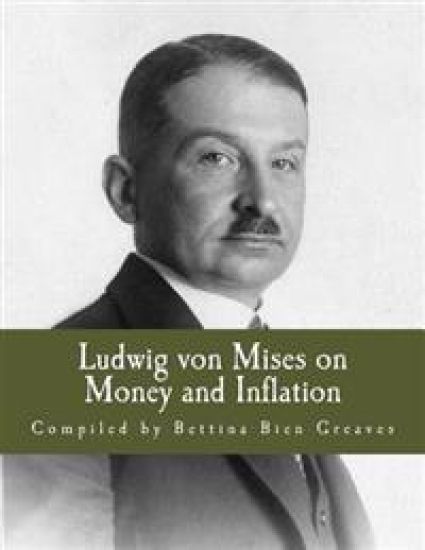
LARGE PRINT EDITION More at LargePrintLiberty.com. In the 1960s, Ludwig von Mises lectured often on money and inflation. Bettina Bien Greaves was there taking shorthand. She has been working to transcribe them for a very long time. At last the results are here and they are fantastic. To have this work is like having Mises as your private tutor, telling you about money and inflation in a casual setting and in plain language. He is the prophet of the 20th century on these topics, and here he presents his entire apparatus. True, this book is not technically by Mises. It is not something he signed off on. But they are his lectures, and they provide a glimpse into the workings of an incredible mind on a topic that is crucial to our future.
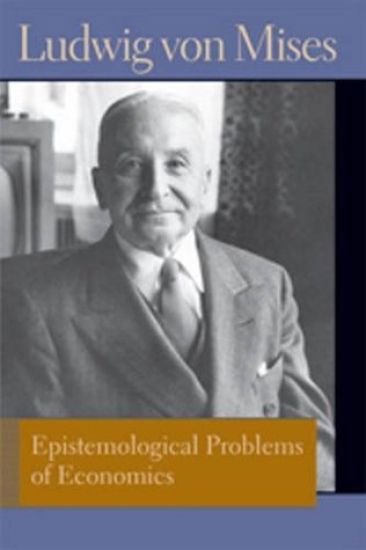
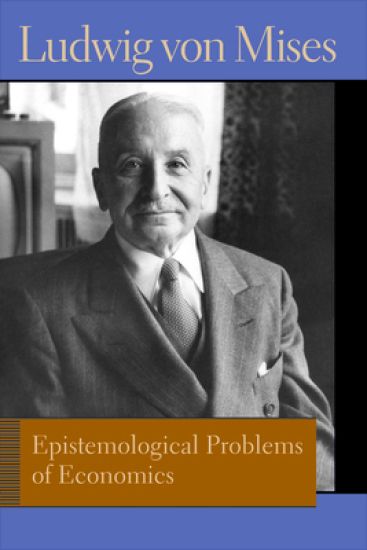
First published in German in 1933 and in English in 1960, Epistemological Problems of Economics presents Ludwig von Mises's views on the logical and epistemological features of social interpretation as well as his argument that the Austrian theory of value is the core element of a general theory of human behavior that transcends traditional limitations of economic science. Epistemological Problems of Economics presents the first outline of Mises's general science of human action, and may, therefore, be of special interest to individuals with knowledge in sociology or philosophy or those who are seeking a suitable initiation to Mises's thought. This volume is unique among Mises's works in that it contains a collection of essays in which he contested the theories of intellectuals he respected, such as Carl Menger, Eugen von Böhm-Bawerk, and Max Weber. Mises describes how value theory applies to human action at all times and places, as opposed to economic theory, which applies only to human action guided by economic calculation.
First published in German in 1933 and in English in 1960, Epistemological Problems of Economics presents Ludwig von Mises's views on the logical and epistemological features of social interpretation as well as his argument that the Austrian theory of value is the core element of a general theory of human behavior that transcends traditional limitations of economic science. Epistemological Problems of Economics presents the first outline of Mises's general science of human action, and may, therefore, be of special interest to individuals with knowledge in sociology or philosophy or those who are seeking a suitable initiation to Mises's thought. This volume is unique among Mises's works in that it contains a collection of essays in which he contested the theories of intellectuals he respected, such as Carl Menger, Eugen von Böhm-Bawerk, and Max Weber. Mises describes how value theory applies to human action at all times and places, as opposed to economic theory, which applies only to human action guided by economic calculation.
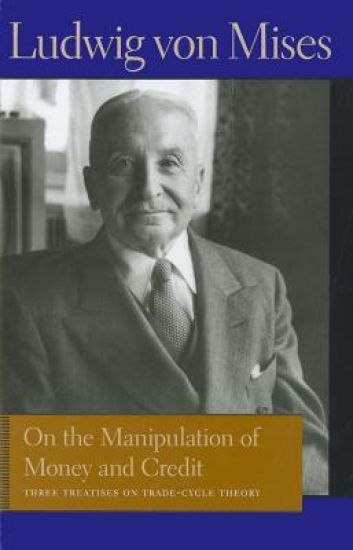
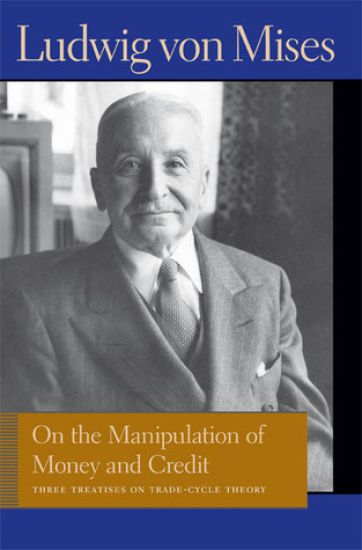
Published by Liberty Fund for the first time in English, "On the Manipulation of Money and Credit" consists primarily of three pieces on monetary theory written by Ludwig von Mises between 1923 and 1931. As a precursor to Human Action, Mises's magnum opus, this volume includes some of his most important contributions to trade-cycle theory. The first essay, "Stabilization of the Monetary Unit from the Viewpoint of Theory" written in 1923 during a period of German hyperinflation, discusses the consequences of the fluctuating purchasing power of paper money and explores such ideas as the outcome of inflation, that is, the result of the increase in the amount of money, and an emancipation of monetary value from the influence of government. Written in 1928, the second essay, "Monetary Stabilization and Cyclical Policy" critiques schemes for stabilising prices and for "measuring" purchasing power. The third selection is a speech Mises gave in 1931, "The Causes of the Economic Crisis". It explores the nature and role of the market and cyclical changes in business conditions.
Published by Liberty Fund for the first time in English, "On the Manipulation of Money and Credit" consists primarily of three pieces on monetary theory written by Ludwig von Mises between 1923 and 1931. As a precursor to Human Action, Mises's magnum opus, this volume includes some of his most important contributions to trade-cycle theory. The first essay, "Stabilization of the Monetary Unit from the Viewpoint of Theory" written in 1923 during a period of German hyperinflation, discusses the consequences of the fluctuating purchasing power of paper money and explores such ideas as the outcome of inflation, that is, the result of the increase in the amount of money, and an emancipation of monetary value from the influence of government. Written in 1928, the second essay, "Monetary Stabilization and Cyclical Policy" critiques schemes for stabilising prices and for "measuring" purchasing power. The third selection is a speech Mises gave in 1931, "The Causes of the Economic Crisis". It explores the nature and role of the market and cyclical changes in business conditions.
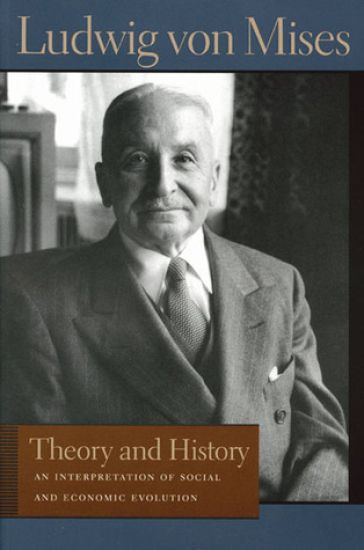
Ludwig von Mises was the leading exponent of the Austrian School of economics throughout most of the twentieth century. He has long been regarded as a most knowledgeable and respected economist, even though his teachings were generally outside the 'mainstream'. THEORY AND HISTORY is primarily a critique of Karl Marx, his materialism, and his prediction of the inevitability of socialism. Marx attributes the creation of tools and machines, as well as the economic structure of society, to undefined 'material productive forces'; Mises rejects this materialistic view; he points out that tools and machines are actually created by individuals acting on the basis of non-materialistic ideas. This book discusses the theory of economics, i.e., the study of purposive human action, and with history, the record of the past actions of individuals. All actions are determined by ideas. Thoughts and ideas are 'real things', Mises writes. "Although intangible and immaterial, they are factors in bringing about changes in the realm, of tangible and material things." Rather than rejecting the study of historical change as a 'useless pastime', Mises considers it of the utmost practical importance. "History looks backward into the past, but the lesson it teaches concerns things to come." History opens the mind to an understanding of human nature, increases wisdom, and distinguishes civilized man from the barbarian. Moreover, historical knowledge is of the utmost importance in helping to anticipate and plan for the future. Though THEORY AND HISTORY may not be studied as often as other, more popular Mises works, it provides great insight into Mises's fundamental thoughts and is a fascinating exploration of human action.