Kirjailija
Bhikkhu Analayo
Kirjat ja teokset yhdessä paikassa: 13 kirjaa, julkaisuja vuosilta 2009–2026, suosituimpiin kuuluu In Love with Wisdom. Vertaile teosten hintoja ja tarkista saatavuus suomalaisista kirjakaupoista.
13 kirjaa
Kirjojen julkaisuvuodet: 2009–2026.
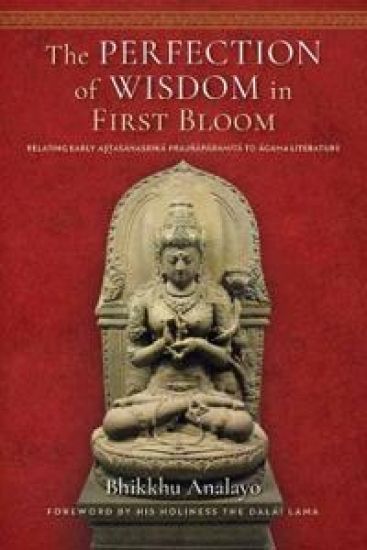
The Perfection of Wisdom in First Bloom
Bhikkhu Analayo
WISDOM PUBLICATIONS,U.S.
2025
sidottu
Halvin toimitettuna 40,40 €
See the formative years of Mahayana Buddhist literature through the lens of the Perfection of Wisdom, expertly analyzed by the venerable scholar-monk Bhikkhu Analayo. In this work we have a rare perspective on the early history of Mahayana Buddhism and the Perfection of Wisdom (Prajnaparamita), as far as this is still accessible in surviving texts. With his characteristic clarity and precision, Bhikkhu Analayo critically analyzes early Perfection of Wisdom literature based on the earliest extant versions of the Astasahasrika Prajnaparamita, or the Perfection of Wisdom in Eight Thousand Lines, one in Chinese and the other in Gandhari--one of the oldest surviving Mahayana manuscripts discovered to date. In reading this text from the viewpoint of early Buddhist literature, the author shows that what has generally been considered a sharp rupture in the formation of the Mahayana turns out to be more of a gradual evolution. With his command of the languages of the ancient Buddhist world, scholar-monk Bhikkhu Analayo sifts through the layers of history and unveils new perspectives on the ideas and figures in early Perfection of Wisdom and Mahayana literature, covering such topics as the rhetoric of emptiness and the emerging bodhisattva ideal, as well as the status of women and the practice of self-immolation. In doing so, Bhikkhu Analayo reveals fresh insights into the gradual development that informs the emergence of early Perfection of Wisdom literature. This is a rare opportunity to peer through a window at the beginnings of Mahayana thought--before the traditions had coalesced into the familiar forms we see today.
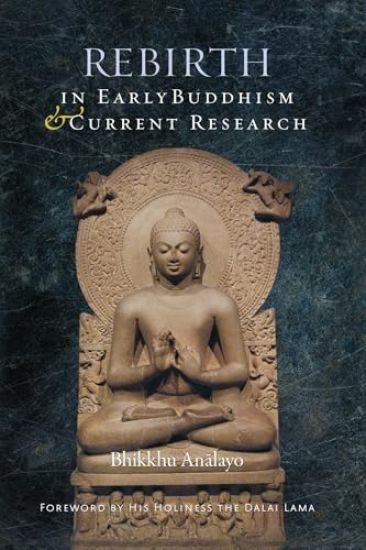
Rebirth in Early Buddhism and Current Research
Bhikkhu Analayo
WISDOM PUBLICATIONS,U.S.
2025
nidottu
Halvin toimitettuna 25,20 €
Join a rigorous scholar and Buddhist monk on a brisk tour of rebirth from ancient doctrine to contemporary debates in this paperback reissue of a reader favorite. In this fascinating book, professor and monk Bhikkhu Analayo illuminates a spectrum of views on rebirth, from ancient scriptures to contemporary research. In four brisk chapters, the book leads readers through the following points: The presentation of rebirth in the earliest Buddhist sources and the way it relates to core doctrine; The debates about rebirth throughout Buddhist history and up to modern times, including the role of confirmation bias in the evaluation of evidence; The current research on rebirth, including near-death experiences, past-life regression, and childhood recollection of previous lives; An examination of a particular case of xenoglossy, the ability to speak languages one has not been taught. As a very young boy, the Sri Lankan Dhammaruwan would chant Pali-language scriptures that he had not apparently learned in his present life. Rebirth in Early Buddhism and Current Research brings together the many strands of the debate on rebirth in one place, making it both comprehensive and compact. It is not a polemic but an interrogation of the evidence, inviting readers to draw their own conclusions.

Abiding in Emptiness
Bhikkhu Analayo
WISDOM PUBLICATIONS,U.S.
2024
sidottu
Halvin toimitettuna 31,20 €
An incisive look into the early Buddhist teachings on emptiness, and a manual for bringing those teachings into our everyday lives. Before the growth of the Mahayana and the Perfection of Wisdom, before Avalokitesvara taught Sariputra the meaning of emptiness, the Buddha gave his own teachings, to his attendant Ananda, on the importance of emptiness (Pali sunnata, Sanskrit sunyata) in everyday practice. In this volume, renowned scholar-monk Bhikkhu Analayo explores these teachings and shows us how to integrate them into our lives. In this practical companion to his scholarly work The Signless and the Deathless: On the Realization of Nirvana, Bhikkhu Analayo draws from instructions found in the Greater and the Smaller Discourses on Emptiness (the Mahasunnatasutta and the Culasunnatasutta). In each chapter, he provides a translation of a pertinent excerpt from the discourses, follows this with clear and precise explanations of the text, and concludes by offering instructions for practice. Step by step, beginning with daily life and concluding with Nirvana, Bhikkhu Analayo unpacks the Buddha's teachings on this foundational concept.

The Signless and the Deathless
Bhikkhu Analayo
WISDOM PUBLICATIONS,U.S.
2023
sidottu
Halvin toimitettuna 32,40 €
An insightful examination of the end of suffering that draws much-needed attention to two overlooked factors of Nirvana: signlessness and deathlessness. Nirvana is a critical part of the Buddhist path, though it remains a difficult concept to fully understand for Buddhist practitioners. In The Signless and the Deathless: On the Realization of Nirvana, scholar-monk Bhikkhu Analayo breaks new ground, or rediscovers old ground, by showing the reader that realizing Nirvana entails "a complete stepping out of the way the mind usually constructs experience." With his extraordinary mastery of canonical Buddhist languages, Venerable Analayo first takes the reader through discussions in early Buddhist suttas on signs (Pali nimitta), the characteristic marks of things that signal to us what they are, and on cultivating concentration on signlessness as a meditative practice. Through practicing bare awareness, we can stop defilements that come from grasping at signs--and stop signs from arising in the first place. He then turns to deathlessness. Deftly avoiding the extremes of nihilism and eternalism that often cloud our understanding of Nirvana, Venerable Analayo shows us that deathless as an epithet of Nirvana "stands for the complete transcendence of mental affliction by mortality"--ours or others'--and that it is achievable while still alive. Advanced practitioners and scholars alike will value the work for its meticulous academic expertise and its novel way of explaining the highest of all Buddhist goals--the final end of suffering.
Daughters of the Buddha
Bhikkhu Analayo; Bhikkhuni Dhammananda
WISDOM PUBLICATIONS,U.S.
2022
sidottu
Halvin toimitettuna 29,20 €
A testimony to the invaluable contributions made by the women who were direct disciples of the Buddha--and a source of inspiration to Buddhist women today. It's a common perception that the earliest textual records don't contain many, if any, teachings by the Buddha's female disciples; yet, this is not the case. In fact, the earliest discourses record a range of teachings from Buddhist women, lay and monastic. Unfortunately their important contributions have so far not received the attention they deserve. In Daughters of the Buddha, esteemed scholar-monk Bhikkhu Analayo examines the accounts of the first female disciples in the canonical scripture, taking the reader back to the earliest period in the history of Buddhism that can still be accessed today. He dedicates each of the twenty-one chapters in the volume to an individual and remarkable woman, sharing her particular insights and teachings with the reader. Both nuns and laywomen are featured in these pages, and their diversity of voices and richness of thought will serve as instruction and encouragement for modern scholars and practitioners alike.
The ensuing pages present a selection of passages from the early Buddhist discourses that provide perspectives on the cultivation of liberating insight into vedanā, "sensation," "feeling," or "feeling tone." For meditators, such passages can be of considerable help as a reference point for deepening insight. A metaphor that can offer considerable help when facing vedanās describes bubbles arising on the surface of a pond during rain...they arise and soon enough burst and disappear. Contemplation of the changing nature of vedanā provides a firm foundation for the growth of insight into not self. Such insight proceeds through successive layers of the mind's ingrained habit of self-referentiality. Based on relinquishing the explicit view of affirming the existence of a permanent self, increasingly subtler traces of conceit and possessiveness need to be successively overcome until with full awakening all selfing in any form will be removed for good. Deepening Insight is based on textual sources that reflect "early Buddhism," which stands for the development of thought and practices during roughly the first two centuries in the history of Buddhism, from about the fifth to the third century BCE. These sources are the Pāli discourses and their parallels, mostly extant in Chinese translation, which go back to instructions and teachings given orally by the Buddha and his disciples. In those times in India, writing was not employed for such purposes, and for centuries these teachings were transmitted orally. The final results of such oral transmission are available to us nowadays in the form of written texts. Bhikkhu Anālayo's presentation is meant to provide direct access, through the medium of translation, to the Chinese Āgama parallels to relevant Pāli discourses. In commenting on such passages, his chief concern throughout is to bring out practical aspects that are relevant to actual insight meditation.
Buddhist meditator and scholar Bhikkhu Analayo introduces the Buddhist backgrounds to mindfulness, ranging from mindful eating to its formal cultivation as satipatthana (the foundations of mindfulness). He also offers a historical survey of the development of mindfulness in different Buddhist traditions. Providing an accessible guide, he offers practical exercises on how to develop mindfulness. The orally transmitted early teachings examined here provide a range of perspectives on mindfulness, with a clear overarching focus on the role of mindfulness in the path to `awakening', to an understanding of reality as it is. Analayo shows how mindfulness is a central tool for recognizing the influence of greed, anger and delusion, and how to emerge from these to progress on the path of practice to liberation. He shows how mindfulness brings about a clear vision of reality, fostering a gradual freeing of the mind from these influences, and enabling us to be more fully in touch with what is taking place and remain in the present; we learn to slow down and come to our senses. As well as being directed within, Analayo demonstrates how mindfulness helps us discern how what we do impacts others, and thus naturally strengthens our compassion, helping us avoid harming others and ourselves. Mindfulness is something to be practised, and at the end of each chapter Analayo provides instructions for developing mindfulness step by step, bringing it into our personal experience.
Mindfulness in Early Buddhism
Bhikkhu Analayo; Mark Allon; Rupert Gethin
Windhorse Publications
2020
nidottu
An invaluable resource for Buddhist scholars, meditation teachers, and practitioners wishing to deepen their own practice of mindfulness. In this in-depth guide, the author examines all aspects of mindfulness practice, explores the history of mindfulness in the Buddhist tradition, and provides instructions for meditation practice.
Analayo offers an inspiring biography of the Buddha based on the early discourses and focusing on his meditative development and practice. By focusing on the Buddha as a meditator, Analayo seeks to provide inspiration and guidance to all meditators, of any tradition and of any level of experience. Each of the twenty-four chapters concludes with suggestions to support meditative practice.