Kirjojen hintavertailu – 12 876 058 kirjaa ja 26 kauppaa

Kirjailija

Bill Laws

Kirjat ja teokset yhdessä paikassa: 17 kirjaa, julkaisuja vuosilta 2004–2025, suosituimpiin kuuluu 50 kasvia jotka muuttivat maailmaa. Vertaile teosten hintoja ja tarkista saatavuus suomalaisista kirjakaupoista.

17 kirjaa

Kirjojen julkaisuvuodet: 2004–2025.

50 kasvia jotka muuttivat maailmaa

50 kasvia jotka muuttivat maailmaa

Bill Laws

Otava
2024
sidottu

Halvin toimitettuna 29,60 €

Upeasti kuvitettu tietokirja kertoo kiehtovasti ihmiskunnan historiaan vaikuttaneista kasveista. Kasvit ovat osa jokapäiväistä elämäämme: syömme kasviksia, liikumme luonnossa, ostamme kukkia, kuopsutamme puutarhassa, rakennamme puusta ja käytämme fossiilisia polttoaineita. Tulemme harvoin ajatelleeksi, miten monin tavoin hyödynnämme kasveja ja miten elintärkeitä ne meille ovat. Jos kohtelemme niitä ja luontoa hyvin, suojelemme samalla maailmaa ja omaa tulevaisuuttamme. Kasvien löytämisen, jalostamisen ja hyödyntämisen ohella kirjassa tarkastellaan niiden taloudellisia, poliittisia ja kulttuurisia merkityksiä.
Fifty Railroads That Changed the Course of History
Praise for a previous title in the series: Fifty Minerals that Changed the Course of History "Interesting, affordable and readable.... Offers the reader an opportunity to delve further into each mineral's historical significance in an accessible way." -- Booklist Fifty Railroads that Changed the Course of History is a handsome, illustrated survey of the most important historical and contemporary railway lines around the world. Filled with unusual and unexpected stories and facts, it will captivate a wide audience, from the curious browser to researching students. The book organizes the railroads chronologically, considering each according to its greatest impact on Social, Commercial, Political, Engineering and Military history. Maps plus more than 200 elegant drawings, photographs and paintings as well as dozens of sidebars highlight the concise, engaging text. The 50 railroads span history, from the first in public passenger travel (Wales, 1807), to Japan's speed-record breaking "Bullet." Railroads in some locales reflect the map of colonialism (Guyana to transport sugar, India to carry cotton and arms). They moved troops (the Crimea, the American Civil War, the Boer War) and united vast lands (Canadian Pacific Railway, Trans-Siberian). They transported people to horrible places (Auschwitz Ker), saved the Railway Children, and went underground to cross the English Channel. Fifty Railroads that Changed the Course of History features rail barons, politicians, disasters, crime, weather, geology, great artists, fraudsters and animals -- a dynamic cast of characters and a mind-spinning whirlwind of facts, trivia and conversation starters.
A Ramble Through the History of Walking

A Ramble Through the History of Walking

Bill Laws

THE HISTORY PRESS LTD
2025
pokkari
‘This book confirms the splendid eccentricity of the British, which often involves oddly dressed men opting to walk long distances for no apparent reason.’ – BBC Countryfile Magazine‘Laws’ sprightly, often arch, account of Britain’s hiking heroes is a pleasure to read.’ – Walk Magazine'The great affair is to move: to come down off this feather-bed of civilisation, and find the globe granite underfoot,' wrote Robert Louis Stevenson. This book celebrates the history of walking for leisure and pleasure. There’s no shortage of the famous, and the not-so-famous, exponents of a good, long walk: Dr Jonson and his faithful Boswell on their Hebridean jaunt; John Taylor, whose Penniless Pilgrimage – a record of his 1618 journey from London to Edinburgh – provided the first account of a walking tour; and Samuel Coleridge who conceived his epic tale of the Ancient Mariner on a ramble through Devon. Celebrating the history of walking for leisure and pleasure, Bill Laws tells the stories behind key walking inventions such as the rucksack, bloomers, youth hostels and the long-distance route. Fully illustrated throughout, A Ramble Through the History of Walking is sure to delight anyone interested in the engaging history of one of man’s favourite pastimes.
The Curious History of Vegetables

The Curious History of Vegetables

Bill Laws

THE HISTORY PRESS LTD
2024
pokkari
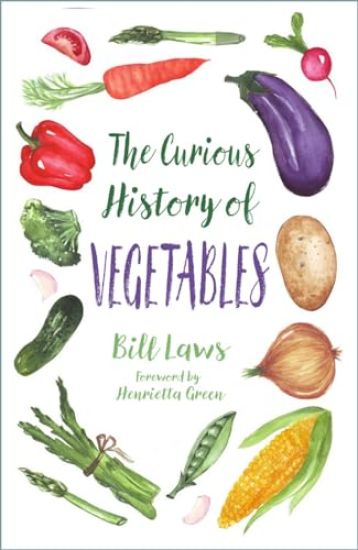
Couch potatoes are idlers, cabbageheads are dunces, swede-bashers are stupid and you may as well give up life if you become a vegetable. A vegetable existence may imply dull monotony, but the humble vegetable has sparked protests, threatened to topple a British government and almost triggered a revolution. From the Scottish Presbyterian campaign against the ‘sinful potato’ to the class act that turned the carrot into a propaganda tool, from garlic inscriptions on Egyptian pyramids to Neolithic broad beans and medieval cabbage, and from the Dig for Victory campaign to competitive vegetable growing, The Curious History of Vegetables highlights just how vital our produce really is.
Femtio växter som ändrat historiens gång
Femtio växter som ändrat historiens gång är en vackert illustrerad bok som innehåller fascinerande berättelser om både kända och mindre kända växter som har spelat en central roll för människans och det moderna samhällets utveckling. Växter är så vanligt förekommande omkring oss att vi sällan stannar upp och funderar över den stora inverkan de har på vår dagliga tillvaro. Vi ger bort blommor vid speciella tillfällen, tillbringar mödosamma timmar i våra trädgårdar, använder växter vid färgning av textilier, till kosmetika och i läkemedel. Vi är helt beroende av dem för vår överlevnad, då de förser oss med syre. Artiklarna i boken sträcker sig från ris och vete, vilka utgör basföda för hälften av jordens befolkning, till örter och kryddor, berömda för sina läkande egenskaper. I boken vävs ekonomins, politikens och jordbrukets historia samman utifrån femtio betydelsefulla växter.
Femti planter som endret historiens gang
Visste du at i middelalderens Europa var svart pepper verdt mer enn gull? Og at Vestens tørst etter te hadde stor skyld i kinesernes massive opiumsmisbruk på 1800- og 1900-tallet? Hjemme i Norge var bøndene en tid pålagt å dyrke humle for å brygge øl – om man sluntret unna, kunne man i verste fall bli vist fra landet. Overalt omgir vi oss av planter – i naturen, hagen, i stuen og på spisebordet, men vi tenker lite over hvilke roller disse plantene har spilt for vår sivilisasjon. I denne boken som har gjort stor internasjonal suksess, får du fascinerende historiske perspektiver på plantene rundt oss. Bill Laws tar for seg 50 vekster og formidler på kunnskapsrikt og underholdende vis hvordan de har påvirket verdenshistorien. I den norske utgaven er innholdet og referansene tilpasset den norske flora og norsk kulturhistorie. Boken er nydelig illustrert med botaniske tegninger, kunst og fotografier, og dessuten krydret med kuriosa, kjente sitater og utdrag fra litterære verker. Dette er en bok som er en nytelse å bla i – og en perfekt bok å gi bort i gave.
Fifty Tales from the Kitchen Garden: A Social History of Vegetables
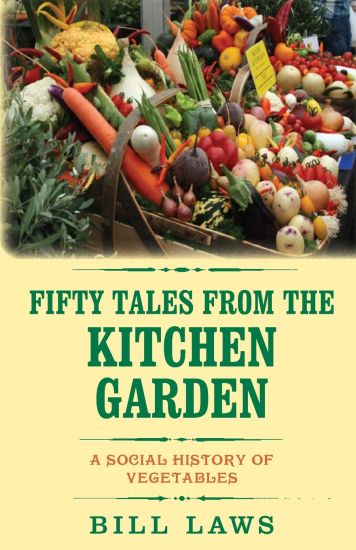
Despite being a source of insults - swede basher, cabbage head, couch potato - the kitchen garden is as full of life, excitement and anecdote as the flower garden. Vegetables have relieved, and caused, famines. They have played a part in protest movements and been used to wage and win wars. Vegetables have shaped the world we know - while the American population thrived on 'king corn' (maize) and green beans, Europeans were hot-housed on a diet of potatoes. Meanwhile many famous historical figures have waxed lyrical on vegetables from Claude Monet, Thomas Jefferson and George Bernard Shaw to Beatrix Potter and P. G. Wodehouse. By celebrating our history of vegetables Bill Laws highlights the facts and foibles for our pleasure and edification. "Laws delights in entertaining us with curious facts, some well known, some new." The Garden "Fascinating and well researched." The English Garden "You'll discover a new side to the common garden vegetable." Period House "There couldn't be a better gift for the dedicated gardener." Publishing News
Fifty Plants That Changed the Course of History
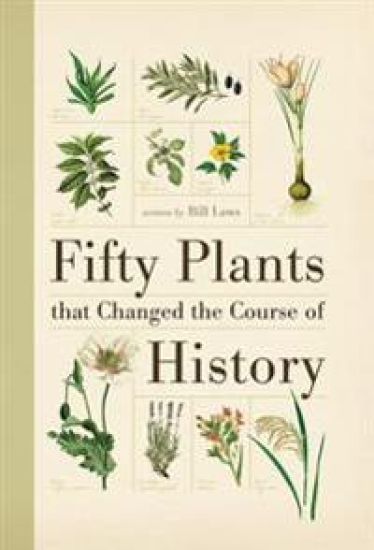
The fascinating stories of the plants that changed civilizations. "This book will mesmerize plant-lovers and non-gardeners alike." --American Gardener "This marvelous collection of tales deserves to be read and enjoyed." --Chicago Botanic Garden Fifty Plants that Changed the Course of History is a beautifully presented guide to the plants that have had the greatest impact on human civilization. Entries feature a description of the plant, its botanical name, its native range and its primary functions--edible, medicinal, commercial or practical. Concise text is highlighted by elegant botanical drawings, paintings and photographs as well as insightful quotes. Many of the plants are well known, such as rice, tea, cotton, rubber, wheat, sugarcane, tobacco, wine grapes and corn. However, there are also many whose stories are less known. These history-changing plants include: Agave, used to make sisal, poison arrows, bullets, tequila and surgical thread Pineapple, which influenced the construction of greenhouses Hemp, used for hangman's rope, sustainable plastics, the Declaration of Independence and Levi's jeans Coconut, used for coir fiber, soap, margarine, cream, sterile IV drips and coagulants Eucalyptus, used in mouthwash, diuretics, vitamins, honey, underwear and fire-resistant uniforms Sweet pea, which Gregor Mendel used in his research on genetics White mulberry, used to feed the caterpillars that make silk English oak, used for fire-resistant structures, dyes, leather tanning, charcoal, casks and ships White willow, used in the manufacture of aspirin, cricket bats, hot-air balloon baskets and coffins. This attractive reference provides an innovative perspective on both botanical and human history.

Fifty Railways That Changed the Course of History

Fifty Railways That Changed the Course of History

Bill Laws

David Charles
2013
sidottu

Halvin toimitettuna 20,30 €

Fifty Railways that Changed the Course of History is a fascinating and beautifully presented guide to the train lines and rail companies that have had the greatest impact on modern civilization. Entries range from the Metropolitan Line of the London Underground, the world’s first underground railway, to the Pacific Railroad, the first transcontinental railroad in North America. In order to justify the assertion that they literally 'changed the course of history,' each railway is judged by its influence in five categories: Engineering, Society, commerce, Politics, and Military.
Home Truths

Home Truths

Bill Laws

The History Press Ltd
2010
nidottu
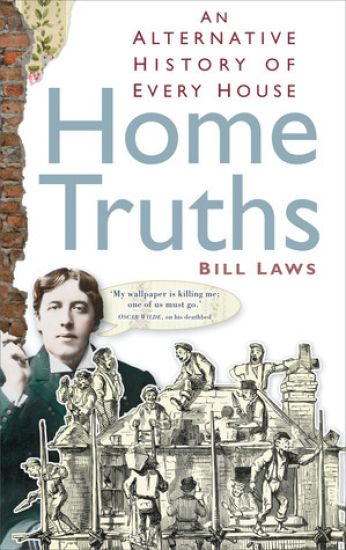
Home Truths uncovers the strange and often bizarre stories behind the inventions, and inventors, that have shaped our homes. From dado rails and stencilling – which date from Roman times – noggins and newel posts to power showers, lights and lightning rods, wallpapers and windows, floors and fitted kitchens, Bill Laws’s book takes us on a journey of discovery that exposes the true secrets behind our four walls. Included here are the incredible flying fitted kitchens, the true saga behind the Aga, Mr Chubb’s great lock scandal and how front doors were changed forever by the penny post, while the near-death experience of one British royal contributed to the contemporary bathroom. This book will ensure that you never look at your wallpaper and laminate flooring in the same way again!
Byways, Boots and Blisters

Byways, Boots and Blisters

Bill Laws

The History Press Ltd
2009
nidottu
'The great affair is to move: to come down off this feather-bed of civilisation, and find the globe granite underfoot,' wrote Robert Louis Stevenson. This book celebrates the history of walking for leisure and pleasure. There's no shortage of the famous, and the not so famous, exponents of a good, long walk: Dr Johnson and his faithful Boswell on their Hebridean jaunt; John Taylor, whose Penniless Pilgrimage, a record of his 1618 journey from London to Edinburgh, provided the first account of a walking tour; and Samuel Coleridge who conceived his epic tale of the Ancient Mariner on a ramble through Devon. The author also includes the stories of key inventions: the cagoule, the Thermos flask, the rucksack, Gore-Tex and the walking pole. Fully illustrated throughout, Byways, Boots and Blisters tells the engaging history of one of man's favourite pastimes.
Nails, Noggins and Newels

Nails, Noggins and Newels

Bill Laws

The History Press Ltd
2006
nidottu
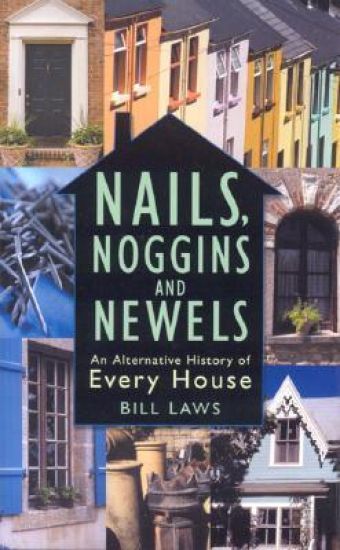
Starting at the front door, this book takes a look at our homes through different eyes, revealing the history of every part from the bricks and beams to pelmets, lights and water pipes; from wallpaper, windows and paints to floors, fires and fitted kitchens. Crammed with fascinating facts about the everyday bric-a-brac of the house in which you live, Nails, Noggins and Newels is written in a lively, informal style which will appeal to any DIY enthusiast.
Spade, Skirret and Parsnip

Spade, Skirret and Parsnip

Bill Laws

Sutton Publishing Ltd
2004
sidottu
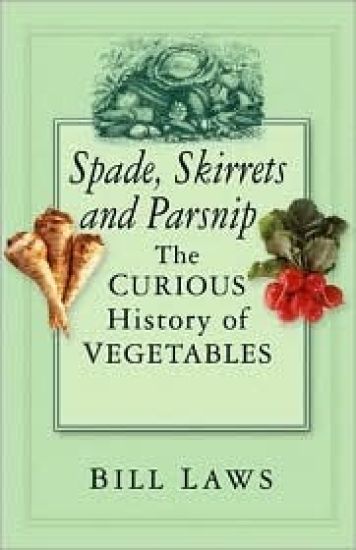
The 'couch potato' is an idler, the 'cabbage-head' a dunce, Swede-bashers are stupid and you may as well give up life if you become a vegetable. A vegetable existence may imply dull monotony, but the humble vegetable has sparked protests, threatened to topple a British government and almost triggered a revolution. From the Scottish Presbyterian campaign against the 'sinful potato' to the class act that turned the carrot into a propaganda tool, from garlic inscriptions on Egyptian pyramids to Neolithic broad beans and medieval cabbage, and from the Dig for Victory campaign to their use in perfumes, Spades, Skirrets & Parsnip shows vegetables in a fascinating new light.