Kirjojen hintavertailu – 12 903 725 kirjaa ja 27 kauppaa

Kirjailija

Bill Martin

Kirjat ja teokset yhdessä paikassa: 102 kirjaa, julkaisuja vuosilta 1983–2027, suosituimpiin kuuluu Miron Bialoszewski. Vertaile teosten hintoja ja tarkista saatavuus suomalaisista kirjakaupoista.

102 kirjaa

Kirjojen julkaisuvuodet: 1983–2027.

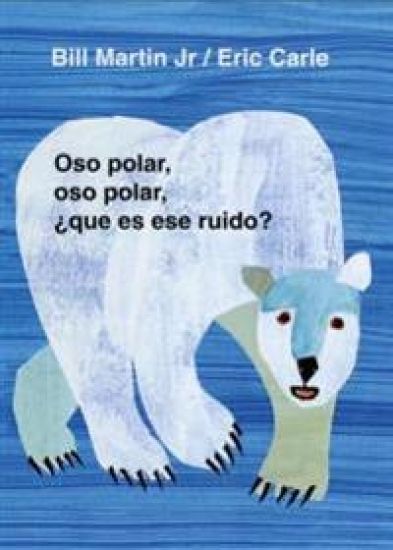
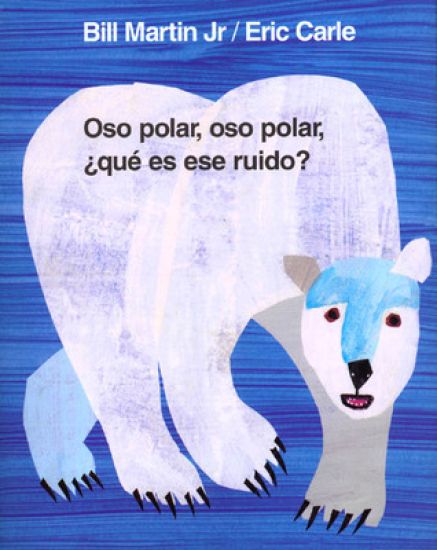
Oso Polar, Oso Polar, Que Es Ese Ruido? = Polar Bear, Polar Bear, What Do You Hear?
Oso polar, Oso polar, qu es ese ruido? es el libro acompa ante del cl sico Oso pardo, oso pardo, qu ves ah ? El texto simple y r tmico de Bill Martin Jr. invita a los escuchantes j venes a cantar junto a los sonidos de los animales en el zool gico, desde el rebuzno de la cebra hasta el trompar del elefante. El arte brillante e imaginativa de Eric Carle son la pareja perfecta para este texto divertido que mantiene a los ni os y las ni as cautivos lectura tras lectura.
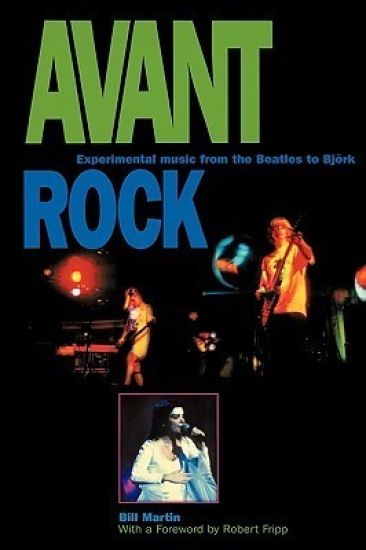
Avant Rock

Avant Rock

Bill Martin; Robert Fripp

Open Court Publishing Co ,U.S.
2002
pokkari
Critiquing avant-garde rock bands from the 1960s to the present, Bill Martin examines how social upheaval gave rise to this new form of musical expression. He covers early experimentation by artists such as James Brown; initiation into the mainstream and the resulting adaptations by the Beatles and the Who; and continues into the present looking at how groups like Stereolab, Sonic Youth, Jim O’Rourke, and others continue to innovate. An annotated discography is included.
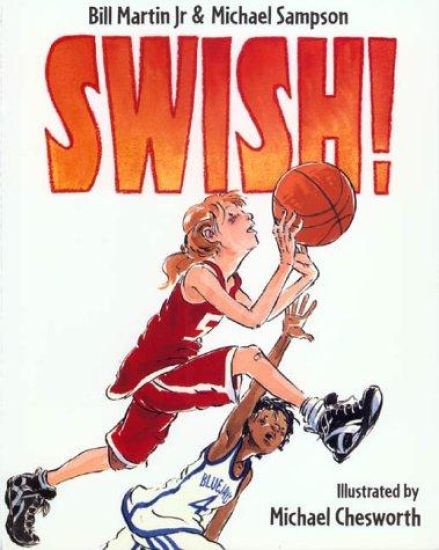
Swish!

Swish!

Bill Martin; Michael Sampson

Square Fish
2000
nidottu
A fast-paced book about two girls' basketball teams fighting for the championship. "The Cardinals and Bluejays are in the final game of the championship. The tension builds as the clock ticks away. The score is tied at 44/44 with one second left . . . who will win the game?" New interest in women's basketball, including the 1996 Olympic team and the heavily watched 1996 NCAA women's championship, makes Swish an exciting addition to the list. Bill Martin, Jr. and Michael Sampson have created an action-packed text filled with suspense. Illustrations by Michael Chesworth put the reader on the court as these tough players battle it out.
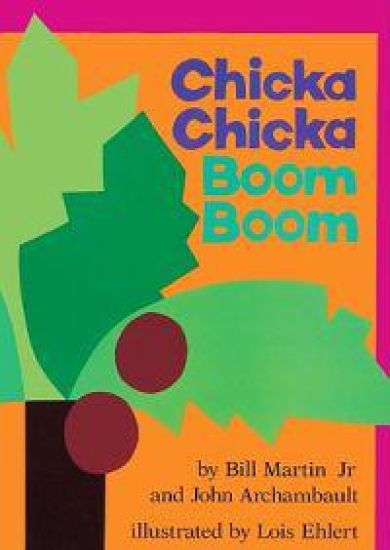
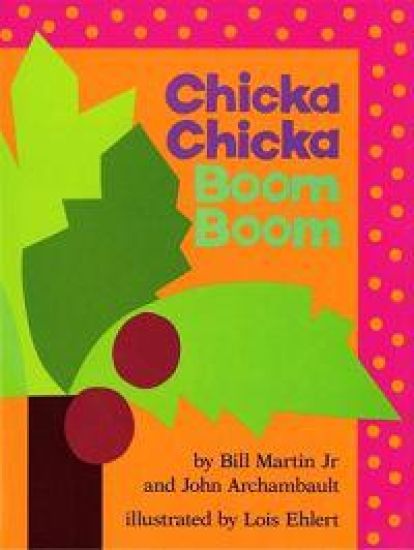
Chicka Chicka Boom Boom

Chicka Chicka Boom Boom

Bill Martin; John Archambault

Simon Schuster Australia
2000
pokkari

Halvin toimitettuna 15,00 €

There is always enough room on your child’s bookshelf for this rollicking alphabet chant that has been a children’s favorite for over thirty years! A told B, and B told C, “I’ll meet you at the top of the coconut tree” In this lively alphabet rhyme, all the letters of the alphabet race each other up the coconut tree. Will there be enough room? Oh, no—Chicka Chicka Boom! Boom! Countless children—and their parents—can joyfully recite the familiar words of this beloved alphabet chant. Bill Martin, Jr., and John Archambault’s rhythmic text keeps the beat with Caldecott Honor illustrator Lois Ehlert’s bold, cheerful art. This winning combination has made the Chicka Chicka series an enduring classic.
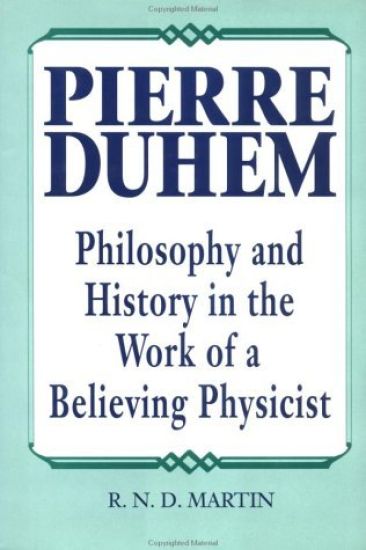
Pierre Duhem

Pierre Duhem

Bill Martin

Open Court Publishing Co ,U.S.
1999
sidottu
Dr Martin's study of Pierre Duhem's work refutes many prevailing legends about Duhem. His book pays particular attention to the political and intellectual context of French Catholicism, wracked as it was by the tensions of the Dreyfus affair and the so-called modernist crisis. Duhem took his inspiration, not from the Papally-sponsored revival of the thought of St. Thomas Aquinas, but from Pascal, a fact that aroused suspicions of skepticism in the minds of conservatively-minded Catholics. The tensions between Duhem's work and authoritarian Catholic positions became more explicit at his historical work unfolded. Duhem has often been interpreted as a mere instrumentalist or conventionalist, denying the meaningfulness of a reality behind the theory. Dr Martin shows that Duhem was a Pascalian, arguing that both logic and intuition were indispensible in approaching the truth. Duhem argued that physics could not legitimately be used to attack Christianity, but he held that physics was equally useless for the defense of Christianity, a position which made him unpopular with many Catholics. Duhem is now well-known for his historical work refuting the myth that there was no medieval science. Duhem showed that figures like Leonardo and Galileo were not isolated; far from being the founders of a new science, they were continuing a tradition of scientific work that had been developing for centuries. It has been surmised that Duhem was predisposed to rehabilitate medieval science for apologetic motives. Martin shows that Duhem's discovery of medieval science can be dated to within a month, and came as a complete suprise to him, changing the whole course of his work, and introducing an abrupt discontinuity between his earlier and his later preoccupations. Furthermore, Duhem's findings in medieval intellectual history have proved indigestible ever since, to believers and unbelievers alike.
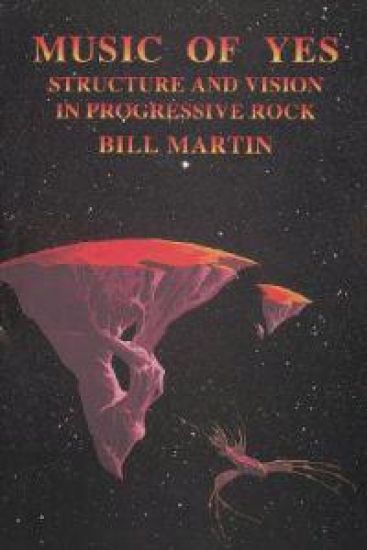
Music of "Yes"

Music of "Yes"

Bill Martin

Open Court Publishing Co ,U.S.
1998
pokkari
An examination of the work of one of the most creative groups from the progressive rock period, Yes. Unlike many books on rock music, this text does not focus on personalities, but concentrates on musical structures, lyrical vision, and the cultural and historical context of the band's music.
Listening to the Future

Listening to the Future

Bill Martin

Open Court Publishing Co ,U.S.
1998
pokkari
In the early seventies, King Crimson, Yes, Jethro Tull, Emerson, Lake and Palmer, and many others brought forth a series of adventurous and visionary works, often of epic length. Responding both to the new possibilities in rock music opened up by "Sergeant Pepper's Lonely Hearts Club Band", as well as to the countercultural politics and aesthetics of the late sixties, these musicians applied consummate instrumental and compositional skill to transgressing boundaries. Since the late seventies, histories of rock music have either ignored or marginalized the progressive rock era. In part, this has occurred because rock music criticism has taken an almost completely sociological turn, with little or no interest in musical form itself. In "Listening to the Future", Bill Martin argues that it is a musical and political mistake to ignore this period of tremendous creativity, a period which still finds resonance in rock music today. He sets the scene for the emergence of progressive rock (showing that, in fact, there has always been a progressive trend in rock music, a trend that took a quantum leap in the late sixties), and develops a terminology for understanding how an avant-garde could arise out of the sonic and social materials of rock music. Martin examines groups from the famous to the obscure: along with well-known groups such as Genesis or ELP, lesser-known groups such as Henry Cow, Magma and PFM receive attention that is long past due. He also surveys the albums, and provides resources for readers to explore the music further. Finally, he discusses the critical reception of progressive rock and the impact of the trend beyond the time of its greatest popularity - in particular considering the emergent "neoprogressive" trend, as well as recent works by Yes, Jethro Tull and King Crimson.

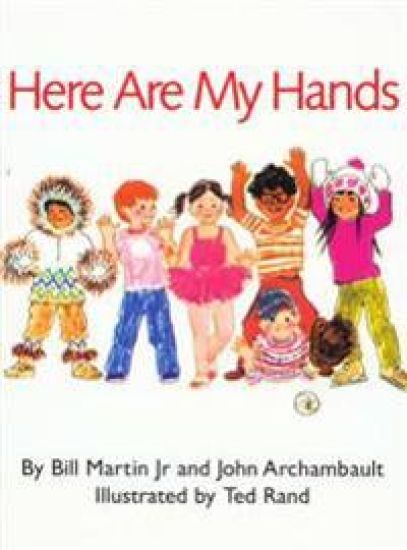
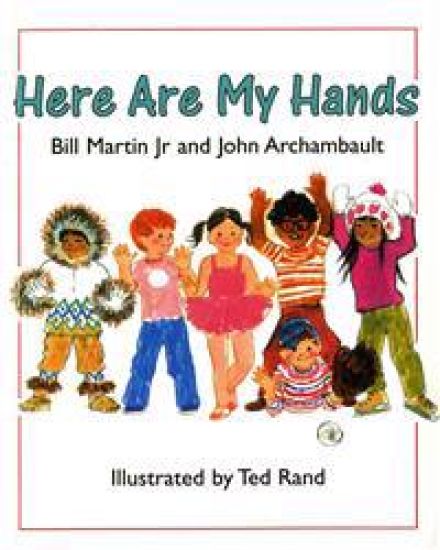
Here Are My Hands

Here Are My Hands

Bill Martin; John Archambault

Henry Holt Company
1998
sidottu
The owner of a human body celebrates it by pointing out various parts and mentioning their functions, from "hands for catching and throwing" to the "skin that bundles me in"
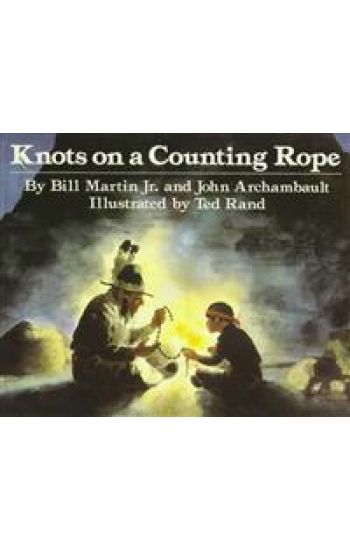
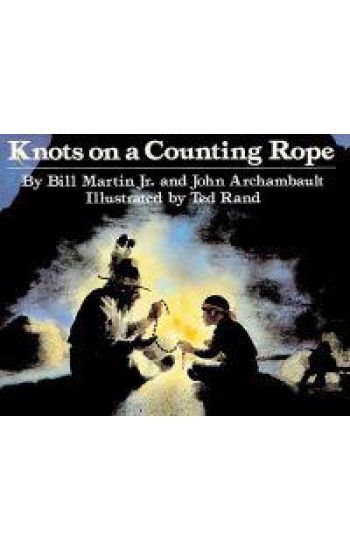
Knots on a Counting Rope

Knots on a Counting Rope

Bill Martin; John Archambault

Square Fish
1997
nidottu
In Knots on a Counting Rope, Bill Martin, Jr. and John Archambault tell a poignant story about a boy's emerging confidence in facing his blindness in this beautiful children's picture book illustrated by Ted Rand. By the warmth of a campfire beneath a starry night sky, a Navajo youth named Boy-Strength-of-Blue-Horses listens to the tale of his birth from his grandfather. Although blind, the boy learns that he has the strength to cope with his condition and meet any challenge that comes his way. "The powerful, spare, poetic text is done full justice by Rand's fine full-color illustrations... The love, hope, and courage expressed are universal."-- Booklist (starred review)
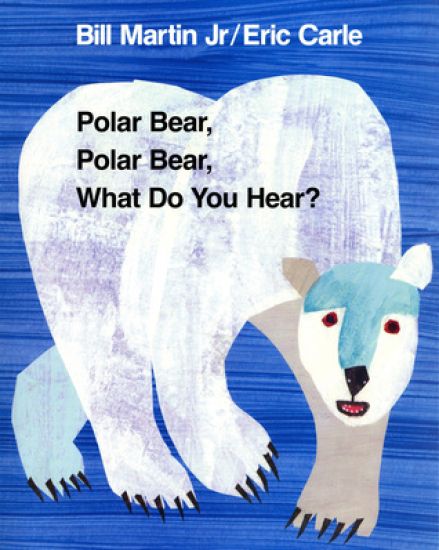
Polar Bear, Polar Bear, What Do You Hear

Polar Bear, Polar Bear, What Do You Hear

Bill Martin

Henry Holt Company
1992
nidottu
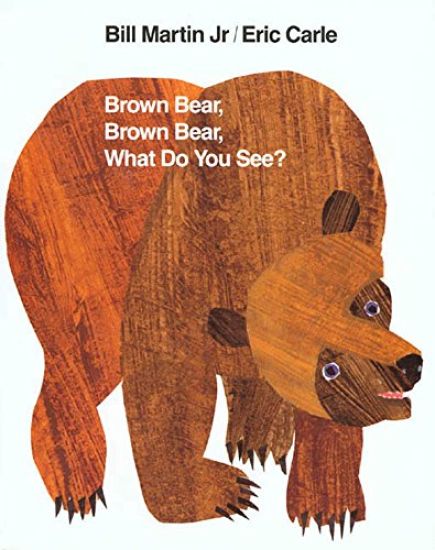
Bill Martin Jr. and Eric Carle are two of the most respected names in children's education and children's illustrations. This collaboration, Polar Bear, Polar Bear, What Do You Hear?, their first since the classic Brown Bear, Brown Bear, What Do You See? (published decades ago and still a bestseller) shows two masters at their best. What will you hear when you read this book to a preschool child? Lots of noise Children will chant the rhythmic words. They'll make the sounds the animals make. And they'll pretend to be the zoo animals featured in the book-- look at the last page A Redbook Children's Picture Book Award winner The rollicking companion to Brown Bear, Brown Bear, What Do You See?
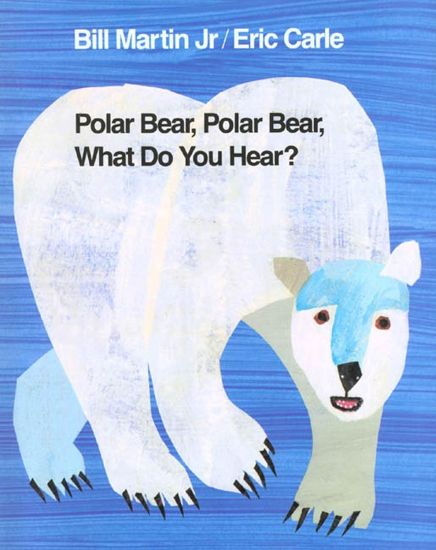
Polar Bear, Polar Bear, What Do You Hear?

Polar Bear, Polar Bear, What Do You Hear?

Bill Martin

Henry Holt Company
1991
sidottu
Bill Martin Jr. and Eric Carle are two of the most respected names in children's education and children's illustrations. This collaboration, Polar Bear, Polar Bear, What Do You Hear?, their first since the classic Brown Bear, Brown Bear, What Do You See? (published decades ago and still a bestseller) shows two masters at their best. What will you hear when you read this book to a preschool child? Lots of noise Children will chant the rhythmic words. They'll make the sounds the animals make. And they'll pretend to be the zoo animals featured in the book-- look at the last page A Redbook Children's Picture Book Award winner The rollicking companion to Brown Bear, Brown Bear, What Do You See?
Chicka Chicka Boom Boom

Chicka Chicka Boom Boom

Bill Martin; John Archambault

Simon Schuster Books for Young Readers
1989
sidottu
There is always enough room on your child's bookshelf for this rollicking alphabet chant that has been a children's favorite for over thirty years A told B, and B told C, "I'll meet you at the top of the coconut tree" In this lively alphabet rhyme, all the letters of the alphabet race each other up the coconut tree. Will there be enough room? Oh, no--Chicka Chicka Boom Boom Countless children--and their parents--can joyfully recite the familiar words of this beloved alphabet chant. Bill Martin, Jr., and John Archambault's rhythmic text keeps the beat with Caldecott Honor illustrator Lois Ehlert's bold, cheerful art. This winning combination has made the Chicka Chicka series an enduring classic.
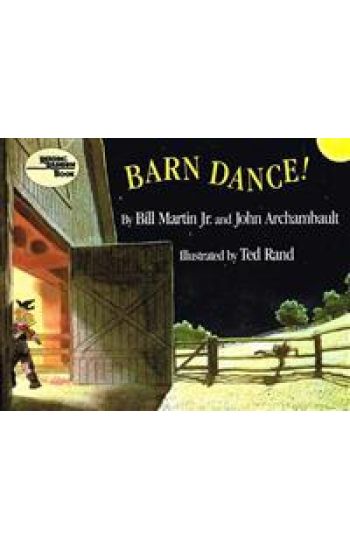
Barn Dance!

Barn Dance!

Bill Martin; John Archambault

Turtleback Books
1988
sidottu
A boy trying to sleep is lured downstairs by the sounds of dancing coming from the barn, only to find that there really is a certain magic to the night air