Kirjojen hintavertailu – 12 903 733 kirjaa ja 27 kauppaa
Kirjailija
Bill Porter
Kirjat ja teokset yhdessä paikassa: 19 kirjaa, julkaisuja vuosilta 2008–2026, suosituimpiin kuuluu Historic RCA Studio B. Vertaile teosten hintoja ja tarkista saatavuus suomalaisista kirjakaupoista.
Opened in 1957, RCA’s historic Nashville recording studio, known as Studio B, is a musical landmark like few others. Its reputation was built by some of the most important producers and artists in country and pop music. During its heyday, from 1957 to 1977, approximately 18,000 sessions were recorded within the studio’s walls, including more than 200 songs by Elvis Presley. The studio’s opening marked a milestone in Nashville’s development as a music center, and those many hits spread Nashville’s reputation as Music City worldwide. Generously illustrated with more than 200 rare photos from the Country Music Hall of Fame and Museum’s archives, this book traces the full story of RCA Studio B-from its beginnings to its continued use today as both working studio and tourist attraction.

Tom Copeland is the nation's leading expert on the business of family child care. The Family Child Care 2025 Tax Companion is a comprehensive tool that will help tax preparers understand the unique rules that affect family child care businesses. Using this resource will increase your confidence in the tax professional who prepares your return, help you identify potential errors before your taxes are filed, and ensure that your tax preparer is claiming all allowable deductions. Once you fill out the worksheets in this book, give it to your tax professional to use as a guide as your tax forms are completed. This will help you ensure your business expenses are properly deducted.
Tom Copeland is the nation's leading expert on the business of family child care. As tax season approaches each year, thousands of family child care providers save time and money using the Tax Workbook and Organizers. The most comprehensive resource available, this book contains up-to-date guidance so family child care providers can accurately complete their own tax returns and take advantage of all the business deductions they are entitled to claim.
Family child care providers can feel confident in their tax preparer with the help of this perennial resource. The Family Child Care 2024 Tax Companion is a comprehensive tool that helps tax preparers understand the unique rules that affect family child care businesses. Using this resource will increase your confidence in the tax professional who prepares your return, help you identify potential errors before your taxes are filed, and ensure that your tax preparer is claiming all allowable deductions. Once you fill out the worksheets in this book, give them to your tax professional to use as a guide as your tax forms are completed. This will help you ensure your business expenses are properly deducted.
Family child care providers filing their own taxes save time and money at tax season with this essential perennial resource. As tax season approaches each year, thousands of family child care providers save time and money using the Workbook and Organizers. The most comprehensive resource available, this book contains up-to-date guidance so family child care providers can accurately complete their own tax returns and take advantage of all the business deductions they are entitled to claim. The authors attend IRS seminars so you don't have to
Student-led peer review can be a powerful learning experience for both giver and receiver, developing evaluative judgment, critical thinking, and collaborative skills that are highly transferable across disciplines and professions. Its success depends on purposeful planning and scaffolding to promote student ownership of the process. With intentional and consistent implementation, peer review can engage students in course content and promote deep learning, while also increasing the efficiency and effectiveness of faculty assessment. Based on the authors’ extensive experience and research, this book provides a practical introduction to the key principles, steps, and strategies to implement student peer review – sometimes referred to as “peer critique” or “workshopping”. It addresses common challenges that faculty and students encounter. The authors offer an easy-to-follow and rigorously tested three-part protocol to use before, during, and after a peer review session, and advice on adapting each step to individual courses. The process is applicable across all disciplines, content types, and modalities, face-to-face and online, synchronous and asynchronous. Instructors can guide students in peer review in one course, across two or more courses that are team-taught, or across programs or curriculums. When instructors, students, and university stakeholders create a culture of peer review, it enhances learning benefits for students and allows faculty to share pedagogical resources. Student peer review is a high-impact pedagogy that’s easily implemented, inculcates lifelong learning skills in students, and relieves the assessment burden on faculty as students collaborate to improve their own work.
Chinese civilization first developed 5,000 years ago in North China along the middle and lower reaches of the Yellow River. And the Yellow River remained the center of Chinese civilization for the next 4,000 years. Then a thousand years ago, this changed. A thousand years ago, the center of Chinese civilization moved to the Yangtze. And the Yangtze, not the Yellow River, has remained the center of its civilization. A thousand years ago, the Chinese came up with a name for this new center of its civilization. They called it Chiangnan, meaning "South of the River," the river in question, of course, being the Yangtze. The Chinese still call this region Chiangnan. Nowadays it includes the northern parts of Chekiang and Kiangsi provinces and the southern parts of Anhui and Kiangsu. And some would even add the northern part of Hunan. But it's not just a region on the map. It's a region in the Chinese spirit. It's hard to put it into words. Ask a dozen Chinese what  Chiangnan" means, and they'll give you a dozen different answers. For some the word conjures forests of pine and bamboo. For others, they envision hillsides of tea, or terraces of rice, or lakes of lotuses and fish. Or they might imagine Zen monasteries, or Taoist temples, or artfully-constructed gardens, or mist-shrouded peaks. Oddly enough, no one ever mentions the region's cities, which include some of the largest in the world. Somehow, whatever else it might mean to people, Chiangnan means a landscape, a landscape and a culture defined by mist, a landscape and a culture that lacks the harder edges of the arid North. In the Fall of 1991, Bill Porter decided to travel through this vaporous land, following the old post roads that still connected its administrative centers and scenic wonders, its most famous hometowns and graves, its factories and breweries, its dreamlike memories and its mist, and he was joined on this journey by his poet and photographer friends, Finn Wilcox and Steve Johnson. South of the Yangtze is a record in words and black and white images of their trip.
To travel upon the Silk Road is to travel through history. Millennia older than California's Camino Real, and perhaps even a few years senior to the roads of the Roman Empire, the Silk Road is a network of routes stretching from delta towns of China all the way to the Mediterranean Sea  a cultural highway considered to be essential to the development of some of the world's oldest civilizations. It was upon this road that that Chinese silk traveled and was exchanged for incense, precious stones, and gold from India, the Middle East and as far the Mediterranean, contributing to the great tradition of commercial and idea exchange along the way. In the fall of 1992, celebrated translator, writer, and scholar Bill Porter left his home in Hong Kong and decided to travel from China to Pakistan by way of this famous and often treacherous Silk Road. Equipped with a plastic bottle of whiskey, needle-nose pliers, and the companionship of an old friend, Porter embarks upon the journey on the anniversary of Hong Kong's liberation from the Japanese after World War II and concludes in Islamabad, the capital of Pakistan, at the end of the monsoon season. Weaving witty travel anecdotes with the history and fantastical mythology of China and the surrounding regions, Porter exposes a world of card-sharks, unheard-of ethnic minorities, terracotta soldiers, nuclear experiments in the desert, emperors falling in love with bathing maidens, monks with miracle tongues, and a giant Buddha relaxing to music played by an invisible band. The Silk Road is the second of a three-book memoir series about Porter's travels in and around China to be published by Counterpoint. With an eye for cultural idiosyncrasies and a vast knowledge of history, Porter continues to make with his mark as an expert and travel writer.
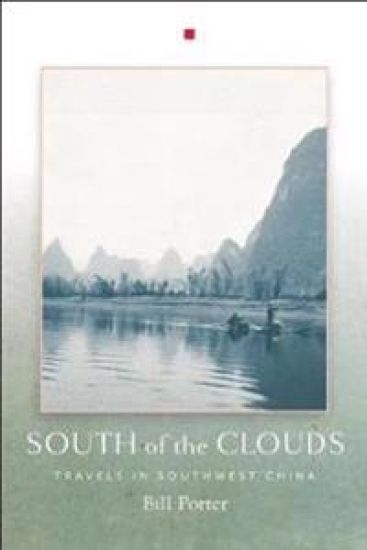
While flipping through the atlas of Chang Ch'i-yun, one of China's most famous geographers, distinguished translator Bill Porter (Red Pine) developed a curiosity about the southwestern province of China. Dubbed Yun-nan, Â South of the Clouds," this was the last area modern China to come under Chinese control. Originally conquered by the Mongols and eventually introduced to foreigners as a vibrant setting for trade, Yun-nan became a critical crossroad connecting East and West. In 1992, Porter left his home in Hong Kong to tour the small towns and major cities of Yun-nan, studying each of their local cultures and larger impacts on the trajectory of Chinese history. Here, he shares his encyclopedic knowledge of the nation's beautiful legacy while introducing new insight about the province's landscapes, people, and recent state of affairs. He visited Bulang Mountain, where the local people had no written language of their own, so they sent their children to live as monks in nearby Tai temples to learn Tai script. He saw women in Lijiang who wore traditional sheepskin jackets that bore seven frogeyes without clear explanation. In Dali, a small town turned urban center, he recalls a massive museum built to show off the city's new wealth, only to have half of its halls left empty and unvisited. The first of a series of three China travel memoirs to be published by Counterpoint, Bill Porter's book tells the incredible story of a spread of land with a thousand years of human history. His remarkable insight and unparalleled understanding of China place this book at the forefront of East Asian travel literature.
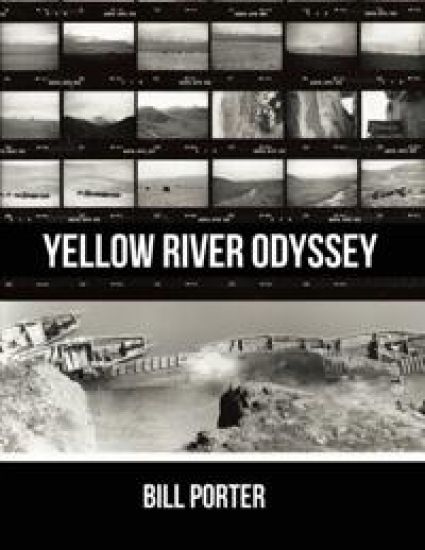
Bill Porter follows the Yellow River, the world's sixth longest river, from its mouth to its source high in the Tibetan Plateau, a journey of more than three thousand miles through nine Chinese provinces. The trip takes the master translator into what was once the cradle of Chinese civilization and to the hometowns and graves of key historical figures such as Confucius, Mencius, Lao-tzu, and Chuang-tzu. Porter's depth of knowledge of Chinese history and culture is unparalleled. Yellow River Odyssey, already a bestseller in China, reveals a complex, fascinating, contradictory country. Porter masterfully digs beneath China's present-day materialism and the deep wounds of the Cultural Revolution to get at the roots of Chinese culture. And he does so with an ever-present wit and a keen eye for the telling detail. The book also includes more than fifty black-and-white photographs taken by Porter during his travels. Bill Porter is an award-winning author and translator also known by his pen name, Red Pine. He is considered one of the foremost translators of Chinese texts, especially Buddhist and Taoist poetry and sutras. His translation work includes major Buddhist texts such as The Platform Sutra, The Diamond Sutra, and The Heart Sutra as well as the best-selling poetry collections Taoteching and Collected Songs of Cold Mountain. He is also the author of Zen Baggage and Road to Heaven: Encounters with Chinese Hermits. Porter lives in Port Townsend, Washington.
My name is Delinda Rodgers, the mother of the little girl, Lacey Rodgers, who will be the subject of this story. I'm writing this book, because I feel like the Lord wants me to tell about the marvelous things He was willing to do for our family, during the time that our daughter Lacey, was sick with leukemia, took her chemo, and recovered from the cancer that came into her life, like it does to so many other wonderful children. I feel like God would want me to share this with other families that are, and might be going through what we went through during this very difficult time. I know in my heart, God lead us to this cross for a purpose, and that purpose was to get my husband Greg, and myself, closer to Him, and to teach us to depend on Him, for all things. When God leads us to our cross, and when He leads you to your cross, no matter how big or how small that cross may be, I can assure you, it will be; "The Perfect Cross". I do hope you enjoy reading this book as much as I enjoyed writing it.
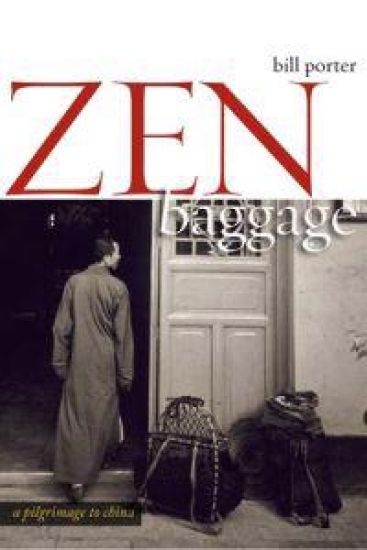
In the spring of 2006, Bill Porter traveled through the heart of China, from Beijing to Hong Kong, on a pilgrimage to sites associated with the first six patriarchs of Zen. In "Zen Baggage," Porter takes readers to places few Westerners have ever ventured, weaving together historical background, interviews, and translations of the earliest known records of Zen along with personal vignettes into a fascinating tale of discovery. Porter's account captures the transformations taking place at religious centers in China but also the legacy they have somehow managed to preserve. Porter brings wisdom and humor to every situation, whether visiting ancient caves containing the most complete collection of Buddhist texts ever uncovered, enduring a six-hour Buddhist ceremony, or meeting the abbess of China's first Zen nunnery. Porter's "Road to Heaven: Encounters with Hermits" has become recommended reading at Zen centers and universities throughout America and even in China (in its Chinese translation), and "Zen Baggage" is sure to follow suit.
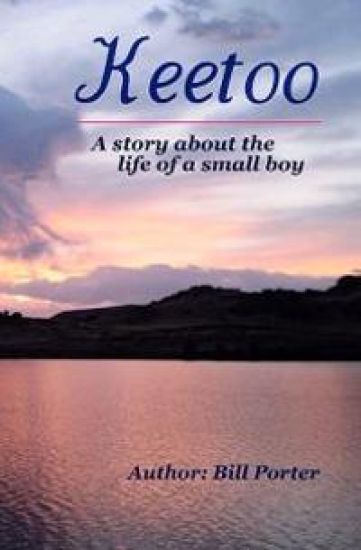
The story line of this book, is to bring about the picture in our mind of the river of life. Very early in our lifes, difficulties face us that take great courage and determination in order that we may succeed, so then the final outcome can be successful. We must learn very early on, to listen and remember the words of those that are wise, that have gone through the storms of life. Then we should try very hard to pass on these lessons of getting through the storms, with the least amount of difficulties. We must learn to whisper to ourselves, over and over again, these words of wisdom we have heard, and to remind ourselves, to remember these things. This will be a constant help, as we face the tasks that we will surely encounter on our journey. Also very early on, we will suffer the lose of things that are dear to us, things and people that we feel sure we just cannot do without. We will also fall off of some of the cliffs that we walk too close to, and then learn to grab hold of anything that can save us. If we are careful to remember the stories that have been told to us by them that are older and wiser, seasoned in the journey, we will find our way through the maze. We must then, ultimately find the source of all our strength, clinging to those that seemingly come into our lives, often times without any effort from us, as we just stumble into them and find that for some reason, they were placed in our path, to save us. Finally in our seeking we come to understand what the plan is, that truly there is a God, and we are able to see what He has placed us here to accomplish, while we are here in this world. We should then be able to come to the right understanding of Him, and learn to trust what He says and to follow the lead of His teachers and His teachings, so that ultimately in the end, we find ourselves also, who we are, and what our intended purpose was. And, in the final days of our journey, if we do these things, very often the Father of us all, might be able to turn over the great responsibilities of guiding the ship ourselves as we have learned from those before us, and bring about the successes of life to many others. Now, I hope you like the story of KEETOO.
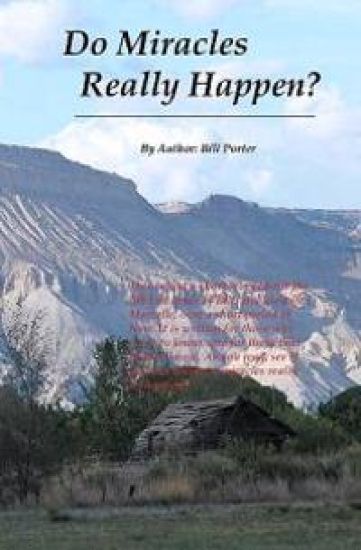
Do Miracle's Really Happen, is a story about some life changing events that happened in the life's of the Author, and his wife, during a period of several years. It also tells of some things that God brought about, that are without question, things that just couldn't happen without the working of an Almighty Power. Not magic, but power that comes from unwavering faith in God, and trusting in Him to do what just seemed, could not be done. It speaks of a Miracle Peach Crop, that happened in Colorado, where an old dilapidated orchard brought forth more peaches than one could imagine, when all the other orchards of the area were bare, because of a late freeze. The appearance of a buyer, out of nowhere, when there were no buyers, and the miracle of a man from nowhere that made it all come together. It also tells of many things that happened, which will stimulate your faith, and perhaps, make you want to again, trust in the Almighty God. Hope you like these stories, The Author: Bill Porter