Kirjojen hintavertailu – 12 903 735 kirjaa ja 27 kauppaa
Kirjailija
Bill Sanders
Kirjat ja teokset yhdessä paikassa: 5 kirjaa, julkaisuja vuosilta 2005–2021, suosituimpiin kuuluu Youth Crime and Youth Culture in the Inner City. Vertaile teosten hintoja ja tarkista saatavuus suomalaisista kirjakaupoista.
Negotiation is stuck. It's time for something new. Almost everything is negotiable. Almost every interaction is a negotiation. And in no field is this clearer than in business, where every day we work with others to get things done. But when we have real differences, is win-win always possible? Or must every negotiation be a zero-sum battle, with a winner and a loser? Over the last half century, two opposing philosophies have ruled the field of negotiation: the win-lose, tooth-and-nail approach of training guru Chester Karrass; and the win-win, "principled" creed of Getting to Yes, developed by Roger Fisher and William Ury. But neither approach fully meets the challenge of today's volatile, disruptive, ultracompetitive business environment, where strategic problem-solving is of critical importance. In Creative Conflict, negotiation experts Bill Sanders and Frank Mobus provide something new. They use a dynamic, dialectical approach to show how negotiations are driven by competition and cooperation at the same time. Counterintuitively, they reveal that conflict lies at the heart of more profitable agreements. They believe that when we tiptoe around conflict, we negotiate in a half-hearted way that limits our results. By contrast, creative negotiators probe and push until they hit a wall of disagreement, and then they figure out how to get past it. The authors construct a clear and useful framework based on three distinct negotiating contexts: Bargaining, Creative Dealmaking, and Relationship Building. They instruct readers on how to skillfully pursue their fair share while simultaneously seeking ways to expand a deal's scope and value for both sides.
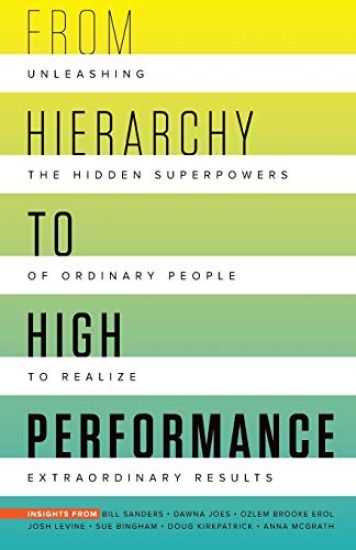
Forward-thinking leaders are developing new, successful models of self-management, attracting the energies and visions of a young and modern workforce who rightfully demand autonomy and flexibility. Driven by passion and purpose as a driver of profit, they delight their customers, from stockholders to stakeholders. From Hierarchy to High Performance shares the secrets for companies that want to restore people to their rightful place as leaders who are poised and eager to make a difference at work and in the world. Great Work Cultures is a consortium of business professionals dedicated to unleashing the power within human organizations. We prioritize collaboration over control, human experience over bureaucratic rules, and networks over hierarchies.
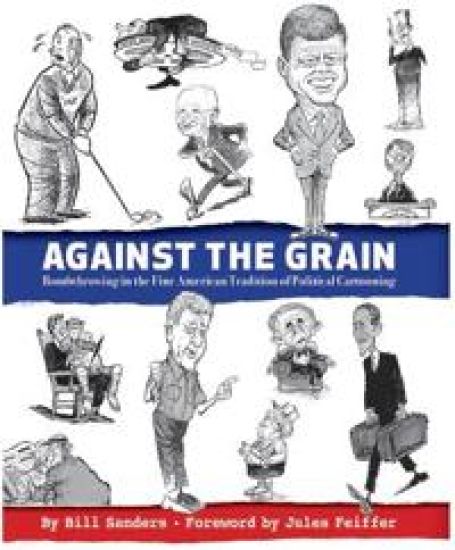
Editorial cartoonists are an endangered species, and even in their heyday they were rare birds—at the top ranks of print journalism, only a few hundred such jobs existed worldwide in the 20th century. Yet those who wielded the drawing pen had enormous influence and popularity as they caricatured news events and newsmakers into "ink-drenched bombshells" that often said more than the accompanying news stories. Bill Sanders, working in a liberal tradition that stretches back to Thomas Nast and in more recent times includes Herblock, Oliphant, Feiffer, and Trudeau, began his career in the Eisenhower era and is still drawing in the age of Trump. In Against the Grain, he shares the upbringing and experiences that prepared him to inflict his opinions on the readers of the three major newspapers he worked for, the 100-plus papers he was syndicated in, and now, an internet channel. Sanders's memoir is both personal and political. He reveals his small-town Southern roots, his athletic exploits and military service, his courtship and enduring marriage, and his life-long passion for music. These threads are woven into his main narrative, explaining how a cartoonist works and why: "The cartoon should be a vehicle for opinion and it should be polemical in nature—otherwise, it is a waste of time." Along the way he shares vignettes about people he encountered and events he witnessed, illustrated here with a few photos and scores of the cartoons he produced to meet daily newspaper deadlines. He notes that while a cartoon is a simple communication, it is based on reading and research, and only then comes the drawing. Finally, there is this:"While there may be—to varying degrees—two sides to some issues, don't bother looking for that posture on the following pages." While political cartoonist Bill Sanders’s book may be a memoir, it is primarily a chronicle of his brushes with history during the era that stretched from the presidency of John Kennedy to that of Barack Obama—and of his good fortune to have had personal contact with some of the major actors on the political and social stage. After briefly telling of his roots in Tennessee, Florida, and Kentucky and how he became a cartoonist, Sanders leads the reader on a guided tour—illustrated with photos and his cartoons—through the headlines of the last half of the 20th century and the beginning of the 21st. Following World War Two, the “between” generation entered the young adult world of the early 1950s. It was a time of panty raids, Levittown, Dixieland jazz, early rock and roll, and television’s coming of age. It was a time when “war” morphed into “conflicts” and Korea took some from this transitional generation to their graves, calling into question the United States’ role as a global power. As the era unfolded, the cold war and civil rights challenged Presidents Kennedy and Lyndon Johnson. Meanwhile, extremism found regional traction in the John Birch Society, the Minute Men, the bombast of Southern demagogues, and Barry Goldwater’s campaign. LBJ redeemed the national pledge on civil rights but was diverted into the swamp of Vietnam’s civil war where his political career perished. Richard Nixon then rose like Lazarus and eventually truncated the Vietnam War, but his personal demons led to the corruption of Watergate. Bookended by the Jimmy Carter and George Bush I interludes, the carefully constructed myth of Ronald Reagan closed the door to progressive taxation, caged the regulatory watchdogs, and flowed massive wealth to the 1%. Stained by Monicagate and hindered by the Blue Dogs, Bill Clinton did not reverse this course. Then came the age of preemptive war and torture after the Supreme Court elected George Bush II by a 5–4 vote. Dubya and his fellow neocon draft dodgers—aided by a new age of partisan TV pundits and internet bloggers and an arthritic print media—lied and deceived the American public into an unjustified war of aggression. On the other hand, a new era began with the election of Barack Obama, the hijacking of the Republican Party by a coalition of rich white men and Tea Party fanatics, and the Supreme Court’s awarding of “personhood.” All in all, the era has been a cartoonist’s feast.
Youth Crime and Youth Culture in the Inner City offers an interpretive account of juvenile delinquency within the modern inner city, an environment which is characterized by a long history of social deprivation and high rates of crime. A wide range of topics are explored, such as young people's motivation for, frequency of, and attitudes towards, a variety of illegal behaviors, such as street robbery, burglary, theft, drug use, drug selling and violence. Why do young people commit these offences? Who do they commit them against? How do they feel afterwards? This book attempts to answer these important theoretical questions, utilizing ethnographic research collected over a seven year period and based around the London inner city borough of Lambeth.
Youth Crime and Youth Culture in the Inner City offers an interpretive account of juvenile delinquency within the modern inner city, an environment which is characterized by a long history of social deprivation and high rates of crime. A wide range of topics are explored, such as young people's motivation for, frequency of, and attitudes towards, a variety of illegal behaviors, such as street robbery, burglary, theft, drug use, drug selling and violence. Why do young people commit these offences? Who do they commit them against? How do they feel afterwards? This book attempts to answer these important theoretical questions, utilizing ethnographic research collected over a seven year period and based around the London inner city borough of Lambeth.