Kirjojen hintavertailu – 12 903 735 kirjaa ja 27 kauppaa

Kirjailija

Bill Tammeus

Kirjat ja teokset yhdessä paikassa: 8 kirjaa, julkaisuja vuosilta 2009–2021, suosituimpiin kuuluu They Were Just People. Vertaile teosten hintoja ja tarkista saatavuus suomalaisista kirjakaupoista.

8 kirjaa

Kirjojen julkaisuvuodet: 2009–2021.

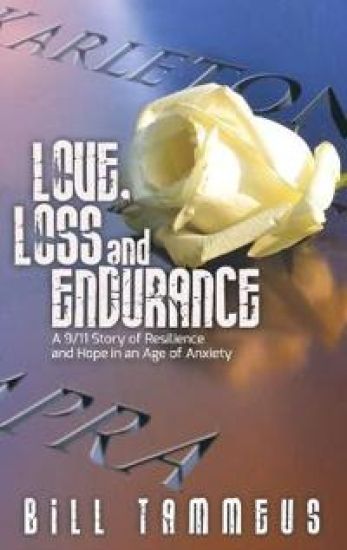
Love, Loss and Endurance

Love, Loss and Endurance

Bill Tammeus; Adam Hamilton; Mindy Corporon

Front Edge Publishing, LLC
2021
sidottu
Two decades after the terrorist attacks on 9/11, America still is reeling from lingering trauma. Award-winning journalist Bill Tammeus was among those who suffered the personal loss of a relative that day. In this inspiring and hopeful book, Tammeus takes us to the heart of that gripping drama. He helps us to understand the many sources of religious extremism -- and what can be done to stop it. Finally, he invites us to reclaim core values that can help all of us become peacemakers in today's tumultuous world." The people who perished on 9/11 -- whether as airline passengers, first responders, office workers or others who simply were in the wrong place when catastrophe struck -- must be remembered and their legacies honored. One way that can happen is by each of us committing ourselves to being thoughtful, loving people who can help lead others away from violent extremism rooted in misguided theology. To make that commitment, start by reading this book. Then share it with others," writes best-selling author and pastor Adam Hamilton, whose Kansas City-based church has become the nation's largest United Methodist congregation. In the Foreword that introduces readers to this powerfully transformative book, Hamilton explains, "The loss of Bill's beloved nephew, who was just 31 years old at the time, sent waves of trauma through his family. It's painful to read his account of that, but because this is a story of resilience and hope, readers will come away not with a smothering sense of despair but, rather, with an understanding that even in the bleakest of times there is something real and generative, something divine, on which they can depend. We Christians are all about hope. But so are many other faith traditions, and Bill, who has worked on behalf of interfaith understanding and dialogue for decades, understands that and encourages all of us -- no matter what religion we claim as our own -- to seek peace and reconciliation and to oppose approaches to religion that lead vulnerable young men and women to murder in the name of God." In her Afterword to the book, peacemaker and community consultant Mindy Corporon puts it simply: "This book raises many questions about how humans choose to live either in healthy, generative ways or, by contrast, to murder others while, at the same time, losing their own lives. Such profound questions form the landscape of this book and they touch each of us because they are questions we cannot ignore. Bill's memoir teaches us that the depth of evil can and must be overshadowed with an even deeper love of one another and of life itself." Tammeus echoes that message in his conclusion: "Although I am familiar with the story of failure and evil in human history, my faith urges me not to let that overwhelm me but to keep hope alive -- and to do that by encouraging myself and others to live healthy, generous, redemptive lives. So I try. I try but fail regularly. And I hope you will try, too, perhaps by engaging in some of the behaviors and approaches that I outline in this book about how to stand against radical religious nonsense that leads to violence."
Love, Loss and Endurance

Love, Loss and Endurance

Bill Tammeus; Adam Hamilton; Mindy Corporon

Front Edge Publishing, LLC
2021
pokkari
Two decades after the terrorist attacks on 9/11, America still is reeling from lingering trauma. Award-winning journalist Bill Tammeus was among those who suffered the personal loss of a relative that day. In this inspiring and hopeful book, Tammeus takes us to the heart of that gripping drama. He helps us to understand the many sources of religious extremism -- and what can be done to stop it. Finally, he invites us to reclaim core values that can help all of us become peacemakers in today's tumultuous world." The people who perished on 9/11 -- whether as airline passengers, first responders, office workers or others who simply were in the wrong place when catastrophe struck -- must be remembered and their legacies honored. One way that can happen is by each of us committing ourselves to being thoughtful, loving people who can help lead others away from violent extremism rooted in misguided theology. To make that commitment, start by reading this book. Then share it with others," writes best-selling author and pastor Adam Hamilton, whose Kansas City-based church has become the nation's largest United Methodist congregation. In the Foreword that introduces readers to this powerfully transformative book, Hamilton explains, "The loss of Bill's beloved nephew, who was just 31 years old at the time, sent waves of trauma through his family. It's painful to read his account of that, but because this is a story of resilience and hope, readers will come away not with a smothering sense of despair but, rather, with an understanding that even in the bleakest of times there is something real and generative, something divine, on which they can depend. We Christians are all about hope. But so are many other faith traditions, and Bill, who has worked on behalf of interfaith understanding and dialogue for decades, understands that and encourages all of us -- no matter what religion we claim as our own -- to seek peace and reconciliation and to oppose approaches to religion that lead vulnerable young men and women to murder in the name of God." In her Afterword to the book, peacemaker and community consultant Mindy Corporon puts it simply: "This book raises many questions about how humans choose to live either in healthy, generative ways or, by contrast, to murder others while, at the same time, losing their own lives. Such profound questions form the landscape of this book and they touch each of us because they are questions we cannot ignore. Bill's memoir teaches us that the depth of evil can and must be overshadowed with an even deeper love of one another and of life itself." Tammeus echoes that message in his conclusion: "Although I am familiar with the story of failure and evil in human history, my faith urges me not to let that overwhelm me but to keep hope alive -- and to do that by encouraging myself and others to live healthy, generous, redemptive lives. So I try. I try but fail regularly. And I hope you will try, too, perhaps by engaging in some of the behaviors and approaches that I outline in this book about how to stand against radical religious nonsense that leads to violence."
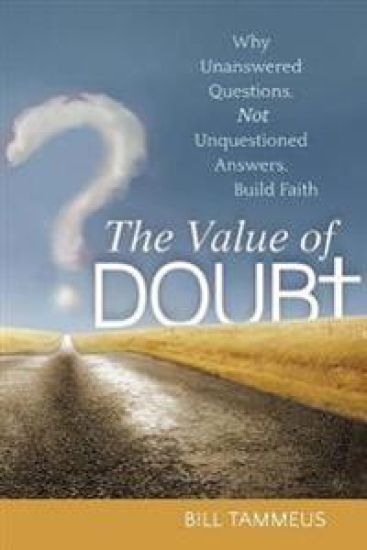
The Value of Doubt

The Value of Doubt

Bill Tammeus

Jewish Lights Publishing
2016
sidottu
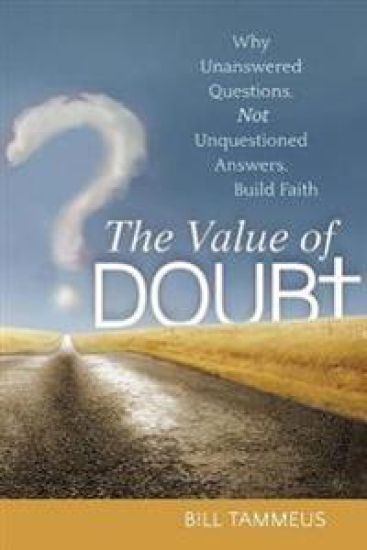
An invitation not to a faith certain of everything but, rather, to a faith that welcomes the discomforting questions. Religious zealotry plagues the world. It drives susceptible people to believe they have all the truth, all the wisdom, all the divine favor. And in some cases it even moves them to murder people who, they have concluded, are enemies of God. In The Value of Doubt, veteran journalist Bill Tammeus draws deeply on his own Protestant experience of doubt and faith and, in a series of reflections, contends that the road to a rich, dynamic, healthy faith inevitably must run through the valley of the shadow of doubt. The opposite of faith, he says, is not doubt; rather, the opposite of faith is false certitude. Tammeus argues in favor of recognizing our mortality, of adopting the Benedictine virtue of humility and of realizing that we live by metaphor, by allegory, by myth. It's the willingness to question, to reconsider, to be comfortable with ambiguity and paradox that will save faith from the hands of those who seem to know all the answers before they ever hear the questions. This lively and challenging look at the religious life is for anyone seeking to build and enrich an authentic faith and courageous enough to see doubt as an essential part of it.
The Value of Doubt

The Value of Doubt

Bill Tammeus

Skylight Paths Publishing
2016
pokkari
An invitation not to a faith certain of everything but, rather, to a faith that welcomes the discomforting questions. Religious zealotry plagues the world. It drives susceptible people to believe they have all the truth, all the wisdom, all the divine favor. And in some cases it even moves them to murder people who, they have concluded, are enemies of God. In The Value of Doubt, veteran journalist Bill Tammeus draws deeply on his own Protestant experience of doubt and faith and, in a series of reflections, contends that the road to a rich, dynamic, healthy faith inevitably must run through the valley of the shadow of doubt. The opposite of faith, he says, is not doubt; rather, the opposite of faith is false certitude. Tammeus argues in favor of recognizing our mortality, of adopting the Benedictine virtue of humility and of realizing that we live by metaphor, by allegory, by myth. It's the willingness to question, to reconsider, to be comfortable with ambiguity and paradox that will save faith from the hands of those who seem to know all the answers before they ever hear the questions. This lively and challenging look at the religious life is for anyone seeking to build and enrich an authentic faith and courageous enough to see doubt as an essential part of it.
Jesus, Pope Francis, and a Protestant Walk into a Bar

Jesus, Pope Francis, and a Protestant Walk into a Bar

Paul Rock; Bill Tammeus

Westminster/John Knox Press,U.S.
2015
nidottu
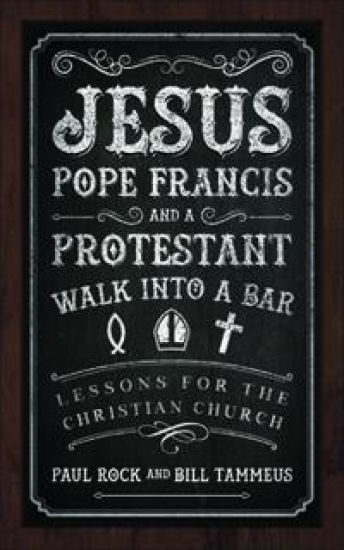
Pope Francis has taken the world by storm, captivating Catholics, Protestants, and non-Christians alike. Sneaking out of the Vatican at night, washing the feet of inmates, and taking selfies with young fans is certainly unlike any religious leader we've seen in a while, and some of the religious establishment is uneasy about it. The revitalization Francis is bringing to the Catholic Church is not without precedent, however. Jesus had a similar effect in his day, drawing crowds with his humility, kindness, and wisdomâ€"even as he drew the disapproval of established religious leaders. The things that have brought Francis such media attention are the same things that made Jesus so peculiar and attractive in his day. Thoughtful examination of Jesus' example and legacy, as well as an honest look at the similarities and differences between Catholic and Protestant faith, invites reflection on the heart of Christianity and how we relate to our fellow Christians. Readers will discover the power of heartfelt joy, radical love, and passion for justice to shake people out of religious complacency and into dynamic, contagious faith. Jesus, Pope Francis, and a Protestant Walk into a Bar looks at what is universal among Christians, what is unique to Catholics and Protestants, and how all Christians can practice understanding and cooperation across differences. Perfect for individual or group use, discussion questions are also included to encourage further thought and conversation.
They Were Just People

They Were Just People

Bill Tammeus; Jacques Cukierkorn

University of Missouri Press
2009
sidottu
Hitler's attempt to murder all of Europe's Jews almost succeeded. One reason it fell short of its nefarious goal was the work of brave non-Jews who sheltered their fellow citizens. In most countries under German control, those who rescued Jews risked imprisonment and death. In Poland, home to more Jews than any other country at the start of World War II and location of six German-built death camps, the punishment was immediate execution. This book tells the stories of Polish Holocaust survivors and their rescuers. The authors traveled extensively in the United States and Poland to interview some of the few remaining participants before their generation is gone. Tammeus and Cukierkorn unfold many stories that have never before been made public: gripping narratives of Jews who survived against all odds and courageous non-Jews who risked their own lives to provide shelter. These are harrowing accounts of survival and bravery. Maria Devinki lived for more than two years under the floors of barns. Felix Zandman sought refuge from Anna Puchalska for a night, but she pledged to hide him for the whole war if necessary - and eventually hid several Jews for seventeen months in a pit dug beneath her house. Through some twenty stories like these, Tammeus and Cukierkorn show that even in an atmosphere of unimaginable malevolence, individuals can decide to act in civilized ways. Some rescuers had antisemitic feelings but acted because they knew and liked individual Jews. In many cases, the rescuers were simply helping friends or business associates. The accounts include the perspectives of men and women, city and rural residents, clergy and laypersons - even children who witnessed their parents' efforts. These stories show that assistance from non-Jews was crucial, but also that Jews needed ingenuity, sometimes money, and most often what some survivors called simple good luck. Sixty years later, they invite each of us to ask what we might do today if we were at risk - or were asked to risk our lives to save others.
They Were Just People

They Were Just People

Bill Tammeus; Jacques Cukierkorn

University of Missouri Press
2009
nidottu
Hitler's attempt to murder all of Europe's Jews almost succeeded. One reason it fell short of its nefarious goal was the work of brave non-Jews who sheltered their fellow citizens. In most countries under German control, those who rescued Jews risked imprisonment and death. In Poland, home to more Jews than any other country at the start of World War II and location of six German-built death camps, the punishment was immediate execution. This book tells the stories of Polish Holocaust survivors and their rescuers. The authors traveled extensively in the United States and Poland to interview some of the few remaining participants before their generation is gone. Tammeus and Cukierkorn unfold many stories that have never before been made public: gripping narratives of Jews who survived against all odds and courageous non-Jews who risked their own lives to provide shelter. These are harrowing accounts of survival and bravery. Maria Devinki lived for more than two years under the floors of barns. Felix Zandman sought refuge from Anna Puchalska for a night, but she pledged to hide him for the whole war if necessary - and eventually hid several Jews for seventeen months in a pit dug beneath her house. Through some twenty stories like these, Tammeus and Cukierkorn show that even in an atmosphere of unimaginable malevolence, individuals can decide to act in civilized ways. Some rescuers had antisemitic feelings but acted because they knew and liked individual Jews. In many cases, the rescuers were simply helping friends or business associates. The accounts include the perspectives of men and women, city and rural residents, clergy and laypersons - even children who witnessed their parents' efforts. These stories show that assistance from non-Jews was crucial, but also that Jews needed ingenuity, sometimes money, and most often what some survivors called simple good luck. Sixty years later, they invite each of us to ask what we might do today if we were at risk - or were asked to risk our lives to save others.