Kirjojen hintavertailu – 12 859 828 kirjaa ja 27 kauppaa
Kirjailija
Bill Wylie-Kellermann
Kirjat ja teokset yhdessä paikassa: 17 kirjaa, julkaisuja vuosilta 2004–2024, suosituimpiin kuuluu Instead of Death. Vertaile teosten hintoja ja tarkista saatavuus suomalaisista kirjakaupoista.
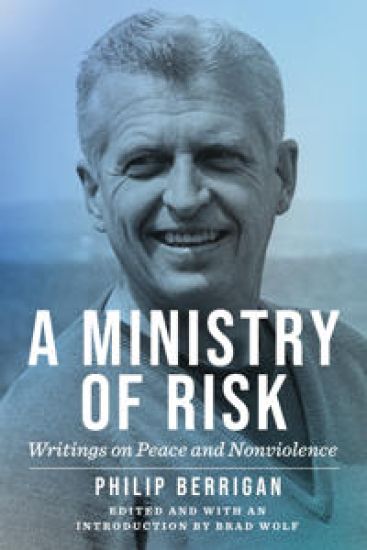
Experience the powerful legacy of Philip Berrigan's nonviolent resistance to war and empire From the battlefields of World War II to the front lines of peace activism, Philip Berrigan evolved from soldier to scholar, priest to political prisoner. Confronting the fundamental nature of America's military-focused culture, Berrigan took an unyielding stance against societal evils—war, systemic racism, unchecked materialism, and the baleful presence of nuclear weapons. Imprisoned by his government and ostracized by his Church, Berrigan's life is a courageous example of nonviolent resistance and liberation in the face of overwhelming odds. A Ministry of Risk is the definitive collection of Philip Berrigan's writings. Authorized by the Berrigan family and arranged chronologically, these writings depict the transformation of one revolutionary soul while also providing a firsthand account of a nation grappling with its martial obsessions. Threading the vibrant fabric of history with autobiographical insights, introspective theology, and a clarion call to activism, A Ministry of Risk offers both a living manifesto of nonviolent resistance and a journal of spiritual reflection by one of the 20th century's most prophetic voices.
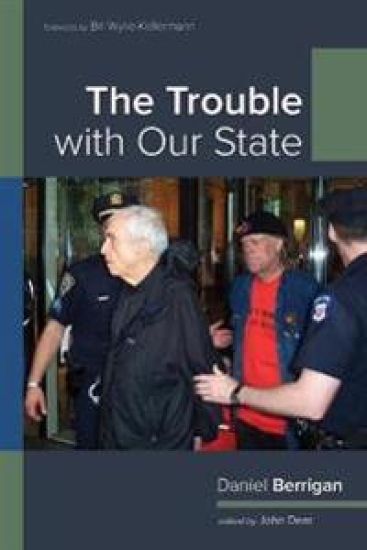
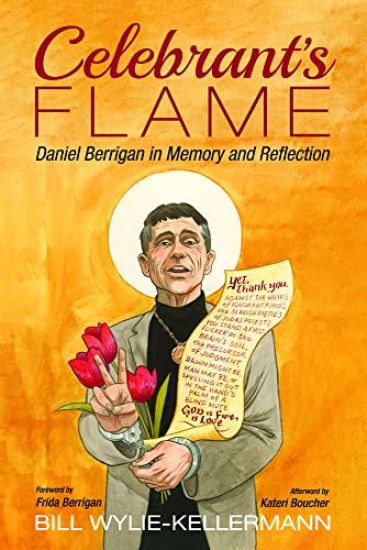
Daniel Berrigan (+2016+) is most notorious for dramatic anti-war actions at a Catonsville draft board and a Pennsylvania nuclear weapons plant in the '60s and '80s. Indeed, with friends, he was practically devising what's been called "liturgical direct action." Berrigan was also teacher, pastor, and friend to author Bill Wylie-Kellermann. Celebrant's Flame is a well-researched, but personal book, a debt of gratitude-in the end a tome of love to his mentor. Reflecting on aspects of Berrigan's person and work-from poet, prophet, prisoner, priest, and more, Wylie-Kellermann sketches this warm portrait of a figure whose impact on church and movement only deepens in the present moment. The book includes considerable material by Berrigan himself, some previously unpublished-a wedding homily, a long poem, a controversial speech, plus much in the way of personal letters, poetry, and memoir. Written with Berrigan's hundredth birthday in mind, these reflections help keep the flame of this beloved celebrant burning for the stunning new movement generation arising among us.
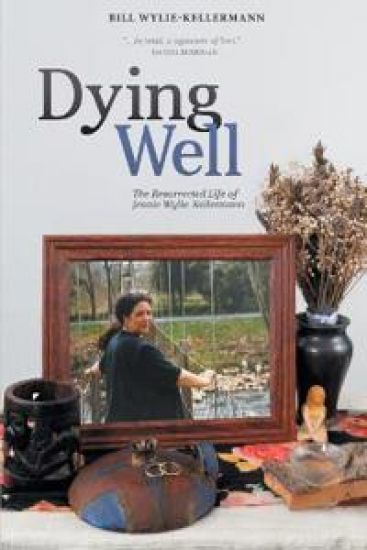
A loving memoir about the life, illness, death and resurrection freedom of Christian mother, writer and community activist Jeanie Wylie-Kellermann. The book's first half focuses on her inspiring life, including her activism, journalism and documentary filmmaking. The second half follows her glioblastoma brain cancer, when Jeanie chose a process of "dying well" involving family and community. Reviewers describe the book's mix of letters, poetry and stories as "flashes of raw beauty and abject brilliance." The theologian Walter Brueggemann writes, "Of course all of us are precious in God's sight. But some of 'all of us' stand out because of their freedom, their courage and their tenacity. We call them 'saints.' Jeanie Wylie-Kellermann was one such. She embodied gospel passion that led her beyond herself to a rich network of justice and restoration." The book was written by Jeanie's husband Bill Wylie-Kellermann, also a nationally known social-justice activist and writer--and her partner in many social justice causes over the years. A great summary of the book can be found in the first eight words Bill wrote: "This book is verily an event of community." That choice of "verily," which evokes memories stretching back to the age of Chaucer, was no accident. In these 425 pages, Bill begins by chronicling Jeanie's robust life and then he shares many equally inspiring stories about the seven-year progress from diagnosis of a glioblastoma until her death. In "verily" on that first page, Bill is signaling to readers that this book is as much about memory as it is about this couple's cutting-edge, social-justice activism. Early reviewers repeatedly praised Dying Well as a profound love story about the two writer-activists who led a tumultuous life at the barricades of many justice issues--and then shared in an equally inspiring quest for healing and eventually after many years a graceful death. Ultimately, though, this book expands into an invitation for readers to remember: Remember a real love story you've known of an impassioned couple who became impassioned parents. Remember the best of family life. And remember, when the arc of life is closing its path in this tangible world--remember how loving families used to care for the dying and also the mourners in the humble surroundings of home." As readers experience our story, many of them are going to remember things about their own families. In our collective memory, in our community memory, we all know a lot more about family life as it shapes the eventual process of death and dying than we realize," Bill Wylie-Kellermann said in an interview about his book." Talk to your relatives, especially the older people, and you'll find we're not that far removed from vigils for loved ones in parlors, back before the funeral industry took over most of this process from us. These family-based and community-based stories of caring for the dying, right up through the vigil and funeral--that's a memory only a generation or two removed from most of us. These memories are still in our bones. We still can come together as family and community in ways that once were so natural for us. This story isn't as much about pushing some new agenda about dying well as it is remembering the power of community and family that we can reclaim.""Reading these pages, the love will jump right off the page," writes their daughter, the writer-activist Lydia Wylie-Kellermann in her Foreword to the book. "I hope that within these pages, we all find a bit of your own story and a friend on the journey."
Bill Wylie-Kellermann is a Methodist pastor serving an Episcopal Church in Detroit, the cofounder of Word and World People's School, and faculty of the Seminary Consortium for Urban Pastoral Education (SCUPE) in Chicago).
Doing Justice introduces readers to congregation-based community organizing rooted in the day-to-day struggles and hopes of urban ministry. It draws from the author's decades-long career of personal experience in community organizing ministries. Illustrated with examples from the experience of community organizers, Doing Justice weaves theological and biblical warrants for community organizing into concrete strategies for achieving justice in the public arena. It offers sound treatment of fundamental organizing principles like power, self-interest, and agitation and suggests ways to build and sustain an organization, relate to media and corporations, and strengthen ministries and empower lay leaders. The second edition includes forewords by veteran pastor-activists Bill Wylie Kellermann and Grant Stevensen and a new preface that notes recent changes in organizing, describes needed new directions and connections, and discusses the significance of new movements such as Black Lives Matter. Also new is Stevensen's running "conversation" with Jacobsen, drawing readers into deeper engagement with organizing practices. Designed for use by congregations and church leaders as well as by ministerial students, Doing Justice will open new vistas for community action in support of the poor, the disadvantaged, and the disenfranchised of our society.
Seasons of Faith and Conscience challenges religious activists and the wider church with an answer to the question: What is the connection between faith and politics? ""Every act of worship,"" Kellermann says, ""every occasion where the sovereignty of the word of God is acknowledged, is always and everywhere expressly political."" In a profound biblical and theological reflection, Kellermann begins by investigating the political implications of worship and liturgy, both in the Hebrew Bible and in the New Testament. He goes on to review the history of ""confessional politics,"" those situations in which Christians have felt their historical situation to be so grave as to call into question the very identity of the church. Recent examples include the Confessing Church in Nazi Germany and the Kairos document from South Africa. Kellermann explores analogies in our own situation--the continuing arms buildup, the international debt system, and the ""war against the poor"" in the Third World. Seasons of Faith and Conscience concludes with a series of moving meditations on the key seasons and events of the liturgical calendar: Advent, Christmas, Epiphany, Lent, Easter, and Pentecost. ""Here is a book which reclaims the Christian faith in all of its stunning, radical beauty. . . . Of particular interest for pastors are the] sermons at the end of the book in which he articulates, in a clear, evocative, and thoroughly applicable way, this theology of radical discipleship."" --William H. Willimon, Bishop in the United Methodist Church, currently serving in North Alabama ""A daring piece of expose and a powerful invitation . . . a nervy affirmation that, in a world of brutalizing power and uncaring technology, human sacramental action can matter decisively."" --Walter Brueggemann, Columbia Theological Seminary, Emeritus ""An important and thought-provoking book. Anyone concerned with the vital issues of faith and action will find ample material here for fruitful reflection."" --Shelley M. Douglass, Mary's House Catholic Worker ""Quietly, and at high personal cost, a few people have been exploring new liturgical forms for engaging the Powers That Be. This book is the fruit of that effort: a delight to read, a theological feast and practical guide, a challenge to action."" --Walter Wink, Auburn Theological Seminary, Emeritus Bill Wylie Kellermann is a United Methodist pastor who has served city parishes in Detroit, Michigan, and is currently director of Graduate Theological Urban Studies for the Seminary Consortium for Urban Pastoral Education of Chicago, Illinois. A graduate of Union Theological Seminary in New York City, he is also a frequent contributor to Sojourners and other publications, often on topics framed biblically by ""the principalities and powers.""
Suspect Tenderness opens with a narrative concerning the capture of Daniel Berrigan, related in his continuing friendship and pastoral relationship with Stringfellow and co-author Anthony Towne. It continues with an examination of the ethical and theological implications of the Berrigan witness, in which middle-class American piety is asked to face the fact that Jesus was a criminal. Stringfellow insists that every state feels threatened by Christ's claim to a moral authority over death, and sees the community of resistance as a community of resurrection.
Spirituality, according to William Stringfellow, represents the ordinary experience of partaking in politics - the activity of the Word of God in judgment over all that belongs to human history. He criticizes religiosity, advocating instead for a biblical holiness that implies wholeness for all creation. He takes a prophetic and somber view of the present dark ages, characterized as they are by hypocrisy, profligate consumption, disregard for human life, and dependence on nuclear force. Speaking from a lifetime of experience and reflection, Stringfellow issues a call to conscience and sanity, a reaffirmation of the incarnation, and belief in the grace of the Word of God who transcends the injustice of the present age and agitates the resilience of those who struggle to expose and rebuke injustice.
From 'An Ethic for Christians and Other Aliens in a Strange Land' "America is a fallen nation. Americans exist in time, in the era biblically called the Fall. America is a demonic principality, or conglomeration of principalities and powers in which death furnishes the meaning, in which death is the reigning idol. Enshrined in multifarious forms and guises, it enslaves human beings, exacts human sacrifices, captures and captivates Presidents as well as intimidating and dehumanizing ordinary citizens." Strong statements, yes, but timely in the biblical context which forms William Stringfellow's perspective of our contemporary situation. Identifying America as a fallen nation with the parable of Babylon in the Book of Revelation - not with Jerusalem the holy nation, as Americans are naively and vainly wont to do - Dr. Stringfellow issues as trenchant an indictment of our society as has been made since Philip Wylie's 'Generation of Vipers'. Shockingly prophetic, dismaying, and sobering, William Stringfellow's rigorous biblical theology will surely offend the self-righteous. But the citizen of Jerusalem, alien in Babylon, will welcome the bluntness and insight with which he speaks.
The first edition of 'Instead of Death', a critique of both the institutions of the Church and the more secular but no less destructive institutions of the state, became a small classic. After its publication, Stringfellow's life was deeply affected by a serious illness, his work in East Harlen, and his efforts on behalf of the cause of women's ordination to the priesthood. Thus, although a substantial portion of the original text was unchanged, his experiences had given him added insights that were expressed in two new chapters: one on money and the struggle for security, the other on the politics of death and life. A long preface dealing with Stringfellow's motivations for writing this expanded version of 'Instead of Death' is also included.
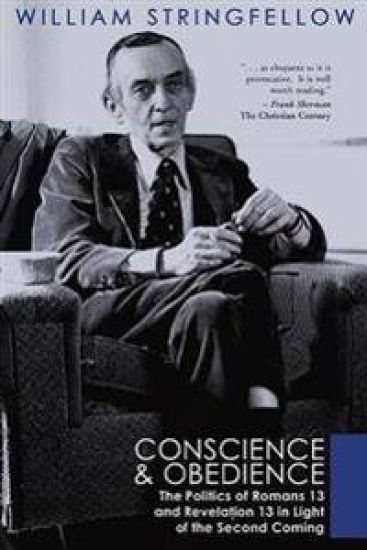
Is the Church truly above politics? Or is it all too often a gullible victim of the political arena? The theme of this prophetic work is that Christians must comprehend politics if they are to transcend politics. In 'Conscience and Obedience', William Stringfellow reviews the long history of the church's interpretations and misinterpretations of Scriptural texts relating to politics. The most notorious abuses have come, he says, in interpretations of Romans 13 and Revelation 13. Stringfellow declares that what is missing most is an understanding of eschatology that can stand against any political ideology, whether of the status quo or revolution. 'Conscience and Obedience' challenges the reader to examine the sources of our faith and our freedom.