Kirjojen hintavertailu – 12 859 818 kirjaa ja 27 kauppaa

Kirjailija

Billy Wilder

Kirjat ja teokset yhdessä paikassa: 7 kirjaa, julkaisuja vuosilta 1999–2022, suosituimpiin kuuluu Double Indemnity. Vertaile teosten hintoja ja tarkista saatavuus suomalaisista kirjakaupoista.

7 kirjaa

Kirjojen julkaisuvuodet: 1999–2022.

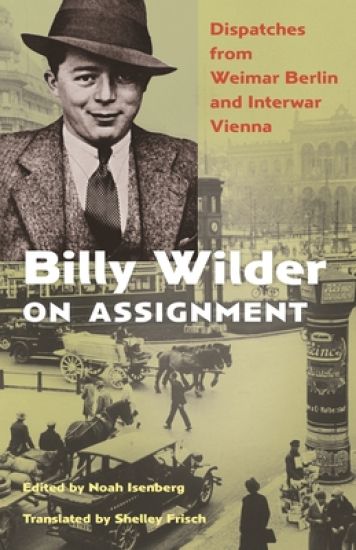
Billy Wilder on Assignment

Billy Wilder on Assignment

Billy Wilder

PRINCETON UNIVERSITY PRESS
2022
pokkari
A Times Literary Supplement Book of the Year, chosen by Tom Stoppard"A revelation."—Marc Weingarten, Washington PostAcclaimed film director Billy Wilder’s early writings—brilliantly translated into English for the first timeBefore Billy Wilder became the screenwriter and director of iconic films like Sunset Boulevard and Some Like It Hot, he worked as a freelance reporter, first in Vienna and then in Weimar Berlin. Billy Wilder on Assignment brings together more than fifty articles, translated into English for the first time, that Wilder (then known as "Billie") published in magazines and newspapers between September 1925 and November 1930. From a humorous account of Wilder's stint as a hired dancing companion in a posh Berlin hotel and his dispatches from the international film scene, to his astute profiles of writers, performers, and political figures, the collection offers fresh insights into the creative mind of one of Hollywood’s most revered writer-directors. Wilder’s early writings—a heady mix of cultural essays, interviews, and reviews—contain the same sparkling wit and intelligence as his later Hollywood screenplays, while also casting light into the dark corners of Vienna and Berlin between the wars. Wilder covered everything: big-city sensations, jazz performances, film and theater openings, dance, photography, and all manner of mass entertainment. And he wrote about the most colorful figures of the day, including Charlie Chaplin, Cornelius Vanderbilt, the Prince of Wales, actor Adolphe Menjou, director Erich von Stroheim, and the Tiller Girls dance troupe. Film historian Noah Isenberg's introduction and commentary place Wilder’s pieces—brilliantly translated by Shelley Frisch—in historical and biographical context, and rare photos capture Wilder and his circle during these formative years. Filled with rich reportage and personal musings, Billy Wilder on Assignment showcases the burgeoning voice of a young journalist who would go on to become a great auteur.
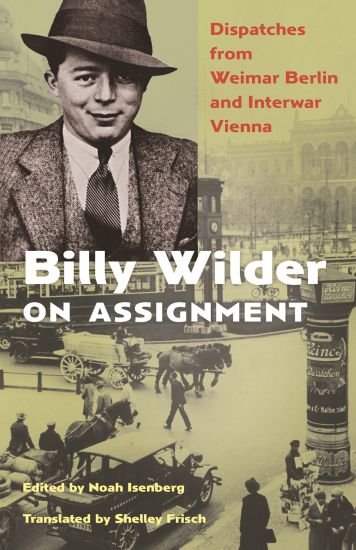
Billy Wilder on Assignment

Billy Wilder on Assignment

Billy Wilder

PRINCETON UNIVERSITY PRESS
2021
sidottu
A Times Literary Supplement Book of the Year, chosen by Tom Stoppard"A revelation."—Marc Weingarten, Washington PostAcclaimed film director Billy Wilder’s early writings—brilliantly translated into English for the first timeBefore Billy Wilder became the screenwriter and director of iconic films like Sunset Boulevard and Some Like It Hot, he worked as a freelance reporter, first in Vienna and then in Weimar Berlin. Billy Wilder on Assignment brings together more than fifty articles, translated into English for the first time, that Wilder (then known as "Billie") published in magazines and newspapers between September 1925 and November 1930. From a humorous account of Wilder's stint as a hired dancing companion in a posh Berlin hotel and his dispatches from the international film scene, to his astute profiles of writers, performers, and political figures, the collection offers fresh insights into the creative mind of one of Hollywood’s most revered writer-directors. Wilder’s early writings—a heady mix of cultural essays, interviews, and reviews—contain the same sparkling wit and intelligence as his later Hollywood screenplays, while also casting light into the dark corners of Vienna and Berlin between the wars. Wilder covered everything: big-city sensations, jazz performances, film and theater openings, dance, photography, and all manner of mass entertainment. And he wrote about the most colorful figures of the day, including Charlie Chaplin, Cornelius Vanderbilt, the Prince of Wales, actor Adolphe Menjou, director Erich von Stroheim, and the Tiller Girls dance troupe. Film historian Noah Isenberg's introduction and commentary place Wilder’s pieces—brilliantly translated by Shelley Frisch—in historical and biographical context, and rare photos capture Wilder and his circle during these formative years. Filled with rich reportage and personal musings, Billy Wilder on Assignment showcases the burgeoning voice of a young journalist who would go on to become a great auteur.

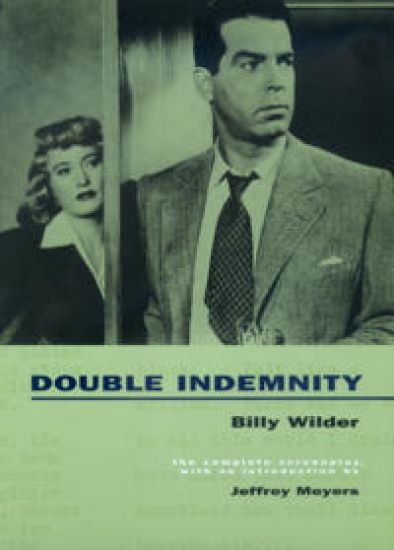
Double Indemnity

Double Indemnity

Billy Wilder; Raymond Chandler

University of California Press
2000
pokkari
On every level - writing, direction, acting - "Double Indemnity" (1944) is a triumph and stands as one of the greatest achievements in Billy Wilder's career. Adapted from the James M. Cain novel by director Wilder and novelist Raymond Chandler, it tells the story of an insurance salesman, played by Fred MacMurray, who is lured into a murder-for-insurance plot by Barbara Stanwyck, in an archetypal femme fatale role. From its grim story to its dark, atmospheric lighting, "Double Indemnity" is a definitive example of World War II-era film noir. Wilder's approach is everywhere evident: in the brutal cynicism the film displays, the moral complexity, and in the empathy we feel for the killers. The film received almost unanimous critical success, garnering seven Academy Award nominations. More than fifty years later, most critics agree that this classic is one of the best films of all time. The collaboration between Wilder and Raymond Chandler produced a masterful script and some of the most memorable dialogue ever spoken in a movie. This facsimile edition of "Double Indemnity" contains Wilder and Chandler's original - and quite different - ending, published here for the first time. Jeffrey Meyers' introduction contextualizes the screenplay, providing hilarious anecdotes about the turbulent collaboration, as well as background information about Wilder and the film's casting and production.
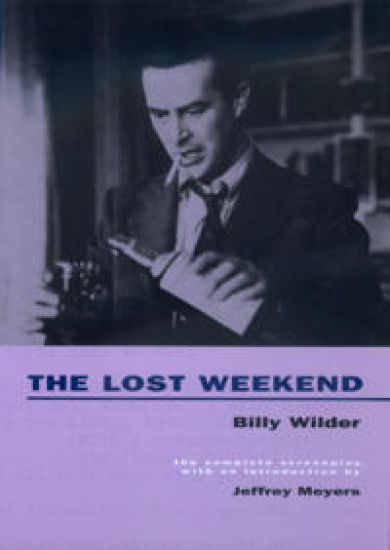
The Lost Weekend

The Lost Weekend

Billy Wilder

University of California Press
2000
pokkari
"The Lost Weekend" swept the 1945 Academy Awards, with nominations for Best Film Editing, Score, and Black and White Cinematography, and Oscars for Best Picture, Director, Actor, and Screenplay. It also received numerous awards at the Cannes Film Festival and the Golden Globes. Based on the novel by Charles Jackson, a work that many in Hollywood had thought unfilmmable because of its relentless grimness, "The Lost Weekend" was one of the first films to explore the devastating effects of alcoholism. Ray Milland was cast against type as Don Birnam, a writer plagued by depression and self-doubt who, as his alcoholism progresses, slips into a horrifying downward spiral of lying, begging, stealing, and madness. Milland's riveting performance won him an Oscar. Jane Wyman also delivers a powerful performance as his faithful girlfriend, Helen St. James, whose selfless love offers Birnam a hope of redemption. This facsimile edition of "The Lost Weekend" not only reveals the genius of the film but also illuminates how the script stands alone as a rare, wonderful piece of writing. Jeffrey Meyers' introduction looks at the transformation from novel to film and examines Wilder and coauthor Charles Brackett's methods as collaborators. Readers will gain important insights into the craft of screenwriting, and the personality and methods of one of Hollywood's greatest directors.
Sunset Boulevard

Sunset Boulevard

Billy Wilder

University of California Press
1999
pokkari
"Sunset Boulevard" (1950) is one of the most famous films in the history of Hollywood, and perhaps no film better represents Hollywood's vision of itself. Billy Wilder collaborated on the screenplay with the very able Charles Brackett, and with D. M. Marshman Jr., who later joined the team. Together they created a film both allusive and literate, with Hollywood's worst excesses and neuroses laid out for all to see. After viewing "Sunset Boulevard" Louis B. Mayer exclaimed: 'We should throw this Wilder out of town!' "The New York Times", however, gave the movie a rave review, praising 'that rare blend of pungent writing, expert acting, masterly direction, and unobtrusively artistic photography.' The film was nominated for Best Picture, and Wilder won an Academy Award for Best Story and Best Screenplay. This facsimile edition of "Sunset Boulevard" makes it possible to get as much pleasure from reading the highly intelligent screenplay as from seeing the film. Jeffrey Meyers' introduction provides an intriguing array of background details about Wilder, the film's casting and production, and the lives of those connected to what has become a classic.
Stalag 17

Stalag 17

Billy Wilder

University of California Press
1999
pokkari
"Stalag 17" (1953), the riveting drama of a German prisoner-of-war camp, was adapted from the Broadway play directed by Jose Ferrer in 1951. Billy Wilder developed the play and made the film version more interesting in every way. Edwin Blum, a veteran screenwriter and friend of Wilder's, collaborated on the screenplay but found working with Wilder an agonizing experience. Wilder's mordant humor and misanthropy percolate throughout this bitter story of egoism, class conflict, and betrayal. As in a well-constructed murder mystery, the incriminating evidence points to the wrong man. Jeffrey Meyers' introduction enriches the reading of "Stalag 17" by including comparisons with the Broadway production and the reasons for Wilder's changes.