Kirjojen hintavertailu – 12 903 724 kirjaa ja 27 kauppaa

Kirjailija

Bin Cui

Kirjat ja teokset yhdessä paikassa: 6 kirjaa, julkaisuja vuosilta 2007–2023, suosituimpiin kuuluu Spatio-Temporal Recommendation in Social Media. Vertaile teosten hintoja ja tarkista saatavuus suomalaisista kirjakaupoista.

6 kirjaa

Kirjojen julkaisuvuodet: 2007–2023.

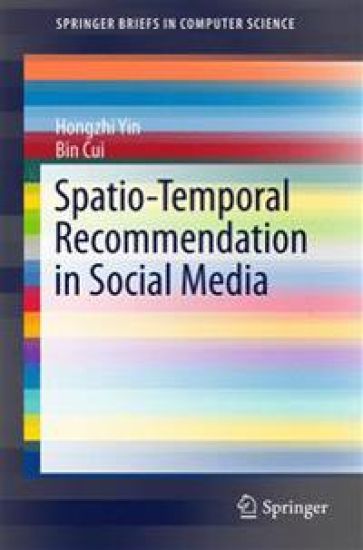
Spatio-Temporal Recommendation in Social Media

Spatio-Temporal Recommendation in Social Media

Hongzhi Yin; Bin Cui

Springer Verlag, Singapore
2016
nidottu
This book covers the major fundamentals of and the latest research on next-generation spatio-temporal recommendation systems in social media. It begins by describing the emerging characteristics of social media in the era of mobile internet, and explores the limitations to be found in current recommender techniques. The book subsequently presents a series of latent-class user models to simulate users’ behaviors in decision-making processes, which effectively overcome the challenges arising from temporal dynamics of users’ behaviors, user interest drift over geographical regions, data sparsity and cold start. Based on these well designed user models, the book develops effective multi-dimensional index structures such as Metric-Tree, and proposes efficient top-k retrieval algorithms to accelerate the process of online recommendation and support real-time recommendation. In addition, it offers methodologies and techniques for evaluating both the effectiveness and efficiency of spatio-temporal recommendation systems in social media. The book will appeal to a broad readership, from researchers and developers to undergraduate and graduate students.
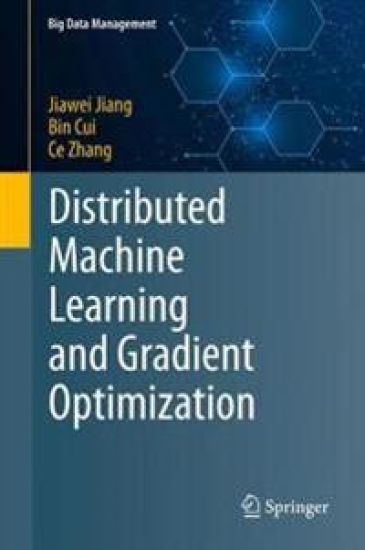
Distributed Machine Learning and Gradient Optimization

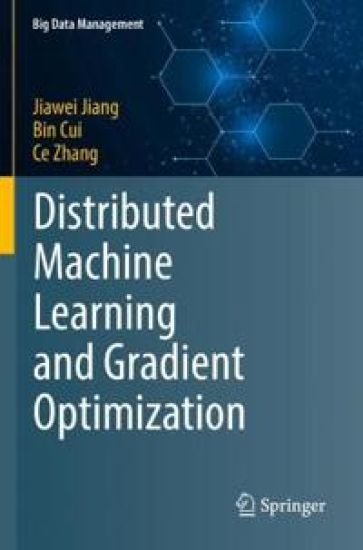
Distributed Machine Learning and Gradient Optimization

Jiawei Jiang; Bin Cui; Ce Zhang

SPRINGER VERLAG, SINGAPORE
2023
nidottu
This book presents the state of the art in distributed machine learning algorithms that are based on gradient optimization methods. In the big data era, large-scale datasets pose enormous challenges for the existing machine learning systems. As such, implementing machine learning algorithms in a distributed environment has become a key technology, and recent research has shown gradient-based iterative optimization to be an effective solution. Focusing on methods that can speed up large-scale gradient optimization through both algorithm optimizations and careful system implementations, the book introduces three essential techniques in designing a gradient optimization algorithm to train a distributed machine learning model: parallel strategy, data compression and synchronization protocol. Written in a tutorial style, it covers a range of topics, from fundamental knowledge to a number of carefully designed algorithms and systems of distributed machine learning. It will appealto a broad audience in the field of machine learning, artificial intelligence, big data and database management.
Distributed Machine Learning and Gradient Optimization

Distributed Machine Learning and Gradient Optimization

Jiawei Jiang; Bin Cui; Ce Zhang

Springer Verlag, Singapore
2022
sidottu
This book presents the state of the art in distributed machine learning algorithms that are based on gradient optimization methods. In the big data era, large-scale datasets pose enormous challenges for the existing machine learning systems. As such, implementing machine learning algorithms in a distributed environment has become a key technology, and recent research has shown gradient-based iterative optimization to be an effective solution. Focusing on methods that can speed up large-scale gradient optimization through both algorithm optimizations and careful system implementations, the book introduces three essential techniques in designing a gradient optimization algorithm to train a distributed machine learning model: parallel strategy, data compression and synchronization protocol. Written in a tutorial style, it covers a range of topics, from fundamental knowledge to a number of carefully designed algorithms and systems of distributed machine learning. It will appealto a broad audience in the field of machine learning, artificial intelligence, big data and database management.
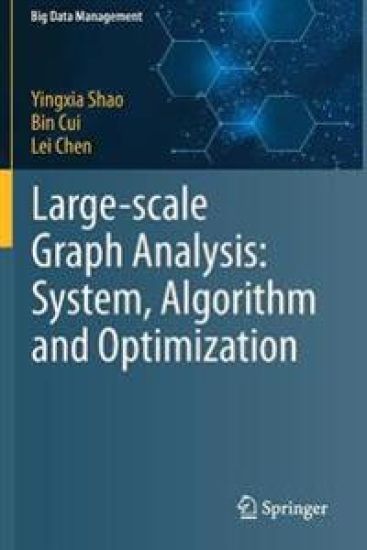
Large-scale Graph Analysis: System, Algorithm and Optimization

Large-scale Graph Analysis: System, Algorithm and Optimization

Yingxia Shao; Bin Cui; Lei Chen

SPRINGER VERLAG, SINGAPORE
2021
nidottu
This book introduces readers to a workload-aware methodology for large-scale graph algorithm optimization in graph-computing systems, and proposes several optimization techniques that can enable these systems to handle advanced graph algorithms efficiently. More concretely, it proposes a workload-aware cost model to guide the development of high-performance algorithms. On the basis of the cost model, the book subsequently presents a system-level optimization resulting in a partition-aware graph-computing engine, PAGE. In addition, it presents three efficient and scalable advanced graph algorithms – the subgraph enumeration, cohesive subgraph detection, and graph extraction algorithms. This book offers a valuable reference guide for junior researchers, covering the latest advances in large-scale graph analysis; and for senior researchers, sharing state-of-the-art solutions based on advanced graph algorithms. In addition, all readers will find a workload-aware methodology fordesigning efficient large-scale graph algorithms.
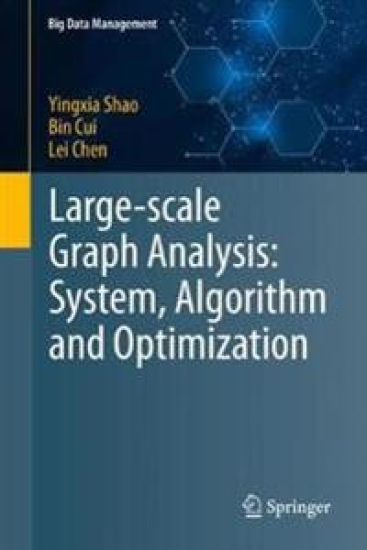
Large-scale Graph Analysis: System, Algorithm and Optimization

Large-scale Graph Analysis: System, Algorithm and Optimization

Yingxia Shao; Bin Cui; Lei Chen

Springer Verlag, Singapore
2020
sidottu
This book introduces readers to a workload-aware methodology for large-scale graph algorithm optimization in graph-computing systems, and proposes several optimization techniques that can enable these systems to handle advanced graph algorithms efficiently. More concretely, it proposes a workload-aware cost model to guide the development of high-performance algorithms. On the basis of the cost model, the book subsequently presents a system-level optimization resulting in a partition-aware graph-computing engine, PAGE. In addition, it presents three efficient and scalable advanced graph algorithms – the subgraph enumeration, cohesive subgraph detection, and graph extraction algorithms. This book offers a valuable reference guide for junior researchers, covering the latest advances in large-scale graph analysis; and for senior researchers, sharing state-of-the-art solutions based on advanced graph algorithms. In addition, all readers will find a workload-aware methodology fordesigning efficient large-scale graph algorithms.