Kirjojen hintavertailu – 12 903 735 kirjaa ja 27 kauppaa

Kirjailija

Bina Fernandez

Kirjat ja teokset yhdessä paikassa: 5 kirjaa, julkaisuja vuosilta 2012–2019, suosituimpiin kuuluu Land, Labour and Livelihoods. Vertaile teosten hintoja ja tarkista saatavuus suomalaisista kirjakaupoista.

5 kirjaa

Kirjojen julkaisuvuodet: 2012–2019.

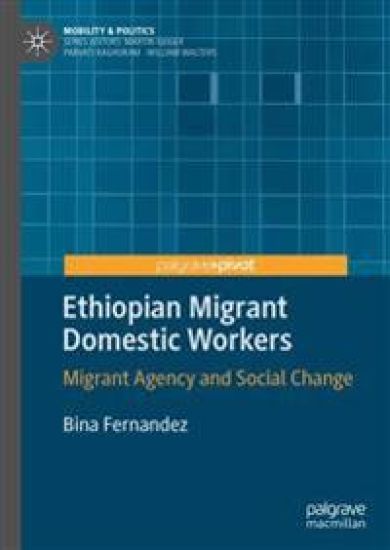
Ethiopian Migrant Domestic Workers

Ethiopian Migrant Domestic Workers

Bina Fernandez

Springer Nature Switzerland AG
2019
sidottu
This book tells the stories of the Ethiopian women who migrate to work as domestic workers in the Middle East. Drawing on qualitative research in Ethiopia, Lebanon and Kuwait, the author reveals how women’s aspirations to migrate are constituted within unequal gendered structures of opportunity in Ethiopia and asks us to consider how gender, race, class and nationality intersect in the construction of migrant subjectivities and agency. By analysing the impact of migration on social reproduction both in Ethiopia and the destination countries, the book offers fresh empirical and theoretical insights into the largest stream of women’s autonomous international migration from Africa.
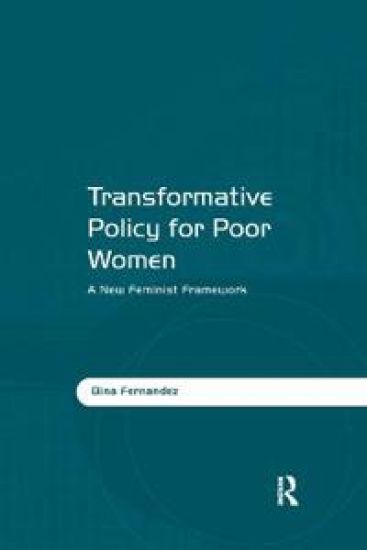
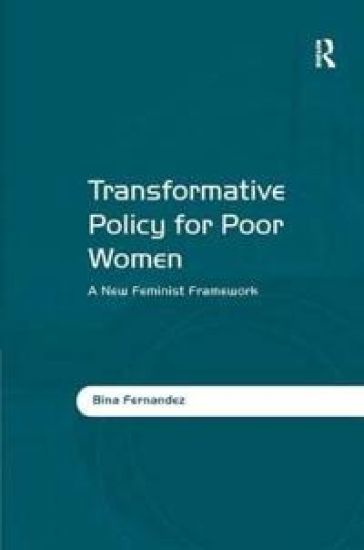
Transformative Policy for Poor Women
What accounts for the oft-noted 'gap' between well-designed policies for women and their inadequate implementation? Why do such policies often fail to benefit the poorest women? How do policies address the intersecting inequalities of gender, class, caste, ethnic identity and race? What are the conditions under which policy may have transformative potential for poor women? This book answers these questions and many more. Presenting a new feminist framework for policy analysis that can account for policy failures, Bina Fernandez argues that these failures are often predictable and that it is necessary to unpack the actual policy practices within the policy-implementation gap. Recognising that policy is a multiply layered, contingent and politically contested discursive process, the author proposes the analysis of policy through four analytical categories: Constitutive Contexts, Representations, Practices and Consequences. Within each of these four categories, gender, class and ethnic identity are central axes of analysis. The framework is given substance through an empirical case-study of an anti-poverty policy in India, yet the wider relevance of the framework is validated through a discussion of parallels in the policy contexts of other developing countries. Transformative Policy for Poor Women provides an important and required framework to understand the gap between policy pronouncement and its praxis on the ground. These features make this book an important read for both scholars and practitioners seeking to understand policy in developing country contexts.'

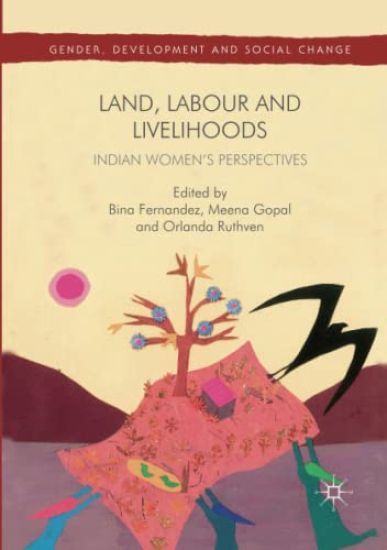
Land, Labour and Livelihoods

Land, Labour and Livelihoods

Bina Fernandez; Meena Gopal; Orlanda Ruthven

Springer International Publishing AG
2018
nidottu
This book brings together a unique collection of theoretical and empirical analyses of women’s access to land, labour and livelihoods in contemporary India. The authors recognize that gender relations must be viewed intersectionally, along with other social relationships such as caste, ethnicity, religion, sexuality and age, in order to inform an integrated analysis of women’s persistent disadvantage in India. The chapters examine a diverse range of rural and urban livelihoods within sectors such as tea plantations, nursing, hair salons, sex work and waste collection. Documenting the shifts in these sectors in the context of economic liberalization, the authors offer insights on the challenges of development interventions as women negotiate shifts in their livelihood options. Written to engage, the contributions to this book will be of interest both to the general reader and to academics and practitioners in development and gender/women’s studies.
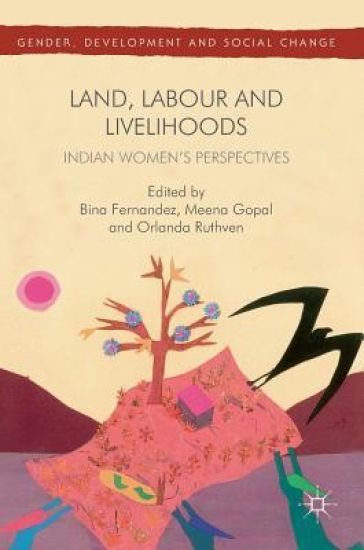
Land, Labour and Livelihoods

Land, Labour and Livelihoods

Bina Fernandez; Meena Gopal; Orlanda Ruthven

Springer International Publishing AG
2016
sidottu
This book brings together a unique collection of theoretical and empirical analyses of women’s access to land, labour and livelihoods in contemporary India. The authors recognize that gender relations must be viewed intersectionally, along with other social relationships such as caste, ethnicity, religion, sexuality and age, in order to inform an integrated analysis of women’s persistent disadvantage in India. The chapters examine a diverse range of rural and urban livelihoods within sectors such as tea plantations, nursing, hair salons, sex work and waste collection. Documenting the shifts in these sectors in the context of economic liberalization, the authors offer insights on the challenges of development interventions as women negotiate shifts in their livelihood options. Written to engage, the contributions to this book will be of interest both to the general reader and to academics and practitioners in development and gender/women’s studies.
Transformative Policy for Poor Women

Transformative Policy for Poor Women

Bina Fernandez

Ashgate Publishing Limited
2012
sidottu
What accounts for the oft-noted 'gap' between well-designed policies for women and their inadequate implementation? Why do such policies often fail to benefit the poorest women? How do policies address the intersecting inequalities of gender, class, caste, ethnic identity and race? What are the conditions under which policy may have transformative potential for poor women? This book answers these questions and many more. Presenting a new feminist framework for policy analysis that can account for policy failures, Bina Fernandez argues that these failures are often predictable and that it is necessary to unpack the actual policy practices within the policy-implementation gap. Recognising that policy is a multiply layered, contingent and politically contested discursive process, the author proposes the analysis of policy through four analytical categories: Constitutive Contexts, Representations, Practices and Consequences. Within each of these four categories, gender, class and ethnic identity are central axes of analysis. The framework is given substance through an empirical case-study of an anti-poverty policy in India, yet the wider relevance of the framework is validated through a discussion of parallels in the policy contexts of other developing countries. Transformative Policy for Poor Women provides an important and required framework to understand the gap between policy pronouncement and its praxis on the ground. These features make this book an important read for both scholars and practitioners seeking to understand policy in developing country contexts.'