Kirjojen hintavertailu – 12 903 724 kirjaa ja 27 kauppaa

Kirjailija

Binbing Yu

Kirjat ja teokset yhdessä paikassa: 4 kirjaa, julkaisuja vuosilta 2015–2022, suosituimpiin kuuluu Statistical Methods for Immunogenicity Assessment. Vertaile teosten hintoja ja tarkista saatavuus suomalaisista kirjakaupoista.

4 kirjaa

Kirjojen julkaisuvuodet: 2015–2022.

Cure Models

Cure Models

Yingwei Peng; Binbing Yu

TAYLOR FRANCIS LTD
2022
nidottu
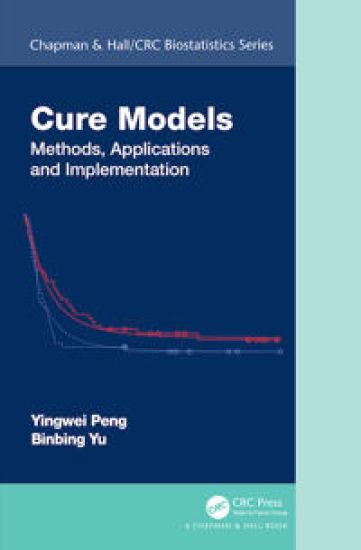
Cure Models: Methods, Applications and Implementation is the first book in the last 25 years that provides a comprehensive and systematic introduction to the basics of modern cure models, including estimation, inference, and software. This book is useful for statistical researchers and graduate students, and practitioners in other disciplines to have a thorough review of modern cure model methodology and to seek appropriate cure models in applications. The prerequisites of this book include some basic knowledge of statistical modeling, survival models, and R and SAS for data analysis. The book features real-world examples from clinical trials and population-based studies and a detailed introduction to R packages, SAS macros, and WinBUGS programs to fit some cure models. The main topics covered include the foundation of statistical estimation and inference of cure models for independent and right-censored survival data, cure modeling for multivariate, recurrent-event, and competing-risks survival data, and joint modeling with longitudinal data, statistical testing for the existence and difference of cure rates and sufficient follow-up, new developments in Bayesian cure models, applications of cure models in public health research and clinical trials.
Cure Models

Cure Models

Yingwei Peng; Binbing Yu

CRC Press
2021
sidottu
Cure Models: Methods, Applications and Implementation is the first book in the last 25 years that provides a comprehensive and systematic introduction to the basics of modern cure models, including estimation, inference, and software. This book is useful for statistical researchers and graduate students, and practitioners in other disciplines to have a thorough review of modern cure model methodology and to seek appropriate cure models in applications. The prerequisites of this book include some basic knowledge of statistical modeling, survival models, and R and SAS for data analysis. The book features real-world examples from clinical trials and population-based studies and a detailed introduction to R packages, SAS macros, and WinBUGS programs to fit some cure models. The main topics covered include the foundation of statistical estimation and inference of cure models for independent and right-censored survival data, cure modeling for multivariate, recurrent-event, and competing-risks survival data, and joint modeling with longitudinal data, statistical testing for the existence and difference of cure rates and sufficient follow-up, new developments in Bayesian cure models, applications of cure models in public health research and clinical trials.
Statistical Methods for Immunogenicity Assessment

Statistical Methods for Immunogenicity Assessment

Harry Yang; Jianchun Zhang; Binbing Yu; Wei Zhao

CRC Press
2020
nidottu
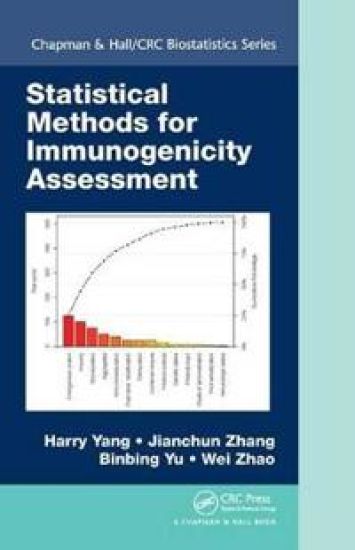
Develop Effective Immunogenicity Risk Mitigation StrategiesImmunogenicity assessment is a prerequisite for the successful development of biopharmaceuticals, including safety and efficacy evaluation. Using advanced statistical methods in the study design and analysis stages is therefore essential to immunogenicity risk assessment and mitigation strategies. Statistical Methods for Immunogenicity Assessment provides a single source of information on statistical concepts, principles, methods, and strategies for detection, quantification, assessment, and control of immunogenicity. The book first gives an overview of the impact of immunogenicity on biopharmaceutical development, regulatory requirements, and statistical methods and strategies used for immunogenicity detection, quantification, and risk assessment and mitigation. It then covers anti-drug antibody (ADA) assay development, optimization, validation, and transfer as well as the analysis of cut point, a key assay performance parameter in ADA assay development and validation. The authors illustrate how to apply statistical modeling approaches to establish associations between ADA and clinical outcomes, predict immunogenicity risk, and develop risk mitigation strategies. They also present various strategies for immunogenicity risk control. The book concludes with an explanation of the computer codes and algorithms of the statistical methods. A critical issue in the development of biologics, immunogenicity can cause early termination or limited use of the products if not managed well. This book shows how to use robust statistical methods for detecting, quantifying, assessing, and mitigating immunogenicity risk. It is an invaluable resource for anyone involved in immunogenicity risk assessment and control in both non-clinical and clinical biopharmaceutical development.
Statistical Methods for Immunogenicity Assessment

Statistical Methods for Immunogenicity Assessment

Harry Yang; Jianchun Zhang; Binbing Yu; Wei Zhao

Productivity Press
2015
sidottu
Develop Effective Immunogenicity Risk Mitigation StrategiesImmunogenicity assessment is a prerequisite for the successful development of biopharmaceuticals, including safety and efficacy evaluation. Using advanced statistical methods in the study design and analysis stages is therefore essential to immunogenicity risk assessment and mitigation strategies. Statistical Methods for Immunogenicity Assessment provides a single source of information on statistical concepts, principles, methods, and strategies for detection, quantification, assessment, and control of immunogenicity. The book first gives an overview of the impact of immunogenicity on biopharmaceutical development, regulatory requirements, and statistical methods and strategies used for immunogenicity detection, quantification, and risk assessment and mitigation. It then covers anti-drug antibody (ADA) assay development, optimization, validation, and transfer as well as the analysis of cut point, a key assay performance parameter in ADA assay development and validation. The authors illustrate how to apply statistical modeling approaches to establish associations between ADA and clinical outcomes, predict immunogenicity risk, and develop risk mitigation strategies. They also present various strategies for immunogenicity risk control. The book concludes with an explanation of the computer codes and algorithms of the statistical methods. A critical issue in the development of biologics, immunogenicity can cause early termination or limited use of the products if not managed well. This book shows how to use robust statistical methods for detecting, quantifying, assessing, and mitigating immunogenicity risk. It is an invaluable resource for anyone involved in immunogenicity risk assessment and control in both non-clinical and clinical biopharmaceutical development.