

Kirjailija
Birgit Sauer
Kirjat ja teokset yhdessä paikassa: 7 kirjaa, julkaisuja vuosilta 2019–2025, suosituimpiin kuuluu An den Rändern Wiens / At the Edges of Vienna. Vertaile teosten hintoja ja tarkista saatavuus suomalaisista kirjakaupoista.
7 kirjaa
Kirjojen julkaisuvuodet: 2019–2025.
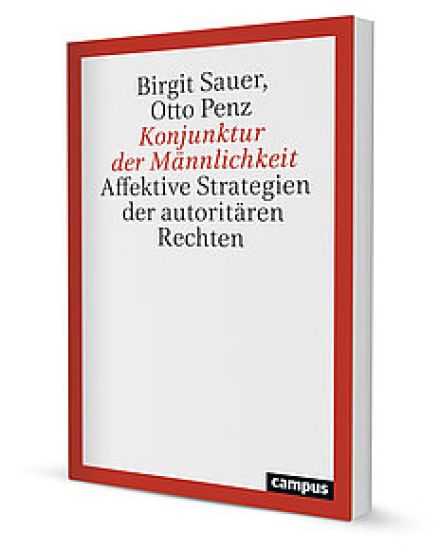

Governing Affects explores the neoliberal transformation of state governance in Europe towards affective forms of dominance exercised by customer-oriented neo-bureaucracies and public service providers. By investigating the rise of affective labour in contemporary European service societies and the conversion of state administrations into business-like public services, the authors trace the transformative power of neoliberal political thought as it is put into practice. The book examines new affective modes of subjectivation and activation of public employees, as well as their embodiment of affective requirements, to successfully guide and advise citizens. Neoliberalism induces a double agency in neo-bureaucrats: entrepreneurialism is coupled with affective skills for the purpose of governing clients in their own best interests. These competences are unevenly distributed between the genders, as their affective dispositions differ historically. Drawing on the theoretical concepts of Foucault and Bourdieu, the book offers innovative insights into recent processes of state transformation, affective subjectivation, and changes in labour relations. By combining theory building on governance with empirical research in key areas of state power, the book will be of interest to scholars and researchers in a broad range of disciplines, including political science, political sociology, and critical governance studies.
Gender Equality in Context
Birgit Sauer; Karin Gottschall; Brigitte Liebig
Saint Philip Street Press
2020
pokkari
Gender Equality in Context
Birgit Sauer; Karin Gottschall; Brigitte Liebig
Saint Philip Street Press
2020
sidottu
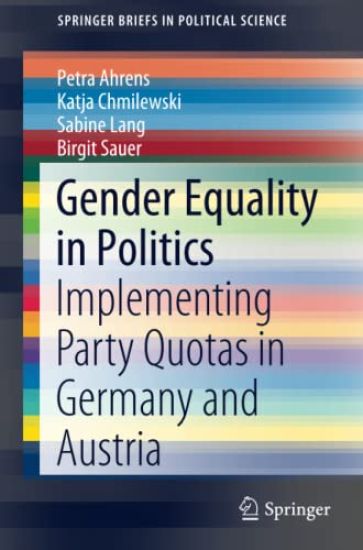
Gender Equality in Politics
Petra Ahrens; Katja Chmilewski; Sabine Lang; Birgit Sauer
Springer Nature Switzerland AG
2020
nidottu
This book provides a timely and unique contribution to current debates on how effectively voluntary party quotas address the persistent underrepresentation of women in legislatures. Using a most similar case design and a mixed-methods approach, the authors draw attention to the ways in which electoral systems and party regulations interface with voluntary party quotas in Germany and Austria. All quota parties in these countries support the goal of equal participation of women and men in elected office, and quotas are presented as a means to precisely that end. In order to assess parties’ commitment to their declared goals, and the effectiveness of quotas, the book introduces the concept of the post-quota gender gap and defines it as the difference between a party’s adopted quota and the actual share of women in legislative bodies at the national and regional level. Complementing the existing literature on recruitment and socio-cultural legacies, the authors argue that the problem of voluntary party quotas lies at the intersection of party quota design and electoral law. Either parties need to design quotas that actually work within a given electoral system, or we need legislative action geared toward advancing parity not just in candidate selection, but in the composition of legislatures. The book draws on gendered candidate and election data, on the party statutes of federal and state-level party organizations, and on interviews with party officials and party women’s organizations.

Governing Affects explores the neoliberal transformation of state governance in Europe towards affective forms of dominance exercised by customer-oriented neo-bureaucracies and public service providers. By investigating the rise of affective labour in contemporary European service societies and the conversion of state administrations into business-like public services, the authors trace the transformative power of neoliberal political thought as it is put into practice. The book examines new affective modes of subjectivation and activation of public employees, as well as their embodiment of affective requirements, to successfully guide and advise citizens. Neoliberalism induces a double agency in neo-bureaucrats: entrepreneurialism is coupled with affective skills for the purpose of governing clients in their own best interests. These competences are unevenly distributed between the genders, as their affective dispositions differ historically. Drawing on the theoretical concepts of Foucault and Bourdieu, the book offers innovative insights into recent processes of state transformation, affective subjectivation, and changes in labour relations. By combining theory building on governance with empirical research in key areas of state power, the book will be of interest to scholars and researchers in a broad range of disciplines, including political science, political sociology, and critical governance studies.