Kirjojen hintavertailu – 12 870 886 kirjaa ja 27 kauppaa

Kirjailija

Birol Baskan

Kirjat ja teokset yhdessä paikassa: 7 kirjaa, julkaisuja vuosilta 2014–2024, suosituimpiin kuuluu Turkey and Qatar in the Tangled Geopolitics of the Middle East. Vertaile teosten hintoja ja tarkista saatavuus suomalaisista kirjakaupoista.

7 kirjaa

Kirjojen julkaisuvuodet: 2014–2024.

Turkey

Turkey

Birol Baskan; Burak Bilgehan Özpek

TAYLOR FRANCIS LTD
2024
sidottu
Focused on the rise of the Justice and Development Party (AKP) over the last two decades, this book discusses and contextualizes key events and developments in Turkish politics, economics and foreign policy. The authors begin by exploring the longer-term historical trends that shaped the country, focusing on Ottoman and Republican legacies, culminating in the formation of the modern state in Turkey. This context, it is argued, is key in understanding the AKP’s emergence since 2002 as the preeminent political power. The book further argues that the AKP achieved this position due to political maneuvers aimed at undermining military influence within politics, its management of the economy and its approach to foreign policy. These three domains are dealt with in successive chapters to help explicate how the AKP built broad societal coalitions and consolidated its power. The book concludes by analyzing contemporary developments: in the face of mounting economic and political challenges, the fate of the AKP, and of Turkey, remain uncertain. Written in an accessible style and grounded in data-driven analysis, the book will appeal to journalists, policymakers, researchers and general audiences interested in the contemporary Middle East, Turkish political economy and international relations.
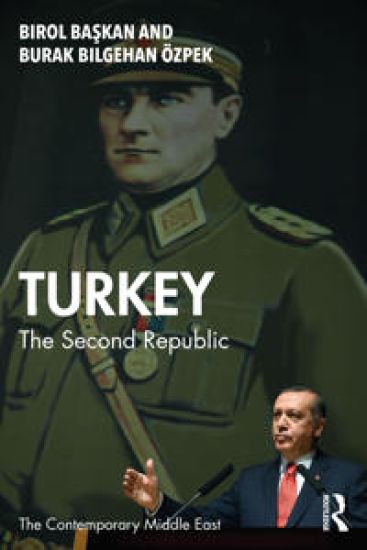
Turkey

Turkey

Birol Baskan; Burak Bilgehan Özpek

TAYLOR FRANCIS LTD
2024
nidottu
Focused on the rise of the Justice and Development Party (AKP) over the last two decades, this book discusses and contextualizes key events and developments in Turkish politics, economics and foreign policy. The authors begin by exploring the longer-term historical trends that shaped the country, focusing on Ottoman and Republican legacies, culminating in the formation of the modern state in Turkey. This context, it is argued, is key in understanding the AKP’s emergence since 2002 as the preeminent political power. The book further argues that the AKP achieved this position due to political maneuvers aimed at undermining military influence within politics, its management of the economy and its approach to foreign policy. These three domains are dealt with in successive chapters to help explicate how the AKP built broad societal coalitions and consolidated its power. The book concludes by analyzing contemporary developments: in the face of mounting economic and political challenges, the fate of the AKP, and of Turkey, remain uncertain. Written in an accessible style and grounded in data-driven analysis, the book will appeal to journalists, policymakers, researchers and general audiences interested in the contemporary Middle East, Turkish political economy and international relations.
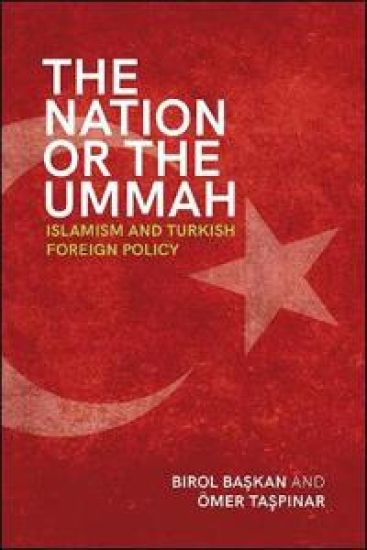
The Nation or the Ummah

The Nation or the Ummah

Birol Baskan; Ömer Taspinar

STATE UNIVERSITY OF NEW YORK PRESS
2022
pokkari
Explains why Turkey embraced the Arab Spring despite the risk both domestically and internationally. Turkey's enthusiastic embrace of the Arab Spring set in motion a dynamic that fundamentally altered its relations with the United States, Russia, Qatar, Egypt, Saudi Arabia, the United Arab Emirates, and Iran, and transformed Turkey from a soft power to a hard power in the tangled geopolitics of the Middle East. Birol Baskan and Ömer Taspinar argue that the ruling Justice and Development Party's (AKP) Islamist background played a significant role in the country's decision to embrace the uprisings and the subsequent foreign policy direction the country has pursued. They demonstrate that religious ideology is endogenous to-shaping and in turn being shaped by-Turkey's various engagements in the Middle East. The Nation or the Ummah emphasizes that while Islamist religious ideology does not provide specific policy prescriptions, it does shape the way the ruling elite sees and interprets the context and the structural boundaries they operate within.
The Nation or the Ummah

The Nation or the Ummah

Birol Baskan; Ömer Taspinar

State University of New York Press
2021
sidottu
Explains why Turkey embraced the Arab Spring despite the risk both domestically and internationally. Turkey's enthusiastic embrace of the Arab Spring set in motion a dynamic that fundamentally altered its relations with the United States, Russia, Qatar, Egypt, Saudi Arabia, the United Arab Emirates, and Iran, and transformed Turkey from a soft power to a hard power in the tangled geopolitics of the Middle East. Birol Baskan and Ömer Taspinar argue that the ruling Justice and Development Party's (AKP) Islamist background played a significant role in the country's decision to embrace the uprisings and the subsequent foreign policy direction the country has pursued. They demonstrate that religious ideology is endogenous to-shaping and in turn being shaped by-Turkey's various engagements in the Middle East. The Nation or the Ummah emphasizes that while Islamist religious ideology does not provide specific policy prescriptions, it does shape the way the ruling elite sees and interprets the context and the structural boundaries they operate within.
From Religious Empires to Secular States
In the 1920s and the 1930s, Turkey, Iran and Russia vehemently pursued state-secularizing reforms, but adopted different strategies in doing so. But why do states follow different secularizing strategies? The literature has already shattered the illusion that secularization of the state has been a unilinear, homogeneous and universal process, and has convincingly shown that secularization of the state has unfolded along different paths. Much, however, remains to be uncovered. This book provides an in-depth comparative historical analysis of state secularization in three major Eurasian countries: Turkey, Iran and Russia. To capture the aforementioned variation in state secularization across three countries that have been hitherto analyzed as separate studies, Birol Baskan adopts three modes of state secularization: accommodationism, separationism and eradicationism. Focusing thematically on the changing relations between the state and religious institutions, Baskan brings together a host of factors, historical, strategic and structural, to account for why Turkey adopted accommodationism, Iran separationism and Russia eradicationism. In doing so, he expertly demonstrates that each secularization strategy was a rational response to the strategic context the reformers found themselves in.
Turkey and Qatar in the Tangled Geopolitics of the Middle East
This book narrates how Turkey and Qatar have come to forge a mutually special relationship. The book argues that throughout the 2000s Turkey and Qatar had pursued similar foreign policies and aligned their positions on many critical and controversial issues. By doing so, however, they increasingly isolated themselves in the Middle East as states challenging the status quo. The claim made here is that it is this isolation—which became acute in the summer of 2013—that led the two countries to forge much stronger relations.
From Religious Empires to Secular States
In the 1920s and the 1930s, Turkey, Iran and Russia vehemently pursued state-secularizing reforms, but adopted different strategies in doing so. But why do states follow different secularizing strategies? The literature has already shattered the illusion that secularization of the state has been a unilinear, homogeneous and universal process, and has convincingly shown that secularization of the state has unfolded along different paths. Much, however, remains to be uncovered. This book provides an in-depth comparative historical analysis of state secularization in three major Eurasian countries: Turkey, Iran and Russia. To capture the aforementioned variation in state secularization across three countries that have been hitherto analyzed as separate studies, Birol Baskan adopts three modes of state secularization: accommodationism, separationism and eradicationism. Focusing thematically on the changing relations between the state and religious institutions, Baskan brings together a host of factors, historical, strategic and structural, to account for why Turkey adopted accommodationism, Iran separationism and Russia eradicationism. In doing so, he expertly demonstrates that each secularization strategy was a rational response to the strategic context the reformers found themselves in.