Kirjojen hintavertailu – 12 903 725 kirjaa ja 27 kauppaa
Kirjailija
Bisserka Gaydarska
Kirjat ja teokset yhdessä paikassa: 5 kirjaa, julkaisuja vuosilta 2010–2022, suosituimpiin kuuluu The Upper Tisza Project. Studies in Hungarian Landscape Archaeology. Book 3: Settlement Patterns in the Zemplén Block. Vertaile teosten hintoja ja tarkista saatavuus suomalaisista kirjakaupoista.
John Chapman; Steve Cousins; Bisserka Gaydarska; Mark Gillings; Karen Hardy; Eniko Magyari; Robert Shiel; Denise Telford; Katalin Biró; Chris Bond; David Brookshaw
This volume, part of the Upper Tisza Project, investigates settlement patterns in the upland Zemplen region of northeast Hungary and interactions between the region and adjacent lowland areas. In analysing the results the authors conclude that prehistoric settlement in the region was seasonal, and based on the need to gather lithic raw materials. Permanent settlement came in the medieval period, with a monastic and castle dominated landscape of nucleated villages emerging.
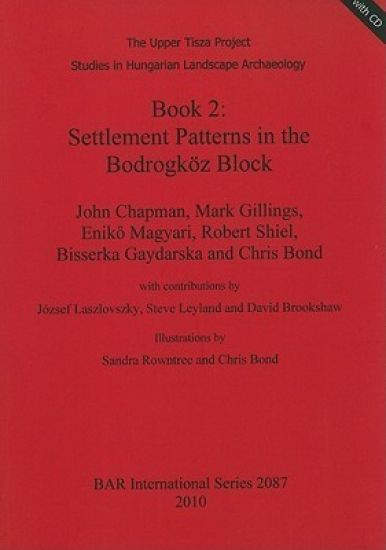
This report, the second in the series from the Upper Tisza Project, examines the lowland zone of the Bodrogkoz Block in northeastern Hungary. After outlining the theoretical and methodological frmaework for the project, the book seeks to "define some of the principle changes in the landscape in Block 2 over the last 12,000 years, and to characterise the main trends in settlement in the Bodrogkoz area".
This is an Element about some of the largest sites known in prehistoric Europe – sites so vast that they often remain undiscussed for lack of the theoretical or methodological tools required for their understanding. Here, the authors use a relational, comparative approach to identify not only what made megasites but also what made megasites so special and so large. They have selected a sample of megasites in each major period of prehistory – Neolithic, Copper, Bronze and Iron Ages – with a detailed examination of a single representative megasite for each period. The relational approach makes explicit comparisons between smaller, more 'normal' sites and the megasites using six criteria – scale, temporality, deposition / monumentality, formal open spaces, performance and congregational catchment. The authors argue that many of the largest European prehistoric megasites were congregational places.
Reports on excavations which took place in the Summer of 1995 at the Middle Neolithic site of Polgar-10 in northeastern Hungary, as part of the Upper Tizsa Project. The excavations centred on the low-lying part of the site, which would have flooded periodically in the Spring during the Neolithic. The evidence for social practices at the site shows a strong bias towards deposition related to pottery discard. The site produced no evidence for pottery production, primary lithic knapping, grindstone making or plant processing, or of feasting, and it is surmised that these activities took place on the higher hillocks to the north and south of the excavated area.
Book 5 in the reports series on the Upper Tisza Project, north-eastern Hungary. This volume covers the summer 1995 excavations at the multi-period site of Regec 95, located in an upland basin in the South Zemplen Mountains. Contents: 1) Introduction to the archaeology of the South Zemplen Mountains and the Regec Basin (John Chapman & Magdolna Vicze); 2) Site environment and land use (Robert Shiel, David Passmore & Eniko Magyari); 3) Surface collection, phosphate analysis and sampling strategy (John Chapman, Keri Brown & Alan Biggins); 4) The stratigraphic sequence (John Chapman, Robert Shiel & Magdolna Vicze); 5) The pottery (Magdolna Vicze & John Chapman); 6) The chipped stone (Steve Cousins & John Chapman); 7 The small finds (Denise Telford & John Chapman); 8) The plant remains (Ferenc Gyula & Edina Rudner); 9) Absolute dating (John Chapman & Sarah Krywicky); 10) Interpretation and summary (John Chapman & Magdolna Vicze).