

Kirjailija
Bo Giertz
Kirjat ja teokset yhdessä paikassa: 30 kirjaa, julkaisuja vuosilta 1984–2026, suosituimpiin kuuluu A Shepherd's Letter. Vertaile teosten hintoja ja tarkista saatavuus suomalaisista kirjakaupoista.
30 kirjaa
Kirjojen julkaisuvuodet: 1984–2026.



In The New Testament Devotional Commentary Volume 3: Galatians Through Revelation, Bo Giertz returns to the text with his keen insight and love for God’s word and God’s people. This would finish his work as an author that began in the 1930s and continued for five decades. Taking the principles of Biblical Realism he had learned from his mentor Anton Fridrichsen, with its rejection of both liberal higher criticism and fundamentalist biblicism, Bo Giertz opens some of the most difficult to understand texts in all of Scripture with a simple understanding that this is God’s word for you. He blends this approach to Scripture with pastoral insight gained from his years as both a rural parish priest in the Swedish countryside and the Bishop of the bustling cosmopolitan center of Gothenburg. His commentary on Revelation is particularly revolutionary. Appendix: The Bible’s View of Itself and Other Views of the Bible


Bo Giertz wrote these commentaries in retirement after a lifetime of studying the Greek New Testament. These accompanied his own translations of the New Testament. This volume covers the Gospel of John through to Second Corinthians. Many have previously enjoyed Giertz's Romans commentary that is also included here, and they will not be disappointed with his treatment of the other texts. Giertz's views were heavily shaped by his mentor Anton Fridrichsen who wanted to counter both the liberalism of men like his friend Rudolph Bultmann, and the neo-orthodoxy of Karl Barth with Biblical Realism. Biblical Realism sought to avoid the pitfalls of biblicism by allowing for academic freedom while studying scriptures, while also maintaining that the events of the Bible were true events that happened in our history all centered upon the death and resurrection of Christ. The scriptures are therefore a salvation history meant to ""declare to you a message by which you will be saved, you and your household"" (Acts 11:14).
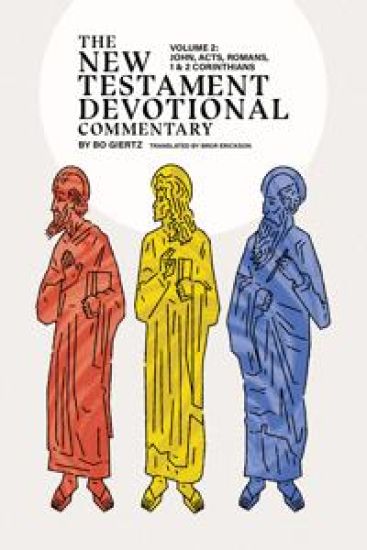
Bo Giertz wrote these commentaries in retirement after a lifetime of studying the Greek New Testament. These accompanied his own translations of the New Testament. This volume covers the Gospel of John through to Second Corinthians. Many have previously enjoyed Giertz's Romans commentary that is also included here, and they will not be disappointed with his treatment of the other texts. Giertz’s views were heavily shaped by his mentor Anton Fridrichsen who wanted to counter both the liberalism of men like his friend Rudolph Bultmann, and the neo-orthodoxy of Karl Barth with Biblical Realism. Biblical Realism sought to avoid the pitfalls of biblicism by allowing for academic freedom while studying scriptures, while also maintaining that the events of the Bible were true events that happened in our history all centered upon the death and resurrection of Christ. The scriptures are therefore a salvation history meant to "declare to you a message by which you will be saved, you and your household" (Acts 11:14).
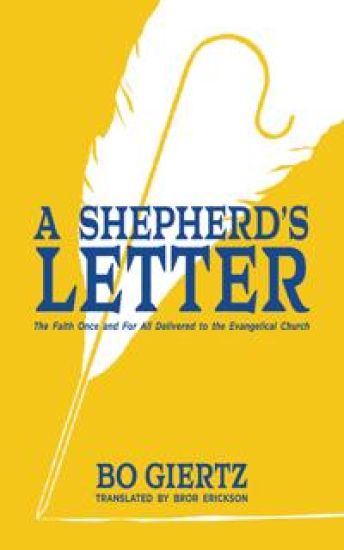
A Shepherd's Letter is Bo Giertz distilled and served neat. He wrote this book to introduce his theological agenda for the Diocese of Gothenburg to which he was elected bishop in 1949. Here, he takes a straightforward approach to the theological themes that guided his writing of The Hammer of God, Faith Alone: The Heart of Everything, and With My Own Eyes. What he wrote for the sheep of the Gothenburg diocese, has applicability for all Christians everywhere even today, and will enrich their understanding of the "faith once for all delivered to the saints" (Jude 3).

Bo Giertz was a serious biblical scholar who avoided the ivory tower. He studied classics in undergrad before taking up theology in preparation for the ministry. In 1930 he spent time on an archeological dig in Palestine and travelled the country with his exegetical professor Anton Fridrichsen who insisted on Biblical Realism,which avoided fundamentalism and yet refused to succumb to higher criticism. In these commentaries, Bo Giertz takes what he learned from a lifetime of such study and application in sermons and visits with people to open Scripture to anyone who wants to grow in their faith. He never avoids the hard questions concerning the texts, and yet tackles them in such a way as to restore confidence in God's word. Here, he is concerned with what the text meant to those who first wrote it and heard it so he can deliver the same goods to us today.


Faith Alone, written in 1943, is a prequel to Bo Giertz's better-known novel, The Hammer of God. This is Bo Giertz's masterpiece-written with the doctrinal clarity and purpose of G. K. Chesterton and C. S. Lewis, the historical acumen of Bernard Cornwell, and the psychological insight of Kafka. The result is a Scandinavian Noir that cuts open the soul and lays it at the foot of the cross. The novel begins in 1540 and ends in 1543, during which time the largest peasant revolt in the history of Scandinavia occurred under the leadership of Nils Dacke. The Dacke Rebellion, as it is known, started in the county of Småland but bled over into the Ydre district on Ö stergÖtland's southern border with Småland. The plot follows the story of two brothers, Anders and Martin. It was the wish of their mother that these two brothers would become priests in the Catholic Church, and so they were both sent to study for the priesthood in the town of LinkÖping, Sweden, when they were quite young. It was at this time that the Reformation began in Germany, and Sweden fought for independence from Denmark, breaking the Kalmar Union. German mercenaries hired by King Gustav Vasa to fight Danish troops brought Reformation literature with them. So, Martin became a Lutheran and left for Stockholm to work for King Gustav Vasa as a scrivener. His brother Anders continued with his studies and became a Catholic priest. When the king has to pay his debt to Lubeck for the mercenaries he hired for the war, he confiscates the church's land, bells, silver, and gold to do so. With this he firmly declares his cause with the Reformation doctrine of Martin Luther. However, the people of Småland are fond of Roman Catholicism and chafe at Lubeck's measures. So, they rebelled. Anders takes up with their cause and joins with Nils Dacke and his men. Martin stays with the king, before becoming disillusioned and falling in with a group of Schwärmerei, or pre-Pentecostal legalists. As the war comes to an end both brothers are brought back to the Reformation faith through the patient shepherding of a Lutheran priest named Peder.
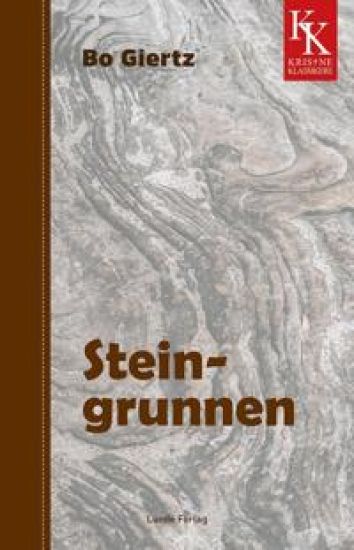
«Steingrunnen» er en historisk roman som står som et av 1900-tallets ruvende lutherske verk. Bo Giertz (1905-1998) har lagt handlingen til en menighet i sitt hjemland, Sverige, hvor vi følger tre prester som skal ut i sin første prestetjeneste. De unge mennene hører hjemme i ulike tidsepoker, og får hver brynes mot de teologiske strømninger som karakteriserer deres tid. Alle tre stilles overfor et personlig kall til vekkelse. Det tilbakevendende problemet i romanen er synden som ligger som en steingrunn i hjertet. Hvordan forholder man seg til synden slik at man kan finne fred i frelsen? Boken utgis i serien Kristne klassikere - et utvalg av titler fra forlagets arkiv til glede for gamle og nye lesere.

A Year of Grace Vol. 2 is a collection of Bo Giertz's sermons from the second half of the liturgical calendar following the day of Pentecost. He preached the earlier sermons in his ten years as a parish pastor at Torpa, a small rural town in Sweden where he began his pastoral career and wrote such books as The Hammer of God and With My Own Eyes. These early sermons are strongly influenced by the ordo salutis (order of salvation) that he took over from Henric Schartau, yet always with an emphasis on salvation by grace rather than the order. His later sermons were preached as the Bishop of Gothenburg throughout his diocese and as a guest preacher elsewhere. These retain the influence of Henric Schartau in that they seek to directly address the "three hearers"--unbelievers, those awakened to the law, and mature Christians--yet his style takes on more subtlety in when, where and how these hearers are addressed in the context of the sermon. The result is a collection of sermons that provide both great weekly devotions (as the collection was intended) and a program of study for pastors and others wanting to learn how to "rightly handle the word of truth." (2 Tim. 2:15)

A Year of Grace Vol. 2 is a collection of Bo Giertz's sermons from the second half of the liturgical calendar following the day of Pentecost. He preached the earlier sermons in his ten years as a parish pastor at Torpa, a small rural town in Sweden where he began his pastoral career and wrote such books as The Hammer of God and With My Own Eyes. These early sermons are strongly influenced by the ordo salutis (order of salvation) that he took over from Henric Schartau, yet always with an emphasis on salvation by grace rather than the order. His later sermons were preached as the Bishop of Gothenburg throughout his diocese and as a guest preacher elsewhere. These retain the influence of Henric Schartau in that they seek to directly address the "three hearers"--unbelievers, those awakened to the law, and mature Christians--yet his style takes on more subtlety in when, where and how these hearers are addressed in the context of the sermon. The result is a collection of sermons that provide both great weekly devotions (as the collection was intended) and a program of study for pastors and others wanting to learn how to "rightly handle the word of truth." (2 Tim. 2:15)

These sermons are taken from various stages in Bo Giertz pastoral career, from his time as a parish pastor, his time as a bishop, and his time in retirement. He adapted the homiletical style of Henric Schartau (whose homiletical style informs the novel “The Hammer of God”). Schartau would preach in a manner that expounded on the text before applying it to people who might find themselves in three different spiritual conditions, sometimes this is referred to as an Ordo Salutis. These three would be that of an unbeliever, a newly awakened Christian or young believer, and that of a mature believer. This has met with some controversy over the years as it was often identified with pietism, however Bo Giertz is aware of the pitfalls of this approach and turns the method in a matter that emphasizes the strengths. When it comes to the order of grace, Bo Giertz would say that it is not the order that matters but the grace.

Bo Giertz (1905-1998) oli Göteborgin hiippakunnan piispa. Hänet nimettiin kuolemansa jälkeen Kyrkans Tidning-lehden yleisönäänestyksessä 1900-luvun merkittävimmäksi vaikuttajaksi Ruotsin kirkossa. Elävän kirkon ensimmäinen osa kuvailee Jumalan tietä ihmisen sydämeen. Toinen osa avaa huikeita näköaloja jumalanpalveluksen ja rukouksen maailmaan. Kolmas osa keskittyy kahteen aina ajankohtaiseen kysymykseen: avioliittoon ja työhön. Kirja julkaistaan nyt ensi kertaa suomeksi.
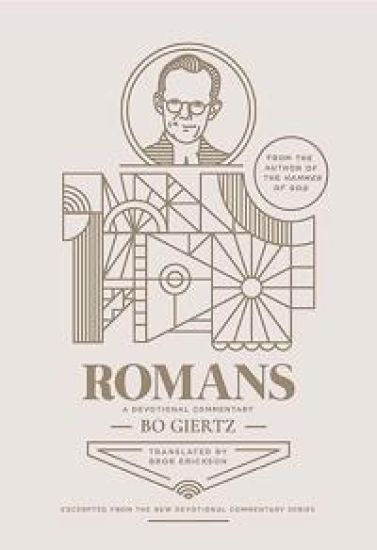
Fans of The Hammer of God and With My Own Eyes will enjoy this devotional commentary on Romans from Pastor, Bo Giertz. The beloved 20th-century bishop takes readers through Paul's letter to the Romans; pointing to God's grace in Christ and forgiveness for the sinner at every turn. Known as the "C. S. Lewis of Sweden,” Bo Giertz, unerringly reveals the fountain of good news in every Romans passage. Giertz delivers part commentary by thoroughly dissecting each passage, and part devotional as he keenly directs readers to comforts won for them by Christ crucified in all His saving glory.
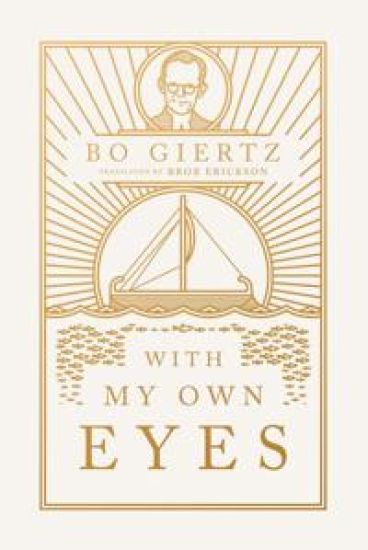
Bo Giertz wrote this book drawing upon the exegetical insights that he received from his mentor Anton Fridrichsen before, during and after his trip to Palestine in the early 1930's. The book is a third-person retelling of the gospels that brings into account various Old Testament references and the contemporary interpretations of those passages by the Jews of Jesus' day as well as contemporary events throughout the Roman Empire, but most especially those directly affecting the Jewish people of Israel at the time, so that the gospel stories take on new life and meaning for the reader. It's both a harmonization of the gospels, and a commentary on them, but much richer. The perspectives change depending on the episode. Sometimes the perspective is from that of a disciple, sometimes from that of a person being healed or a bystander observing. The Christmas story is told from the perspective of Shepherds, the crucifixion scene dwells on the perspective of Simon of Cyrene.

Omin silmin vie lukijan keskelle kristinuskon ja Raamatun merkittävimpiä vaiheita ja maisemia. Lukija voi kuin omin silmin nähdä missä ja miten kaikki tapahtui. Kirja on ruotsalaisen piispan vahvaa kerrontaa. Se kuuluu hänen klassikkoteostensa joukkoon. Bo Giertz oli nuorena ateisti. Hän opiskeli lääketiedettä Uppsalassa, jossa hän tutusui kristittyihin opiskelijoihin. Hänestä tuli kristitty ja rakastettu kirjailija ja kirkonmies. Pasi Palmu on onnistunut käännöksessään loistavasti.

? Jag har själv en gång börjat på bar mark utan att egentligen veta någonting om kristendomen. Det blev början till ett långt livs ständigt lika fascinerande upptäcktsfärd. Jag har skrivit den här boken med förhoppningen att den kanske skulle kunna hjälpa någon läsare att komma in på samma väg. Han kommer inte att ångra det.? Bo Giertz Att tro på Kristus är en bok för läsare som vill ha mer kunskap, hjälp i sin bön, hjälp att förstå Bibeln och som vill lära känna rytmen i kyrkoåret. Med början i Advent finns för varje dag en bibeltext, en utläggning, en bön och ett förslag på en psalm. Texterna har tidigare varit utgivna i två separata böcker med titlarna Att tro på Kristus och Att leva med Kristus. Nu är de samlade i denna gemensamma volym.