Kirjojen hintavertailu – 12 859 819 kirjaa ja 27 kauppaa

Kirjailija

Boaventura de Sousa Santos

Kirjat ja teokset yhdessä paikassa: 20 kirjaa, julkaisuja vuosilta 2006–2023, suosituimpiin kuuluu Decolonising the University. Vertaile teosten hintoja ja tarkista saatavuus suomalaisista kirjakaupoista.

20 kirjaa

Kirjojen julkaisuvuodet: 2006–2023.

Law and the Epistemologies of the South

Law and the Epistemologies of the South

Boaventura de Sousa Santos

Cambridge University Press
2023
pokkari
Modern state law excludes populations, peoples, and social groups by making them invisible, irrelevant, or dangerous. In this book, Boaventura de Sousa Santos offers a radical critique of the law and develops an innovative paradigm of socio-legal studies which is based on the historical experience of the Global South. He traces the history of modern law as an abyssal law, or a kind of law that is theoretically invisible yet implements profound exclusions in practice. This abyssal line has been the key procedure used by modern modes of domination – capitalism, colonialism, and patriarchy – to divide people into two groups, the metropolitan and the colonial, or the fully human and the sub-human. Crucially, de Sousa Santos rejects the decadent pessimism that claims that we are living through 'the end of history'. Instead, this book offers practical, hopeful alternatives to social exclusion and modern legal domination, aiming to make post-abyssal legal utopias a reality.

Law and the Epistemologies of the South

Law and the Epistemologies of the South

Boaventura de Sousa Santos

Cambridge University Press
2023
sidottu
Modern state law excludes populations, peoples, and social groups by making them invisible, irrelevant, or dangerous. In this book, Boaventura de Sousa Santos offers a radical critique of the law and develops an innovative paradigm of socio-legal studies which is based on the historical experience of the Global South. He traces the history of modern law as an abyssal law, or a kind of law that is theoretically invisible yet implements profound exclusions in practice. This abyssal line has been the key procedure used by modern modes of domination – capitalism, colonialism, and patriarchy – to divide people into two groups, the metropolitan and the colonial, or the fully human and the sub-human. Crucially, de Sousa Santos rejects the decadent pessimism that claims that we are living through 'the end of history'. Instead, this book offers practical, hopeful alternatives to social exclusion and modern legal domination, aiming to make post-abyssal legal utopias a reality.
From the Pandemic to Utopia

From the Pandemic to Utopia

Boaventura De Sousa Santos

TAYLOR FRANCIS LTD
2023
sidottu
The coronavirus pandemic forces us to rethink our contemporaneity. It has brought to the surface dimensions of human fragility that partially contradict the euphoria and human hubris of the fourth industrial revolution (artificial intelligence). It has also aggravated the social inequality and racial discrimination that characterize our societies. The book argues that the virus, rather than an enemy, must be viewed as a pedagogue. It is trying to teach us that the deep causes of the pandemic lie in our dominant mode of production and consumption. The systemic overload of natural resources creates a metabolic rift between society and nature that destabilizes the habitat of wild animals and the vital cycles of natural regeneration whereby pandemics become an increasingly recurrent phenomenon. In trying to take seriously this lesson the book proposes a paradigmatic shift from the current civilizatory model to a new one guided by a more equitable relationship between nature and society and the priority of life, both human and non-human.
From the Pandemic to Utopia

From the Pandemic to Utopia

Boaventura De Sousa Santos

TAYLOR FRANCIS LTD
2023
nidottu
The coronavirus pandemic forces us to rethink our contemporaneity. It has brought to the surface dimensions of human fragility that partially contradict the euphoria and human hubris of the fourth industrial revolution (artificial intelligence). It has also aggravated the social inequality and racial discrimination that characterize our societies. The book argues that the virus, rather than an enemy, must be viewed as a pedagogue. It is trying to teach us that the deep causes of the pandemic lie in our dominant mode of production and consumption. The systemic overload of natural resources creates a metabolic rift between society and nature that destabilizes the habitat of wild animals and the vital cycles of natural regeneration whereby pandemics become an increasingly recurrent phenomenon. In trying to take seriously this lesson the book proposes a paradigmatic shift from the current civilizatory model to a new one guided by a more equitable relationship between nature and society and the priority of life, both human and non-human.
Toward a New Legal Common Sense

Toward a New Legal Common Sense

Boaventura de Sousa Santos

Cambridge University Press
2020
sidottu
Paradigmatic transition is the idea that ours is a time of transition between the paradigm of modernity, which seems to have exhausted its regenerating capacities, and another, emergent time, of which so far we have seen only signs. Modernity as an ambitious and revolutionary sociocultural paradigm based on a dynamic tension between social regulation and social emancipation, the prevalent dynamic in the sixteenth century, has by the twenty-first century tilted in favour of regulation, to the determent of emancipation. The collapse of emancipation into regulation, and hence the impossibility of thinking about social emancipation consistently, symbolizes the exhaustion of the paradigm of modernity. At the same time, it signals the emergence of a new paradigm or new paradigms. This updated 2020 edition is written for students taking law and globalization courses, and political science, philosophy and sociology students doing optional subjects.
Toward a New Legal Common Sense

Toward a New Legal Common Sense

Boaventura de Sousa Santos

Cambridge University Press
2020
pokkari
Paradigmatic transition is the idea that ours is a time of transition between the paradigm of modernity, which seems to have exhausted its regenerating capacities, and another, emergent time, of which so far we have seen only signs. Modernity as an ambitious and revolutionary sociocultural paradigm based on a dynamic tension between social regulation and social emancipation, the prevalent dynamic in the sixteenth century, has by the twenty-first century tilted in favour of regulation, to the determent of emancipation. The collapse of emancipation into regulation, and hence the impossibility of thinking about social emancipation consistently, symbolizes the exhaustion of the paradigm of modernity. At the same time, it signals the emergence of a new paradigm or new paradigms. This updated 2020 edition is written for students taking law and globalization courses, and political science, philosophy and sociology students doing optional subjects.
Globalizing Institutions

Globalizing Institutions

Jane Jenson; Boaventura de Sousa Santos

Routledge
2019
nidottu
This title was first published in 2000: The contributors to this fully documented volume address the debate surrounding the nature, impact and desirability of the complex set of phenomena collectively referred to as 'globalization'. The book breaks new ground by showing globalization in a wide range of areas, including national and transnational corporations, welfare policies, adoption, gendered politics and democratic institutions, citizenship, religion and judicial systems. It is also a truly international volume, including studies from North and South America, Africa and Europe. The book illustrates how globalization entails localization and is best explored through the analysis of institutions. It will be of particular interest to political scientists, sociologists, lawyers and anyone interested in the continual processes of global change.
Latin America's Pink Tide

Latin America's Pink Tide

Boaventura de Sousa Santos

Rowman Littlefield
2019
sidottu
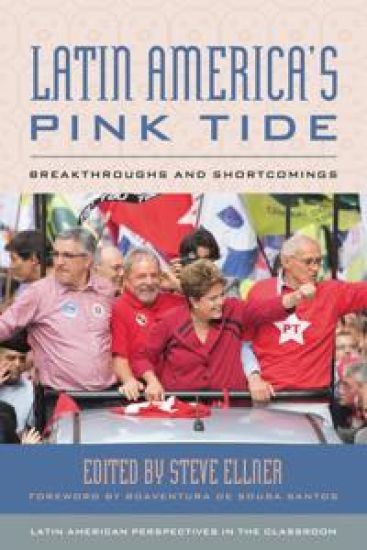
This timely book analyzes the governing experiences of the nine major leftist governments in Latin America. The individual country case study chapters are preceded by chapters that frame the discussion by considering the theoretical implications of the Pink Tide experience relating to globalization, the state, and neo-extractivism. The contributors examine the Pink Tide policies and rhetoric that gained widespread approval and led to the long tenure of many of these governments. These included ambitious social programs, prioritizing the needs of the poor, nationalistic foreign policy, economic nationalism, and asserting control of strategic sectors of the economy. The book continues by taking a critical look at policies that have contributed to recent setbacks, acknowledging the inability of progressive governments to overcome embedded structures holding back economic development. One such setback has come from the opposition—often supported by powerful foreign actors—pressuring the government into making concessions and carrying out policies that ultimately undermined economic and political stability. With its balanced and thorough assessment, this book will provide readers with a deep and nuanced understanding of the complexity of the political, economic, and sociocultural reality of contemporary Latin America and the Caribbean. The contributors critically examine these policies, which were politically successful in the short run but eventually backfired in the form of corruption, bureaucratic waste, and economic sluggishness. With its thorough and knowledgeable assessment, this book will provide readers with a deep and nuanced understanding of the complexity of the political, economic, and sociocultural reality of contemporary Latin America and the Caribbean.
Latin America's Pink Tide

Latin America's Pink Tide

Boaventura de Sousa Santos

Rowman Littlefield
2019
nidottu
This timely book analyzes the governing experiences of the nine major leftist governments in Latin America. The individual country case study chapters are preceded by chapters that frame the discussion by considering the theoretical implications of the Pink Tide experience relating to globalization, the state, and neo-extractivism. The contributors examine the Pink Tide policies and rhetoric that gained widespread approval and led to the long tenure of many of these governments. These included ambitious social programs, prioritizing the needs of the poor, nationalistic foreign policy, economic nationalism, and asserting control of strategic sectors of the economy. The book continues by taking a critical look at policies that have contributed to recent setbacks, acknowledging the inability of progressive governments to overcome embedded structures holding back economic development. One such setback has come from the opposition—often supported by powerful foreign actors—pressuring the government into making concessions and carrying out policies that ultimately undermined economic and political stability. With its balanced and thorough assessment, this book will provide readers with a deep and nuanced understanding of the complexity of the political, economic, and sociocultural reality of contemporary Latin America and the Caribbean. The contributors critically examine these policies, which were politically successful in the short run but eventually backfired in the form of corruption, bureaucratic waste, and economic sluggishness. With its thorough and knowledgeable assessment, this book will provide readers with a deep and nuanced understanding of the complexity of the political, economic, and sociocultural reality of contemporary Latin America and the Caribbean.
The End of the Cognitive Empire

The End of the Cognitive Empire

Boaventura de Sousa Santos

Duke University Press
2018
sidottu
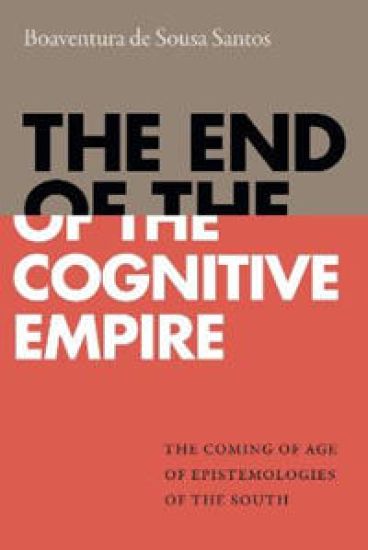
In The End of the Cognitive Empire Boaventura de Sousa Santos further develops his concept of the "epistemologies of the South," in which he outlines a theoretical, methodological, and pedagogical framework for challenging the dominance of Eurocentric thought. As a collection of knowledges born of and anchored in the experiences of marginalized peoples who actively resist capitalism, colonialism, and patriarchy, epistemologies of the South represent those forms of knowledge that are generally discredited, erased, and ignored by dominant cultures of the global North. Noting the declining efficacy of established social and political solutions to combat inequality and discrimination, Santos suggests that global justice can only come about through an epistemological shift that guarantees cognitive justice. Such a shift would create new, alternative strategies for political mobilization and activism and give oppressed social groups the means through which to represent the world as their own and in their own terms.
The End of the Cognitive Empire

The End of the Cognitive Empire

Boaventura de Sousa Santos

Duke University Press
2018
pokkari
In The End of the Cognitive Empire Boaventura de Sousa Santos further develops his concept of the "epistemologies of the South," in which he outlines a theoretical, methodological, and pedagogical framework for challenging the dominance of Eurocentric thought. As a collection of knowledges born of and anchored in the experiences of marginalized peoples who actively resist capitalism, colonialism, and patriarchy, epistemologies of the South represent those forms of knowledge that are generally discredited, erased, and ignored by dominant cultures of the global North. Noting the declining efficacy of established social and political solutions to combat inequality and discrimination, Santos suggests that global justice can only come about through an epistemological shift that guarantees cognitive justice. Such a shift would create new, alternative strategies for political mobilization and activism and give oppressed social groups the means through which to represent the world as their own and in their own terms.
Decolonising the University

Decolonising the University

Boaventura de Sousa Santos

Cambridge Scholars Publishing
2017
sidottu
At each particular historical moment, the university appears as a heavy and rigid structure resisting changes, whereas, throughout time, it has actually undergone profound transformation. Often such changes have been drastic and almost always provoked by factors external to the university, be they of a religious, political or economic nature. This book explores the nature and dynamics of the transformation that the university is undergoing today. It argues that some of the projects of reform currently under way are so radical that the question of the future of the university may well turn into the question of whether the university has a future. A specific feature of this inquiry is the realisation that questioning the future of the university involves questioning its past as well.
Globalizing Institutions

Globalizing Institutions

Jane Jenson; Boaventura de Sousa Santos

Routledge
2017
sidottu
This title was first published in 2000: The contributors to this fully documented volume address the debate surrounding the nature, impact and desirability of the complex set of phenomena collectively referred to as 'globalization'. The book breaks new ground by showing globalization in a wide range of areas, including national and transnational corporations, welfare policies, adoption, gendered politics and democratic institutions, citizenship, religion and judicial systems. It is also a truly international volume, including studies from North and South America, Africa and Europe. The book illustrates how globalization entails localization and is best explored through the analysis of institutions. It will be of particular interest to political scientists, sociologists, lawyers and anyone interested in the continual processes of global change.
If God Were a Human Rights Activist

If God Were a Human Rights Activist

Boaventura de Sousa Santos

Stanford University Press
2015
sidottu
We live in a time when the most appalling social injustices and unjust human sufferings no longer seem to generate the moral indignation and the political will needed both to combat them effectively and to create a more just and fair society. If God Were a Human Rights Activist aims to strengthen the organization and the determination of all those who have not given up the struggle for a better society, and specifically those that have done so under the banner of human rights. It discusses the challenges to human rights arising from religious movements and political theologies that claim the presence of religion in the public sphere. Increasingly globalized, such movements and the theologies sustaining them promote discourses of human dignity that rival, and often contradict, the one underlying secular human rights. Conventional or hegemonic human rights thinking lacks the necessary theoretical and analytical tools to position itself in relation to such movements and theologies; even worse, it does not understand the importance of doing so. It applies the same abstract recipe across the board, hoping that thereby the nature of alternative discourses and ideologies will be reduced to local specificities with no impact on the universal canon of human rights. As this strategy proves increasingly lacking, this book aims to demonstrate that only a counter-hegemonic conception of human rights can adequately face such challenges.
If God Were a Human Rights Activist

If God Were a Human Rights Activist

Boaventura de Sousa Santos

Stanford University Press
2015
pokkari
We live in a time when the most appalling social injustices and unjust human sufferings no longer seem to generate the moral indignation and the political will needed both to combat them effectively and to create a more just and fair society. If God Were a Human Rights Activist aims to strengthen the organization and the determination of all those who have not given up the struggle for a better society, and specifically those that have done so under the banner of human rights. It discusses the challenges to human rights arising from religious movements and political theologies that claim the presence of religion in the public sphere. Increasingly globalized, such movements and the theologies sustaining them promote discourses of human dignity that rival, and often contradict, the one underlying secular human rights. Conventional or hegemonic human rights thinking lacks the necessary theoretical and analytical tools to position itself in relation to such movements and theologies; even worse, it does not understand the importance of doing so. It applies the same abstract recipe across the board, hoping that thereby the nature of alternative discourses and ideologies will be reduced to local specificities with no impact on the universal canon of human rights. As this strategy proves increasingly lacking, this book aims to demonstrate that only a counter-hegemonic conception of human rights can adequately face such challenges.
Epistemologies of the South

Epistemologies of the South

Boaventura de Sousa Santos

Paradigm
2014
nidottu

Halvin toimitettuna 51,00 €

This book explores the concept of 'cognitive injustice': the failure to recognise the different ways of knowing by which people across the globe run their lives and provide meaning to their existence. Boaventura de Sousa Santos shows why global social justice is not possible without global cognitive justice. Santos argues that Western domination has profoundly marginalised knowledge and wisdom that had been in existence in the global South. She contends that today it is imperative to recover and valorize the epistemological diversity of the world. Epistemologies of the South outlines a new kind of bottom-up cosmopolitanism, in which conviviality, solidarity and life triumph against the logic of market-ridden greed and individualism.
Democracia al borde del caos: Ensayo contra la autoflagelación

Democracia al borde del caos: Ensayo contra la autoflagelación

Boaventura De Sousa Santos

Siglo del Hombre Editores
2014
nidottu
La autoflagelaci n es la mala conciencia de la pasividad, y no es f cil superarla en un contexto en el que la pasividad es impuesta. Sin embargo, el reconocimiento pleno de la fuerza avasalladora de las circunstancias no puede paralizar la lucha por la b squeda de alternativas dignas. Se pretende mostrar, a lo largo del libro, que ese imaginario de Europa corresponde cada vez menos a la realidad; que los partidarios de gobierno nacional -de derecha y de izquierda- y las instancias de gobierno europeo se dejaron capturar por la voracidad del neoliberalismo y de su arma de destrucci n masiva, el capital financiero, la forma de capital m s hostil a la voluntad democr tica.
Om Gud var människorättsaktivist

Om Gud var människorättsaktivist

Boaventura de Sousa Santos

Tankekraft Förlag
2014
nidottu
Idag upplever vi ett paradigmskifte i och med att västerlandets sociokulturella modell genomgår sin slutgiltiga kris. I denna situation ställs själva grundfrågorna för den mänskliga samlevnaden på sin spets genom att en mängd motstridiga principer och värderingar gör lika anspråk på giltighet. I föreliggande bok angriper sociologen, kritikern och aktivisten Boaventura de Sousa Santos ett av vår tids stora spänningsfält, nämligen den latenta konflikten mellan å ena sidan den konventionella människorättsideologin och å andra sidan de olika politiska teologier som har upplevt ett kraftigt uppsving under de senaste decennierna. Med komplexitet som analytiskt verktyg analyserar de Sousa Santos denna grundläggande tvist och identifierar såväl återvändsgränder som potentiella allianser där pluralistiska teologier och progressiva människorättskamper kan dra nytta av varandra i emancipatoriska projekt. Boaventura de sousa santos är professor i sociologi vid universitetet i Coimbra. Han är författare till ett stort antal böcker om bland annat epistemologi, demokratiteori och mänskliga rättigheter. Under det senaste decenniet har han varit nära engagerad i World Social Forum.
Epistemologies of the South

Epistemologies of the South

Boaventura de Sousa Santos

Paradigm
2014
sidottu
This book explores the concept of 'cognitive injustice': the failure to recognise the different ways of knowing by which people across the globe run their lives and provide meaning to their existence. Boaventura de Sousa Santos shows why global social justice is not possible without global cognitive justice. Santos argues that Western domination has profoundly marginalised knowledge and wisdom that had been in existence in the global South. She contends that today it is imperative to recover and valorize the epistemological diversity of the world. Epistemologies of the South outlines a new kind of bottom-up cosmopolitanism, in which conviviality, solidarity and life triumph against the logic of market-ridden greed and individualism.
The Rise of the Global Left

The Rise of the Global Left

Boaventura De Sousa Santos

Zed Books Ltd
2006
nidottu
Leading sociologist Boaventura de Sousa Santos makes an impassioned case for the politicisation of the World Social Forum, arguing that its full potential as a force for social, economic and political change can be achieved only by taking a stand against neo-liberal globalization, war, famine and corruption. However, since its inception in Porto Alegre in 2001, the World Social Forum has refused to adopt political positions on world events, preferring instead to provide a platform that facilitates cooperation between diverse social movements. Through a detailed analysis of the WSF's history and organization, he demonstrates that it has always been an inherently political organization, and argues that if the WSF is able to realise its potential as an institution for a new form of politics, it will become a global power to be reckoned with in the 21st century.