
Kirjojen hintavertailu – 12 859 829 kirjaa ja 27 kauppaa

Kirjailija

Boaz Tamir

Kirjat ja teokset yhdessä paikassa: 2 kirjaa, julkaisuja vuosilta 2017–2018, suosituimpiin kuuluu Econophysics of the Kolkata Restaurant Problem and Related Games. Vertaile teosten hintoja ja tarkista saatavuus suomalaisista kirjakaupoista.

2 kirjaa

Kirjojen julkaisuvuodet: 2017–2018.

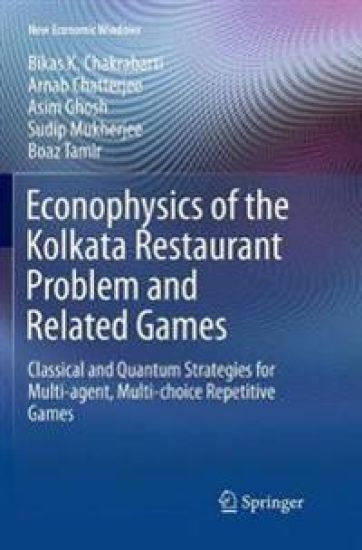
Econophysics of the Kolkata Restaurant Problem and Related Games

Econophysics of the Kolkata Restaurant Problem and Related Games

Bikas K. Chakrabarti; Arnab Chatterjee; Asim Ghosh; Sudip Mukherjee; Boaz Tamir

Springer International Publishing AG
2018
nidottu
This book provides the first comprehensive introduction to multi-agent, multi-choice repetitive games, such as the Kolkata Restaurant Problem and the Minority Game. It explains how the tangible formulations of these games, using stochastic strategies developed by statistical physicists employing both classical and quantum physics, have led to very efficient solutions to the problems posed. Further, it includes sufficient introductory notes on information-processing strategies employing both classical statistical physics and quantum mechanics. Games of this nature, in which agents are presented with choices, from among which their goal is to make the minority choice, offer effective means of modeling herd behavior and market dynamics and are highly relevant to assessing systemic risk. Accordingly, this book will be of interest to economists, physicists, and computer scientists alike.
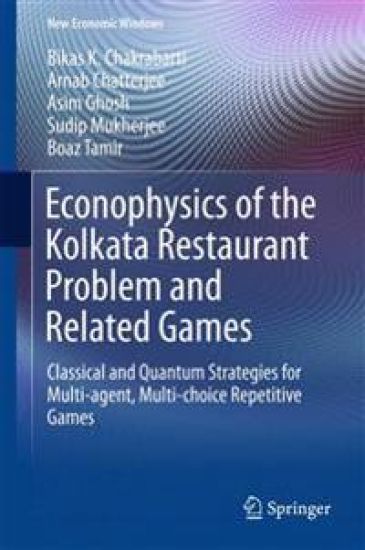
Econophysics of the Kolkata Restaurant Problem and Related Games

Econophysics of the Kolkata Restaurant Problem and Related Games

Bikas K. Chakrabarti; Arnab Chatterjee; Asim Ghosh; Sudip Mukherjee; Boaz Tamir

Springer International Publishing AG
2017
sidottu
This book provides the first comprehensive introduction to multi-agent, multi-choice repetitive games, such as the Kolkata Restaurant Problem and the Minority Game. It explains how the tangible formulations of these games, using stochastic strategies developed by statistical physicists employing both classical and quantum physics, have led to very efficient solutions to the problems posed. Further, it includes sufficient introductory notes on information-processing strategies employing both classical statistical physics and quantum mechanics. Games of this nature, in which agents are presented with choices, from among which their goal is to make the minority choice, offer effective means of modeling herd behavior and market dynamics and are highly relevant to assessing systemic risk. Accordingly, this book will be of interest to economists, physicists, and computer scientists alike.