Kirjojen hintavertailu – 12 859 819 kirjaa ja 27 kauppaa

Kirjailija

Bonnie A. Nardi

Kirjat ja teokset yhdessä paikassa: 3 kirjaa, julkaisuja vuosilta 2000–2017, suosituimpiin kuuluu Heteromation, and Other Stories of Computing and Capitalism. Vertaile teosten hintoja ja tarkista saatavuus suomalaisista kirjakaupoista.

3 kirjaa

Kirjojen julkaisuvuodet: 2000–2017.

Heteromation, and Other Stories of Computing and Capitalism

Heteromation, and Other Stories of Computing and Capitalism

Hamid R. Ekbia; Bonnie A. Nardi

MIT Press
2017
sidottu
An exploration of a new division of labor between machines and humans, in which people provide value to the economy with little or no compensation. The computerization of the economy-and everyday life-has transformed the division of labor between humans and machines, shifting many people into work that is hidden, poorly compensated, or accepted as part of being a "user" of digital technology. Through our clicks and swipes, logins and profiles, emails and posts, we are, more or less willingly, participating in digital activities that yield economic value to others but little or no return to us. Hamid Ekbia and Bonnie Nardi call this kind of participation-the extraction of economic value from low-cost or free labor in computer-mediated networks-"heteromation." In this book, they explore the social and technological processes through which economic value is extracted from digitally mediated work, the nature of the value created, and what prompts people to participate in the process. Arguing that heteromation is a new logic of capital accumulation, Ekbia and Nardi consider different kinds of heteromated labor: communicative labor, seen in user-generated content on social media; cognitive labor, including microwork and self-service; creative labor, from gaming environments to literary productions; emotional labor, often hidden within paid jobs; and organizing labor, made up of collaborative groups such as citizen scientists. Ekbia and Nardi then offer a utopian vision: heteromation refigured to bring end users more fully into the prosperity of capitalism.
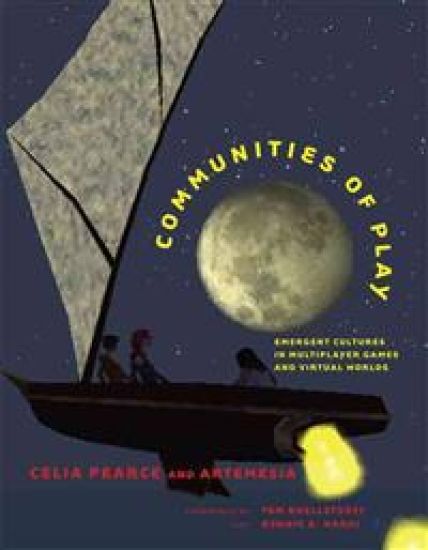
Communities of Play

Communities of Play

Celia Pearce; Tom Boellstorff; Bonnie A. Nardi

MIT Press
2011
pokkari
The odyssey of a group of "refugees" from a closed-down online game and an exploration of emergent fan cultures in virtual worlds. Play communities existed long before massively multiplayer online games; they have ranged from bridge clubs to sports leagues, from tabletop role-playing games to Civil War reenactments. With the emergence of digital networks, however, new varieties of adult play communities have appeared, most notably within online games and virtual worlds. Players in these networked worlds sometimes develop a sense of community that transcends the game itself. In Communities of Play, game researcher and designer Celia Pearce explores emergent fan cultures in networked digital worlds-actions by players that do not coincide with the intentions of the game's designers. Pearce looks in particular at the Uru Diaspora-a group of players whose game, Uru: Ages Beyond Myst, closed. These players (primarily baby boomers) immigrated into other worlds, self-identifying as "refugees"; relocated in There.com, they created a hybrid culture integrating aspects of their old world. Ostracized at first, they became community leaders. Pearce analyzes the properties of virtual worlds and looks at the ways design affects emergent behavior. She discusses the methodologies for studying online games, including a personal account of the sometimes messy process of ethnography. Pearce considers the "play turn" in culture and the advent of a participatory global playground enabled by networked digital games every bit as communal as the global village Marshall McLuhan saw united by television. Countering the ludological definition of play as unproductive and pointing to the long history of pre-digital play practices, Pearce argues that play can be a prelude to creativity.
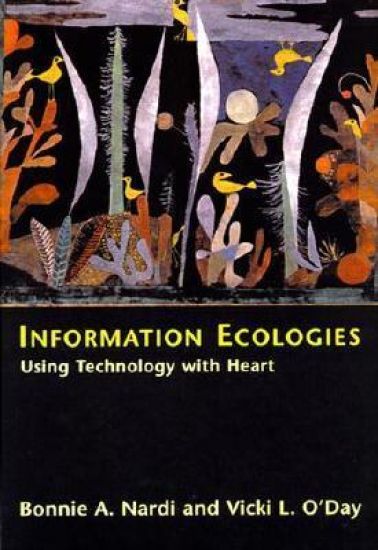
Information Ecologies

Information Ecologies

Bonnie A. Nardi; Vicki O'Day

MIT Press
2000
pokkari
A call for informed, responsible engagement with information technology at the local level. The common rhetoric about technology falls into two extreme categories: uncritical acceptance or blanket rejection. Claiming a middle ground, Bonnie Nardi and Vicki O'Day call for responsible, informed engagement with technology in local settings, which they call information ecologies. An information ecology is a system of people, practices, technologies, and values in a local environment. Nardi and O'Day encourage the reader to become more aware of the ways people and technology are interrelated. They draw on their empirical research in offices, libraries, schools, and hospitals to show how people can engage their own values and commitments while using technology.