Kirjojen hintavertailu – 12 859 818 kirjaa ja 27 kauppaa

Kirjailija

Bonnie Nardi

Kirjat ja teokset yhdessä paikassa: 4 kirjaa, julkaisuja vuosilta 2010–2024, suosituimpiin kuuluu My Life as a Night Elf Priest. Vertaile teosten hintoja ja tarkista saatavuus suomalaisista kirjakaupoista.

4 kirjaa

Kirjojen julkaisuvuodet: 2010–2024.

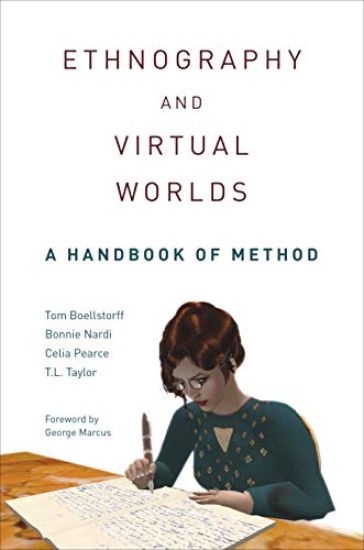
Ethnography and Virtual Worlds

Ethnography and Virtual Worlds

Tom Boellstorff; Bonnie Nardi; Celia Pearce; T. L. Taylor

PRINCETON UNIVERSITY PRESS
2024
pokkari

Halvin toimitettuna 32,40 €

A practical guide to the ethnographic study of online cultures, and beyondEthnography and Virtual Worlds is the only book of its kind—a concise, comprehensive, and practical guide for students, teachers, designers, and scholars interested in using ethnographic methods to study online virtual worlds, including both game and nongame environments. Written by leading ethnographers of virtual worlds, and focusing on the key method of participant observation, the book provides invaluable advice, tips, guidelines, and principles to aid researchers through every stage of a project, from choosing an online fieldsite to writing and publishing the results. Provides practical and detailed techniques for ethnographic research customized to reflect the specific issues of online virtual worlds, both game and nongameDraws on research in a range of virtual worlds, including Everquest, Second Life, There.com, and World of WarcraftProvides suggestions for dealing with institutional review boards, human subjects protocols, and ethical issuesGuides the reader through the full trajectory of ethnographic research, from research design to data collection, data analysis, and writing up and publishing research resultsAddresses myths and misunderstandings about ethnographic research, and argues for the scientific value of ethnography
Activity Theory in HCI

Activity Theory in HCI

Victor Kaptelinin; Bonnie Nardi

Springer International Publishing AG
2012
nidottu
Activity theory -- a conceptual framework originally developed by Aleksei Leontiev -- has its roots in the socio-cultural tradition in Russian psychology. The foundational concept of the theory is human activity, which is understood as purposeful, mediated, and transformative interaction between human beings and the world. Since the early 1990s, activity theory has been a visible landmark in the theoretical landscape of Human-Computer Interaction (HCI). Along with some other frameworks, such as distributed cognition and phenomenology, it established itself as a leading post-cognitivist approach in HCI and interaction design. In this book we discuss the conceptual foundations of activity theory and its contribution to HCI research. After making the case for theory in HCI and briefly discussing the contribution of activity theory to the field (Chapter One) we introduce the historical roots, main ideas, and principles of activity theory (Chapter Two). After that we present in-depth analyses of three issues which we consider of special importance to current developments in HCI and interaction design, namely: agency (Chapter Three), experience (Chapter Four), and activity-centric computing (Chapter Five). We conclude the book with reflections on challenges and prospects for further development of activity theory in HCI (Chapter Six). Table of Contents: Introduction: Activity theory and the changing face of HCI / Basic concepts and principles of activity theory / Agency / Activity and experience / Activity-centric computing / Activity theory and the development of HCI
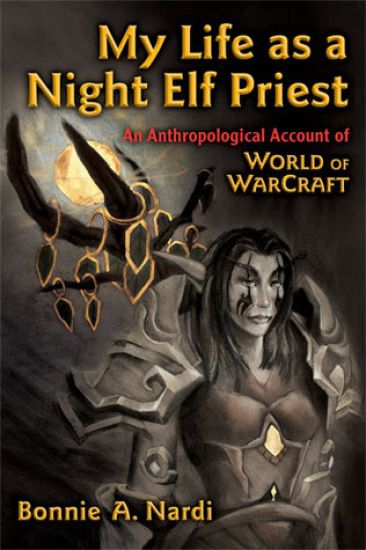
My Life as a Night Elf Priest

My Life as a Night Elf Priest

Bonnie Nardi

The University of Michigan Press
2010
sidottu
"Ever since the creators of the animated television show South Park turned their lovingly sardonic gaze on the massively multiplayer online game World of Warcraft for an entire episode, WoW's status as an icon of digital culture has been secure. My Life as a Night Elf Priest digs deep beneath the surface of that icon to explore the rich particulars of the World of Warcraft player's experience."—Julian Dibbell, Wired"World of Warcraft is the best representative of a significant new technology, art form, and sector of society: the theme-oriented virtual world. Bonnie Nardi's pioneering transnational ethnography explores this game both sensitively and systematically using the methods of cultural anthropology and aesthetics with intensive personal experience as a guild member, media teacher, and magical quest Elf."—William Sims Bainbridge, author of The Warcraft Civilization and editor of Online Worlds “Nardi skillfully covers all of the hot button issues that come to mind when people think of video games like World of Warcraft such as game addiction, sexism, and violence. What gives this book its value are its unexpected gems of rare and beautifully detailed research on less sensationalized topics of interest such as the World of Warcraft player community in China, game modding, the increasingly blurred line between play and work, and the rich and fascinating lives of players and player cultures. Nardi brings World of Warcraft down to earth for non-players and ties it to social and cultural theory for scholars. . . . the best ethnography of a single virtual world produced so far.”—Lisa Nakamura, University of IllinoisWorld of Warcraft rapidly became one of the most popular online world games on the planet, amassing 11.5 million subscribers—officially making it an online community of gamers that had more inhabitants than the state of Ohio and was almost twice as populous as Scotland. It's a massively multiplayer online game, or MMO in gamer jargon, where each person controls a single character inside a virtual world, interacting with other people's characters and computer-controlled monsters, quest-givers, and merchants. In My Life as a Night Elf Priest, Bonnie Nardi, a well-known ethnographer who has published extensively on how theories of what we do intersect with how we adopt and use technology, compiles more than three years of participatory research in Warcraft play and culture in the United States and China into this field study of player behavior and activity. She introduces us to her research strategy and the history, structure, and culture of Warcraft; argues for applying activity theory and theories of aesthetic experience to the study of gaming and play; and educates us on issues of gender, culture, and addiction as part of the play experience. Nardi paints a compelling portrait of what drives online gamers both in this country and in China, where she spent a month studying players in Internet cafes. Bonnie Nardi has given us a fresh look not only at World of Warcraft but at the field of game studies as a whole. One of the first in-depth studies of a game that has become an icon of digital culture, My Life as a Night Elf Priest will capture the interest of both the gamer and the ethnographer. Bonnie A. Nardi is an anthropologist by training and a professor in the Department of Informatics in the Donald Bren School of Information and Computer Sciences at the University of California, Irvine. Her research focus is the social implications of digital technologies. She is the author of A Small Matter of Programming: Perspectives on End User Computing and the coauthor of Information Ecologies: Using Technology with Heart and Acting with Technology: Activity Theory and Interaction Design. Cover art by Jessica Damsky

My Life as a Night Elf Priest

My Life as a Night Elf Priest

Bonnie Nardi

The University of Michigan Press
2010
nidottu
"Ever since the creators of the animated television show South Park turned their lovingly sardonic gaze on the massively multiplayer online game World of Warcraft for an entire episode, WoW's status as an icon of digital culture has been secure. My Life as a Night Elf Priest digs deep beneath the surface of that icon to explore the rich particulars of the World of Warcraft player's experience."—Julian Dibbell, Wired"World of Warcraft is the best representative of a significant new technology, art form, and sector of society: the theme-oriented virtual world. Bonnie Nardi's pioneering transnational ethnography explores this game both sensitively and systematically using the methods of cultural anthropology and aesthetics with intensive personal experience as a guild member, media teacher, and magical quest Elf."—William Sims Bainbridge, author of The Warcraft Civilization and editor of Online Worlds “Nardi skillfully covers all of the hot button issues that come to mind when people think of video games like World of Warcraft such as game addiction, sexism, and violence. What gives this book its value are its unexpected gems of rare and beautifully detailed research on less sensationalized topics of interest such as the World of Warcraft player community in China, game modding, the increasingly blurred line between play and work, and the rich and fascinating lives of players and player cultures. Nardi brings World of Warcraft down to earth for non-players and ties it to social and cultural theory for scholars. . . . the best ethnography of a single virtual world produced so far.”—Lisa Nakamura, University of IllinoisWorld of Warcraft rapidly became one of the most popular online world games on the planet, amassing 11.5 million subscribers—officially making it an online community of gamers that had more inhabitants than the state of Ohio and was almost twice as populous as Scotland. It's a massively multiplayer online game, or MMO in gamer jargon, where each person controls a single character inside a virtual world, interacting with other people's characters and computer-controlled monsters, quest-givers, and merchants. In My Life as a Night Elf Priest, Bonnie Nardi, a well-known ethnographer who has published extensively on how theories of what we do intersect with how we adopt and use technology, compiles more than three years of participatory research in Warcraft play and culture in the United States and China into this field study of player behavior and activity. She introduces us to her research strategy and the history, structure, and culture of Warcraft; argues for applying activity theory and theories of aesthetic experience to the study of gaming and play; and educates us on issues of gender, culture, and addiction as part of the play experience. Nardi paints a compelling portrait of what drives online gamers both in this country and in China, where she spent a month studying players in Internet cafes. Bonnie Nardi has given us a fresh look not only at World of Warcraft but at the field of game studies as a whole. One of the first in-depth studies of a game that has become an icon of digital culture, My Life as a Night Elf Priest will capture the interest of both the gamer and the ethnographer. Bonnie A. Nardi is an anthropologist by training and a professor in the Department of Informatics in the Donald Bren School of Information and Computer Sciences at the University of California, Irvine. Her research focus is the social implications of digital technologies. She is the author of A Small Matter of Programming: Perspectives on End User Computing and the coauthor of Information Ecologies: Using Technology with Heart and Acting with Technology: Activity Theory and Interaction Design. Cover art by Jessica Damsky