
Kirjojen hintavertailu – 12 903 725 kirjaa ja 27 kauppaa

Kirjailija

Boris Dimitrov

Kirjat ja teokset yhdessä paikassa: 2 kirjaa, julkaisuja vuosilta 2012–2021, suosituimpiin kuuluu Tribology of Abrasive Machining Processes. Vertaile teosten hintoja ja tarkista saatavuus suomalaisista kirjakaupoista.

2 kirjaa

Kirjojen julkaisuvuodet: 2012–2021.

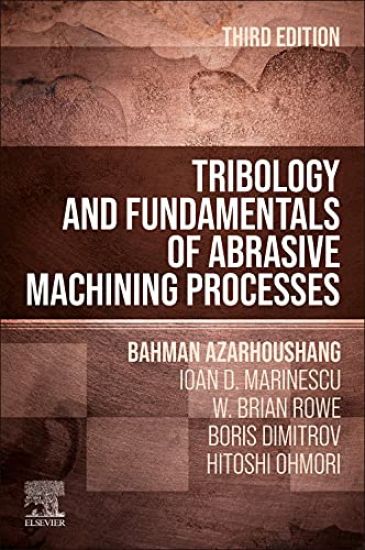
Tribology and Fundamentals of Abrasive Machining Processes

Tribology and Fundamentals of Abrasive Machining Processes

Bahman Azarhoushang; Ioan D. Marinescu; W. Brian Rowe; Boris Dimitrov; Hitoshi Ohmori

William Andrew Publishing
2021
sidottu
This new edition draws upon the fundamentals of abrasive machining processes and the science of tribology to understand, predict, and improve abrasive machining processes. Each of the main elements of the abrasive machining system is looked at alongside the tribological factors that control the efficiency and quality of the processes described. The new edition has been updated to include a variety of industrial applications. Grinding and conditioning of grinding tools are dealt with in particular detail, and solutions are proposed for many of the most commonly experienced industrial problems, such as poor accuracy, poor surface quality, rapid tool wear, vibrations, workpiece burn, and high process costs. The entire book has been rewritten and restructured, with ten completely new chapters. Other new features include:

Tribology of Abrasive Machining Processes

Tribology of Abrasive Machining Processes

Ioan D. Marinescu; W. Brian Rowe; Boris Dimitrov; Hitoshi Ohmori

William Andrew Publishing
2012
sidottu
This book draws upon the science of tribology to understand, predict and improve abrasive machining processes. Pulling together information on how abrasives work, the authors, who are renowned experts in abrasive technology, demonstrate how tribology can be applied as a tool to improve abrasive machining processes. Each of the main elements of the abrasive machining system are looked at, and the tribological factors that control the efficiency and quality of the processes are described. Since grinding is by far the most commonly employed abrasive machining process, it is dealt with in particular detail. Solutions are posed to many of the most commonly experienced industrial problems, such as poor accuracy, poor surface quality, rapid wheel wear, vibrations, work-piece burn and high process costs. This practical approach makes this book an essential tool for practicing engineers.