Kirjojen hintavertailu – 12 859 828 kirjaa ja 27 kauppaa
Kirjailija
Boris Groys
Kirjat ja teokset yhdessä paikassa: 34 kirjaa, julkaisuja vuosilta 2006–2026, suosituimpiin kuuluu Jeff Wall. Vertaile teosten hintoja ja tarkista saatavuus suomalaisista kirjakaupoista.
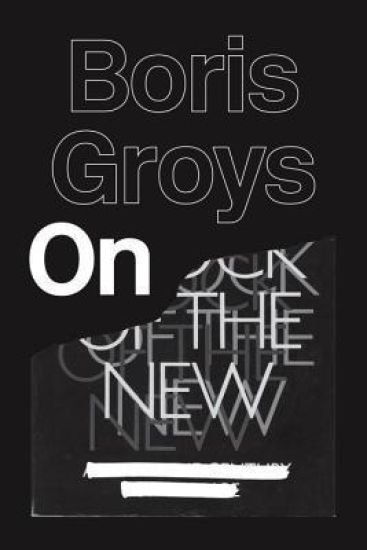
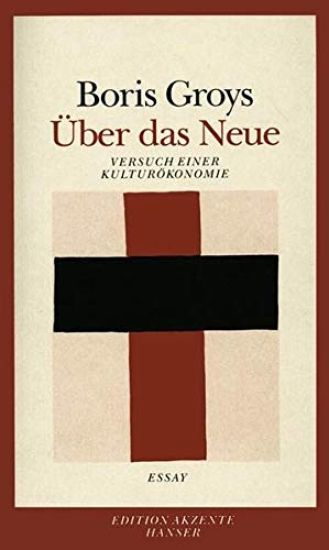
On the New looks at the economies of exchange and valuation that drive modern culture's key sites: the intellectual marketplace and the archive. As ideas move from one context to another, newness is created. This continuous shifting of the line that separates the valuable from the worthless, culture from profanity, is at the center of Boris Groys's investigation which aims to map the uncharted territory of what constitutes artistic innovation and what processes underpin its recognition and appropriation.
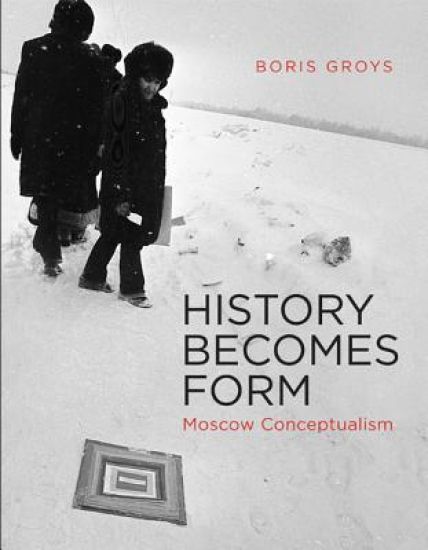
An insider's account of the art and artists of the most interesting Russian artistic phenomenon since the Russian Avant-Garde. In the 1970s and 1980s, a group of "unofficial" artists in Moscow-artists not recognized by the state, not covered by state-controlled media, and cut off from wider audiences-created artworks that gave artistic form to a certain historical moment: the experience of Soviet socialism. The Moscow conceptualists not only reflected and analyzed by artistic means a spectacle of Soviet life but also preserved its memory for a future that turned out to be different from the officially predicted one. They captured both the shabby austerity of everyday Soviet life and the utopian energy of Soviet culture. In History Becomes Form, Boris Groys offers a contemporary's account of what he calls the most interesting Russian artistic phenomenon since the Russian avant-garde. The book collects Groys's essays on Moscow conceptualism, most of them written after his emigration to the West in 1981. The individual artists of the group-including Ilya Kabakov, Lev Rubinstein, and Ivan Chuikov-became known in the West after perestroika, but until now the artistic movement as a whole has received little attention. Groys's account sheds light not only on the Moscow Conceptualists and their work but also on the dilemmas of Soviet artists during the cold war.
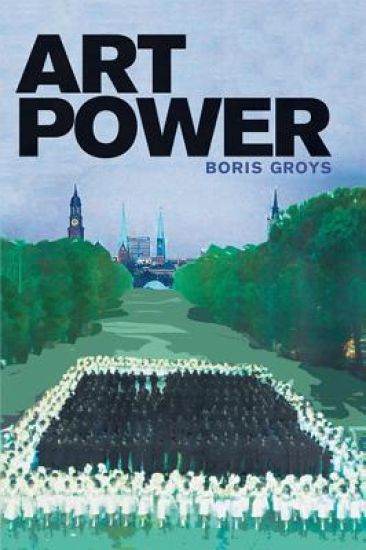
A new book by Boris Groys acknowledges the problem and potential of art's complex relationship to power. Art has its own power in the world, and is as much a force in the power play of global politics today as it once was in the arena of cold war politics. Art, argues the distinguished theoretician Boris Groys, is hardly a powerless commodity subject to the art market's fiats of inclusion and exclusion. In Art Power, Groys examines modern and contemporary art according to its ideological function. Art, Groys writes, is produced and brought before the public in two ways-as a commodity and as a tool of political propaganda. In the contemporary art scene, very little attention is paid to the latter function. Arguing for the inclusion of politically motivated art in contemporary art discourse, Groys considers art produced under totalitarianism, Socialism, and post-Communism. He also considers today's mainstream Western art-which he finds behaving more and more according the norms of ideological propaganda: produced and exhibited for the masses at international exhibitions, biennials, and festivals. Contemporary art, Groys argues, demonstrates its power by appropriating the iconoclastic gestures directed against itself-by positioning itself simultaneously as an image and as a critique of the image. In Art Power, Groys examines this fundamental appropriation that produces the paradoxical object of the modern artwork.
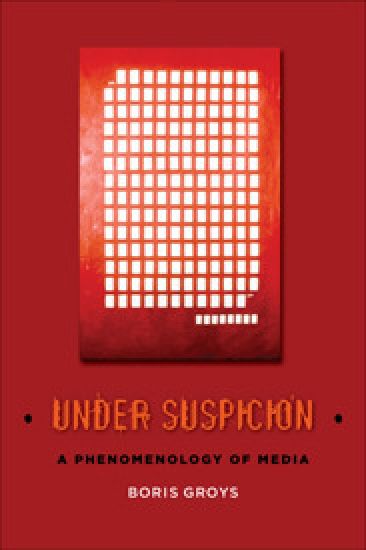
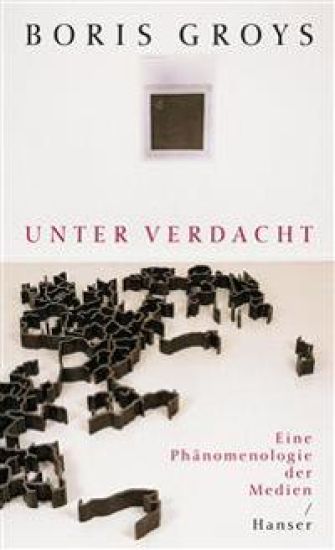
The public generally regards the media with suspicion and distrust. Therefore, the media's primary concern is to regain that trust through the production of sincerity. Advancing the field of media studies in a truly innovative way, Boris Groys focuses on the media's affect of sincerity and its manufacture of trust to appease skeptics. Groys identifies forms of media sincerity and its effect on politics, culture, society, and conceptions of the self. He relies on different philosophical writings thematizing the gaze of the other, from the theories of Heidegger, Sartre, Mauss, and Bataille to the poststructuralist formulations of Lacan and Derrida. He also considers media "states of exception" and their creation of effects of sincerity-a strategy that feeds the media's predilection for the extraordinary and the sensational, further fueling the public's suspicions. Emphasizing the media's production of emotion over the presentation (or lack thereof) of "facts," Groys launches a timely study boldly challenging the presumed authenticity of the media's worldview.
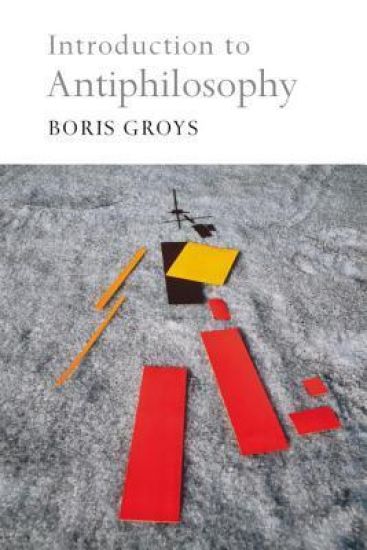
Philosophy is traditionally understood as the search for universal truths, and philosophers are supposed to transmit those truths beyond the limits of their own culture. But, today, we have become sceptical about the ability of an individual philosopher to engage in 'universal thinking', so philosophy seems to capitulate in the face of cultural relativism. In Introduction to Antiphilosophy, Boris Groys argues that modern 'antiphilosophy' does not pursue the universality of thought as its goal but proposes in its place the universality of life, material forces, social practices, passions, and experiences - angst, vitality, ecstasy, the gift, revolution, laughter or 'profane illumination' - and he analyses this shift from thought to life and action in the work of thinkers from Kierkegaard to Derrida, from Nietzsche to Benjamin. Ranging across the history of modern thought, Introduction to Antiphilosophy endeavours to liberate philosophy from the stereotypes that hinder its development.
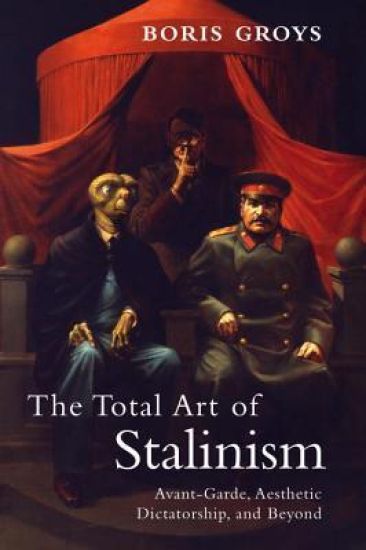
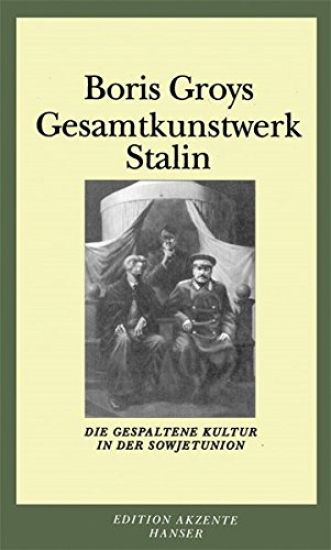
From the ruins of communism, Boris Groys emerges to provoke our interest in the aesthetic goals pursued with such catastrophic consequences by its founders. Interpreting totalitarian art and literature in the context of cultural history, this brilliant essay likens totalitarian aims to the modernists' goal of producing world-transformative art. In this new edition, Groys revisits the debate that the book has stimulated since its first publication.
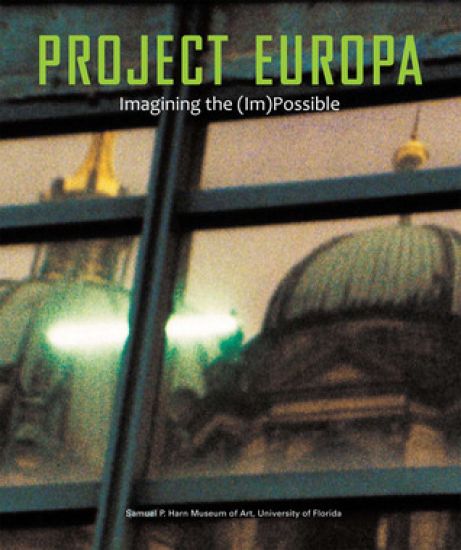
Twenty years after the fall of the Berlin wall, Project Europaconsiders the relationship of art and artists to democracy. What is the role of art in the public sphere? In what ways do artists mediate the vital and critical political issues of their time? What is the emancipator potential of art? In the exhibition, nineteen artists from the British Isles to Turkey challenge the collective imagination of Europe while confronting a paradox: Europe as the site of possibility and impossibility for creating an egalitarian society. Europe is a name, a continent, and an abstract idea. Europe was the center of Judeo-Christian tradition and, later, the beacon of the Enlightenment's universal values of equity, tolerance, and reason. Nevertheless, Europe has also given rise to xenophobia and racism, religious intolerance, and the hardening of immigration policies. This thought-provoking, visually dynamic exhibition includes poetry, photography, prints, paintings, video, installations, and wall drawings, and features an international roster of artists. In the debate between the separation of art from everyday life or the immersion of art into everyday life, these artists stake a claim at the intersection of both sides. Project Europa: Imagining the (Im)Possible, appeared at the Samuel P. Harn Museum of Art February 7-May 9, 2010. A preview of the exhibition appeared in Art Forum;reviews will appear in the June issues of Art in Americaand Camera Austriamagazines. The exhibition travels to the Miriam and Ira D. Wallach Art Gallery at Columbia University January 25-March 19, 2011.
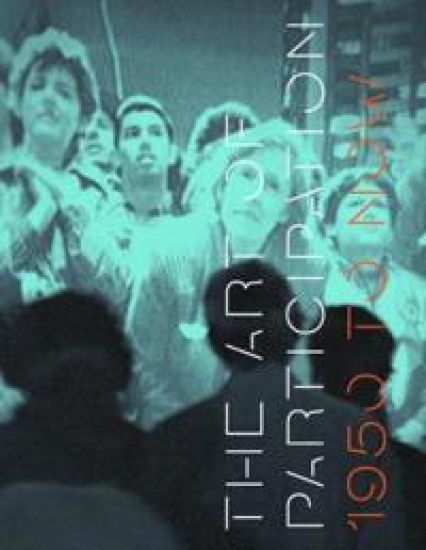
This new survey covers the rich and varied history of participatory art, from early happenings and performances to current practices that demand audience interaction. As the internet mindset – browsing, sharing, collecting, producing – increasingly permeates every aspect of society, this timely project reveals the ways in which artists and viewers have approached the creation of open works of art. Original essays identify seminal moments in participatory practice from the 1950s to the present day, while a rich array of plates reproduces the work of the movement’s major figures in vivid detail.
Boris Groys untersucht den kulturellen Prozeß als ökonomische Operation, angetrieben von Gesetzen des Tausches, der Bewertung, der Dynamik, des intellektuellen Marktes, der Nutzung des kulturellen Archivs. Kulturökonomie: eine ärgerliche Paradoxie? Nein, die Neubestimmung von Kultur jenseits der Dichotomie von Neu und Alt und ohne die Idee weitertreibender, schöpferischer Innovation aufzugeben.