Kirjojen hintavertailu – 12 903 725 kirjaa ja 27 kauppaa

Kirjailija

Borko Furht

Kirjat ja teokset yhdessä paikassa: 31 kirjaa, julkaisuja vuosilta 1990–2026, suosituimpiin kuuluu Dark Minds Beyond the Grave with AI. Vertaile teosten hintoja ja tarkista saatavuus suomalaisista kirjakaupoista.

31 kirjaa

Kirjojen julkaisuvuodet: 1990–2026.

Video and Image Processing in Multimedia Systems

Video and Image Processing in Multimedia Systems

Borko Furht; Stephen W. Smoliar

Springer-Verlag New York Inc.
2012
nidottu
Video and Image Processing in Multimedia Systems treats a number of critical topics in multimedia systems, with respect to image and video processing techniques and their implementations. These techniques include: Image and video compression techniques and standards, and Image and video indexing and retrieval techniques. Video and Image Processing in Multimedia Systems is divided into three parts. Part I serves as an introduction to multimedia systems, discussing basic concepts, multimedia networking and synchronization, and an overview of multimedia applications. Part II presents comprehensive coverage of image and video compression techniques and standards, their implementations and applications. Because multimedia data (specifically video and images) require efficient compression techniques in order to be stored and delivered in real-time, video and image compression is a crucial element of an effective multimedia system. In Part III attention is focused on the semantic nature of image and video source material, and how that material may be effectively indexed and retrieved. Topics discussed include static images, full-motion video, and the manner in which compressed representations can facilitate structural analysis. Part III concludes with an extended discussion of a case study. This book serves as an invaluable reference with respect to the most important standards in the field. Video and Image Processing in Multimedia Systems is suitable as a textbook for course use.
Content-Based Image and Video Retrieval

Content-Based Image and Video Retrieval

Oge Marques; Borko Furht

Springer-Verlag New York Inc.
2012
nidottu
Content-Based Image And Video Retrieval addresses the basic concepts and techniques for designing content-based image and video retrieval systems. It also discusses a variety of design choices for the key components of these systems. This book gives a comprehensive survey of the content-based image retrieval systems, including several content-based video retrieval systems. The survey includes both research and commercial content-based retrieval systems. Content-Based Image And Video Retrieval includes pointers to two hundred representative bibliographic references on this field, ranging from survey papers to descriptions of recent work in the area, entire books and more than seventy websites. Finally, the book presents a detailed case study of designing MUSE–a content-based image retrieval system developed at Florida Atlantic University in Boca Raton, Florida.
Real-Time UNIX® Systems

Real-Time UNIX® Systems

Borko Furht; Dan Grostick; David Gluch; Guy Rabbat; John Parker; Meg McRoberts

Springer-Verlag New York Inc.
2012
nidottu
A growing concern of mine has been the unrealistic expectations for new computer-related technologies introduced into all kinds of organizations. Unrealistic expectations lead to disappointment, and a schizophrenic approach to the introduction of new technologies. The UNIX and real-time UNIX operating system technologies are major examples of emerging technologies with great potential benefits but unrealistic expectations. Users want to use UNIX as a common operating system throughout large segments of their organizations. A common operating system would decrease software costs by helping to provide portability and interoperability between computer systems in today's multivendor environments. Users would be able to more easily purchase new equipment and technologies and cost-effectively reuse their applications. And they could more easily connect heterogeneous equipment in different departments without having to constantly write and rewrite interfaces. On the other hand, many users in various organizations do not understand the ramifications of general-purpose versus real-time UNIX. Users tend to think of "real-time" as a way to handle exotic heart-monitoring or robotics systems. Then these users use UNIX for transaction processing and office applications and complain about its performance, robustness, and reliability. Unfortunately, the users don't realize that real-time capabilities added to UNIX can provide better performance, robustness and reliability for these non-real-time applications. Many other vendors and users do realize this, however. There are indications even now that general-purpose UNIX will go away as a separate entity. It will be replaced by a real-time UNIX. General-purpose UNIX will exist only as a subset of real-time UNIX.
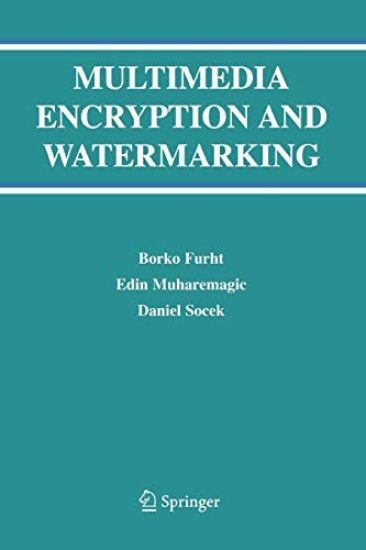
Multimedia Encryption and Watermarking

Multimedia Encryption and Watermarking

Borko Furht; Edin Muharemagic; Daniel Socek

Springer-Verlag New York Inc.
2010
nidottu
Multimedia Encryption and Watermarking presents a comprehensive survey of contemporary multimedia encryption and watermarking techniques, which enable a secure exchange of multimedia intellectual property. Part I, Digital Rights Management (DRM) for Multimedia, introduces DRM concepts and models for multimedia content protection, and presents the key players. Part II, Multimedia Cryptography, provides an overview of modern cryptography, with the focus on modern image, video, speech, and audio encryption techniques. This book also provides an advanced concept of visual and audio sharing techniques. Part III, Digital Watermarking, introduces the concept of watermarking for multimedia, classifies watermarking applications, and evaluates various multimedia watermarking concepts and techniques, including digital watermarking techniques for binary images. Multimedia Encryption and Watermarking is designed for researchers and practitioners, as well as scientists and engineers who design and develop systems for the protection of digital multimedia content. This volume is also suitable as a textbook for graduate courses on multimedia security.
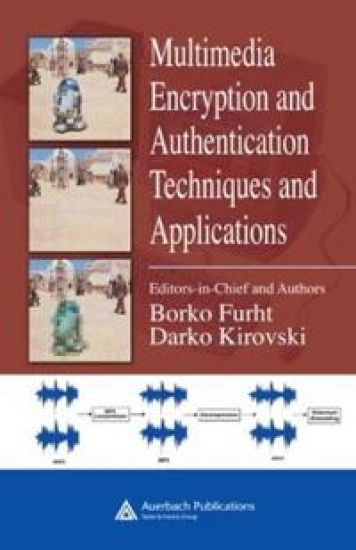
Multimedia Encryption and Authentication Techniques and Applications

Multimedia Encryption and Authentication Techniques and Applications

Borko Furht; Darko Kirovski

Auerbach Publishers Inc.
2006
sidottu
Intellectual property owners must continually exploit new ways of reproducing, distributing, and marketing their products. However, the threat of piracy looms as a major problem with digital distribution and storage technologies. Multimedia Encryption and Authentication Techniques and Applications covers current and future trends in the design of modern systems that use encryption and authentication to protect multimedia content. Containing the works of contributing authors who are worldwide experts in their fields, this volume is intended for researchers and practitioners, as well as for those who want a broad understanding of multimedia security. In the wake of the explosive growth of digital entertainment and Internet applications, this book is a definitive resource for scientists, researchers, programmers, engineers, business managers, entrepreneurs, and investors. FeaturesDescribes and evaluates the state of the art in multimedia encryption and authentication techniques and related technologies, architectures, standards, and applications Includes advanced topics, such as chaotic encryption techniques for digital images and video, as well as streaming media encryption Focuses on digital rights management issues for video and for consumer devices Covers key management and protection for IP multimedia, digital media fingerprinting, and signature-based media authentication
Multimedia Encryption and Watermarking

Multimedia Encryption and Watermarking

Borko Furht; Edin Muharemagic; Daniel Socek

Springer-Verlag New York Inc.
2005
sidottu
Multimedia Encryption and Watermarking presents a comprehensive survey of contemporary multimedia encryption and watermarking techniques, which enable a secure exchange of multimedia intellectual property. Part I, Digital Rights Management (DRM) for Multimedia, introduces DRM concepts and models for multimedia content protection, and presents the key players. Part II, Multimedia Cryptography, provides an overview of modern cryptography, with the focus on modern image, video, speech, and audio encryption techniques. This book also provides an advanced concept of visual and audio sharing techniques. Part III, Digital Watermarking, introduces the concept of watermarking for multimedia, classifies watermarking applications, and evaluates various multimedia watermarking concepts and techniques, including digital watermarking techniques for binary images. Multimedia Encryption and Watermarking is designed for researchers and practitioners, as well as scientists and engineers who design and develop systems for the protection of digital multimedia content. This volume is also suitable as a textbook for graduate courses on multimedia security.
Content-Based Image and Video Retrieval

Content-Based Image and Video Retrieval

Oge Marques; Borko Furht

Springer-Verlag New York Inc.
2002
sidottu
Content-Based Image And Video Retrieval addresses the basic concepts and techniques for designing content-based image and video retrieval systems. It also discusses a variety of design choices for the key components of these systems. This book gives a comprehensive survey of the content-based image retrieval systems, including several content-based video retrieval systems. The survey includes both research and commercial content-based retrieval systems. Content-Based Image And Video Retrieval includes pointers to two hundred representative bibliographic references on this field, ranging from survey papers to descriptions of recent work in the area, entire books and more than seventy websites. Finally, the book presents a detailed case study of designing MUSE–a content-based image retrieval system developed at Florida Atlantic University in Boca Raton, Florida.
Motion Estimation Algorithms for Video Compression

Motion Estimation Algorithms for Video Compression

Borko Furht; Joshua Greenberg; Raymond Westwater

Springer
1996
sidottu
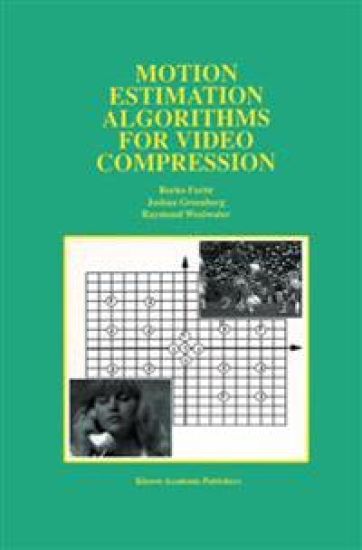
Video technology promises to be the key for the transmission of motion video. A number of video compression techniques and standards have been introduced in the past few years, particularly the MPEG-1 and MPEG-2 for interactive multimedia and for digital NTSC and HDTV applications, and H.2611H.263 for video telecommunications. These techniques use motion estimation techniques to reduce the amount of data that is stored and transmitted for each frame. This book is about these motion estimation algorithms, their complexity, implementations, advantages, and drawbacks. First, we present an overview of video compression techniques with an emphasis to techniques that use motion estimation, such as MPEG and H.2611H.263. Then, we give a survey of current motion estimation search algorithms, including the exhaustive search and a number of fast search algorithms. An evaluation of current search algorithms, based on a number of experiments on several test video sequences, is presented as well. The theoretical framework for a new fast search algorithm, Densely-Centered Uniform-P Search (DCUPS), is developed and presented in the book. The complexity of the DCUPS algorithm is comparable to other popular motion estimation techniques, however the algorithm shows superior results in terms of compression ratios and video qUality. We should stress out that these new results, presented in Chapters 4 and 5, have been developed by Joshua Greenberg, as part of his M. Sc. thesis entitled "Densely-Centered Uniform P-Search: A Fast Motion Estimation Algorithm" (FAU, 1996).
Real-Time Video Compression

Real-Time Video Compression

Raymond Westwater; Borko Furht

Springer
1996
sidottu
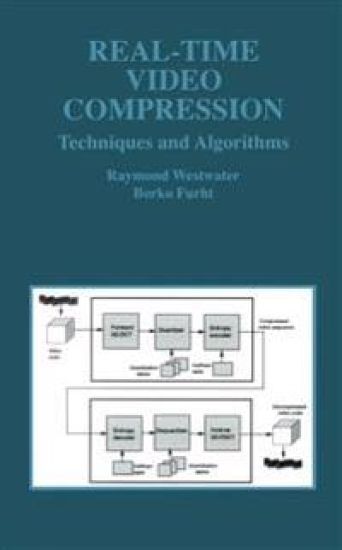
Real-Time Video Compression: Techniques and Algorithms introduces the XYZ video compression technique, which operates in three dimensions, eliminating the overhead of motion estimation. First, video compression standards, MPEG and H.261/H.263, are described. They both use asymmetric compression algorithms, based on motion estimation. Their encoders are much more complex than decoders. The XYZ technique uses a symmetric algorithm, based on the Three-Dimensional Discrete Cosine Transform (3D-DCT). 3D-DCT was originally suggested for compression about twenty years ago; however, at that time the computational complexity of the algorithm was too high, it required large buffer memory, and was not as effective as motion estimation. We have resurrected the 3D-DCT-based video compression algorithm by developing several enhancements to the original algorithm. These enhancements make the algorithm feasible for real-time video compression in applications such as video-on-demand, interactive multimedia, and videoconferencing. The demonstrated results, presented in this book, suggest that the XYZ video compression technique is not only a fast algorithm, but also provides superior compression ratios and high quality of the video compared to existing standard techniques, such as MPEG and H.261/H.263. The elegance of the XYZ technique is in its simplicity, which leads to inexpensive VLSI implementation of any XYZ codec. Real-Time Video Compression: Techniques and Algorithms can be used as a text for graduate students and researchers working in the area of real-time video compression. In addition, the book serves as an essential reference for professionals in the field.
Video and Image Processing in Multimedia Systems

Video and Image Processing in Multimedia Systems

Borko Furht; Stephen W. Smoliar

Springer
1995
sidottu
Video and Image Processing in Multimedia Systems treats a number of critical topics in multimedia systems, with respect to image and video processing techniques and their implementations. These techniques include: Image and video compression techniques and standards, and Image and video indexing and retrieval techniques. Video and Image Processing in Multimedia Systems is divided into three parts. Part I serves as an introduction to multimedia systems, discussing basic concepts, multimedia networking and synchronization, and an overview of multimedia applications. Part II presents comprehensive coverage of image and video compression techniques and standards, their implementations and applications. Because multimedia data (specifically video and images) require efficient compression techniques in order to be stored and delivered in real-time, video and image compression is a crucial element of an effective multimedia system. In Part III attention is focused on the semantic nature of image and video source material, and how that material may be effectively indexed and retrieved. Topics discussed include static images, full-motion video, and the manner in which compressed representations can facilitate structural analysis. Part III concludes with an extended discussion of a case study. This book serves as an invaluable reference with respect to the most important standards in the field. Video and Image Processing in Multimedia Systems is suitable as a textbook for course use.
Real-Time UNIX® Systems

Real-Time UNIX® Systems

Borko Furht; Dan Grostick; David Gluch; Guy Rabbat; John Parker; Meg McRoberts

Springer
1990
sidottu
A growing concern of mine has been the unrealistic expectations for new computer-related technologies introduced into all kinds of organizations. Unrealistic expectations lead to disappointment, and a schizophrenic approach to the introduction of new technologies. The UNIX and real-time UNIX operating system technologies are major examples of emerging technologies with great potential benefits but unrealistic expectations. Users want to use UNIX as a common operating system throughout large segments of their organizations. A common operating system would decrease software costs by helping to provide portability and interoperability between computer systems in today's multivendor environments. Users would be able to more easily purchase new equipment and technologies and cost-effectively reuse their applications. And they could more easily connect heterogeneous equipment in different departments without having to constantly write and rewrite interfaces. On the other hand, many users in various organizations do not understand the ramifications of general-purpose versus real-time UNIX. Users tend to think of "real-time" as a way to handle exotic heart-monitoring or robotics systems. Then these users use UNIX for transaction processing and office applications and complain about its performance, robustness, and reliability. Unfortunately, the users don't realize that real-time capabilities added to UNIX can provide better performance, robustness and reliability for these non-real-time applications. Many other vendors and users do realize this, however. There are indications even now that general-purpose UNIX will go away as a separate entity. It will be replaced by a real-time UNIX. General-purpose UNIX will exist only as a subset of real-time UNIX.