
Kirjailija
Brad D. Strawn
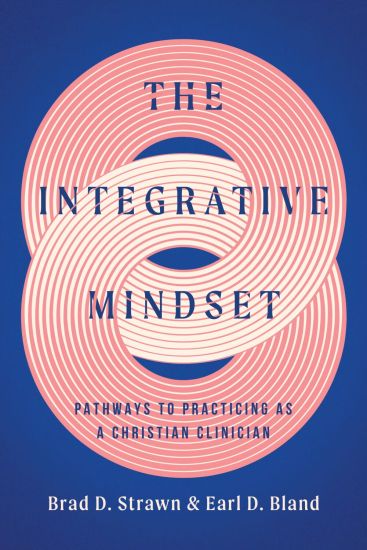
Kirjat ja teokset yhdessä paikassa: 9 kirjaa, julkaisuja vuosilta 2012–2025, suosituimpiin kuuluu The Integrative Mindset. Vertaile teosten hintoja ja tarkista saatavuus suomalaisista kirjakaupoista.
Nimi esiintyy myös muodoissa: Brad D Strawn
9 kirjaa
Kirjojen julkaisuvuodet: 2012–2025.

A Christian Approach to Counseling and Psychotherapy
Siang-Yang Tan; Brad D Strawn
Cascade Books
2022
pokkari
A Christian Approach to Counseling and Psychotherapy
Siang-Yang Tan; Brad D Strawn
Cascade Books
2022
sidottu
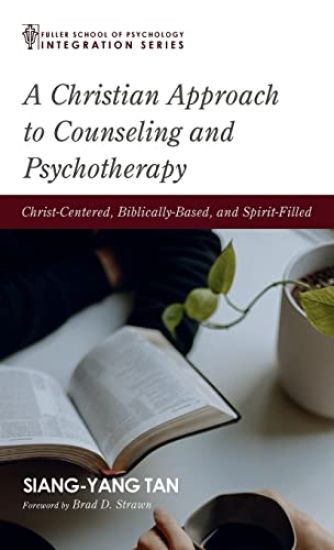
What does a Christian approach to counseling and psychotherapy involve? The 2021 Fuller Integration Symposium Lectures by Dr. Siang-Yang Tan, published in this book, cover this topic with the overall title of: A Christian Approach to Counseling and Psychotherapy: Christ-Centered, Biblically Based, and Spirit-Filled. The three lectures in three chapters are on: (1) A Christian Perspective on Human Nature and Effective Counseling and Psychotherapy; (2) Implicit and Explicit Integration in Christian Counseling and Psychotherapy: Christian Faith in Clinical Practice; and (3) The Role of the Holy Spirit in Christian Counseling and Psychotherapy.
Enhancing Christian Life – How Extended Cognition Augments Religious Community
Brad D. Strawn; Warren S. Brown
IVP Academic
2020
nidottu
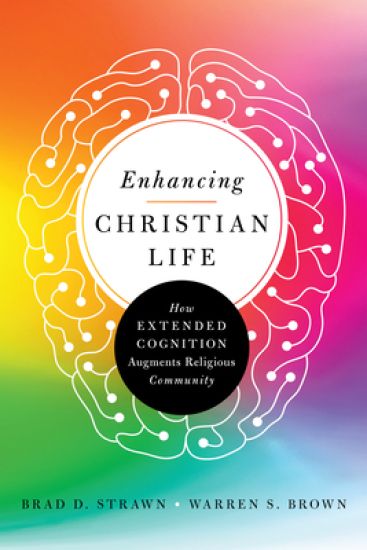
2020 Foreword INDIES Book of the Year Finalist - Science and Technology No one is really Christian on their own. But often the religious life is seen as individual, private, and internal—resulting in a truncated, consumeristic faith. And what if that kind of individualistic Christianity is built on a fundamental misunderstanding of human nature? According to psychologists Brad Strawn and Warren Brown, it's time to rethink the Christian life in light of current research on the human mind, particularly with a deeper understanding of the process called "extended cognition." Using insights from neuroscience, psychology, and philosophy, they argue in Enhancing Christian Life that persons must be understood as not only embodied and embedded within particular contexts, but also extended beyond the body to encompass aspects of the physical and social world. Embracing a vision of the Christian life as extended into interactions with a local network of believers, they help us discover a fuller, more effective way to be Christian. After exploring the psychological dynamics of extended cognition, including how the mind is "supersized" by the incorporation of physical tools and social networks, Strawn and Brown consider implications for spiritual practices, congregational life, and religious language and traditions, which they describe as mental "wikis." The formation of robust Christian life, they show, is a process that takes place within a larger mesh of embodiment and mind—broader, deeper, and richer than we could ever be on our own.


Christianity & Psychoanalysis – A New Conversation
Earl D. Bland; Brad D. Strawn
Inter-Varsity Press,US
2014
nidottu
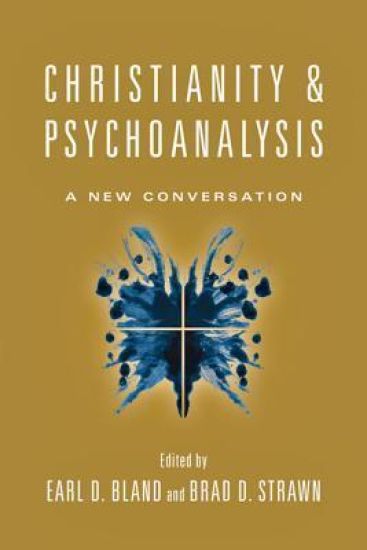
Unsurprisingly, given Sigmund Freud's understanding of religion, the conversation between Christianity and psychoanalysis has long been marked by mutual suspicion. Psychoanalysis originated within a naturalist, post-Enlightenment context and sought to understand human functioning and pathology--focusing on phenomena such as the unconscious and object representation--on a strictly empirical basis. Given certain accounts of divine agency and human uniqueness, psychoanalytic work was often seen as competitive with a Christian understanding of the human person. The contributors to Christianity and Psychoanalysis seek to start a new conversation. Aided by the turn to relationality in theology, as well as by a noncompetitive conception of God?s transcendence and agency, this book presents a fresh integration of Christian thought and psychoanalytic theory. The immanent processes identified by psychoanalysis need not compete with Christian theology but can instead be the very means by which God is involved in human existence. The Christian study of psychoanalysis can thus serve the flourishing of God?s kingdom. Christian Association for Psychological Studies (CAPS) Books explore how Christianity relates to mental health and behavioral sciences including psychology, counseling, social work, and marriage and family therapy in order to equip Christian clinicians to support the well-being of their clients.
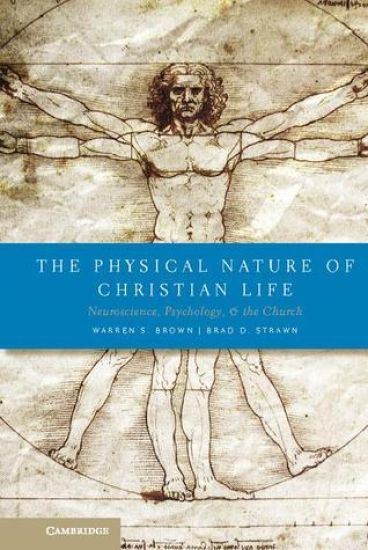
The Physical Nature of Christian Life
Warren S. Brown; Brad D. Strawn
Cambridge University Press
2012
sidottu
This book explores the implications of recent insights in modern neuroscience for the church's view of spiritual formation. Science suggests that functions of the brain and body in collaboration with social experience, rather than a disembodied soul, provide physical basis for the mental capacities, interpersonal relations, and religious experiences of human beings. The realization that human beings are wholly physical, but with unique mental, relational and spiritual capacities, challenges traditional views of Christian life as defined by the care of souls, a view that leads to inwardness and individuality. Psychology and neuroscience suggest the importance of developmental openness, attachment, imitation and stories as tools in spiritual formation. Accordingly, the idea that care of embodied persons should be fundamentally social and communal sets new priorities for encouraging spiritual growth and building congregations.
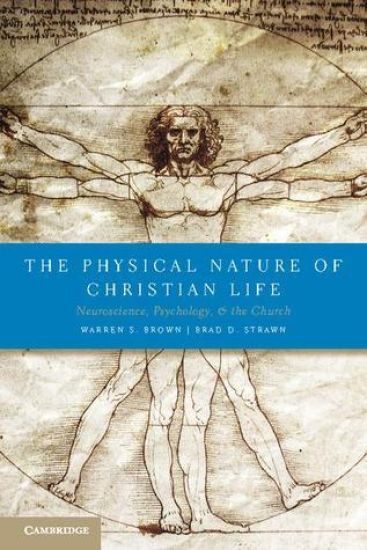
The Physical Nature of Christian Life
Warren S. Brown; Brad D. Strawn
Cambridge University Press
2012
pokkari
This book explores the implications of recent insights in modern neuroscience for the church's view of spiritual formation. Science suggests that functions of the brain and body in collaboration with social experience, rather than a disembodied soul, provide physical basis for the mental capacities, interpersonal relations, and religious experiences of human beings. The realization that human beings are wholly physical, but with unique mental, relational and spiritual capacities, challenges traditional views of Christian life as defined by the care of souls, a view that leads to inwardness and individuality. Psychology and neuroscience suggest the importance of developmental openness, attachment, imitation and stories as tools in spiritual formation. Accordingly, the idea that care of embodied persons should be fundamentally social and communal sets new priorities for encouraging spiritual growth and building congregations.