Kirjojen hintavertailu – 12 903 724 kirjaa ja 27 kauppaa

Kirjailija

Brad Prager

Kirjat ja teokset yhdessä paikassa: 10 kirjaa, julkaisuja vuosilta 2007–2023, suosituimpiin kuuluu Phoenix. Vertaile teosten hintoja ja tarkista saatavuus suomalaisista kirjakaupoista.

10 kirjaa

Kirjojen julkaisuvuodet: 2007–2023.

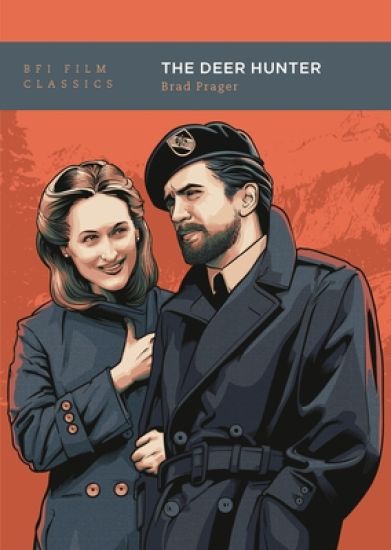
The Deer Hunter

The Deer Hunter

Brad Prager

BLOOMSBURY PUBLISHING PLC
2023
nidottu
Michael Cimino’s The Deer Hunter was met with both critical and commercial success upon its release in 1978. However, it was also highly controversial and came to be seen as a powerful statement on the human cost of America's longest war and as a colonialist glorification of anti-Asian violence. Brad Prager's study of the film considers its significance as a war movie and contextualizes its critical reception. Drawing on an archive of contemporaneous materials, as well as an in-depth analysis of the film’s lighting, mise-en-scène, multiple cameras and shifting depths of field, Prager examines how the film simultaneously presents itself as a work of cinematic realism, while problematically blurring the lines between fact and fiction. While Cimino felt he had no responsibility to historical truth, depicting a highly stylized version of his own fantasies about the Vietnam War, Prager argues that The Deer Hunter’s formal elements were used to bolster his troubling depictions of war and race. Finally, comparing the film with later depictions of US-led intervention such as Albert and Allen Hughes’s Dead Presidents (1995) and Spike Lee’s Da Five Bloods (2020), Prager illuminates The Deer Hunter’s major presumptions, blind spots and omissions, while also presenting a case for its classic status.
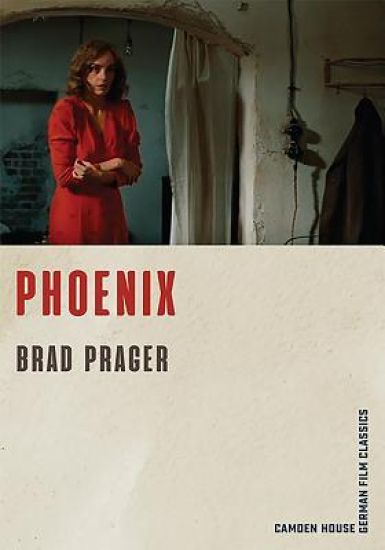
Phoenix

Phoenix

Brad Prager

Camden House Inc
2019
pokkari
Offers not only a close reading but also a film-historical contextualization of Phoenix, constituting the most significant and thorough study of Petzold's film to date. Christian Petzold's Phoenix (2014), a masterpiece from one of Germany's leading contemporary filmmakers, portrays a death-camp survivor's return to occupied Berlin just after the war has come to an end. Nelly, played by German film star Nina Hoss, returns badly wounded, her face covered in bandages, hoping that her German husband will still love her. Johnny fails to recognize her and instead offers her a role in an intricate criminal scheme. Petzold's film, which he scripted together with his frequent collaborator Harun Farocki, was an international success that has been widely compared with works by Alfred Hitchcock and Rainer Werner Fassbinder. This study explores the film's unique array of influences including the vast range of films, novels, and memoirs on which its screenwriters drew. Its central argument concerns the film's integration of a long history of German-Jewish works and ideas-its attempt to confront its audience with a neglected tradition that included figures as diverse as Peter Lorre, Fred Zinnemann, and Hannah Arendt. Offering a close reading of the film's themes, compositions, and music alongside a film-historical contextualization, this book constitutes the most significant and thorough study of Phoenix to date. Brad Prager is Professor of German and Film Studies at the University of Missouri.
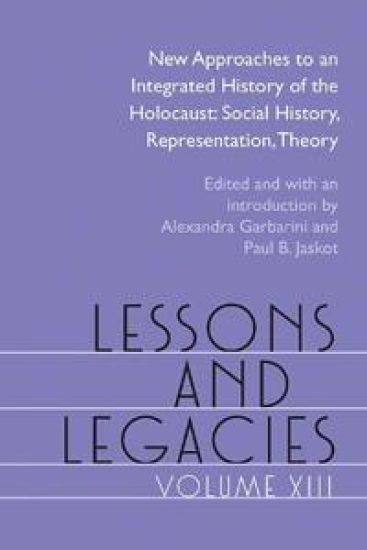
Lessons and Legacies XIII

Lessons and Legacies XIII

Alexandra Garbarini; Paul Jaskot; Brad Prager; Dana Smith; Marion Kaplan; Kaelber Lutz; Kubátová Hana; Martin Dean; Jan Grabowski; Simone Gigliotti; Pedro Correa Martín-Arroyo; Jonathan Druker; Gershon Greenberg; Lissa Skitolsky; Dorota Glowacka

Northwestern University Press
2018
sidottu
The social history of the genocide, its representation in postwar culture, and new theoretical approaches stand at the forefront of current research in a range of disciplines. Analyses at the most intimate scale—of the individual or of a particular locale— are juxtaposed with those that turn to broader studies of the war or postwar order. Complementing these different scales are theoretical investigations that address individual agency, moral judgment, and the construction of meaning and memory in the study of the victims of the Holocaust and in our understanding of society as a whole. Together they mark the contemporary scholarly landscape of Holocaust studies, which includes history as well as film and literary studies, philosophy, and religious studies (among other disciplines). Each of the volume's three sections contributes to understanding the Holocaust and postwar ramifications of the genocide by focusing on: 1) the history of specific communities of both victims and perpetrators; 2) postwar cultural representations; and 3) new theoretical understandings of each. The essays in this volume thus represent new interests in the field that contribute to building integrated histories of the Holocaust.
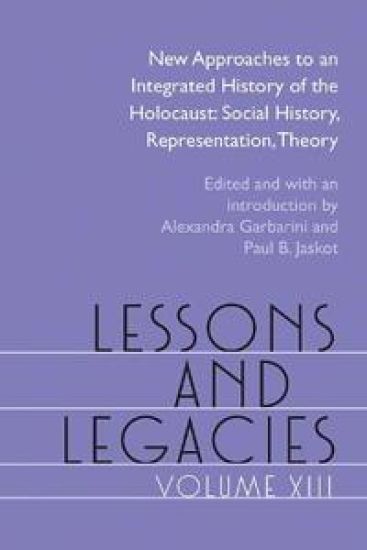
Lessons and Legacies XIII

Lessons and Legacies XIII

Alexandra Garbarini; Paul Jaskot; Brad Prager; Dana Smith; Marion Kaplan; Kaelber Lutz; Kubátová Hana; Martin Dean; Jan Grabowski; Simone Gigliotti; Pedro Correa Martín-Arroyo; Jonathan Druker; Gershon Greenberg; Lissa Skitolsky; Dorota Glowacka

Northwestern University Press
2018
nidottu
The social history of the genocide, its representation in postwar culture, and new theoretical approaches stand at the forefront of current research in a range of disciplines. Analyses at the most intimate scale—of the individual or of a particular locale— are juxtaposed with those that turn to broader studies of the war or postwar order. Complementing these different scales are theoretical investigations that address individual agency, moral judgment, and the construction of meaning and memory in the study of the victims of the Holocaust and in our understanding of society as a whole. Together they mark the contemporary scholarly landscape of Holocaust studies, which includes history as well as film and literary studies, philosophy, and religious studies (among other disciplines). Each of the volume's three sections contributes to understanding the Holocaust and postwar ramifications of the genocide by focusing on: 1) the history of specific communities of both victims and perpetrators; 2) postwar cultural representations; and 3) new theoretical understandings of each. The essays in this volume thus represent new interests in the field that contribute to building integrated histories of the Holocaust.
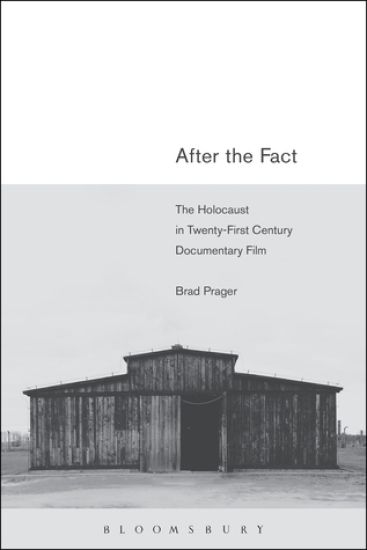
After the Fact

After the Fact

Brad Prager

Bloomsbury Academic USA
2015
sidottu
After the Fact studies the terrain of Holocaust documentaries subsequent to the turn of the twenty-first century. Until now most studies have centered primarily on canonical films such as Shoah and Night and Fog, but over the course of the last ten years filmmaking practices have altered dramatically. Changing techniques, diminishing communities of survivors, and the public's response to familiar, even iconic imagery, have all challenged filmmakers to radically revise and newly envision how they depict the Holocaust. Innovative styles have emerged, including groundbreaking techniques of incorporating archival footage, survivor testimony, and reenactment. Carrying wider implications for the fields of Film Studies, Jewish Studies, and Visual Studies, this book closely analyzes ten contemporary and internationally produced films, most of which have hardly been touched upon in the critical literature or elsewhere.
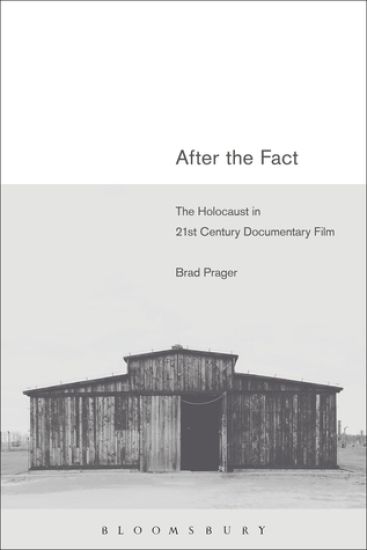
After the Fact

After the Fact

Brad Prager

Bloomsbury Academic USA
2015
nidottu
After the Fact studies the terrain of Holocaust documentaries subsequent to the turn of the twenty-first century. Until now most studies have centered primarily on canonical films such as Shoah and Night and Fog, but over the course of the last ten years filmmaking practices have altered dramatically. Changing techniques, diminishing communities of survivors, and the public's response to familiar, even iconic imagery, have all challenged filmmakers to radically revise and newly envision how they depict the Holocaust. Innovative styles have emerged, including groundbreaking techniques of incorporating archival footage, survivor testimony, and reenactment. Carrying wider implications for the fields of Film Studies, Jewish Studies, and Visual Studies, this book closely analyzes ten contemporary and internationally produced films, most of which have hardly been touched upon in the critical literature or elsewhere.
Aesthetic Vision and German Romanticism

Aesthetic Vision and German Romanticism

Brad Prager

Camden House Inc
2010
pokkari
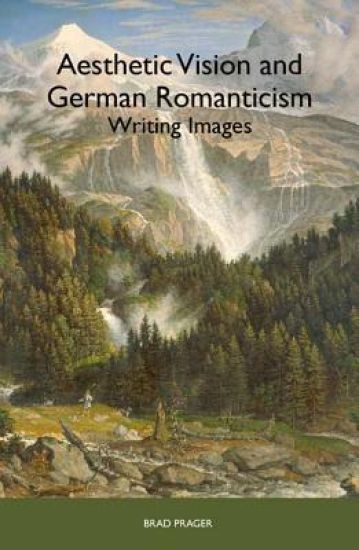
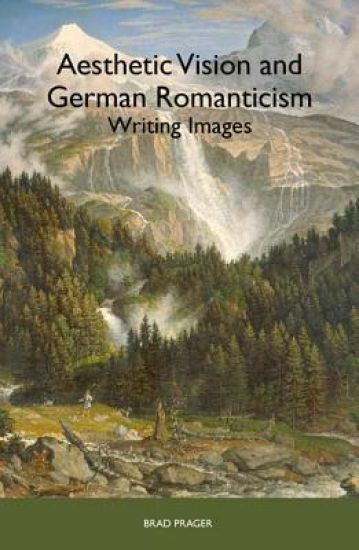
Crosses disciplinary boundaries to explore German Romantic writing about visual experience and the interplay of text and image in Romantic epistemology. The work of the groundbreaking writers and artists of German Romanticism -- including the writers Tieck, Brentano, and Eichendorff and the artists Caspar David Friedrich and Philipp Otto Runge -- followed from the philosophical arguments of the German Idealists, who placed emphasis on exploring the subjective space of the imagination. The Romantic perspective was a form of engagement with Idealist discourses, especially Kant's Critique of Pure Reason and Fichte's Science of Knowledge. Through an aggressive, speculative reading of Kant, the Romantics abandoned the binary distinction between the palpable outer world and the ungraspable space of the mind's eye and were therefore compelled to develop new terms for understanding the distinction between "internal" and "external." In this light, Brad Prager urges a reassessment of some of Romanticism's major oppositional tropes, contending that binaries such as "self and other," "symbol and allegory," and "light and dark," should be understood as alternatives to Lessing's distinction between interior and exterior worlds. Prager thus crosses the boundaries between philosophy,literature, and art history to explore German Romantic writing about visual experience, examining the interplay of text and image in the formulation of Romantic epistemology. Brad Prager is Associate Professor of Germanat the University of Missouri, Columbia.
The Cinema of Werner Herzog

The Cinema of Werner Herzog

Brad Prager

Wallflower Press
2007
sidottu
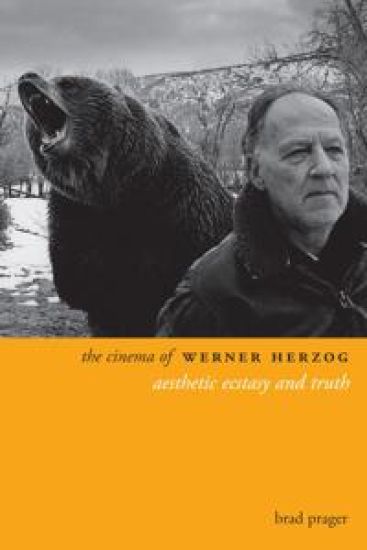
Werner Herzog is renowned for pushing the boundaries of conventional cinema, especially those between the fictional and the factual, the fantastic and the real. The Cinema of Werner Herzog: Aesthetic Ecstasy and Truth is the first study in twenty years devoted entirely to an analysis of Herzog's work. It explores the director's continuing search for what he has described as 'ecstatic truth, ' drawing on over thirty-five films, from the epics Aguirre: Wrath of God (1972) and Fitzcarraldo (1982) to innovative documentaries like Fata Morgana (1971), Lessons of Darkness (1992), and Grizzly Man (2005). Special attention is paid to Herzog's signature style of cinematic composition, his "romantic" influences, and his fascination with madmen, colonialism, and war.
Aesthetic Vision and German Romanticism

Aesthetic Vision and German Romanticism

Brad Prager

Camden House Inc
2007
sidottu
Crosses disciplinary boundaries to explore German Romantic writing about visual experience and the interplay of text and image in Romantic epistemology. The work of the groundbreaking writers and artists of German Romanticism -- including the writers Tieck, Brentano, and Eichendorff and the artists Caspar David Friedrich and Philipp Otto Runge -- followed from the philosophical arguments of the German Idealists, who placed emphasis on exploring the subjective space of the imagination. The Romantic perspective was a form of engagement with Idealist discourses, especially Kant's Critique of Pure Reason and Fichte's Science of Knowledge. Through an aggressive, speculative reading of Kant, the Romantics abandoned the binary distinction between the palpable outer world and the ungraspable space of the mind's eye and were therefore compelled to develop new terms for understanding the distinction between "internal" and "external." In this light, Brad Prager urges a reassessment of some of Romanticism's major oppositional tropes, contending that binaries such as "self and other," "symbol and allegory," and "light and dark," should be understood as alternatives to Lessing's distinction between interior and exterior worlds. Prager thus crosses the boundaries between philosophy,literature, and art history to explore German Romantic writing about visual experience, examining the interplay of text and image in the formulation of Romantic epistemology. Brad Prager is Associate Professor of Germanat the University of Missouri, Columbia.