Kirjojen hintavertailu – 12 859 819 kirjaa ja 27 kauppaa
Kirjailija
Bram Stoker
Kirjat ja teokset yhdessä paikassa: 1 088 kirjaa, julkaisuja vuosilta 1897–2026, suosituimpiin kuuluu Dracula. Vertaile teosten hintoja ja tarkista saatavuus suomalaisista kirjakaupoista.
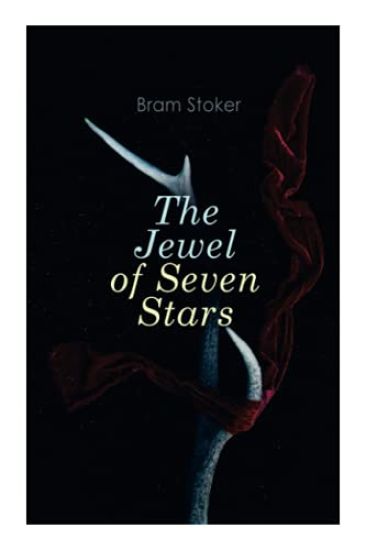
The Jewel of Seven Stars tells the tale of Malcolm Ross, a young barrister, pulled into an archaeologist's plot to revive Queen Tera, an ancient Egyptian mummy. Malcolm is awakened in the middle of the night and summoned to the house of famous Egyptologist Abel Trelawny at the request of his daughter, Margaret. Once Malcolm arrives at the house, he learns why he has been called - Margaret, hearing strange noises from her father's bedroom, woke to find him unconscious and bloodied on the floor of his room, under some sort of trance. Margaret reveals that her father had left a letter of strange instructions in the event of his incapacitation, stating that his body should not be removed from his room and must be watched at all times until he wakes up. The room is filled with Egyptian relics, and Malcolm notices that the "mummy smell" has an effect on those in the room.
Kui noor advokaat Jonathan Harker saab ülesandeks reisida Transilvaaniasse, et nõustada seal Inglismaale kinnisvara osta soovivat aadlikku, ei tea ta, et siseneb verejanulise vampiiri, krahv Dracula valdustesse. Krahv ihkab leida mere tagant värsket verd ja käsilasi ning pahaaimamatu Harker peab teda selles ettevõtmises aitama. Kui tõde Dracula tõelisest olemusest tasapisi välja koorub, tuleb käputäiel surelikel krahvi peatamiseks oma jõud ühendada ning algab metsik võidujooks ohtliku vampiiri ja ajaga, mida ühel on terve igavik, teistel aga vaid üürike hetk... Iiri kirjanik Abraham "Bram" Stoker (1847-1912) oli oma eluajal tuntud rohkem kui kuulsa näitleja Sir Henry Irvingu assistent ja Londonis asuva Lyceumi teatri juhataja, kuigi kirjutanud oli ta juba teismeliseeast peale. Esimeste kirjatükkide hulka kuulusid peamiselt teatriarvustused, hiljem lisandusid lühijutud ja romaanid. Viimastest saavutas tõelise edu 1897. aastal trükivalgust näinud õudusromaan "Dracula", mis sai kohe suureks menukiks. Kuigi vampiiridest olid selleks ajaks kirjutanud ka teised, oli just Stoker see, kes lõi paljudele lugejatele luttava krahv Dracula ning kelle nüüdseks maailmakirjanduse klassikasse kuuluv romaan on andnud ainest arvukatele kirjandusteostele ja filmidele, teleseriaalidele ja teatrietendustele.
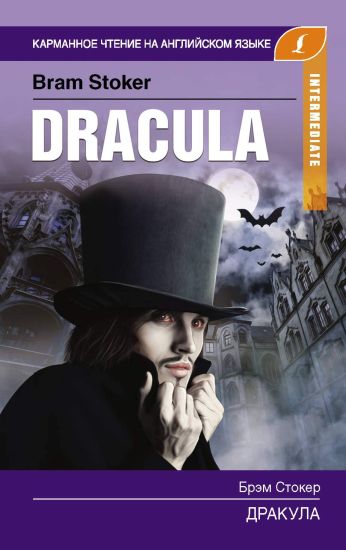
Kogda Dzhonatan Kharker pribyl v mrachnyj zamok Drakuly v Transilvanii, on i ne predpolagal, chto s nim mozhet sluchitsja. Odnako uzhasnye nochnye povadki khozjaina zamka vskore zastavili Kharkera opasatsja za svoju zhizn... Eto rasskaz o bitve so zlom, kotoruju vedut professor Van Khelsing i ego molodye druzja. Ikh protivnik - samyj kovarnyj vampir v mire. Tekst adaptirovan dlja prodolzhajuschikh izuchat anglijskij jazyk (uroven 3 - Intermediate) i soprovozhdaetsja kommentarijami, uprazhnenijami i slovarem.
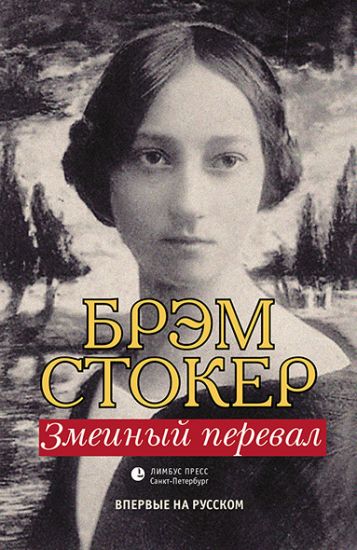
Brem Stoker (1847 - 1912) - klassik anglijskoj literatury, ego roman "Drakula" dal zhizn odnomu iz samykh moschnykh kulturnykh mifov novogo vremeni. "Zmeinyj pereval" pereveden na russkij jazyk vpervye - zdes, kak i v drugikh knigakh mastera, istorija vsepogloschajuschej ljubvi razvorachivaetsja na fone mrachnykh, misticheskikh i polnykh zagadok sobytij. Surovye pejzazhi Severnoj Irlandii sozdajut podobajuschie dekoratsii tainstvennomu i zavorazhivajuschemu dejstviju.
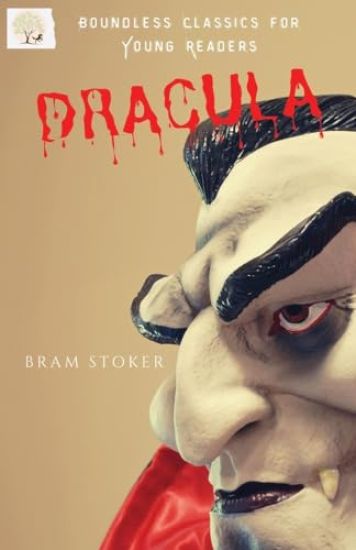
It is a timeless Gothic horror tale written in 1897 that suggests a struggle between modernity and science with religion and superstition. The story is that of a Transylvanian vampire who, using supernatural powers, makes his way to England and they're victimises innocent people to gain the blood on which he survives. Led by Dr. Abraham Van Helsing-an expert on "obscure diseases"- a small group of men and a woman are at last able to overpower and destroy Dracula. The story is told in epistolary format, as a series of letters, diary entries, newspaper articles, and ships' log entries, whose narrators are the novel's protagonists, and occasionally supplemented with newspaper clippings relating events not directly witnessed. Dracula, has inspired the creation of numerous theatrical, literary and film adaptations - among them are the 1931 film Dracula and 1922 film Nosferatu, starring that propelled the vampire myth to the forefront of popular culture.
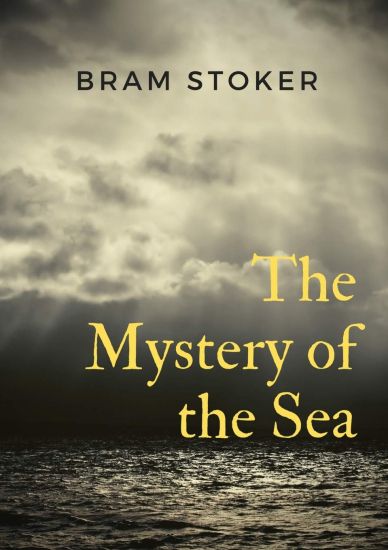
The Mystery of the Sea By Bram StokerThe Mystery of the Sea, a mystery novel by Bram Stoker, was originally published in 1902. Stoker is best known for his 1897 novel Dracula, but The Mystery of the Sea contains many of the same compelling elements. It tells the story of an Englishman living in Aberdeenshire, Scotland, who meets and falls in love with an American heiress. She is involved with the intrigues of the Spanish-American War, and a complex plot involving second sight, kidnapping, and secret codes unfolds over the course of the novel. The Mystery of the Sea contains supernatural elements, but is in many respects a political thriller. Stoker draws from personal experience and incorporates historical strands from the Spanish-American War as well as the sixteenth-century conflict between Spain and Elizabethan England, using these events to explore important themes of his time such as national identity and changing concepts of womanhood. Although The Mystery of the Sea received many favorable reviews when it was published (and many of the criticisms it received could be equally well applied to Dracula), it has been significantly overshadowed in scholarship and criticism by Dracula. Bram Stoker was born on November 8, 1847 in Dublin, Ireland. He was brought up in a Protestant middle-class household, and was a sickly child. However, Stoker eventually grew out of his illnesses and attended Trinity College, where he studied science and mathematics. Stoker became a civil service clerk in Dublin for a short time, but was always interested in literature. He wrote short fiction and edited an Irish newspaper, publishing his first story, "The Crystal Cup", in 1872. He also submitted work to a magazine called the Shamrock, based in Dublin. In 1876, while volunteering as a drama critic for the Dublin Evening Mail, met actor Henry Irving. In 1878, Stoker moved to London to serve as manager for Irving's Lyceum Theatre. Stoker was an adept administrator and introduced a number of new practices into the theatre, including numbering seats and advertising a season or selling tickets for shows in advance. Stoker was quite busy while he worked for Irving, and much of his writing had to be done on holidays and in his spare time. However, Stoker's business often proved to be helpful to his writings. Stoker's position at the Lyceum had a direct influence on his novels, particularly in terms of travel and setting. Company tours between 1883 and 1904 took him to America regularly.
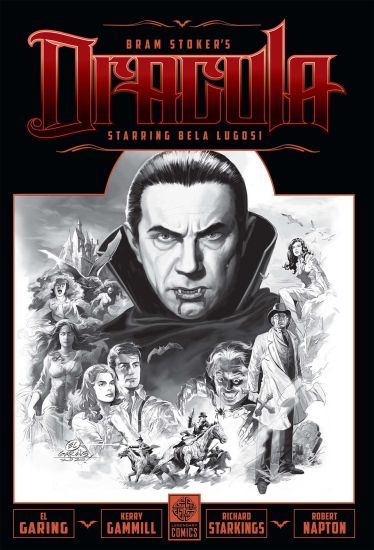
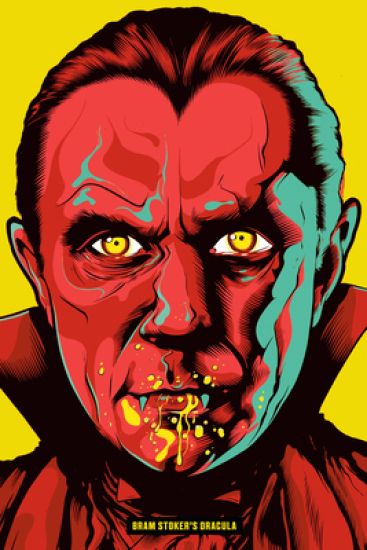
For the first time ever Bram Stoker's gothic masterpiece is being united with the definitive screen Dracula, Bela Lugosi, in an all new graphic novel. In the late 19th century, Dracula, an ancient Transylvanian Vampire, moves to England to find fresh blood and spread his evil contagion. There he encounters two women, Lucy and Mina, who become the targets of his dark obsession. Aided by a group of brave men, Professor Van Helsing arrives on the scene and takes on the Vampire Prince in the ultimate battles between the forces of light and dark
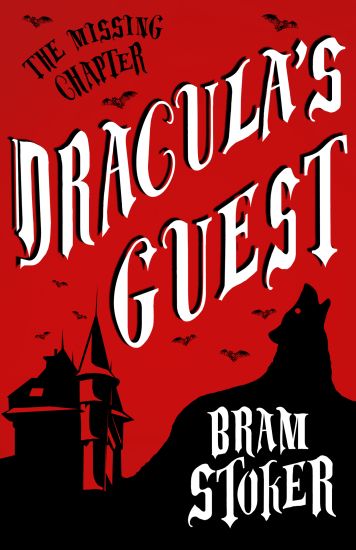
Dracula needs no introduction, but few of its fans have heard of Dracula's Guest, a short story following Jonathan Harker as he makes his way to Transylvania and falls prey to Walpurgis Nacht terrors when he stops off in Munich. Dracula's Guest is the missing chapter that will captivate all fans of Stoker's 'dangers from snow and wolves and night'.
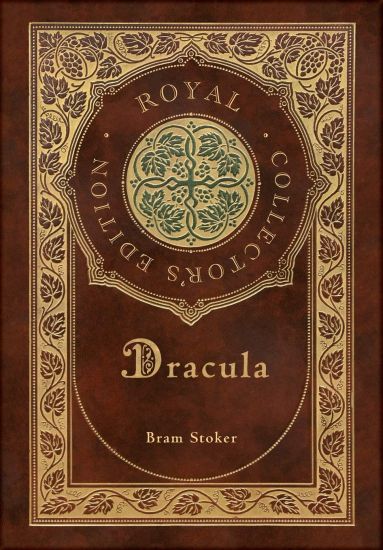
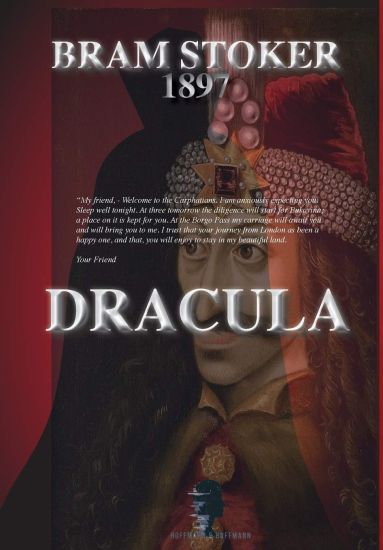
Dracula is an 1897 Gothic horror novel by Irish author Bram Stoker. Famous for introducing the character of the vampire Count Dracula, the novel tells the story of Dracula's attempt to move from Transylvania to England so he may find new blood and spread the undead curse, and the battle between Dracula and a small group of men and women led by Professor Abraham Van Helsing. Dracula has been assigned to many literary genres including vampire literature, horror fiction, the gothic novel and invasion literature. Although Stoker did not invent the vampire, he defined its modern form, and the novel has spawned numerous theatrical, film and television interpretations. About the authorBram Stoker (1847-1912) was born in Dublin. After attending Dublin University, he spent ten years as an Irish civil servant, trying to keep up his writing in his free time. By 1871, he had become the drama critic for the Dublin Mail and had gained experience as a newspaper editor, reporter, and short story writer. In 1878 he became the personal assistant to Sir Henry Irving, the foremost Shakespearean actor of his day, accompanying him on tours and managing Irving's theater. After Irving's death in 1905, Stoker worked on the literary staff of the London Telegraph. Dracula, his most famous work, was published in 1897. Analysis Bram Stoker's Dracula established many conventions of the subsequent vampire fantasy genre. This gothic fiction tells the tale of Count Dracula's transition from Transylvania to England and his attempt to spread the undead curse and of the battle between Dracula and Professor Abraham Van Helsing. Scholarly criticismC. F. Bentley reads Dracula as an embodiment of the Freudian id Carol A. Senf reads the novel as a response to the New Woman archetype, while Christopher Craft sees Dracula as embodying latent homosexuality and sees the text as an example of a 'characteristic, if hyperbolic instance of Victorian anxiety over the potential fluidity of gender roles'. Franco Moretti reads Dracula as a figure of monopoly capitalism, though Hollis Robbins suggests that Dracula's inability to participate in social conventions and to forge business partnerships undermines his power. Richard Noll reads Dracula within the context of 19th century alienism (psychiatry) and asylum medicine. D. Bruno Starrs understands the novel to be a pro-Catholic pamphlet promoting proselytization. Dracula is one of Five Books most recommended books with literary scholars, science writers and novelists citing it as an influential text for topics such as sex in Victorian Literature, best horror books and criminology. Historical and geographical referencesDracula is a work of fiction, but it does contain some historical references although it is a matter of conjecture and debate as to how much historical connection was deliberate on Stoker's part. During his main reign (1456-1462), "Vlad the Impaler" is said to have killed from 40,000 to 100,000 European civilians (political rivals, criminals, and anyone that he considered "useless to humanity"), mainly by impaling. REVIEW"Those who cannot find their own reflection in Bram Stoker's still-living creation are surely the undead ." New York Times Review of Books"It is splendid. No book since Mrs. Shelley's Frankenstein or indeed any other at all has come near yours in originality, or terror." Bram Stoker's Mother
This Penguin Classic is narrated by Mark Gatiss who also wrote the screen play for the critically acclaimed BBC adaptation. Gatiss has also had an extensive acting career including roles in Sherlock, which he wrote alongside Steven Moffat, The League of Gentlemen and Wolf Hall. When Jonathan Harker visits Transylvania to help Count Dracula with the purchase of a London house, he makes a series of horrific discoveries about his client. Soon afterwards, various bizarre incidents unfold in England: an apparently unmanned shipis wrecked off the coast of Whitby; a young woman discovers strange puncture marks on her neck; and the inmate of a lunatic asylum raves about the 'Master' and his imminent arrival. In Dracula, Bram Stoker created one of the great masterpieces of the horror genre, brilliantly evoking a nightmare world of vampires and vampire hunters and also illuminating the dark corners of Victorian sexuality and desire.
The Graphic Novelization of a Classic Tale Of the many admiring reviews Bram Stoker's Dracula received when it first appeared in 1897, the most astute praise came from the author's mother, who wrote her son: 'It is splendid. No book since Mrs. Shelley's Frankenstein or indeed any other at all has come near yours in originality, or terror.'A popular bestseller in Victorian England, Stoker's hypnotic tale of the bloodthirsty Count Dracula, whose nocturnal atrocities are symbolic of an evil ages old yet forever new, endures as the quintessential story of suspense and horror. The unbridled lusts and desires, the diabolical cravings that Stoker dramatized with such mythical force, render Dracula resonant and unsettling a century later.
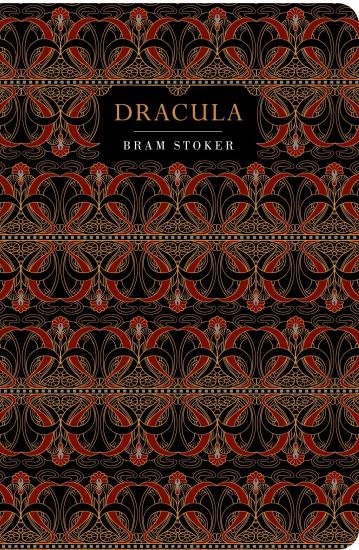
Part of the Chiltern Classics range. In Bram Stoker's bone-chilling vampire tale, told through the diaries and letters of the chief characters, young lawyer Jonathan Harker and his friends are drawn into a desperate battle to stop the sinister Count Dracula - but not all of them will survive. Chiltern are publishers of exquisitely crafted editions of the world’s finest classic literature. These beautiful books are a perfect mix of tradition and the very latest in printing techniques. With wonderful original, detailed and embossed covers, sparkling gilt edges, cream art paper, ribbon markers and stitched binding they are simply the most beautiful classics ever published.
Dracula is an 1897 Gothic horror novel by Irish author Bram Stoker. Famous for introducing the character of the vampire Count Dracula, the novel tells the story of Dracula's attempt to move from Transylvania to England so he may find new blood and spread the undead curse, and the battle between Dracula and a small group of men and women led by Professor Abraham Van Helsing. Dracula has been assigned to many literary genres including vampire literature, horror fiction, the gothic novel and invasion literature. Although Stoker did not invent the vampire, he defined its modern form, and the novel has spawned numerous theatrical, film and television interpretations. Dracula has been attributed to many literary genres including vampire literature, horror fiction, the gothic novel and invasion literature. Structurally it is an epistolary novel, that is, told as a series of diary entries and letters. Literary critics have examined many themes in the novel, such as the role of women in Victorian culture, conventional and conservative sexuality, immigration, colonialism, postcolonialism and folklore. Although Stoker did not invent the vampire, the novel's influence on the popularity of vampires has been singularly responsible for many theatrical and film interpretations throughout the 20th and 21st centuries. Bram Stoker's Dracula established many conventions of the subsequent vampire fantasy genre. This gothic fiction tells the tale of Count Dracula's transition from Transylvania to England and his attempt to spread the undead curse and of the battle between Dracula and Professor Abraham Van Helsing.