Kirjojen hintavertailu – 12 859 819 kirjaa ja 27 kauppaa
Kirjailija
Brandi Nicole Hinnant-Crawford
Kirjat ja teokset yhdessä paikassa: 5 kirjaa, julkaisuja vuosilta 2020–2025, suosituimpiin kuuluu Improving Together. Vertaile teosten hintoja ja tarkista saatavuus suomalaisista kirjakaupoista.
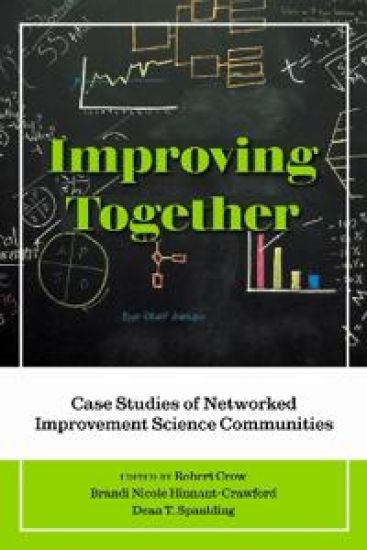
Improving Together: Case Studies of Networked Improvement Science Communities examines a range of network improvement communities who are using improvement science to examine problems of practice. Operating in varying contexts, NICs provide a platform for communication and other forms of data sharing in order to create meta-findings on a particular phenomenon. The text focus on not only the use of IS in each context/node, but also processes of building and launching networks and considers how particular media and infrastructure are used to share knowledge within the network.
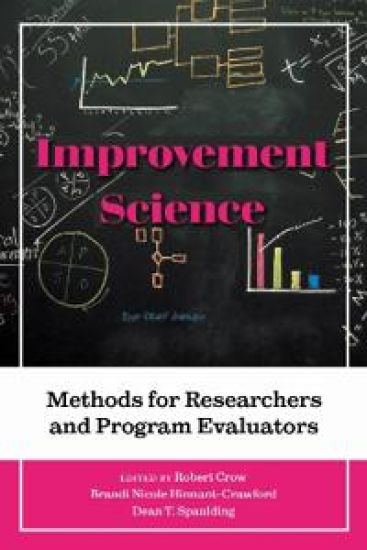
Improvement Science: Methods for Researchers and Program Evaluators moves beyond traditional research methods textbooks by responding to people working in improvement science and program evaluation. This book is tailored to the needfor specific improvement research methodologies and frameworks collected and presented in an edited volume written by research faculty associated withor teaching in leadership programs.
Improvement Science in Education: A Primer, second edition, is the first and introductory volume in the Myers Education Press series, Improvement Science in Education and Beyond. It provides a comprehensive overview of improvement science as a framework to guide continuous improvement and reconceptualizes improvement by centering equity and justice as the purpose of improvement. The Primer is designed to introduce improvement science, a methodology with origins in manufacturing, engineering and healthcare, to educational audiences. The book first explores the philosophical and methodological foundations of improvement science, juxtaposing it with traditional forms of research so that clear distinctions can be drawn. Chapters in the latter half of the book introduce the principles of improvement, give guidance and tools for operationalizing the principles in practice, and conclude with questions to ensure you are improving with equity in mind. Constantly reminding readers to think about who is involved and impacted, the Primer makes improvement science accessible to novices and adds critical dimensions for experienced practitioners to consider. In the second edition of this best-selling book, Brandi Hinnant-Crawford, a nationally recognized authority in the methodology, has added valuable new content that updates the literature and enhances the focus of the volume by asking to even more who questions: who benefits, who bears the burden, whose priorities and values are reflected, and who is heard when decisions are made. Improvement for equity requires more than profound knowledge and subject matter knowledge—it requires criticality. Improvement science is rapidly becoming the signature methodology for accomplishing continuous improvement in universities, public school districts, and professional development programs. Its goal is to create better learning environments. Perfect for courses such as: Educational Research; School Improvement; and Program Evaluation
Improvement Science in Education: A Primer serves a simple but vital purpose: it provides a comprehensive explanation about the field of improvement science to both novices and current practitioners. Improvement science is a methodological framework that is undergirded by foundational principles that guide scholar/practitioners to define problems, understand how the system produces the problems, identify changes to rectify those problems, test the efficacy of those changes, and spread the changes (assuming that the change is indeed an improvement). This Primer is specifically designed to introduce improvement science to educational audiences. Originally employed in such fields as engineering and health care, it has proven to be a very effective process for improving schools. The book first explores the philosophical and methodological foundations of improvement science, juxtaposing it with traditional forms of research so that clear distinctions can be drawn. It then guides the reader through the process of improvement. By providing many examples of strategies to achieve educational equity, the Primer illustrates the practicality of the method as a way to deal with today’s most pressing problems in elementary, secondary, and post-secondary education. It should be adopted in every classroom devoted to the topic.
Improvement Science in Education: A Primer serves a simple but vital purpose: it provides a comprehensive explanation about the field of improvement science to both novices and current practitioners. Improvement science is a methodological framework that is undergirded by foundational principles that guide scholar/practitioners to define problems, understand how the system produces the problems, identify changes to rectify those problems, test the efficacy of those changes, and spread the changes (assuming that the change is indeed an improvement). This Primer is specifically designed to introduce improvement science to educational audiences. Originally employed in such fields as engineering and health care, it has proven to be a very effective process for improving schools. The book first explores the philosophical and methodological foundations of improvement science, juxtaposing it with traditional forms of research so that clear distinctions can be drawn. It then guides the reader through the process of improvement. By providing many examples of strategies to achieve educational equity, the Primer illustrates the practicality of the method as a way to deal with today’s most pressing problems in elementary, secondary, and post-secondary education. It should be adopted in every classroom devoted to the topic.