Kirjojen hintavertailu – 12 903 724 kirjaa ja 27 kauppaa

Kirjailija

Brandon C. Welsh

Kirjat ja teokset yhdessä paikassa: 6 kirjaa, julkaisuja vuosilta 2006–2025, suosituimpiin kuuluu The Oxford Handbook of Crime Prevention. Vertaile teosten hintoja ja tarkista saatavuus suomalaisista kirjakaupoista.

6 kirjaa

Kirjojen julkaisuvuodet: 2006–2025.

Between Medicine and Criminology

Between Medicine and Criminology

Brandon C. Welsh; Steven N. Zane; Scott H. Podolsky

OXFORD UNIVERSITY PRESS INC
2025
sidottu
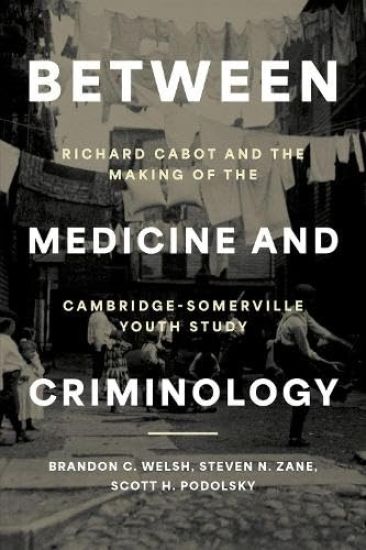
In 1935, Richard Cabot (1868-1939), a renowned physician and professor of clinical medicine and social ethics at Harvard University, founded the Cambridge-Somerville Youth Study. Appalled by high recidivism rates of reformatories of the day, Cabot wanted to do something to help young, underprivileged boys from engaging in delinquency and embarking on a life of crime. Described as character development through positive role models, with similarities to today's mentoring programs, the prevention intervention enrolled 650 boys (later reduced to 506) from Cambridge and Somerville (Mass.) and operated from 1939-45. Over the next 30 years, three major follow-ups would be undertaken, producing a wealth of knowledge on the development and prevention of offending over the life-course. As the earliest randomized controlled trial in criminology, one of the earliest trials of a social intervention, and the longest running trial in the Western world-with the latest follow-up currently tracing participants well into old age-the CSYS is a famous and consequential study in the annals of criminology. But Cabot was not a criminologist. Instead, he worked at the interface of medicine and the social sciences, bringing to bear his important grounding in social ethics and engaging with leading academicians, including Sheldon and Eleanor Glueck and William Healy. In the years to come, Joan McCord-a leading criminologist in her own right-would take over the study and bring it into the modern era. Drawing on extensive archival materials and published works, Between Medicine and Criminology is the first book about the history of the making of the CSYS, as well as what this history holds for modern criminology. It interrogates and describes in fascinating detail the personal, professional, and institutional influences that led Cabot to develop the study; the social and intellectual contexts during the 1920s and 1930s that helped shape the study's novel and rigorous evaluation design; how the operation of the study and changes from the original design may have contributed to its ineffectiveness in preventing delinquency and later offending; and the impacts-and limitations-of this iconic study in the history of criminology.
The Oxford Handbook of Crime Prevention

The Oxford Handbook of Crime Prevention

Brandon C. Welsh; David P. Farrington

Oxford University Press Inc
2014
nidottu

Halvin toimitettuna 79,60 €

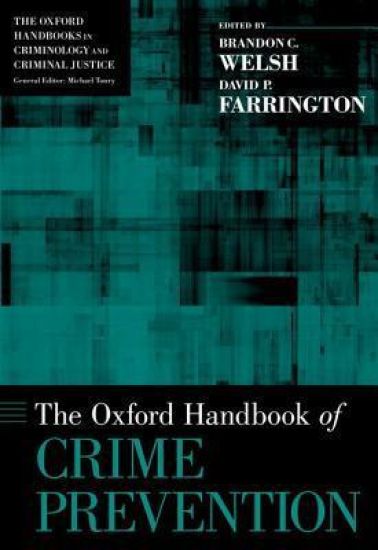
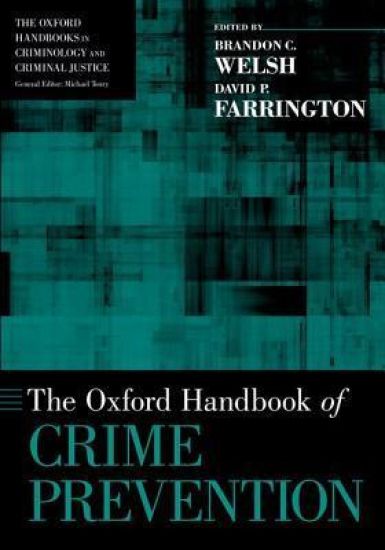
How can a society prevent-not deter, not punish-but prevent crime? Criminal justice prevention, commonly called crime control, aims to prevent crime after an initial offence has been commited through anything from an arrest to a death penalty sentence. These traditional means have been frequently examined and their efficacy just as frequently questioned. Promising new forms of crime prevention have emerged and expanded as important components of an overall strategy to reduce crime. Crime prevention today has developed along three lines: interventions to improve the life chances of children and prevent them from embarking on a life of crime; programs and policies designed to ameliorate the social conditions and institutions that influence offending; and the modification or manipulation of the physical environment, products, or systems to reduce everyday opportunities for crime. Each strategy aims at preventing crime or criminal offending in the first instance - before the act has been committed. Each, importantly, takes place outside of the formal criminal justice system, representing an alternative, perhaps even socially progressive way to reduce crime. The Oxford Handbook of Crime Prevention is a comprehensive, up-to-date, and authoritative review of research on crime prevention. Bringing together top scholars in criminology, public policy, psychology, and sociology, this Handbook includes critical reviews of the main theories that form the basis of crime prevention, evidence-based assessments of the effectiveness of the most important interventions, and cross-cutting essays that examine implementation, evaluation methodology, and public policy. Covering the three major crime prevention strategies active today-developmental, community, and situational-this definitive volume addresses seriously and critically the ways in which the United States and the Western world have attempted, and should continue to strive for the of crime.
The Oxford Handbook of Crime Prevention

The Oxford Handbook of Crime Prevention

Brandon C. Welsh; David P. Farrington

Oxford University Press Inc
2012
sidottu
How can a society prevent-not deter, not punish-but prevent crime? Criminal justice prevention, commonly called crime control, aims to prevent crime after an initial offence has been commited through anything from an arrest to a death penalty sentence. These traditional means have been frequently examined and their efficacy just as frequently questioned. Promising new forms of crime prevention have emerged and expanded as important components of an overall strategy to reduce crime. Crime prevention today has developed along three lines: interventions to improve the life chances of children and prevent them from embarking on a life of crime; programs and policies designed to ameliorate the social conditions and institutions that influence offending; and the modification or manipulation of the physical environment, products, or systems to reduce everyday opportunities for crime. Each strategy aims at preventing crime or criminal offending in the first instance - before the act has been committed. Each, importantly, takes place outside of the formal criminal justice system, representing an alternative, perhaps even socially progressive way to reduce crime. The Oxford Handbook of Crime Prevention is a comprehensive, up-to-date, and authoritative review of research on crime prevention. Bringing together top scholars in criminology, public policy, psychology, and sociology, this Handbook includes critical reviews of the main theories that form the basis of crime prevention, evidence-based assessments of the effectiveness of the most important interventions, and cross-cutting essays that examine implementation, evaluation methodology, and public policy. Covering the three major crime prevention strategies active today-developmental, community, and situational-this definitive volume addresses seriously and critically the ways in which the United States and the Western world have attempted, and should continue to strive for the prevention of crime.
Making Public Places Safer

Making Public Places Safer

Brandon C. Welsh; David P. Farrington

Oxford University Press Inc
2009
sidottu
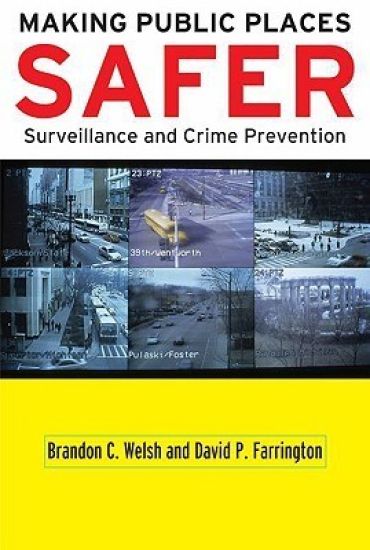
The United Kingdom has more than 4.2 million public closed-circuit television (CCTV) cameras--one for every fourteen citizens. Across the United States, hundreds of video surveillance systems are being installed in town centers, public transportation facilities, and schools at a cost exceeding $100 million annually. And now other Western countries have begun to experiment with CCTV to prevent crime in public places. In light of this expansion and the associated public expenditure, as well as pressing concerns about privacy rights, there is an acute need for an evidence-based approach to inform policy and practice. Drawing on the highest-quality research, criminologists Brandon C. Welsh and David P. Farrington assess the effectiveness and social costs of not only CCTV, but also of other important surveillance methods to prevent crime in public space, such as improved street lighting, security guards, place managers, and defensible space. Importantly, the book goes beyond the question of "Does it work?" and examines the specific conditions and contexts under which these surveillance methods may have an effect on crime as well as the mechanisms that bring about a reduction in crime. At a time when cities need cost-effective methods to fight crime and the public gradually awakens to the burdens of sacrificing their privacy and civil rights for security, Welsh and Farrington provide this timely and reliable guide to the most effective and non-invasive uses of surveillance to make public places safer from crime.
Saving Children from a Life of Crime

Saving Children from a Life of Crime

David P. Farrington; Brandon C. Welsh

Oxford University Press Inc
2008
nidottu

Halvin toimitettuna 47,30 €

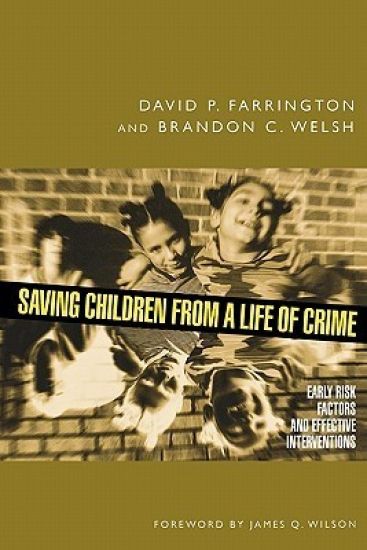
After decades of rigorous study in the United States and across the Western world, a great deal is known about the early risk factors for offending. High impulsiveness, low attainment, criminal parents, parental conflict, and growing up in a deprived, high-crime neighborhood are among the most important factors. There is also a growing body of high quality scientific evidence on the effectiveness of early prevention programs designed to prevent children from embarking on a life of crime. Drawing on the latest evidence, Saving Children from a Life of Crime is the first book to assess the early causes of offending and what works best to prevent it. Preschool intellectual enrichment, child skills training, parent management training, and home visiting programs are among the most effective early prevention programs. Criminologists David Farrington and Brandon Welsh also outline a policy strategy - early prevention - that uses this current research knowledge and brings into sharper focus what America's national crime fighting priority ought to be. At a time when unacceptable crime levels in America, rising criminal justice costs, and a punitive crime policy have spurred a growing interest in the early prevention of delinquency, Farrington and Welsh here lay the groundwork for change with a comprehensive national prevention strategy to save children from a life of crime.
Saving Children from a Life of Crime

Saving Children from a Life of Crime

David P. Farrington; Brandon C. Welsh

Oxford University Press Inc
2006
sidottu

Halvin toimitettuna 46,50 €

After decades of rigorous study in the United States and across the Western world, a great deal is known about the early risk factors for offending. High impulsiveness, low attainment, criminal parents, parental conflict, and growing up in a deprived, high-crime neighborhood are among the most important factors. There is also a growing body of high quality scientific evidence on the effectiveness of early prevention programs designed to prevent children from embarking on a life of crime. Drawing on the latest evidence, Saving Children from a Life of Crime is the first book to assess the early causes of offending and what works best to prevent it. Preschool intellectual enrichment, child skills training, parent management training, and home visiting programs are among the most effective early prevention programs. Criminologists David Farrington and Brandon Welsh also outline a policy strategy--early prevention--that uses this current research knowledge and brings into sharper focus what America's national crime fighting priority ought to be. At a time when unacceptable crime levels in America, rising criminal justice costs, and a punitive crime policy have spurred a growing interest in the early prevention of delinquency, Farrington and Welsh here lay the groundwork for change with a comprehensive national prevention strategy to save children from a life of crime.