Kirjojen hintavertailu – 12 859 818 kirjaa ja 27 kauppaa

Kirjailija

Brandon LaBelle

Kirjat ja teokset yhdessä paikassa: 12 kirjaa, julkaisuja vuosilta 2014–2025, suosituimpiin kuuluu Lerin & Hystad : electronic flora. Vertaile teosten hintoja ja tarkista saatavuus suomalaisista kirjakaupoista.

12 kirjaa

Kirjojen julkaisuvuodet: 2014–2025.

Lerin & Hystad : electronic flora

Lerin & Hystad : electronic flora

Elisabet Yanagisawa; Timothy Morton; Michael Marder; Lars Lerin; Brandon LaBelle; Mats Karström; Suresh Jayaram; Emanuele Coccia; Nadia Bensbih; Giovanni Aloi; Simon Torssell Lerin; Bettina Hvidevold Hystad

Art Theory Publishing
2025
nidottu
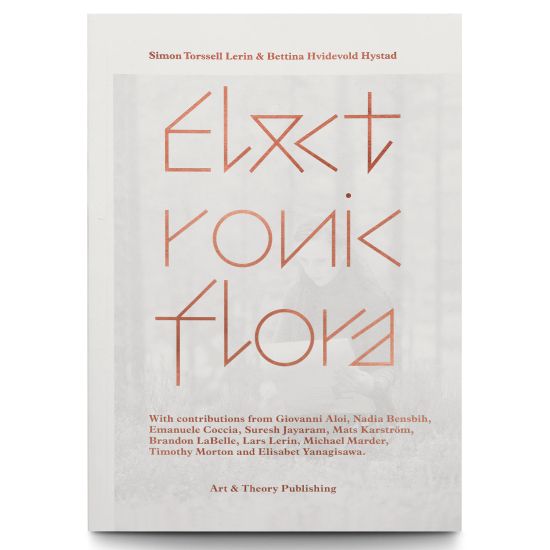
This book documents Lerin/Hystad s meetings with more than a hundred different plants through sketches, text, and music. The otherness of the non-human is by nature inexpugnable. The baseline of our sharing the planet with them, at this point in its evolutional history, entails making kin while negotiating distance. In line with the mounting environmental concerns, artists began to nurture the desire to present less mediated encounters with nature. Central to Lerin/Hystad s modus operandi is a principle of ecological interconnectedness that manifests the undeniable presence of more than human worlds. The main objective has been that of dismantling the anthropocentric view that humans are the most perfect and intelligent species on this planet while inviting us to reconsider non-human intelligences and complexities as valuable diversity. Lerin connects sensors to the plants that Hystad has carefully drawn in their environment. The sensors register electrical currents that plants produce through their biological rhythms and that form a communicational network with animals, bacteria, and fungi. Genom teckning, text och musik, samlar den här boken Lerin/Hystads möten med över hundra olika växter. Det icke-mänskliga är, till sin natur, ofrånkomligen annorlunda oss. För att vi ska kunna samexistera på jorden krävs det därför, vid denna punkt i evolutionshistorien, att vi knyter an till det främmande samtidigt som vi också aktivt förhåller oss till dess ofrånkomliga annanhet. I takt med att miljöhoten har ökat har också konstnärerna uttryckt en ökad vilja att genom konsten möta naturen direkt. Lerin/Hystads modus operandi vilar på den ekologiska sammankopplingens princip och förutsätter att det existerar fler världar än människans. Viktigast av allt har varit att nedmontera den antropocentriska bilden av människan som planetens intelligentaste och mest fulländade varelse för att i stället lyfta fram det icke-mänskligas många komplexa intelligenser som delar av en rik mångfald. Lerin kopplar sensorer till de växter som Hystad så noggrant har tecknat i det vilda. Dessa sensorer känner sedan av alla de elektriska impulser som orsakas av växternas egen biologiska rytm och som bildar kommunikationsnätverk tillsammans med djuren, bakterierna och svamparna.
Poetics of Listening

Poetics of Listening

Brandon LaBelle

BLOOMSBURY PUBLISHING PLC
2025
sidottu
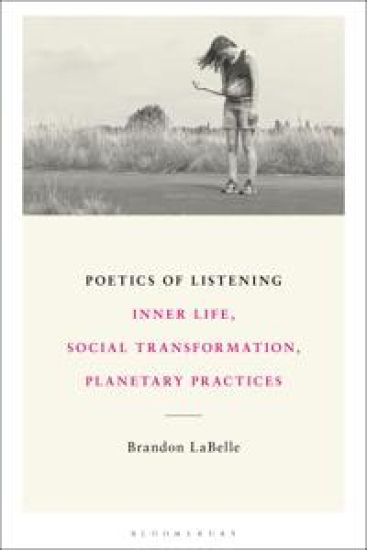
In Poetics of Listening, renowned sound studies scholar Brandon LaBelle brings critical attention to listening as a practice, one that can wield significant impact onto individual, interpersonal and community wellbeing. From self-determination to social participation, somatic healing to collective repair, political recognition to ecological engagement, listening is vitally influential in negotiating our most fundamental challenges. Through thoughtful examinations of listening’s role across society, Poetics of Listening convincingly shows listening to be not only important to social struggles, but a form of poetic imagination and communion. It moves listening toward a broader application and view, which includes the ability to listen across human and more-than-human worlds, to listen into or with one’s body, or to listen out for futures to come as well as addressing unfinished histories, and it challenges us to think more broadly about what it means to hear and be heard within today’s complex environments.
Acoustic Justice

Acoustic Justice

Brandon LaBelle

Bloomsbury Academic USA
2021
nidottu
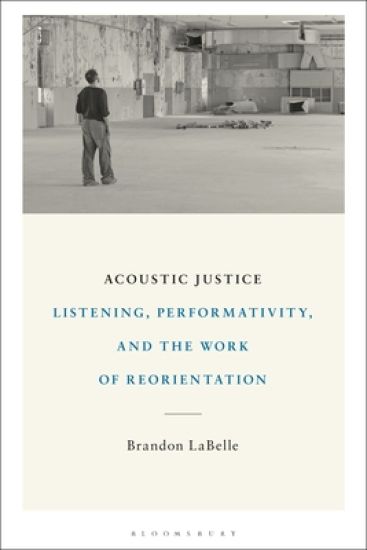
Acoustic Justice engages issues of recognition and misrecognition by mobilizing an acoustic framework. From the vibrational intensities of common life to the rhythm of bodies in movement, and drawing from his ongoing work on sound and agency, Brandon LaBelle positions acoustics, and the broader experience of listening, as a dynamic means for fostering responsiveness, understanding, dispute, and the work of reorientation. As such, acoustic justice emerges as a compelling platform for engaging struggles over the right to speak and to be heard that extends toward a broader materialist and planetary view. This entails critically addressing questions of space, borders, community, and the acoustic norms defining capacities of listening, leading to what LaBelle terms “poetic ecologies of resonance.” Acoustic Justice works at issues of recognition and resistance, place and displacement, by moving across a range of pertinent references and topics, from social practices and sound art to the performativity of skin and the poetics of Deaf voice. Through such transversality, LaBelle captures acoustics as the basis for strategies of refusal and repair.
Acoustic Justice

Acoustic Justice

Brandon LaBelle

Bloomsbury Academic USA
2021
sidottu
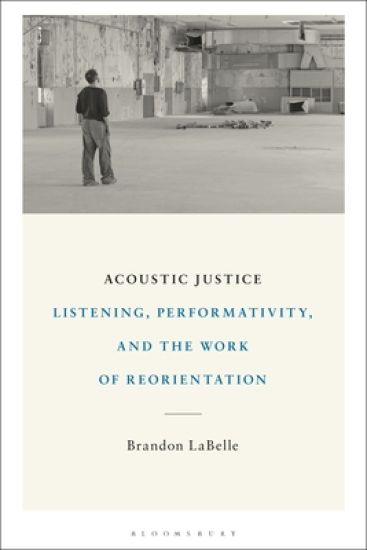
Acoustic Justice engages issues of recognition and misrecognition by mobilizing an acoustic framework. From the vibrational intensities of common life to the rhythm of bodies in movement, and drawing from his ongoing work on sound and agency, Brandon LaBelle positions acoustics, and the broader experience of listening, as a dynamic means for fostering responsiveness, understanding, dispute, and the work of reorientation. As such, acoustic justice emerges as a compelling platform for engaging struggles over the right to speak and to be heard that extends toward a broader materialist and planetary view. This entails critically addressing questions of space, borders, community, and the acoustic norms defining capacities of listening, leading to what LaBelle terms “poetic ecologies of resonance.” Acoustic Justice works at issues of recognition and resistance, place and displacement, by moving across a range of pertinent references and topics, from social practices and sound art to the performativity of skin and the poetics of Deaf voice. Through such transversality, LaBelle captures acoustics as the basis for strategies of refusal and repair.
Sonic Agency

Sonic Agency

Brandon Labelle

Goldsmiths, Unversity of London
2020
nidottu
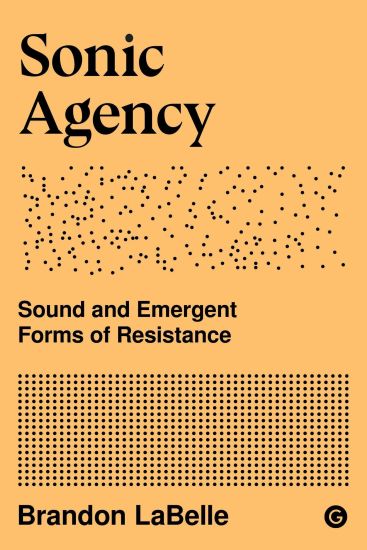
A timely exploration of whether sound and listening can be the basis of political change. In a world dominated by the visual, could contemporary resistances be auditory? This timely and important book from Goldsmiths Press highlights sound's invisible, disruptive, and affective qualities and asks whether the unseen nature of sound can support a political transformation. In Sonic Agency, Brandon LaBelle sets out to engage contemporary social and political crises by way of sonic thought and imagination. He divides sound's functions into four figures of resistance--the invisible, the overheard, the itinerant, and the weak--and argues for their role in creating alternative "unlikely publics" in which to foster mutuality and dissent. He highlights existing sonic cultures and social initiatives that utilize or deploy sound and listening to address conflict, and points to their work as models for a wider movement. He considers issues of disappearance and hidden culture, nonviolence and noise, creole poetics, and networked life, aiming to unsettle traditional notions of the "space of appearance" as the condition for political action and survival. By examining the experience of listening and being heard, LaBelle illuminates a path from the fringes toward hope, citizenship, and vibrancy. In a current climate that has left many feeling they have lost their voices, it may be sound itself that restores it to them.
The Other Citizen

The Other Citizen

Brandon LaBelle

ERRANT BODIES
2020
nidottu
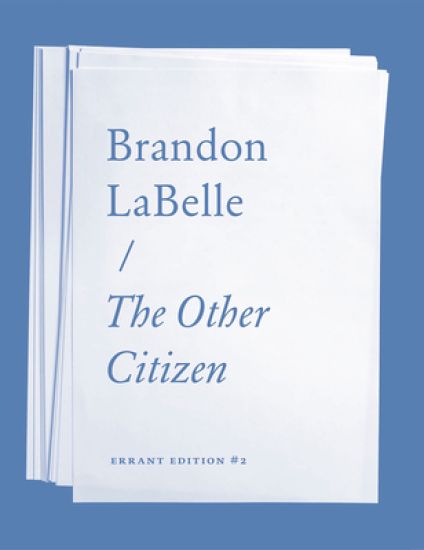
Volume two in Errant Bodies' new series on transcultural poetics: struggles and utopian desires of contemporary lifeThe Other Citizen tracks the hopes and losses, struggles and utopian desires of what the author terms "the floating subjects" of contemporary life. Drawing upon traditions of socially engaged poetics, the work takes aim at the heart of contemporary crisis and exclusionary politics, mobilizing instead the creative solidarities and pirate imaginaries spanning the globe. Through ten acts we are led into narratives of friendship and survival, threadbare endurance and tender resistance. From lost teenagers struggling in the American maze of neoliberal privatization to secret gatherings of artistic bandits occupying buildings in Madrid to those caught in between the borders of nation-states, these emerge as frontiers of invention that, when stitched together, outline the force of an anarchic citizenry. The Other Citizen is a challenging and moving call for exiting the new norm of crisis.
Acoustic Territories, Second Edition

Acoustic Territories, Second Edition

Brandon LaBelle

Bloomsbury Academic USA
2019
nidottu

Halvin toimitettuna 41,40 €

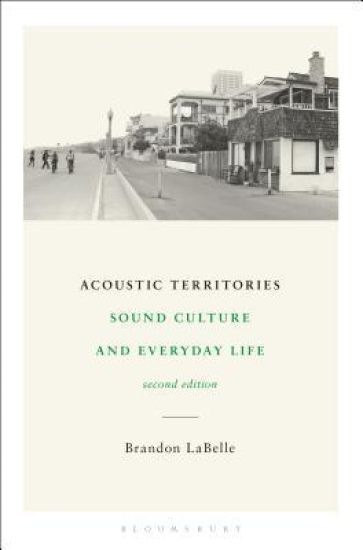
The revised edition of Acoustic Territories: Sound Culture and Everyday Life offers an expansive reading of auditory life. It provides a careful consideration of the performative dynamics inherent to sounding and listening, and discusses how sound studies may illuminate understandings of contemporary society. Combining research on urbanism, popular culture, street life and sonic technologies, Acoustic Territories opens up a range of critical perspectives--it challenges debates surrounding noise pollution and charts an "acoustic politics of space" by engaging auditory experience as found within particular cultural histories and related ideologies. Brandon LaBelle traces sound culture through a topographic structure: from underground territories to the home, and further, into the rhythms and vibrations of streets and neighborhoods, and finally to the sky itself as an arena of transmitted imaginaries. The new edition includes an additional "global territory" of the relational, positioning acoustics as a range of everyday practices that rework dominant tonalities. Questions of orientation and emplacement are critically raised, reframing listening as multi-modal and intrinsic to resistant socialities and what the author terms "acts of compositioning." The book is fully updated to include new relevant research and references surfacing since 2010, as well as a new preface to the second edition. Acoustic Territories continues to uncover the embedded tensions and potentialities inherent to sound as it exists in the everyday spaces around us.
Acoustic Territories, Second Edition

Acoustic Territories, Second Edition

Brandon LaBelle

Bloomsbury Academic USA
2019
sidottu
The revised edition of Acoustic Territories: Sound Culture and Everyday Life offers an expansive reading of auditory life. It provides a careful consideration of the performative dynamics inherent to sounding and listening, and discusses how sound studies may illuminate understandings of contemporary society. Combining research on urbanism, popular culture, street life and sonic technologies, Acoustic Territories opens up a range of critical perspectives--it challenges debates surrounding noise pollution and charts an "acoustic politics of space" by engaging auditory experience as found within particular cultural histories and related ideologies. Brandon LaBelle traces sound culture through a topographic structure: from underground territories to the home, and further, into the rhythms and vibrations of streets and neighborhoods, and finally to the sky itself as an arena of transmitted imaginaries. The new edition includes an additional "global territory" of the relational, positioning acoustics as a range of everyday practices that rework dominant tonalities. Questions of orientation and emplacement are critically raised, reframing listening as multi-modal and intrinsic to resistant socialities and what the author terms "acts of compositioning." The book is fully updated to include new relevant research and references surfacing since 2010, as well as a new preface to the second edition. Acoustic Territories continues to uncover the embedded tensions and potentialities inherent to sound as it exists in the everyday spaces around us.
Ljudkonst

Ljudkonst

Tara Rodgers; Helga de la Motte-Haber; David Toop; Douglas Kahn; Volker Straebel; Barbara Barthelmes; Golo Föllmer; Gernot Böhme; Frauke Behrendt; Gascia Ouzounian; Brandon LaBelle; Salomé Voegelin; Seth Kim-Cohen; Christoph Cox

OEI Editör
2019
nidottu
Denna antologi – Ljudkonst – har som ambition att erbjuda en introduktion till och översikt över delar av ett landskap som utgörs av både konstnärliga soniska praktiker och teoretiska diskurser, vilka sammantagna formar ett fält som kommit att kallas ”ljudkonst”. De fjorton essäer av konstnärer och teoretiker som ingår i Ljudkonst (re)presenterar, skriver antologins redaktörer Åsa Stjerna och Andreas Engström, hur samtalet om ljudkonst har utvecklats och omvandlats i den teoretiska diskussionen under de senaste decennierna. De tecknar konturerna av en historia om begreppets konstruktion och dekonstruktion, och formar en interdisciplinär berättelse som inte desto mindre innebär inkluderanden och exkluderanden. Det är en komplex berättelse om ljudets materialitet, om ljudets ontologi, om dess frigörelse från en inommusikalisk tolkningssfär, om konstarternas diskursiva expansion och öppnande mot samtida konstnärliga och filosofiska strömningar. I Ljudkonst medverkar Helga de la Motte-Haber, David Toop, Douglas Kahn, Volker Straebel, Barbara Barthelmes, Golo Föllmer, Gernot Böhme, Frauke Behrendt, Gascia Ouzounian, Brandon LaBelle, Salomé Voegelin, Seth Kim-Cohen, Christoph Cox och Tara Rodgers. Ljudkonst utgör # 140 i Musikaliska Akademiens skriftserie.
Background Noise, Second Edition

Background Noise, Second Edition

Brandon LaBelle

Bloomsbury Academic USA
2015
nidottu

Halvin toimitettuna 37,40 €

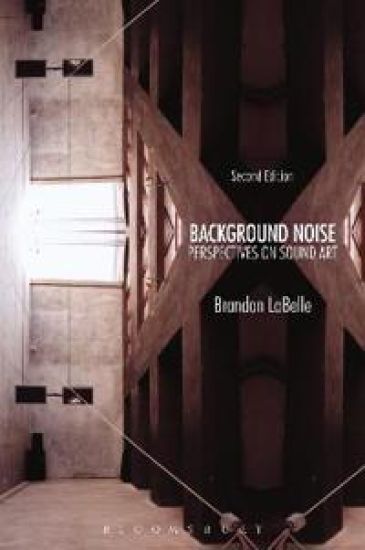
Background Noise follows the development of sound as an artistic medium and illustrates how sound is put to use within modes of composition, installation, and performance. While chronological in its structure, Brandon LaBelle's book is informed by spatial thinking - weaving architecture, environments, and the specifics of location into the work of sound, with the aim of formulating an expansive history and understanding of sound art. At its center the book presupposes an intrinsic relation between sound and its location, galvanizing acoustics, sound phenomena, and the environmental with the tensions inherent in what LaBelle identifies as sound's relational dynamic. For the author, this is embedded within sound's tendency to become public expressed in its ability to travel distances, foster cultural expression, and define spaces while being radically flexible. This second expanded edition includes a new chapter on the non-human and subnatural tendencies in sound art, revisions to the text as well as a new preface by the author. Intersecting material analysis with theoretical frameworks spanning art and architectural theory, performance studies and media theory, Background Noise makes the case that sound and sound art are central to understandings of contemporary culture.
Lexicon of the Mouth

Lexicon of the Mouth

Brandon LaBelle

Bloomsbury Academic USA
2014
nidottu
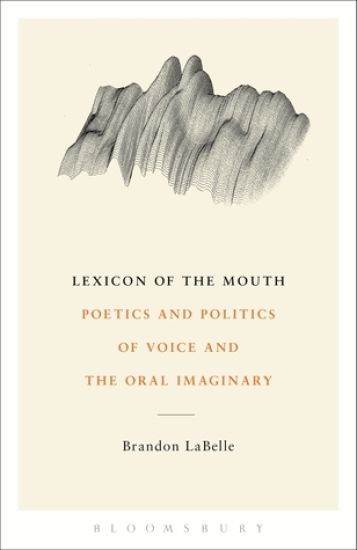
Lexicon of the Mouth surveys the oral cavity as the central channel by which self and surrounding are brought into relation. Questions of embodiment and agency, attachment and loss, incorporation and hunger, locution and the non-sensical are critically examined. In doing so, LaBelle emphasizes the mouth as a vital conduit for negotiating "the foundational narrative of proper speech." Lexicon of the Mouth aims for a viscous, poetic and resonant discourse of subjectivity, detailed through the "micro-oralities" of laughing and whispering, stuttering and reciting, eating and kissing, among others. The oral cavity is posed as an impressionable arena, susceptible to all types of material input, contamination and intervention, while also enabling powerful forms of resistance, attachment and conversation, as well as radical imagination. Lexicon of the Mouth argues for the revolutionary promise of the laugh, the spirited mythologies of the whisper, the schizophonics of self-talk, and the primal noise of gibberish, suggesting that the significance of voicing is fundamentally bound to the exertions of the mouth. Subsequently, assumptions around voice and vocality are unsettled in favor of an epistemology of the oral, highlighting the acts of the tongue, the lips and the throat as primary mediations between interior and exterior, social structures and embodied expressions. LaBelle makes a significant contribution to currents in sound and voice studies by reminding that to hear the voice, and to consider a politics of speech, is first and foremost to assume the mouth.
Lexicon of the Mouth

Lexicon of the Mouth

Brandon LaBelle

Bloomsbury Academic USA
2014
sidottu
Lexicon of the Mouth surveys the oral cavity as the central channel by which self and surrounding are brought into relation. Questions of embodiment and agency, attachment and loss, incorporation and hunger, locution and the non-sensical are critically examined. In doing so, LaBelle emphasizes the mouth as a vital conduit for negotiating "the foundational narrative of proper speech." Lexicon of the Mouth aims for a viscous, poetic and resonant discourse of subjectivity, detailed through the "micro-oralities" of laughing and whispering, stuttering and reciting, eating and kissing, among others. The oral cavity is posed as an impressionable arena, susceptible to all types of material input, contamination and intervention, while also enabling powerful forms of resistance, attachment and conversation, as well as radical imagination. Lexicon of the Mouth argues for the revolutionary promise of the laugh, the spirited mythologies of the whisper, the schizophonics of self-talk, and the primal noise of gibberish, suggesting that the significance of voicing is fundamentally bound to the exertions of the mouth. Subsequently, assumptions around voice and vocality are unsettled in favor of an epistemology of the oral, highlighting the acts of the tongue, the lips and the throat as primary mediations between interior and exterior, social structures and embodied expressions. LaBelle makes a significant contribution to currents in sound and voice studies by reminding that to hear the voice, and to consider a politics of speech, is first and foremost to assume the mouth.