Kirjojen hintavertailu – 12 859 818 kirjaa ja 27 kauppaa

Kirjailija

Brenda Cooper

Kirjat ja teokset yhdessä paikassa: 28 kirjaa, julkaisuja vuosilta 1998–2026, suosituimpiin kuuluu A Heart for Hounds. Vertaile teosten hintoja ja tarkista saatavuus suomalaisista kirjakaupoista.

28 kirjaa

Kirjojen julkaisuvuodet: 1998–2026.

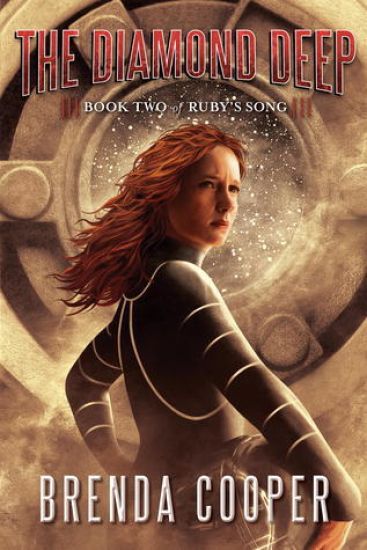
The Diamond Deep

The Diamond Deep

Brenda Cooper

Pyr
2013
nidottu
What if a woman as strong and as complex as Eva Peron began her life as a robot repair assistant threatened by a powerful peacekeeping force that wants to take all she has from her? The discovery ship, Creative Fire, is on its way home from a multi-generational journey. But home is nothing like the crew expected. They have been gone for generations, and the system they return to is home to technologies and riches beyond their wildest dreams. But they are immediately oppressed and relegated to the lowest status imaginable, barely able to interact with the technologies and people of the star station where they dock, the Diamond Deep. Ruby Martin and her partner, Joel North, must find a way to learn what they need to know and to become more than they have ever been if they are to find a way to save their people.
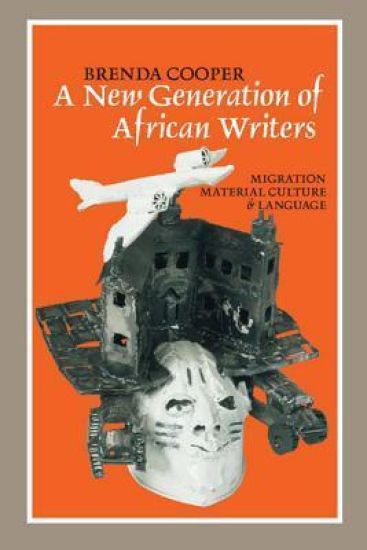
A New Generation of African Writers

A New Generation of African Writers

Brenda Cooper

James Currey
2013
pokkari
Brenda Cooper examines the work of the new generation of African writers who have placed migration as central to their writing There is a growing interest in books by writers of African origin. These authors have often grown up or passed their early adult years out of Africa. The Orange Prize for Fiction was awarded in London 2007 to Chimamanda Ngozie Adichie's Half of a Yellow Sun, and the Caine Prize for African Writing has introduced new writers such as Leila Aboulela, Biyi Bandele and Chimamanda Adichie herself to agents and publishers. This examination of the extraordinary work which has recently appeared is therefore very timely. Migration is a central theme of much African fiction written in English. Here, Brenda Cooper tracks the journeys undertaken by a new generation of Africanwriters, their protagonists and the solid objects that populate their fiction, to depict the material realities of their multiple worlds and languages. She explores the uses to which the English language is put in order to understand these worlds and demonstrates how these writers have contested the dominance of colonising metaphors. The writers' challenge is to find an English that can effectively express their many lives, languages and identities. BRENDA COOPER was for many years Director of the Centre for African Studies and Professor in the English department at the University of Cape Town, where she is now an Emeritus Professor. In 2009 she moved to Salford, where she is an Honorary Research Associate at the University of Manchester. She has published widely on African fiction and postcolonial literary theory. Southern Africa (South Africa, Botswana, Namibia, Lesotho and Swaziland): University of KwaZulu-Natal Press
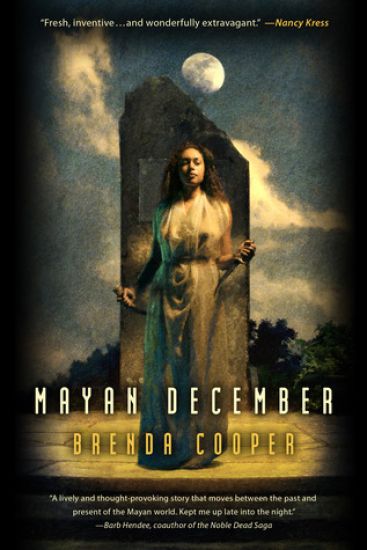
Mayan December

Mayan December

Brenda Cooper

Prime Books
2011
nidottu
Dr. Alice Cameron is a famous scientist — an archeoastronomer — devoted to studying ancient Mayan culture. The era driving her career has always been the end of the Mayan baktun, so she’s on the Yucatan Peninsula in December 2012 with her daughter Nixie...and so are fellow serious scholars, plenty of end-of-the-world crazies, and — at an international summit — the President of the United States and other heads of state. When Nixie disappears into the past in the Mayan jungle, rationality and mysticism, the present and the past start merging. Meanwhile, Alice is drawn into the machinations of statecraft by an old friend. A savvy scientist, a handsome dreadlocked time-traveler, an ancient shaman, a noble Mayan couple, a computer nerd, and an 11-year old traverse the past and present in a search for the meaning of life and a way to save two worlds.
A New Generation of African Writers

A New Generation of African Writers

Brenda Cooper

James Currey
2008
sidottu
Brenda Cooper examines the work of the new generation of African writers who have placed migration as central to their writing. There is a new interest among publishers in New York and London in books by writers of African origin. These authors have often grown up or passed their early adult years out of Africa. The Orange Prize for Fiction was awarded inLondon 2007 to Chimamanda Ngozie Adichie's Half of a Yellow Sun, and the Caine Prize for African Writing has introduced new writers such as Leila Aboulela, Biyi Bandele and Chimamanda Adichie herself to agents and publishers. This examination of the extraordinary work which has recently appeared is therefore very timely. Migration is a central theme of much African fiction written in English. Here, Brenda Cooper tracks the journeys undertakenby a new generation of African writers, their protagonists and the solid objects that populate their fiction, to depict the material realities of their multiple worlds and languages. The book explores the uses to which the Englishlanguage is put in order to understand these worlds. It demonstrates how these writers have contested the dominance of colonising metaphors. The writers' challenge is to find an English that can effectively express their many lives, languages and identities. BRENDA COOPER is Director of the Centre for African Studies and a Professor in the Department of English Language and Literature at the University of Cape Town. Southern Africa(South Africa, Botswana, Namibia, Lesotho and Swaziland): University of KwaZulu-Natal Press (PB]
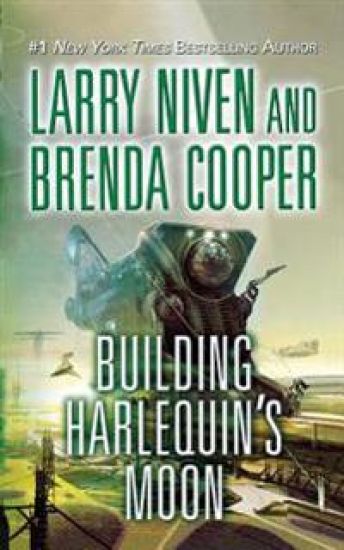
Building Harlequin's Moon

Building Harlequin's Moon

Larry Niven; Brenda Cooper

Tor Books
2006
nidottu
The first interstellar starship, John Glenn, fled a Solar System populated by rogue AIs and machine/human hybrids, threatened by too much nanotechnology, and rife with political dangers. The John Glenn's crew intended to terraform the nearly pristine planet Ymir, in hopes of creating a utopian society that would limit intelligent technology. But by some miscalculation they have landed in another solar system and must shape the gas giant planet Harlequin's moon, Selene, into a new, temporary home. Their only hope of ever reaching Ymir is to rebuild their store of antimatter by terraforming the moon. Gabriel, the head terraformer, must lead this nearly impossible task, with all the wrong materials: the wrong ships and tools, and too few resources. His primary tools are the uneducated and nearly-illiterate children of the original colonists, born and bred to build Harlequin's moon into an antimatter factory. Rachel Vanowen is one of these children. Basically a slave girl, she must do whatever the terraforming Council tells her. She knows that Council monitors her actions from a circling vessel above Selene's atmosphere, and is responsible for everything Rachel and her people know, as well as all the skills, food, and knowledge they have ever received. With no concept of the future and a life defined with duty, how will the children of Selene ever survive once the Council is through terraforming and have abandoned Selene for its ultimate goal of Ymir?
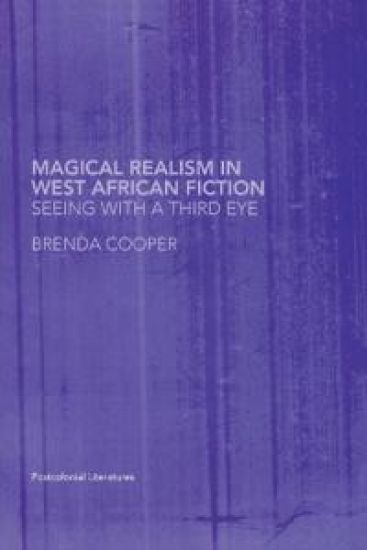
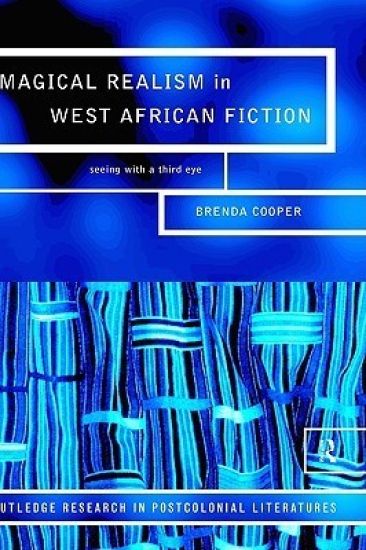
Magical Realism in West African Fiction
This study contextualizes magical realism within current debates and theories of postcoloniality and examines the fiction of three of its West African pioneers: Syl Cheney-Coker of Sierra Leone, Ben Okri of Nigeria and Kojo Laing of Ghana. Brenda Cooper explores the distinct elements of the genre in a West African context, and in relation to: * a range of global expressions of magical realism, from the work of Gabriel Garcia Marquez to that of Salman Rushdie * wider contemporary trends in African writing, with particular attention to how the realism of authors such as Chinua Achebe and Wole Soyinka has been connected with nationalist agendas. This is a fascinating and important work for all those working on African literature, magical realism, or postcoloniality.
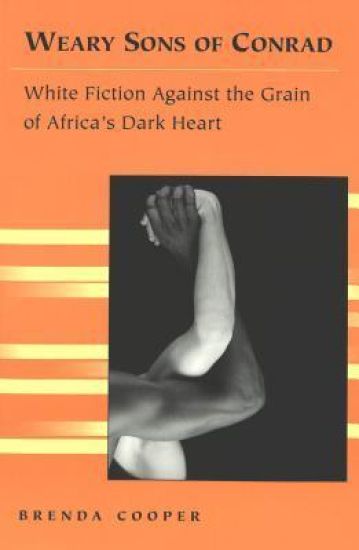
Weary Sons of Conrad

Weary Sons of Conrad

Brenda Cooper

Peter Lang Publishing Inc
2002
nidottu
"Weary Sons of Conrad" poses the question, how is Africa represented in some late twentieth-century European and North American fiction written by white men? Its contribution is to unearth a rich treasure of such fiction that opposes imperialism and struggles with patriarchy and gender stereotypes. These writers go to battle against the stranglehold of myths about Africa, its lands, and its people, which are deeply embedded in the language itself. The writers struggle for new tongues and original ways of telling their stories but cannot be totally free of history, family, language, and tradition. Written in a lively, accessible style, this book is of great interest to a broad range of readers in the fields of postcolonial literary theory, gender, and cultural and African studies.
Magical Realism in West African Fiction
This study contextualizes magical realism within current debates and theories of postcoloniality and examines the fiction of three of its West African pioneers: Syl Cheney-Coker of Sierra Leone, Ben Okri of Nigeria and Kojo Laing of Ghana. Brenda Cooper explores the distinct elements of the genre in a West African context, and in relation to: * a range of global expressions of magical realism, from the work of Gabriel Garcia Marquez to that of Salman Rushdie * wider contemporary trends in African writing, with particular attention to how the realism of authors such as Chinua Achebe and Wole Soyinka has been connected with nationalist agendas. This is a fascinating and important work for all those working on African literature, magical realism, or postcoloniality.