Kirjojen hintavertailu – 12 859 819 kirjaa ja 27 kauppaa

Kirjailija

Brendan Taylor

Kirjat ja teokset yhdessä paikassa: 11 kirjaa, julkaisuja vuosilta 2009–2021, suosituimpiin kuuluu Australia'S American Alliance. Vertaile teosten hintoja ja tarkista saatavuus suomalaisista kirjakaupoista.

11 kirjaa

Kirjojen julkaisuvuodet: 2009–2021.

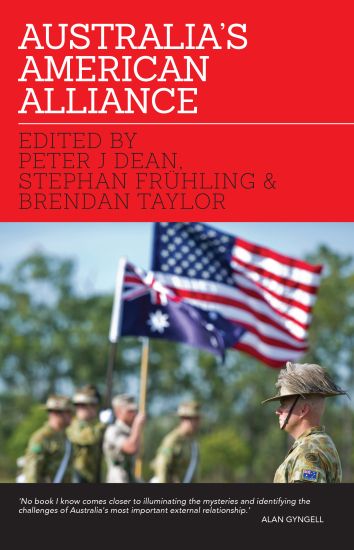
Australia'S American Alliance

Australia'S American Alliance

Peter J Dean; Stephan Frühling; Brendan Taylor

Melbourne University Press
2016
nidottu
The Australia-United States Alliance has been critical to Australian foreign and defence policy since the ANZUS Treaty was signed in 1951. For 63 years it has been an enduring feature of Australian defence planning, yet the contemporary alliance is, arguably, in one of the more important phases of reinterpretation in its long history. Despite the critical importance of the Australian-US Alliance and the evolving nature of the regional and global strategic environment there have been few studies that attempt to provide an in-depth understanding of how the Alliance is developing, and what this means for Australian defence policy. Australia’s American Allianceaims to fill this significant gap in order to provide the general public, policy and academic communities a more nuanced understanding of the Alliance and related choices for Australia, that will provide for a better informed debate over the future of Australia’s most significant strategic partnership.
Australia's American Alliance

Australia's American Alliance

Peter J Dean; Stephan Frühling; Brendan Taylor

Melbourne University Press
2016
sidottu
The Australia-United States Alliance has been critical to Australian foreign and defence policy since the ANZUS Treaty was signed in 1951. For 63 years it has been an enduring feature of Australian defence planning, yet the contemporary alliance is, arguably, in one of the more important phases of reinterpretation in its long history. Despite the critical importance of the Australian-US Alliance and the evolving nature of the regional and global strategic environment there have been few studies that attempt to provide an in-depth understanding of how the Alliance is developing, and what this means for Australian defence policy. Australia’s American Allianceaims to fill this significant gap in order to provide the general public, policy and academic communities a more nuanced understanding of the Alliance and related choices for Australia, that will provide for a better informed debate over the future of Australia’s most significant strategic partnership.
Asia’s New Geopolitics

Asia’s New Geopolitics

Desmond Ball; Lucie Béraud-Sudreau; Tim Huxley; C. Raja Mohan; Brendan Taylor

TAYLOR FRANCIS LTD
2021
nidottu
Intensifying geopolitical rivalries, rising defence spending and the proliferation of the latest military technology across Asia suggest that the region is set for a prolonged period of strategic contestation. None of the three competing visions for the future of Asian order – a US-led ‘Free and Open Indo-Pacific’, a Chinese-centred order, or the ASEAN-inspired ‘Indo-Pacific Outlook’ – is likely to prevail in the short to medium term. In the absence of a new framework, the risk of open conflict is heightened, and along with it the need for effective mechanisms to maintain peace and stability. As Asia’s leaders seek to rebuild their economies and societies in the wake of COVID-19, they would do well to reflect upon the lessons offered by the pandemic and their applicability in the strategic realm. The societies that have navigated the crisis most effectively have been able to do so by putting in place stringent protective measures. Crisis-management and -avoidance mechanisms – and even, in the longer term, wider arms control – can be seen as the strategic equivalent of such measures, and as such they should be pursued with urgency in Asia to reduce the risks of an even greater calamity.
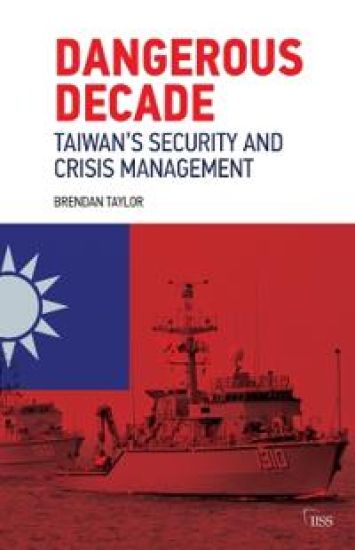
Dangerous Decade

Dangerous Decade

Brendan Taylor

Routledge
2019
nidottu
Taiwan’s position looks increasingly precarious, and tensions threaten to grow into a major strategic crisis. Chinese President Xi Jinping has made reunification with Taiwan a central pillar of his vision for China, and has ramped up diplomatic and economic pressure on Taiwan. Its inhabitants are increasingly estranged from the mainland, and Tsai Ing-wen’s administration refuses to conduct relations with China on Beijing’s terms. Taiwan could take on renewed strategic significance amid the backdrop of the deepening rivalry between China and the United States, and find itself at the centre of a Cold War-style superpower confrontation. While Washington’s support and military power has historically guaranteed Taiwan’s security, this is no longer a certainty. This Adelphi book argues that China’s military modernisation has changed the cross-strait military balance, and the ability of the US to prevail in a conflict over Taiwan may have evaporated by 2030. As China feels increasingly empowered to retake Taiwan, there is significant potential for escalation, particularly given the ambiguity of Beijing’s ‘red lines’ on Taiwan. Neither Beijing, Taipei nor Washington want such a conflict, but each is challenging the uneasy status quo. Taylor calls for the introduction of a narrower set of formal crisis-management mechanisms designed to navigate a major Taiwan crisis.
After American Primacy

After American Primacy

Peter J. Dean; Stephan Frühling; Brendan Taylor

Melbourne University Press
2019
sidottu
Australian defence policy sits at a crossroads. For over 70 years, Australia's strategic position had been anchored by the US-led international order that has been in place since 1945. But in 2017, 'Australians had to acknowledge that the global order that had shaped the world since the end of World War II was not challenged or changing, but over'. In this new era, beset with rapid strategic and technological change underpinned by increasing US-China contestation in the Indo-Pacific, what does the future hold for the region and Australia's strategic approach? Like its companion volumes, Australia's Defence: Towards a New Era? (2014) and Australia's American Alliance (2016), this book brings together leading experts to examine the future of Australian defence policy in a contested Asia. This thought provoking and challenging volume imagines the future of Australian strategy after American primacy, plotting possible, probable and preferable strategic futures for a country that faces unprecedented strategic challenges.
After American Primacy

After American Primacy

Peter J. Dean; Stephan Frühling; Brendan Taylor

Melbourne University Press
2019
nidottu
Australian defence policy sits at a crossroads. For over 70 years, Australia's strategic position had been anchored by the US-led international order that has been in place since 1945. But in 2017, 'Australians had to acknowledge that the global order that had shaped the world since the end of World War II was not challenged or changing, but over'. In this new era, beset with rapid strategic and technological change underpinned by increasing US-China contestation in the Indo-Pacific, what does the future hold for the region and Australia's strategic approach? Like its companion volumes, Australia's Defence: Towards a New Era? (2014) and Australia's American Alliance (2016), this book brings together leading experts to examine the future of Australian defence policy in a contested Asia. This thought provoking and challenging volume imagines the future of Australian strategy after American primacy, plotting possible, probable and preferable strategic futures for a country that faces unprecedented strategic challenges.
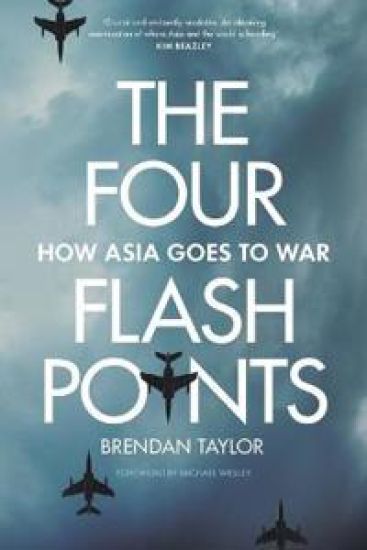
The Four Flashpoints: How Asia Goes to War

The Four Flashpoints: How Asia Goes to War

Brendan Taylor

La Trobe University Press
2018
pokkari
Asia is at a dangerous moment. China is rising fast. Young, reckless North Korean dictator Kim Jong-un is engaging in territorial spats with the US president over nuclear missiles. Japan's nationalist government is remilitarising, throwing off the constitutional constraints imposed at the end of World War II. Washington is charting a different course, too: Donald Trump is the first US president to have contact with Taiwanese leaders since the 1970s, and also the first to edge his finger so firmly towards the nuclear button over North Korea. The doomsday clock has reached two minutes to midnight, as the possibility of global catastrophe looms ever closer. In this revelatory analysis, strategic expert Brendan Taylor examines the four Asian flashpoints that are most likely to erupt in sudden and violent conflict: the Korean Peninsula, Taiwan, the South China Sea and the East China Sea. He argues that crisis can only be averted by understanding the dynamics of these global hotspots and the complex interrelations between them. Drawing on history, contemporary sources and in-depth reports to weave an analysis both pertinent and chilling, Taylor asks what the world's major powers can do to avoid an eruption of war -- and what role Australia, as both a force in this region and a historical ally of the United States, can play to change the course of this otherwise disastrous history.
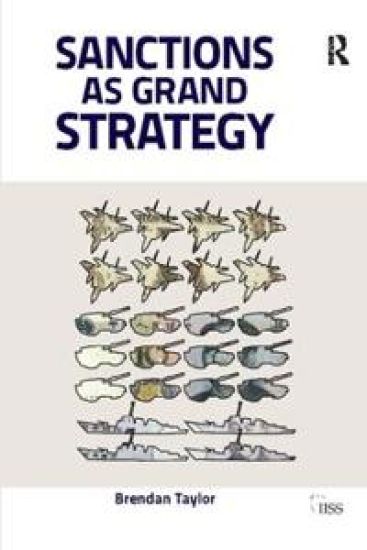
Sanctions as Grand Strategy

Sanctions as Grand Strategy

Brendan Taylor

Routledge
2017
sidottu
Economic sanctions are becoming increasingly central to shaping strategic outcomes in the twenty-first century. They afford great powers a means by which to seek to influence the behaviour of states, to demonstrate international leadership and to express common values for the benefit of the international community at large. Closer to home, they can also offer a 'middle way' for governments that apply them, satisfying moderates and hardliners alike. For some great powers in the multipolar world order, however, they pose a threat to trading relationships. They may also serve as a prelude to military action. With China's international voice growing in prominence and Russia asserting its renewed strength, often in opposition to the use of sanctions, it will be ever more difficult to reach a consensus on their application. Against this backdrop, knowing what kind of measures to take and in which scenarios they are most likely to work is invaluable. This Adelphi focuses on the different sanctions strategies of the United States, China, Russia, Japan and the EU, with regard to the unfolding nuclear crises in Iran and North Korea. It examines how these measures, designed to marginalise the regimes in both countries and restrict their ability to develop nuclear weapons, have also influenced the sanctioning states' international partners. As such, they are not just a tool of statecraft: they are potentially an important facet of grand strategy.
American Sanctions in the Asia-Pacific
Sanctions are a persistent – many would argue increasingly central – component of American efforts to shape foreign policy outcomes in the Asia-Pacific. The use of sanctions in the context of two of the most pressing regional security issues currently on Washington’s radar – the ongoing North Korean nuclear crisis and the management of China’s emergence – clearly reaffirms this pattern. This book provides the first comprehensive treatment of US sanctions policy in the Asia-Pacific. Using the Bill Clinton and George W. Bush presidencies as a basis for comparison, it examines nine prominent episodes involving the US use of sanctions toward countries in this economically and strategically vital part of the world. In each case it addresses the reasons why sanctions were employed in the first place, the precise nature of sanctions and how they operated in practice, before evaluating their effectiveness. Finally, it identifies common trends that emerge from this analysis and draws out practical implications for US sanctions policy, in particular when and how the US can – and cannot – optimally use sanctions in an Asia-Pacific context.
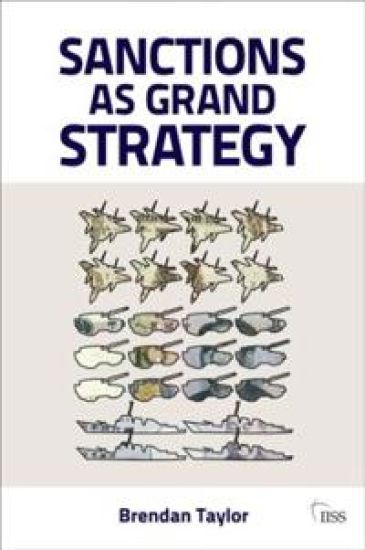
Sanctions as Grand Strategy

Sanctions as Grand Strategy

Brendan Taylor

Routledge
2010
nidottu
Economic sanctions are becoming increasingly central to shaping strategic outcomes in the twenty-first century. They afford great powers a means by which to seek to influence the behaviour of states, to demonstrate international leadership and to express common values for the benefit of the international community at large. Closer to home, they can also offer a 'middle way' for governments that apply them, satisfying moderates and hardliners alike. For some great powers in the multipolar world order, however, they pose a threat to trading relationships. They may also serve as a prelude to military action. With China's international voice growing in prominence and Russia asserting its renewed strength, often in opposition to the use of sanctions, it will be ever more difficult to reach a consensus on their application. Against this backdrop, knowing what kind of measures to take and in which scenarios they are most likely to work is invaluable. This Adelphi focuses on the different sanctions strategies of the United States, China, Russia, Japan and the EU, with regard to the unfolding nuclear crises in Iran and North Korea. It examines how these measures, designed to marginalise the regimes in both countries and restrict their ability to develop nuclear weapons, have also influenced the sanctioning states' international partners. As such, they are not just a tool of statecraft: they are potentially an important facet of grand strategy.
American Sanctions in the Asia-Pacific
Sanctions are a persistent – many would argue increasingly central – component of American efforts to shape foreign policy outcomes in the Asia-Pacific. The use of sanctions in the context of two of the most pressing regional security issues currently on Washington’s radar – the ongoing North Korean nuclear crisis and the management of China’s emergence – clearly reaffirms this pattern. This book provides the first comprehensive treatment of US sanctions policy in the Asia-Pacific. Using the Bill Clinton and George W. Bush presidencies as a basis for comparison, it examines nine prominent episodes involving the US use of sanctions toward countries in this economically and strategically vital part of the world. In each case it addresses the reasons why sanctions were employed in the first place, the precise nature of sanctions and how they operated in practice, before evaluating their effectiveness. Finally, it identifies common trends that emerge from this analysis and draws out practical implications for US sanctions policy, in particular when and how the US can – and cannot – optimally use sanctions in an Asia-Pacific context.