Kirjojen hintavertailu – 12 859 828 kirjaa ja 27 kauppaa

Kirjailija

Brent Berlin

Kirjat ja teokset yhdessä paikassa: 7 kirjaa, julkaisuja vuosilta 1968–2016, suosituimpiin kuuluu Basic Color Terms: Their Universality and Evolution. Vertaile teosten hintoja ja tarkista saatavuus suomalaisista kirjakaupoista.

7 kirjaa

Kirjojen julkaisuvuodet: 1968–2016.

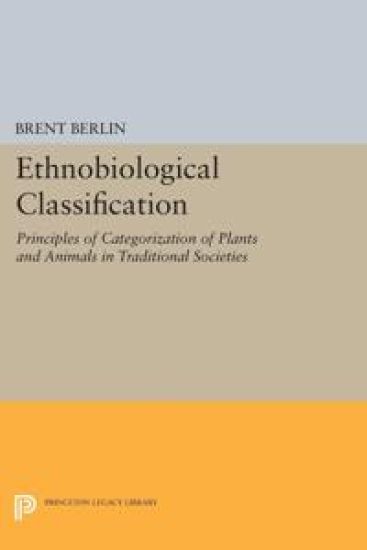
Ethnobiological Classification

Ethnobiological Classification

Brent Berlin

Princeton University Press
2016
sidottu
A founder of and leading thinker in the field of modern ethnobiology looks at the widespread regularities in the classification and naming of plants and animals among peoples of traditional, nonliterate societies--regularities that persist across local environments, cultures, societies, and languages. Brent Berlin maintains that these patterns can best be explained by the similarity of human beings' largely unconscious appreciation of the natural affinities among groupings of plants and animals: people recognize and name a grouping of organisms quite independently of its actual or potential usefulness or symbolic significance in human society. Berlin's claims challenge those anthropologists who see reality as a "set of culturally constructed, often unique and idiosyncratic images, little constrained by the parameters of an outside world." Part One of this wide-ranging work focuses primarily on the structure of ethnobiological classification inferred from an analysis of descriptions of individual systems. Part Two focuses on the underlying processes involved in the functioning and evolution of ethnobiological systems in general. Originally published in 1992. The Princeton Legacy Library uses the latest print-on-demand technology to again make available previously out-of-print books from the distinguished backlist of Princeton University Press. These editions preserve the original texts of these important books while presenting them in durable paperback and hardcover editions. The goal of the Princeton Legacy Library is to vastly increase access to the rich scholarly heritage found in the thousands of books published by Princeton University Press since its founding in 1905.
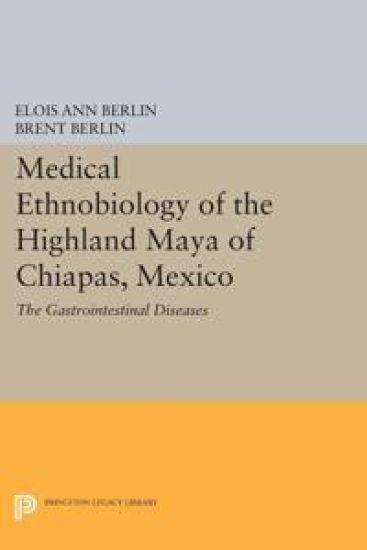
Medical Ethnobiology of the Highland Maya of Chiapas, Mexico

Medical Ethnobiology of the Highland Maya of Chiapas, Mexico

Elois Ann Berlin; Brent Berlin

Princeton University Press
2016
sidottu
Whereas most previous work on Maya healing has focused on ritual and symbolism, this book presents evidence that confirms the scientific foundations of traditional Maya medicine. Data drawn from analysis of the medical practices of two Mayan-speaking peoples, the Tzeltal and Tzotzil, reveal that they have developed a large number of herbal remedies based on a highly sophisticated understanding of the physiology and symptomatology of common diseases and on an in-depth knowledge of medicinal plants. Here Elois Ann Berlin and Brent Berlin, along with their many collaborators, provide detailed information on Maya disease classification, symptomatology, and treatment of the most significant health conditions affecting the Highland Maya, the gastrointestinal diseases. The authors base their work on broad-ranging comparative ethno-medical and ethnobotanical data collected over seven years of original field research. In describing the Mayas' understanding and treatment of gastrointestinal diseases, Berlin and Berlin show that the plants used as remedies are condition specific.> Moreover, laboratory studies demonstrate that the most commonly agreed upon herbal remedies are potentially effective against the pathogenic agents underlying specific diseases and that they strongly affect the physiological processes associated with intestinal peristalsis. These findings suggest that the traditional Maya medical system is the result of long-term explicit empirical experimentation with the effects of herbal remedies on bodily function. Originally published in 1996. The Princeton Legacy Library uses the latest print-on-demand technology to again make available previously out-of-print books from the distinguished backlist of Princeton University Press. These editions preserve the original texts of these important books while presenting them in durable paperback and hardcover editions. The goal of the Princeton Legacy Library is to vastly increase access to the rich scholarly heritage found in the thousands of books published by Princeton University Press since its founding in 1905.
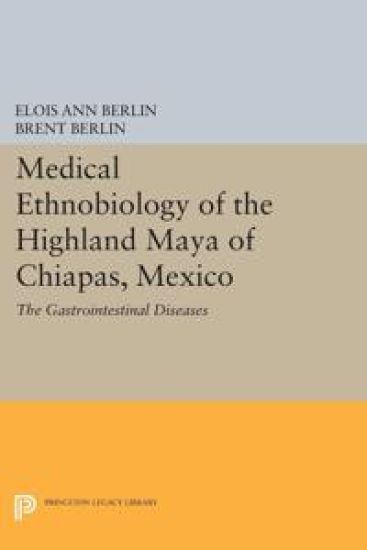
Medical Ethnobiology of the Highland Maya of Chiapas, Mexico

Medical Ethnobiology of the Highland Maya of Chiapas, Mexico

Elois Ann Berlin; Brent Berlin

Princeton University Press
2015
pokkari
Whereas most previous work on Maya healing has focused on ritual and symbolism, this book presents evidence that confirms the scientific foundations of traditional Maya medicine. Data drawn from analysis of the medical practices of two Mayan-speaking peoples, the Tzeltal and Tzotzil, reveal that they have developed a large number of herbal remedies based on a highly sophisticated understanding of the physiology and symptomatology of common diseases and on an in-depth knowledge of medicinal plants. Here Elois Ann Berlin and Brent Berlin, along with their many collaborators, provide detailed information on Maya disease classification, symptomatology, and treatment of the most significant health conditions affecting the Highland Maya, the gastrointestinal diseases. The authors base their work on broad-ranging comparative ethno-medical and ethnobotanical data collected over seven years of original field research. In describing the Mayas' understanding and treatment of gastrointestinal diseases, Berlin and Berlin show that the plants used as remedies are condition specific.> Moreover, laboratory studies demonstrate that the most commonly agreed upon herbal remedies are potentially effective against the pathogenic agents underlying specific diseases and that they strongly affect the physiological processes associated with intestinal peristalsis. These findings suggest that the traditional Maya medical system is the result of long-term explicit empirical experimentation with the effects of herbal remedies on bodily function. Originally published in 1996. The Princeton Legacy Library uses the latest print-on-demand technology to again make available previously out-of-print books from the distinguished backlist of Princeton University Press. These editions preserve the original texts of these important books while presenting them in durable paperback and hardcover editions. The goal of the Princeton Legacy Library is to vastly increase access to the rich scholarly heritage found in the thousands of books published by Princeton University Press since its founding in 1905.
Ethnobiological Classification

Ethnobiological Classification

Brent Berlin

Princeton University Press
2014
pokkari
A founder of and leading thinker in the field of modern ethnobiology looks at the widespread regularities in the classification and naming of plants and animals among peoples of traditional, nonliterate societies--regularities that persist across local environments, cultures, societies, and languages. Brent Berlin maintains that these patterns can best be explained by the similarity of human beings' largely unconscious appreciation of the natural affinities among groupings of plants and animals: people recognize and name a grouping of organisms quite independently of its actual or potential usefulness or symbolic significance in human society. Berlin's claims challenge those anthropologists who see reality as a "set of culturally constructed, often unique and idiosyncratic images, little constrained by the parameters of an outside world." Part One of this wide-ranging work focuses primarily on the structure of ethnobiological classification inferred from an analysis of descriptions of individual systems. Part Two focuses on the underlying processes involved in the functioning and evolution of ethnobiological systems in general. Originally published in 1992. The Princeton Legacy Library uses the latest print-on-demand technology to again make available previously out-of-print books from the distinguished backlist of Princeton University Press. These editions preserve the original texts of these important books while presenting them in durable paperback and hardcover editions. The goal of the Princeton Legacy Library is to vastly increase access to the rich scholarly heritage found in the thousands of books published by Princeton University Press since its founding in 1905.
The World Color Survey

The World Color Survey

Paul Kay; Brent Berlin; Luisa Maffi; William R. Merrifield; Richard Cook

Centre for the Study of Language Information
2011
nidottu
The 1969 publication of Brent Berlin and Paul Kay's "Basic Color Terms" proved explosive. Contrary to the then-popular doctrine of random language variation, Berlin and Kay's multilingual study of color nomenclature indicated a cross-cultural and almost universal pattern in the selection of colors that received abstract names in each language. After four decades in print, "Basic Color Terms" now has a sequel: in this book, the authors authoritatively extend the original survey, studying 110 additional unwritten languages in detail and in situ. The results are presented with charts showing the overall palette of color terms within each language, as well as the levels of agreement among speakers.
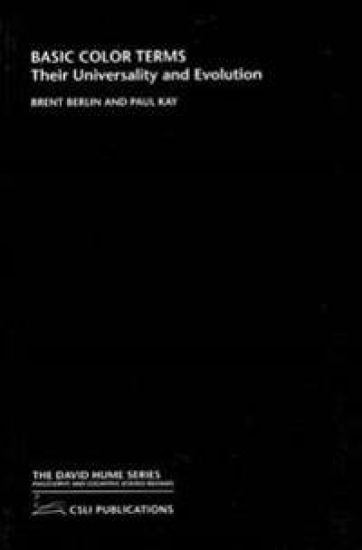
Basic Color Terms: Their Universality and Evolution

Basic Color Terms: Their Universality and Evolution

Brent Berlin; Paul Kay

Center for the Study of Language and Informat
1999
nidottu
The work reported in this monograph was begun in the winter of 1967 in a graduate seminar at Berkeley. Many of the basic data were gathered by members of the seminar and the theoretical framework presented here was initially developed in the context of the seminar discussions. Much has been discovered since 1969, the date of original publication, regarding the psychophysical and neurophysical determinants of universal, cross-linguistic constraints on the shape of basic color lexicons, and something, albeit less, can now also be said with some confidence regarding the constraining effects of these language-independent processes of color perception and conceptualization on the direction of evolution of basic color term lexicons.