Kirjojen hintavertailu – 12 903 733 kirjaa ja 27 kauppaa

Kirjailija

Brent Sohngen

Kirjat ja teokset yhdessä paikassa: 3 kirjaa, julkaisuja vuosilta 2024–2026, suosituimpiin kuuluu ReversingDeforestation. Vertaile teosten hintoja ja tarkista saatavuus suomalaisista kirjakaupoista.

3 kirjaa

Kirjojen julkaisuvuodet: 2024–2026.

Climate Change and Forest Resources

Climate Change and Forest Resources

Brent Sohngen; Robert O. Mendelsohn

Routledge
2026
sidottu
There is growing evidence that even if modest control policies are adopted, increasing greenhouse gas levels in the atmosphere will lead to global warming over the next century and beyond. This is expected to have profound effects on the location and productivity of the world’s ecosystems. Although a great deal of attention has been devoted to studying the direct effects of climate change on agriculture and coastal systems, comparatively little attention has been devoted to studying the impacts on the world’s forests. Yet virtually every forest system around the world is expected to be influenced by climate change; from tropical forests in Africa or the Amazon to polar forests in Canada or Russia. This book discusses important scientific and policy relevant information about climate change and global forests. Divided into three general sections, the book:highlights the natural science link between greenhouse gases and forestsdiscusses the social impacts of climate-induced forest changes discusses policies to use forests to sequester carbon. Each chapter of includes a review of the literature relevant to the specific issues addressed.
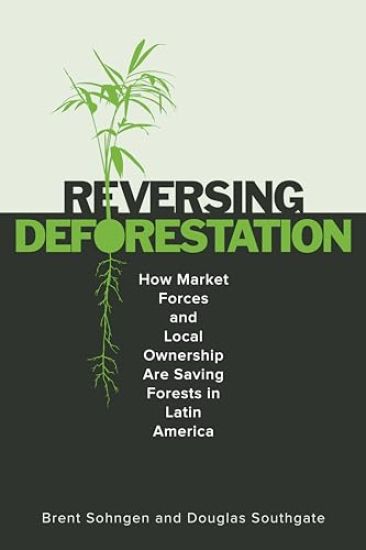
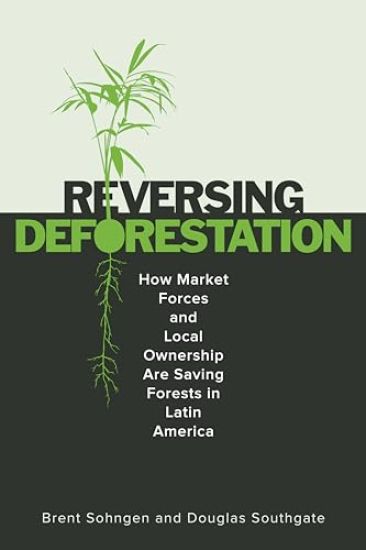
ReversingDeforestation

ReversingDeforestation

Brent Sohngen; Douglas Southgate

STANFORD UNIVERSITY PRESS
2024
sidottu
Dire reports of surging deforestation in the Brazilian Amazon appear often in international headlines, with commentators decrying the destruction of tree-covered habitats as an act of environmental vandalism. Although forest losses are alarming, broader trends are bending in the direction of forest recovery. In this book, Brent Sohngen and Douglas Southgate address the long-term recovery of forests in Latin America. The authors synthesize trends in demography, agricultural development, and technological change, and argue that slower population growth and increasing crop and tree yields—in conjunction with protecting local ownership of natural resources—have encouraged forest transition. This book explores how market forces, ownership arrangements, and the enforcement of property rights have influenced this shift from net deforestation to net afforestation. Forest transitions have happened before, such as the recovery of tree-covered habitats in Europe and the United States. Signs of a similar transformation in land use are now present in Latin America. Ending deforestation requires a strengthening of forest dwellers' property rights while ensuring that biodiversity conservation is no longer treated as a value-less externality. The resulting forest landscape, actively managed for ecosystem services, will be more resilient, as is needed to overcome climate change.
ReversingDeforestation

ReversingDeforestation

Brent Sohngen; Douglas Southgate

STANFORD UNIVERSITY PRESS
2024
pokkari
Dire reports of surging deforestation in the Brazilian Amazon appear often in international headlines, with commentators decrying the destruction of tree-covered habitats as an act of environmental vandalism. Although forest losses are alarming, broader trends are bending in the direction of forest recovery. In this book, Brent Sohngen and Douglas Southgate address the long-term recovery of forests in Latin America. The authors synthesize trends in demography, agricultural development, and technological change, and argue that slower population growth and increasing crop and tree yields—in conjunction with protecting local ownership of natural resources—have encouraged forest transition. This book explores how market forces, ownership arrangements, and the enforcement of property rights have influenced this shift from net deforestation to net afforestation. Forest transitions have happened before, such as the recovery of tree-covered habitats in Europe and the United States. Signs of a similar transformation in land use are now present in Latin America. Ending deforestation requires a strengthening of forest dwellers' property rights while ensuring that biodiversity conservation is no longer treated as a value-less externality. The resulting forest landscape, actively managed for ecosystem services, will be more resilient, as is needed to overcome climate change.