Kirjailija
Bret Harte
Kirjat ja teokset yhdessä paikassa: 1 329 kirjaa, julkaisuja vuosilta 2001–2026, suosituimpiin kuuluu Clarence. Vertaile teosten hintoja ja tarkista saatavuus suomalaisista kirjakaupoista.
1 329 kirjaa
Kirjojen julkaisuvuodet: 2001–2026.

Excerpt: "It was very dark, and the wind was increasing. The last gust had been preceded by an ominous roaring down the whole mountain-side, which continued for some time after the trees in the little valley had lapsed into silence. The air was filled with a faint, cool, sodden odor, as of stirred forest depths. In those intervals of silence the darkness seemed to increase in proportion and grow almost palpable. Yet out of this sightless and soundless void now came the tinkle of a spur's rowels, the dry crackling of saddle leathers, and the muffled plunge of a hoof in the thick carpet of dust and desiccated leaves..." Bret Harte was an American short story writer and poet, best remembered for his short fiction featuring miners, gamblers, and other romantic figures of the California Gold Rush. In a career spanning more than four decades, he wrote poetry, fiction, plays, lectures, book reviews, editorials, and magazine sketches in addition to fiction. As he moved from California to the eastern U. S. to Europe, he incorporated new subjects and characters into his stories, but his Gold Rush tales have been most often reprinted, adapted, and admired.

When three partners find a fortune in the Gold Rush it invites a lot of unwanted attention, deceit and death Excerpt: "The sun was going down on the Black Spur Range. The red light it had kindled there was still eating its way along the serried crest, showing through gaps in the ranks of pines, etching out the interstices of broken boughs, fading away and then flashing suddenly out again like sparks in burnt-up paper. Then the night wind swept down the whole mountain side, and began its usual struggle with the shadows upclimbing from the valley, only to lose itself in the end and be absorbed in the all-conquering darkness..." Bret Harte was an American short story writer and poet, best remembered for his short fiction featuring miners, gamblers, and other romantic figures of the California Gold Rush. In a career spanning more than four decades, he wrote poetry, fiction, plays, lectures, book reviews, editorials, and magazine sketches in addition to fiction. As he moved from California to the eastern U. S. to Europe, he incorporated new subjects and characters into his stories, but his Gold Rush tales have been most often adapted and admired.

Barker's Luck and Other Stories
Bret Harte; Cambridge Riverside Press; Robert B. Honeyman
Hansebooks
2018
nidottu



The sun was going down on the Black Spur Range. The red light it had kindled there was still eating its way along the serried crest, showing through gaps in the ranks of pines, etching out the interstices of broken boughs, fading away and then flashing suddenly out again like sparks in burnt-up paper. Then the night wind swept down the whole mountain side, and began its usual struggle with the shadows upclimbing from the valley, only to lose itself in the end and be absorbed in the all-conquering darkness. Yet for some time the pines on the long slope of Heavy Tree Hill murmured and protested with swaying arms; but as the shadows stole upwards, and cabin after cabin and tunnel after tunnel were swallowed up, a complete silence followed. Only the sky remained visible-a vast concave mirror of dull steel, in which the stars did not seem to be set, but only reflected.

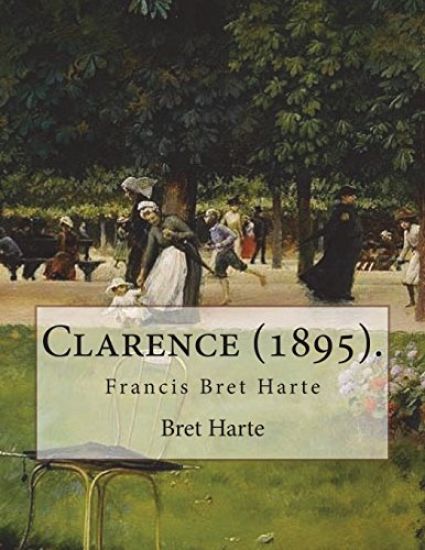
Clarence (1895). By: Bret Harte: Francis Bret Harte (August 25, 1836 - May 5, 1902) was an American short story writer and poet.
Bret Harte
Createspace Independent Publishing Platform
2018
nidottu
Francis Bret Harte (August 25, 1836 - May 5, 1902) was an American short story writer and poet, best remembered for his short fiction featuring miners, gamblers, and other romantic figures of the California Gold Rush. In a career spanning more than four decades, he wrote poetry, plays, lectures, book reviews, editorials, and magazine sketches in addition to fiction. As he moved from California to the eastern U. S. to Europe, he incorporated new subjects and characters into his stories, but his Gold Rush tales have been most often reprinted, adapted, and admired. Early life: Bret Harte was born in Albany, New York. He was named Francis Brett Hart after his great-grandfather, Francis Brett. When he was young, his father, Henry, changed the spelling of the family name from Hart to Harte. Henry's father was Bernard Hart, an Orthodox Jewish immigrant who flourished as a merchant, becoming one of the founders of the New York Stock Exchange. Later, Francis preferred to be known by his middle name, but he spelled it with only one "t", becoming Bret Harte. An avid reader as a boy, Harte published his first work at age 11, a satirical poem titled "Autumn Musings", now lost. Rather than attracting praise, the poem garnered ridicule from his family. As an adult, he recalled to a friend, "Such a shock was their ridicule to me that I wonder that I ever wrote another line of verse". His formal schooling ended when he was 13, in 1849. He was determined to pursue his literary career and traveled back East with his family in 1871 to New York and eventually to Boston where he contracted with the publisher of The Atlantic Monthly for an annual salary of $10,000, "an unprecedented sum at the time". His popularity waned, however, and by the end of 1872 he was without a publishing contract and increasingly desperate. He spent the next few years struggling to publish new work or republish old, and delivering lectures about the gold rush. The winter of 1877-1878 was particularly hard for Harte and his family. He later recalled it as a "hand-to-mouth life" and wrote to his wife Anna, "I don't know-looking back-what ever kept me from going down, in every way, during that awful December and January". After months of soliciting for such a role, Harte accepted the position of United States Consul in the town of Krefeld, Germany in May 1878. Mark Twain had been a friend and supporter of Harte's until a substantial falling out, and he had previously tried to block any appointment for Harte. In a letter to William Dean Howells, he complained that Harte would be an embarrassment to the United States because, as he wrote, "Harte is a liar, a thief, a swindler, a snob, a sot, a sponge, a coward, a Jeremy Diddler, he is brim full of treachery... To send this nasty creature to puke upon the American name in a foreign land is too much". Eventually, Harte was given a similar role in Glasgow in 1880. In 1885, he settled in London. Throughout his time in Europe, he regularly wrote to his wife and children and sent monthly financial contributions. He declined, however, to invite them to join him, nor did he return to the United States to visit them. His excuses were usually related to money. During the 24 years that he spent in Europe, he never abandoned writing and maintained a prodigious output of stories that retained the freshness of his earlier work...........

Drift from two shores, Maruja, By shore and sedge [and] Thankful blossom. By: Bret Harte: Illustrated...Francis Bret Harte (August 25, 1836 - May 5, 1
Bret Harte
Createspace Independent Publishing Platform
2018
nidottu
Francis Bret Harte (August 25, 1836 - May 5, 1902) was an American short story writer and poet, best remembered for his short fiction featuring miners, gamblers, and other romantic figures of the California Gold Rush. In a career spanning more than four decades, he wrote poetry, plays, lectures, book reviews, editorials, and magazine sketches in addition to fiction. As he moved from California to the eastern U. S. to Europe, he incorporated new subjects and characters into his stories, but his Gold Rush tales have been most often reprinted, adapted, and admired. Early life: Bret Harte was born in Albany, New York. He was named Francis Brett Hart after his great-grandfather, Francis Brett. When he was young, his father, Henry, changed the spelling of the family name from Hart to Harte. Henry's father was Bernard Hart, an Orthodox Jewish immigrant who flourished as a merchant, becoming one of the founders of the New York Stock Exchange. Later, Francis preferred to be known by his middle name, but he spelled it with only one "t", becoming Bret Harte. An avid reader as a boy, Harte published his first work at age 11, a satirical poem titled "Autumn Musings", now lost. Rather than attracting praise, the poem garnered ridicule from his family. As an adult, he recalled to a friend, "Such a shock was their ridicule to me that I wonder that I ever wrote another line of verse". His formal schooling ended when he was 13, in 1849.
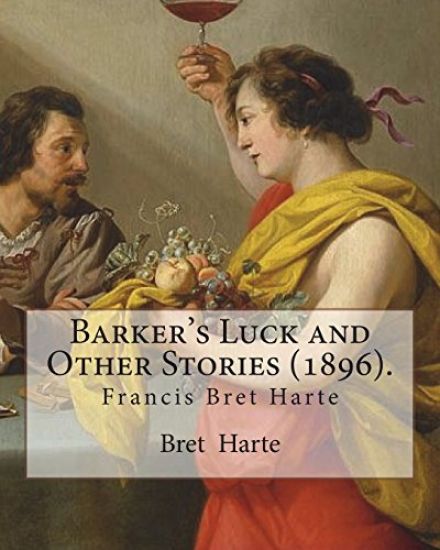
Barker's Luck and Other Stories (1896). By: Bret Harte: Francis Bret Harte (August 25, 1836 - May 5, 1902) was an American short story writer and poet
Bret Harte
Createspace Independent Publishing Platform
2018
nidottu
Francis Bret Harte (August 25, 1836 - May 5, 1902) was an American short story writer and poet, best remembered for his short fiction featuring miners, gamblers, and other romantic figures of the California Gold Rush. In a career spanning more than four decades, he wrote poetry, plays, lectures, book reviews, editorials, and magazine sketches in addition to fiction. As he moved from California to the eastern U. S. to Europe, he incorporated new subjects and characters into his stories, but his Gold Rush tales have been most often reprinted, adapted, and admired. Early life: Bret Harte was born in Albany, New York. He was named Francis Brett Hart after his great-grandfather, Francis Brett. When he was young, his father, Henry, changed the spelling of the family name from Hart to Harte. Henry's father was Bernard Hart, an Orthodox Jewish immigrant who flourished as a merchant, becoming one of the founders of the New York Stock Exchange. Later, Francis preferred to be known by his middle name, but he spelled it with only one "t", becoming Bret Harte. An avid reader as a boy, Harte published his first work at age 11, a satirical poem titled "Autumn Musings", now lost. Rather than attracting praise, the poem garnered ridicule from his family. As an adult, he recalled to a friend, "Such a shock was their ridicule to me that I wonder that I ever wrote another line of verse". His formal schooling ended when he was 13, in 1849. Career in California Harte moved to California in 1853, later working there in a number of capacities, including miner, teacher, messenger, and journalist. He spent part of his life in the northern California coastal town of Union (now Arcata), a settlement on Humboldt Bay that was established as a provisioning center for mining camps in the interior. citation needed] The Wells Fargo Messenger, July 1916, relates that, after an unsuccessful attempt to make a living in the gold camps, he signed on as a messenger with Wells Fargo & Co. Express. He guarded treasure boxes on stagecoaches for a few months, then gave it up to become the schoolmaster at a school near Sonora. He created his character Yuba Bill from his memory of an old stagecoach driver. The 1860 massacre of between 80 and 200 Wiyots at the village of Tuluwat was well documented historically and was reported in San Francisco and New York by Harte. When serving as assistant editor for the Northern Californian, Harte editorialized about the slayings while his boss Stephen G. Whipple was temporarily absent, leaving Harte in charge of the paper. Harte published a detailed account condemning the event, writing: "a more shocking and revolting spectacle never was exhibited to the eyes of a Christian and civilized people. Old women wrinkled and decrepit lay weltering in blood, their brains dashed out and dabbled with their long grey hair. Infants scarcely a span long, with their faces cloven with hatchets and their bodies ghastly with wounds." After he published the editorial, his life was threatened, and he was forced to flee one month later. Harte quit his job and moved to San Francisco, where an anonymous letter published in a city paper is attributed to him, describing widespread community approval of the massacre. In addition, no one was ever brought to trial, despite the evidence of a planned attack and references to specific individuals, including a rancher named Larabee and other members of the unofficial militia called the Humboldt Volunteers.
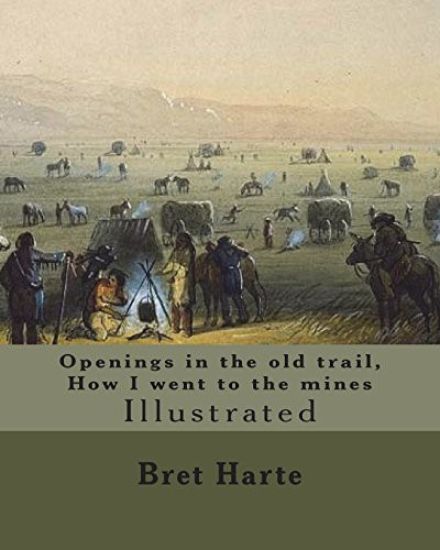
Openings in the old trail, How I went to the mines. By: Bret Harte: Illustrated...Francis Bret Harte (August 25, 1836 - May 5, 1902) was an American s
Bret Harte
Createspace Independent Publishing Platform
2018
nidottu
Francis Bret Harte (August 25, 1836 - May 5, 1902) was an American short story writer and poet, best remembered for his short fiction featuring miners, gamblers, and other romantic figures of the California Gold Rush. In a career spanning more than four decades, he wrote poetry, plays, lectures, book reviews, editorials, and magazine sketches in addition to fiction. As he moved from California to the eastern U. S. to Europe, he incorporated new subjects and characters into his stories, but his Gold Rush tales have been most often reprinted, adapted, and admired. Early life: Bret Harte was born in Albany, New York. He was named Francis Brett Hart after his great-grandfather, Francis Brett. When he was young, his father, Henry, changed the spelling of the family name from Hart to Harte. Henry's father was Bernard Hart, an Orthodox Jewish immigrant who flourished as a merchant, becoming one of the founders of the New York Stock Exchange. Later, Francis preferred to be known by his middle name, but he spelled it with only one "t", becoming Bret Harte. An avid reader as a boy, Harte published his first work at age 11, a satirical poem titled "Autumn Musings", now lost. Rather than attracting praise, the poem garnered ridicule from his family. As an adult, he recalled to a friend, "Such a shock was their ridicule to me that I wonder that I ever wrote another line of verse". His formal schooling ended when he was 13, in 1849. Career in California Harte moved to California in 1853, later working there in a number of capacities, including miner, teacher, messenger, and journalist. He spent part of his life in the northern California coastal town of Union (now Arcata), a settlement on Humboldt Bay that was established as a provisioning center for mining camps in the interior. The Wells Fargo Messenger, July 1916, relates that, after an unsuccessful attempt to make a living in the gold camps, he signed on as a messenger with Wells Fargo & Co. Express. He guarded treasure boxes on stagecoaches for a few months, then gave it up to become the schoolmaster at a school near Sonora. He created his character Yuba Bill from his memory of an old stagecoach driver. The 1860 massacre of between 80 and 200 Wiyots at the village of Tuluwat was well documented historically and was reported in San Francisco and New York by Harte. When serving as assistant editor for the Northern Californian, Harte editorialized about the slayings while his boss Stephen G. Whipple was temporarily absent, leaving Harte in charge of the paper. Harte published a detailed account condemning the event, writing: "a more shocking and revolting spectacle never was exhibited to the eyes of a Christian and civilized people. Old women wrinkled and decrepit lay weltering in blood, their brains dashed out and dabbled with their long grey hair. Infants scarcely a span long, with their faces cloven with hatchets and their bodies ghastly with wounds." 8] After he published the editorial, his life was threatened, and he was forced to flee one month later. Harte quit his job and moved to San Francisco, where an anonymous letter published in a city paper is attributed to him, describing widespread community approval of the massacre. In addition, no one was ever brought to trial, despite the evidence of a planned attack and references to specific individuals, including a rancher named Larabee and other members of the unofficial militia called the Humboldt Volunteers...

Although American author Bret Harte is most readily associated with stories about the West, it is his skill with characterization that distinguishes him from the hundreds of others who set fictional tales in the region. The miners, soldiers, gamblers, entrepreneurs, and lost souls who populate these pages are limned with Harte's unique combination of dry wit and tender pathos. This charming collection of Harte's short stories focuses on life in old California and includes "Openings in the Old Trail," "Colonel Starbottle for the Plaintiff," "The Landlord of the Big Flume Hotel," "A Buckeye Hollow Inheritance," "The Reincarnation of Smith," "Lanty Foster's Mistake," "An Ali Baba of the Sierras," "Miss Peggy's Proteges," and "The Goddess of Excelsior."