
Kirjailija
Brett Younger
Kirjat ja teokset yhdessä paikassa: 6 kirjaa, julkaisuja vuosilta 2012–2019, suosituimpiin kuuluu Jacob's Family Drama. Vertaile teosten hintoja ja tarkista saatavuus suomalaisista kirjakaupoista.
6 kirjaa
Kirjojen julkaisuvuodet: 2012–2019.
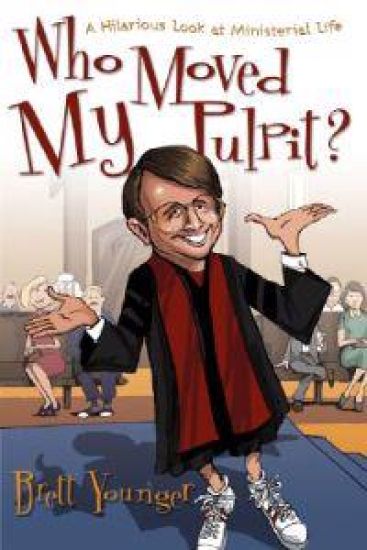
A funny thing happened on the way to the pulpit . . . Join pastor and humorist Brett Younger in this hilarious look at almost everything ministerial. Who Moved My Pulpit? invites us to laugh at the ridiculous and celebrate the holy. Ministers try so hard to keep everything under control that they often miss the fun of it. When church leaders feel frustrated, there's a better option than giving up or giving in. They can open their eyes to a new perspective and cultivate a life shaped by Christ's joy. This look at everything from pastor search committees ("Does this swimsuit make my hips look big?") to church answering machines ("The Lord be with you, but I'm in a meeting") is for everyone who wants to remember the love that led them to church in the first place.
Like it or not, it's election time again in the United States, which means partisan passions are probably already running hot, sometimes to the point of boiling over into angry arguments. Unfortunately, Christians are not immune to this reality. Our church rolls contain Democrats, Republicans, and Independents, as well as members of other political parties. All of these folks love Jesus. They also love their country and have opinions about how it ought to be run. Not surprisingly, these folks don't always agree with each other. Our political differences, however, must never be allowed to trump our Christian fellowship. Politics and faith are tricky areas for Christians to negotiate. The First Amendment to the Constitution guarantees religious freedom for all Americans. Some have argued through the years this means, in part, that people of faith must keep their religious convictions to themselves when participating in public discourse. Such a position not only ignores the rich history of religiously inspired reform in this country (such as the movements against slavery and, a century later, for civil rights), it also results in what Richard John Neuhaus once described as a "naked public square," a morally and intellectually impoverished culture stripped bare of all religious influence. The truth is that Christians are neither called by God to be silent in the public square, nor does the law prohibit us from speaking up and speaking out as guided by the Holy Spirit. Yet still, as Christians who are also citizens, questions abound: How do we know when to speak and when to be quiet? How do we distinguish between faithful and unfaithful forms of civic engagement? How do we give Caesar his due while giving our all to God? God's people have long wrestled with these issues. Fortunately, they've left a record of both their questions and their answers. With the Bible as our guide, then, let's plunge ahead into the often-contested public square as citizens and as Christians seeking to do what is good and right in the name of Jesus Christ.

In the 1986 film, The Mission, Jeremy Irons and Robert De Niro play the central characters in a saga about the church, a mission, and a native people. Irons plays Father Gabriel, who is committed to nonviolence. De Niro plays Rodrigo Mendoza, a former warrior haunted by his sin and now a faithful follower of the Church. The film documents their tension-filled yet deep relationship. In the end, both have to make a decision as the mission where they live and work is scheduled for destruction and relocation. Father Gabriel chooses nonviolence to combat the forces of evil; Mendoza chooses to fight for the rights of the natives. Most of us don't need Hollywood to bring the issues of war and peace home for us. As people of faith, we are faced daily with our participation in violent actions, our willingness to allow violence in the world to continue, and our response to violence in our lives. The Bible does not give us an easy answer. Sometimes we hear ancient Israel on its march through the promised land. Other times we hear Jesus unwilling to raise a hand against those who persecuted and ultimately killed him. There are days when we can side with the psalmist, who lashes out in anger against his enemies. Other times, we know Jesus was right that we should not return violence for violence, that we must pray for our enemies, and that we must love even those who do not love us. How can we do these things? Is there a place for war and violence in our faith? As you read, study, and contemplate these sessions, take time to look deeply within yourself. Although it is difficult, self-examination can enable our learning and activate our engagement with the world and our faith.
A Christian year of fifty-two invitations to communionSome scholars suggest that every meal in literature is a communion scene. Could every meal in the Bible be a communion text? The Lord's Supper is betrayal in the upper room, but it is also dinner in Emmaus and breakfast by the Sea of Tiberias. Could every passage be an invitation to God's grace? At the Lord's Table we experience sorrow, hope, gratitude, friendship, and forgiveness. These meditations on the Lord's Supper help us listen to the myriad of ways God invites us to gratefully, reverently, and joyfully share the cup of Christ.

The Lighter Side: Serving Up Life Lessons with a Smile
Brett Younger
Nurturing Faith Inc.
2012
nidottu