
Kirjailija
Brian A. Catlos
Kirjat ja teokset yhdessä paikassa: 11 kirjaa, julkaisuja vuosilta 2004–2024, suosituimpiin kuuluu The Rough Guide to Languedoc & Roussillon: Travel Guide with eBook. Vertaile teosten hintoja ja tarkista saatavuus suomalaisista kirjakaupoista.
Nimi esiintyy myös muodoissa: Brian A Catlos
11 kirjaa
Kirjojen julkaisuvuodet: 2004–2024.
The Rough Guide to Languedoc & Roussillon: Travel Guide with eBook
Rough Guides; Brian A. Catlos
APA Publications
2023
pokkari
This practical travel guide to Languedoc & Roussillon features detailed factual travel tips and points-of-interest structured lists of all iconic must-see sights as well as some off-the-beaten-track treasures. Our itinerary suggestions and expert author picks of things to see and do will make it a perfect companion both, ahead of your trip and on the ground. This Languedoc & Roussillon guide book is packed full of details on how to get there and around, pre-departure information and top time-saving tips, including a visual list of things not to miss. Our colour-coded maps make Languedoc & Roussillon easier to navigate while you're there. This guide book to Languedoc & Roussillon has been fully updated post-COVID-19 and it comes with a free eBook. The Rough Guide to LANGUEDOC & ROUSSILLON covers: Toulouse, Carcassonne, upper Aude and Ariege, Albi and Haut Languedoc, Nimes, Montpellier, Narbonne, Béziers and Roussillon. Inside this Languedoc & Roussillon travel guide you'll find:RECOMMENDATIONS FOR EVERY TYPE OF TRAVELLER Experiences selected for every kind of trip to Languedoc & Roussillon, from off-the-beaten-track adventures in Camargue to family activities in child-friendly places, like Montpellier or chilled-out breaks in popular tourist areas, like Toulouse. PRACTICAL TRAVEL TIPS Essential pre-departure information including Languedoc & Roussillon entry requirements, getting around, health information, travelling with children, sports and outdoor activities, food and drink, festivals, culture and etiquette, shopping, tips for travellers with disabilities and more. TIME-SAVING ITINERARIESIncludes carefully planned routes covering the best of Languedoc & Roussillon, which give a taste of the richness and diversity of the destination, and have been created for different time frames or types of trip. DETAILED REGIONAL COVERAGEClear structure within each sightseeing chapter of this Languedoc & Roussillon travel guide includes regional highlights, brief history, detailed sights and places ordered geographically, recommended restaurants, hotels, bars, clubs and major shops or entertainment options. INSIGHTS INTO GETTING AROUND LIKE A LOCALTips on how to beat the crowds, save time and money and find the best local spots for sampling local delicacies, exploring beach towns or cycling. HIGHLIGHTS OF THINGS NOT TO MISSRough Guides' rundown of Carcassonne, St-Gilles, Collioure and Narbonne's best sights and top experiences helps to make the most of each trip to Languedoc & Roussillon, even in a short time. HONEST AND INDEPENDENT REVIEWSWritten by Rough Guides' expert authors with a trademark blend of humour, honesty and expertise, this Languedoc & Roussillon guide book will help you find the best places, matching different needs. BACKGROUND INFORMATIONComprehensive 'Contexts' chapter of this travel guide to Languedoc & Roussillon features fascinating insights into Languedoc & Roussillon, with coverage of history, religion, ethnic groups, environment, wildlife and books, plus a handy language section and glossary. FABULOUS FULL COLOUR PHOTOGRAPHYFeatures inspirational colour photography, including the stunning Les Orgues and the spectacular Pont du Gard. COLOUR-CODED MAPPINGPractical full-colour maps, with clearly numbered, colour-coded keys for quick orientation in Narbonne, Perpignan and many more locations in Languedoc & Roussillon, reduce the need to go online. USER-FRIENDLY LAYOUT With helpful icons, and organised by neighbourhood to help you pick the best spots to spend your time. FREE EBOOK Free eBook download with every purchase of this guide book to Languedoc & Roussillon allows you to access all of the content from your phone or tablet, for on-the-road exploration.
The Sea in the Middle
Thomas E Burman; Brian A. Catlos; Mark D. Meyerson
University of California Press
2022
pokkari
The Sea in the Middle presents an original and revisionist narrative of the development of the medieval west from late antiquity to the dawn of modernity. This textbook is uniquely centered on the Mediterranean and emphasizes the role played by peoples and cultures of Africa, Asia, and Europe in an age when Christians, Muslims, and Jews of various denominations engaged with each other in both conflict and collaboration. Key features: Fifteen-chapter structure to aid classroom use Sections in each chapter that feature key artifacts relevant to chapter themesDynamic visuals, including 190 photos and 20 mapsThe Sea in the Middle and its sourcebook companion, Texts from the Middle, pair together to provide a framework and materials that guide students through this complex but essential history—one that will appeal to the diverse student bodies of today.
Prior accounts have portrayed Islamic Spain either as a paradise of enlightened tolerance, or as the site where civilisations clashed. Award-winning historian Brian A. Catlos taps a wide array of original sources to paint a more complex picture, showing how Muslims, Christians, and Jews together built a sophisticated civilisation that transformed the Western world, even as they waged relentless war against each other and amongst themselves. Religion was often the language of conflict, but seldom its cause--a lesson we would do well to learn in our own time. Kingdoms of Faith rewrites Spain's Islamic past from the ground up, evoking the cultural splendour of al-Andalus and the many forces that shaped it.
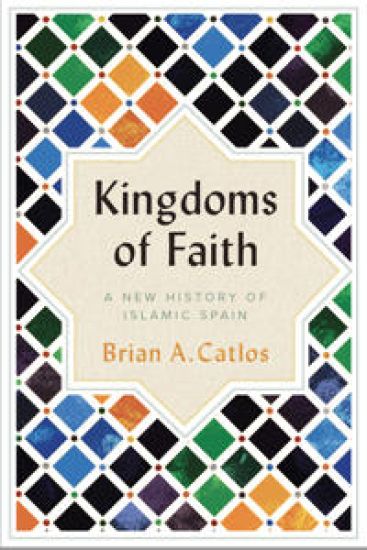
Prior accounts have portrayed Islamic Spain either as a paradise of enlightened tolerance, or as the site where civilisations clashed. Award-winning historian Brian A. Catlos taps a wide array of original sources to paint a more complex picture, showing how Muslims, Christians, and Jews together built a sophisticated civilisation that transformed the Western world, even as they waged relentless war against each other and amongst themselves. Religion was often the language of conflict, but seldom its cause--a lesson we would do well to learn in our own time. Kingdoms of Faith rewrites Spain's Islamic past from the ground up, evoking the cultural splendour of al-Andalus and the many forces that shaped it.
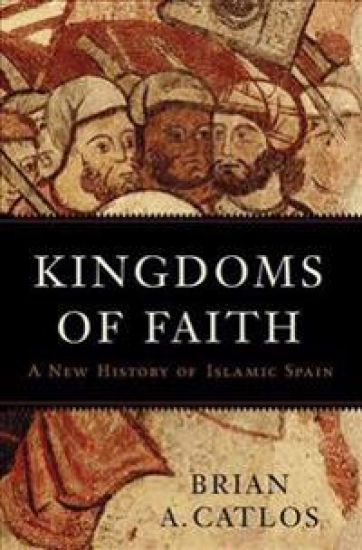
A magisterial, myth-dispelling history of Islamic Spain spanning the millennium between the founding of Islam in the seventh century and the final expulsion of Spain's Muslims in the seventeenth In Kingdoms of Faith, award-winning historian Brian A. Catlos rewrites the history of Islamic Spain from the ground up, evoking the cultural splendor of al-Andalus, while offering an authoritative new interpretation of the forces that shaped it. Prior accounts have portrayed Islamic Spain as a paradise of enlightened tolerance or the site where civilizations clashed. Catlos taps a wide array of primary sources to paint a more complex portrait, showing how Muslims, Christians, and Jews together built a sophisticated civilization that transformed the Western world, even as they waged relentless war against each other and their coreligionists. Religion was often the language of conflict, but seldom its cause -- a lesson we would do well to learn in our own time.
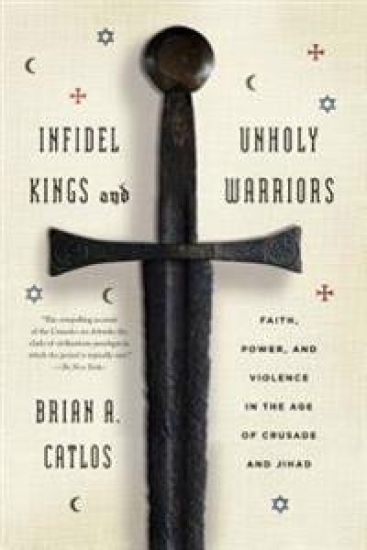
An in-depth portrait of the Crusades-era Mediterranean world, and a new understanding of the forces that shaped itIn "Infidel Kings and Unholy Warriors," the award-winning scholar Brian Catlos puts us on the ground in the Mediterranean world of 1050 1200. We experience the sights and sounds of the region just as enlightened Islamic empires and primitive Christendom began to contest it. We learn about the siege tactics, theological disputes, and poetry of this enthralling time. And we see that people of different faiths coexisted far more frequently than we are commonly told. Catlos's meticulous reconstruction of the era allows him to stunningly overturn our most basic assumption about it: that it was defined by religious extremism. He brings to light many figures who were accepted as rulers by their ostensible foes. Samuel B. Naghrilla, a self-proclaimed Jewish messiah, became the force behind Muslim Granada. Bahram Pahlavuni, an Armenian Christian, wielded power in an Islamic caliphate. And Philip of Mahdia, a Muslim eunuch, rose to admiral in the service of Roger II, the Christian "King of Africa." What their lives reveal is that, then as now, politics were driven by a mix of self-interest, personality, and ideology. Catlos draws a similar lesson from his stirring chapters on the early Crusades, arguing that the notions of crusade and jihad were not causes of war but justifications. He imparts a crucial insight: the violence of the past cannot be blamed primarily on religion."
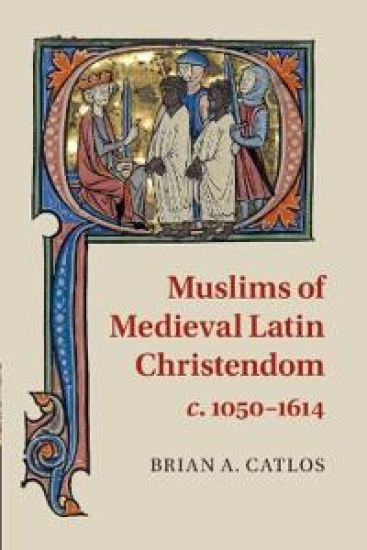
Muslims of Medieval Latin Christendom, c.1050–1614
Brian A. Catlos
Cambridge University Press
2015
pokkari
Through crusades and expulsions, Muslim communities survived for over 500 years, thriving in medieval Europe. This comprehensive study explores how the presence of Islamic minorities transformed Europe in everything from architecture to cooking, literature to science, and served as a stimulus for Christian society to define itself. Combining a series of regional studies, Catlos compares the varied experiences of Muslims across Iberia, southern Italy, the Crusader Kingdoms and Hungary to examine those ideologies that informed their experiences, their place in society and their sense of themselves as Muslims. This is a pioneering new narrative of the history of medieval and early modern Europe from the perspective of Islamic minorities; one which is not, as we might first assume, driven by ideology, isolation and decline, but instead one in which successful communities persisted because they remained actively integrated within the larger Christian and Jewish societies in which they lived.
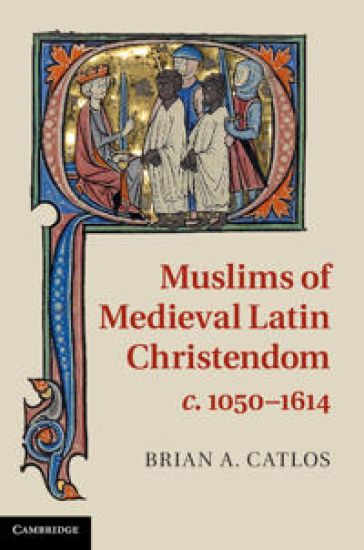
Muslims of Medieval Latin Christendom, c.1050–1614
Brian A. Catlos
Cambridge University Press
2014
sidottu
Through crusades and expulsions, Muslim communities survived for over 500 years, thriving in medieval Europe. This comprehensive study explores how the presence of Islamic minorities transformed Europe in everything from architecture to cooking, literature to science, and served as a stimulus for Christian society to define itself. Combining a series of regional studies, Catlos compares the varied experiences of Muslims across Iberia, southern Italy, the Crusader Kingdoms and Hungary to examine those ideologies that informed their experiences, their place in society and their sense of themselves as Muslims. This is a pioneering new narrative of the history of medieval and early modern Europe from the perspective of Islamic minorities; one which is not, as we might first assume, driven by ideology, isolation and decline, but instead one in which successful communities persisted because they remained actively integrated within the larger Christian and Jewish societies in which they lived.
This is a revisionary study of Muslims living under Christian rule during the Spanish 'reconquest'. It looks beyond the obvious religious distinctions and delves into the subtleties of identity in the thirteenth-century Crown of Aragon, uncovering a social dynamic in which sectarian differences comprise only one of the many factors in the causal complex of political, economic and cultural reactions. Beginning with the final stage of independent Muslim rule in the Ebro valley region, the book traces the transformation of Islamic society into mudéjar society under Christian domination. This was a case of social evolution in which Muslims, far from being passive victims of foreign colonisation, took an active part in shaping their institutions and experiences as subjects of the Infidel. Using a diverse range of methodological approaches, this book challenges widely held assumptions concerning Christian-Muslim relations in the Middle Ages, and minority-majority relations in general.
This is a revisionary study of Muslims living under Christian rule during the Spanish 'reconquest'. It looks beyond the obvious religious distinctions and delves into the subtleties of identity in the thirteenth-century Crown of Aragon, uncovering a social dynamic in which sectarian differences comprise only one of the many factors in the causal complex of political, economic and cultural reactions. Beginning with the final stage of independent Muslim rule in the Ebro valley region, the book traces the transformation of Islamic society into mudéjar society under Christian domination. This was a case of social evolution in which Muslims, far from being passive victims of foreign colonisation, took an active part in shaping their institutions and experiences as subjects of the Infidel. Using a diverse range of methodological approaches, this book challenges widely held assumptions concerning Christian-Muslim relations in the Middle Ages, and minority-majority relations in general.