Kirjojen hintavertailu – 12 903 724 kirjaa ja 27 kauppaa

Kirjailija

Brian Brock

Kirjat ja teokset yhdessä paikassa: 16 kirjaa, julkaisuja vuosilta 2009–2025, suosituimpiin kuuluu Disability. Vertaile teosten hintoja ja tarkista saatavuus suomalaisista kirjakaupoista.

16 kirjaa

Kirjojen julkaisuvuodet: 2009–2025.

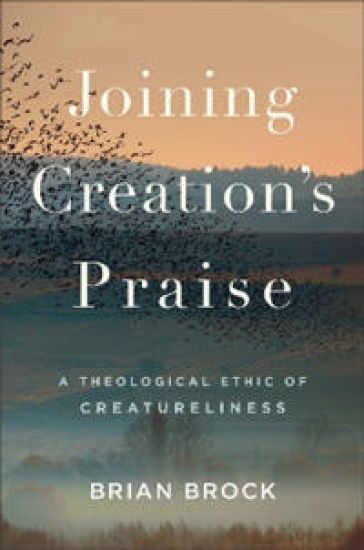
Joining Creation's Praise

Joining Creation's Praise

Brian Brock

BAKER PUBLISHING GROUP
2025
sidottu

Halvin toimitettuna 54,40 €

"In the beginning, God created . . ." Thus begins the Bible's story of a long conversation between God and creatures, one in which humans are often the least edifying contributors. They need to learn what it means to confess themselves creatures if they are to begin to understand what it means to be human and how to live. Joining Creation's Praise, a major statement by a leading Christian ethicist, shows how confessing that we are creatures deeply reshapes every aspect of Christian thinking and living. Human beings are made to embody Christ's image in the world--not as dominators but as conduits of divine life. In this comprehensive yet clear volume of theological ethics, Brian Brock follows the first few chapters of Genesis in order to discover the things that the sages of Israel took to be crucial for the ethical life of human beings among other creatures in God's world. Informed by theological rigor and careful exegesis, the many ethical reflections in this volume allow an ancient wisdom to shed fresh light on very postmodern ethical questions about conversion, life with God, knowledge and wisdom, dominion, Sabbath, vocation, economics, human dignity, our relationship with the rest of creation, sexuality, marriage, family, sin, death, and politics.
Disability – Living into the Diversity of Christ`s Body

Disability – Living into the Diversity of Christ`s Body

Brian Brock; Jason Byassee

Baker Academic, Div of Baker Publishing Group
2021
nidottu
Leading ethicist and pastoral theologian Brian Brock reflects on the challenge of disability, refuting widely held misconceptions and helping readers respond well to the pastoral implications of disability. Brock, the father of a child with special needs, weaves together theological commentary with narrative reflection, offering rich theological wisdom for shepherding people with disabilities. He shows pastors and ministers-in-training that thinking more closely and theologically about disability is a doorway into a more vibrant and welcoming church life for all Christians.
Wondrously Wounded

Wondrously Wounded

Brian Brock

Baylor University Press
2020
pokkari

Halvin toimitettuna 56,30 €

The church welcomes all - or it should. The church has long proven itself a safe refuge despite the sad reality that it can be, and has been, unwelcoming toward those perceived as different. This is especially true of the contemporary church's response to those with disabilities-a response often at surprising variance with its historic practices of care. The church once helped shape western morality to cherish these individuals with love and acceptance. It is thus ironic when today's church neglects this care, or practices care with no awareness of the rich theological history out of which such moral sensibilities originally emerged. In Wondrously Wounded, Brian Brock reclaims the church's historic theology of disability and extends it to demonstrate that people with disabilities, like all created in God's image, are servants of God's redemptive work. Brock divides his volume into five parts. Part one chronicles how early Christianity valued and cared for those with disabilities, putting into practice Jesus' teachings about divine mercy in decidedly countercultural ways. Part two details how a rise in the fear of disability tempted the church away from these merciful practices as well as its confession of the infinite worth of all God has created. Part three traces how the fear of difference continues to negatively shape contemporary practices in today's schools, churches, and politics. Part four lays the foundations of a vision of Christian life that is resistant to this pervasive fear. Finally, Part five shows how the recognition of all people as part of the body of Christ not only demonstrates the love of Christ but displaces the fear of disability in a manner that invites the church beyond even the most ambitious contemporary hopes for full inclusion. Brock interweaves his historical and theological analysis with the narrative of his own disabled son, Adam. These stories vividly bring into view the vulnerability, as well as the power, of the disabled in contemporary society. Ultimately, Brock argues, those with disabilities are conduits of spiritual gifts that the church desperately needs. Wondrously Wounded is an appeal to the church to find itself broken and remade by the presence of Christ on offer in the lives of those society has labeled ‘disabled.’
Summer Harvest

Summer Harvest

Brian Brock

Ginninderra Press
2020
pokkari
'With Summer Harvest, the Australian poet Brian Brock has offered us a feast of issues and moments worthy of serious consideration. His poetry is a conversation, a correspondence, a way of talking about things that truly matter; the paradoxical decay and drift of natural habitats beside human rights violations. We learn about the poet too; his service to country, his encyclopaedic knowledge of flora and fauna, his incredible grasp of the importance of marine biology, his lifelong interest in astronomy and how this awareness always provides the poet with direction, sometimes purpose against the backdrop of an often disorientating and complex world. His gift for announcing, for stating those things that many of us would overlook, is at times exceeded by his ability to fashion language to shape the mundane into an evolving and mutable reality.' - Richard Hillman 'In all the work of Brian Brock, we have a scientist - a biologist - who is equally a poet. The felt life is in all he writes, whether it is place, people, often connected with the past, the near and distant past. In letters to friends, in descriptions of birds, predator and prey, in love with them all, always those verbs. 'Light' glows with them. He is at home in his country, in his backyard reading the constellations. In the time before dawn. In the sounds, the colours, the textures. And we are with him, delighting in the depth of observation, of his engagement with it all. Brian Brock offers a rich evocative harvest. Enjoy it with a glass of wine, coffee or a cup of tea. In 1985, I asked him to read to my Year 10 Advanced English class for students to meet the poet in the scientist. Now everyone can meet him in Summer Harvest.' - Erica Jolly
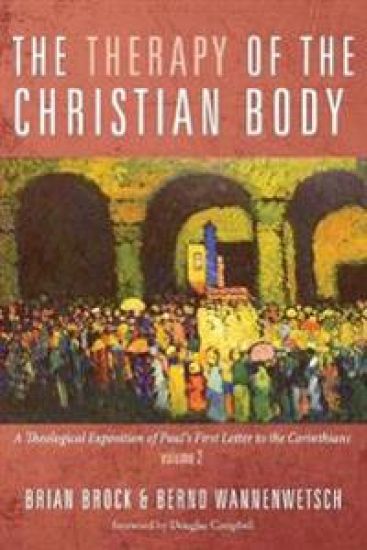
The Therapy of the Christian Body

The Therapy of the Christian Body

Brian Brock

Cascade Books
2018
nidottu
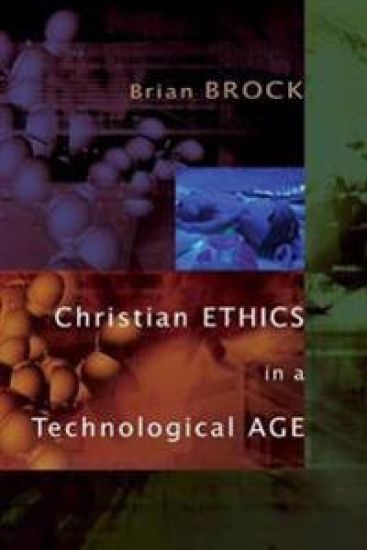
The troubles and ills of the church today can only be understood and healed when Christians begin to face up to their hidden alliances with the Corinthians of the first century and embrace both the Apostle's diagnosis and therapy offered in the epistle. This is the challenge of The Malady and Therapy of the Christian Body, a two-volume commentary by two leading theologians that presents the fruits of a reading strategy that deliberately reflects ecclesial commitment by ""reading the Apostle over against ourselves."" Sharing their discoveries about the way Paul deals with questions of factionalism, sexuality, legal conflict, idolatry, dress codes, and eating habits, Brock and Wannenwetsch demonstrate how neither the malady nor the therapy that Paul describes conforms to dominant analyses of the malaise of the contemporary church, which tend to be as ""organ centered"" as modern medicine. The authors describe the way the Apostle engages in ""feeling-into"" the organic whole of the body in order to detect blockages to the healthy flow of powers by redirecting their vision to how God is working among them toward the ""building up"" of the Christian body. The book breaks new ground in crossing the traditional disciplinary boundaries between biblical studies, systematic theology, and theological ethics. ""This commentary demonstrates--with surprising philological insights--a really consistent theological reading of Paul's absolute innovative guidance to the 'therapy' of the Christian community. It shows how Paul's teaching in its essential focus on God's history of salvation and covenant with his people applies directly to the very critical items of present Christian church life and worship."" --Hans G. Ulrich, Professor of Theological Ethics, Theological Faculty, University Erlangen-Nuremberg ""We are, all of us, afflicted by sin, and we inflict our sin upon others; the body is indeed sickened by this malady. But Paul does not allow us to despair of the church or to exist as 'disembodied' Christians . . . This commentary takes that truth seriously and gives it the place it should have in our hermeneutics."" --Grant Macaskill, Chair of New Testament Exegesis, University of Aberdeen ""Brock and Wannenwetsch have written remarkable books. Their learning is vast, their writing brisk, and their interpretative proposals rich in wisdom. Perhaps most impressive of all is the fact that all of what they know and want to say is put to use in the explication of the words of 1 Corinthians."" --C. Kavin Rowe, Professor of New Testament, Duke University Brian Brock is Professor of Moral and Practical Theology at the University of Aberdeen. He has published on the role of Scripture in Christian ethics (Singing the Ethos of God, 2007), the ethics of technological development (Christian Ethics in a Technological Age, 2010), the theology of disability (Disability in the Christian Tradition, 2012), and most recently, Captive to Christ, Open to the World: On Doing Christian Ethics in Public (2014). Bernd Wannenwetsch was Professor of Systematic Theology and Ethics at the University of Oxford, Chair in Theological Ethics at the University of Aberdeen and the president of the Society for Study of Christian Ethics. He is now Professor of Systematic Theology and Ethics at the Freie Theologische Hochschule Giessen. His publications include Political Worship, Guter schneller Tod?, and Verlangen.

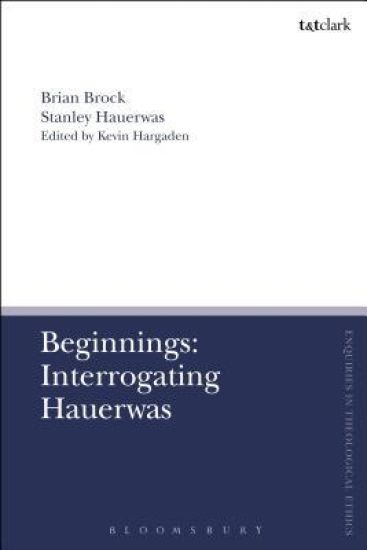
Beginnings: Interrogating Hauerwas

Beginnings: Interrogating Hauerwas

Brian Brock; Stanley Hauerwas

T. T.Clark Ltd
2018
nidottu
Stanley Hauerwas is arguably the most well-known figure in theological ethics of the last generation. Having published voluminously over the last 30 years, late in his career he has also published two volumes of essays discussing his corpus retrospectively, as well as a widely acclaimed memoir. The sheer volume of his work can be daunting to readers, and it is easy to get the impression that his retrospective volumes are restating positions developed earlier. Brian Brock delves into Hauerwas' formation as a theologian at Yale, his first book, Character and the Christian Life, and examines some of his early, and outspoken, criticisms of the guild of Christian ethics. This chapter is followed by a discussion of his memoir, Hannah’s Child, and raises tricky questions about the role of autobiography in Christian ethics, as well as the troubling problem of race in the modern academy. Brock explores Hauerwas’ work on disability, his criticisms of the discipline of medical ethics, and the role played by vulnerability in his work. The next chapter examines his views on just war and pacifism, here probing the sensitive issue of the role of gender in his work, and leading into a discussion on the nature of the church’s peaceable politics, in which his supposed hyper-ecclesiocentricism is examined. Brock examines the role of virtue in Hauerwas' thought, and teases out why he hates to be called a virtue ethicist. A final chapter asks him to respond to the recently levelled criticism that scripture does no work in his theology, focusing especially on his under-appreciated commentary on the gospel of Matthew. The editor of this volume has managed to maneuver Hauerwas into positions where he has directly faced tricky questions that he normally does not discuss, such as the accusation that he is racist, too soft on Yoder, or misogynist.
Beginnings: Interrogating Hauerwas

Beginnings: Interrogating Hauerwas

Brian Brock; Stanley Hauerwas

T. T.Clark Ltd
2017
sidottu
Stanley Hauerwas is arguably the most well-known figure in theological ethics of the last generation. Having published voluminously over the last 30 years, late in his career he has also published two volumes of essays discussing his corpus retrospectively, as well as a widely acclaimed memoir. The sheer volume of his work can be daunting to readers, and it is easy to get the impression that his retrospective volumes are restating positions developed earlier. Brian Brock delves into Hauerwas' formation as a theologian at Yale, his first book, Character and the Christian Life, and examines some of his early, and outspoken, criticisms of the guild of Christian ethics. This chapter is followed by a discussion of his memoir, Hannah’s Child, and raises tricky questions about the role of autobiography in Christian ethics, as well as the troubling problem of race in the modern academy. Brock explores Hauerwas’ work on disability, his criticisms of the discipline of medical ethics, and the role played by vulnerability in his work. The next chapter examines his views on just war and pacifism, here probing the sensitive issue of the role of gender in his work, and leading into a discussion on the nature of the church’s peaceable politics, in which his supposed hyper-ecclesiocentricism is examined. Brock examines the role of virtue in Hauerwas' thought, and teases out why he hates to be called a virtue ethicist. A final chapter asks him to respond to the recently levelled criticism that scripture does no work in his theology, focusing especially on his under-appreciated commentary on the gospel of Matthew. The editor of this volume has managed to maneuver Hauerwas into positions where he has directly faced tricky questions that he normally does not discuss, such as the accusation that he is racist, too soft on Yoder, or misogynist.
Evoking Lament

Evoking Lament

Eva Harasta; Brian Brock

T. T.Clark Ltd
2009
nidottu
Harasta and Brock show how lament seems to introduce notes of mistrust into an otherwise confident relationship with faith, God and His will. In prayer all experiences may be brought to God in openness and trust. Yet lament seems to introduce notes of mistrust into a relationship properly characterized by confident faith in God and His will. Sustained attention to lament presents a challenge to theological reflection in reminding it of the acuteness of the experience of suffering and evil. This volume suggests that a robust concept and practice of lament is an appropriate response to questions of evil and suffering in its refusal to close off questions that cannot and should not be closed. Lament takes place in the eye of the storm of theodicy, and when the distinct content of Christian lament is discovered here the question of theodicy is transformed. The first section reflects on the anthropological conditions of lament, describing it as a hermeneutic for negotiating adverse experiences that transcends the simple opposition of innocent suffering and guilt. The second section reflects on why and how lament has faded from modern theological thought that is over reliant on systematic accounts of evil and whose abstractions have drifted free of religious experience. The third section develops an understanding of trust that includes expressions of lament while not sanitizing its rawness. The final section inquires after the distinct Christian profile of lament. Lament, even as an experience of isolation, stands within the believing community and its traditions. Moreover, because Christian lament is based on Christ's passion and resurrection, Christ endorses and shapes the believers' lament as he shapes their praise.