
Kirjailija
Brian Czech
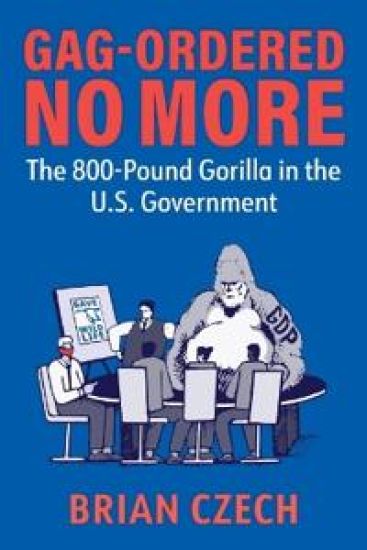
Kirjat ja teokset yhdessä paikassa: 4 kirjaa, julkaisuja vuosilta 2001–2023, suosituimpiin kuuluu Gag-Ordered No More. Vertaile teosten hintoja ja tarkista saatavuus suomalaisista kirjakaupoista.
4 kirjaa
Kirjojen julkaisuvuodet: 2001–2023.
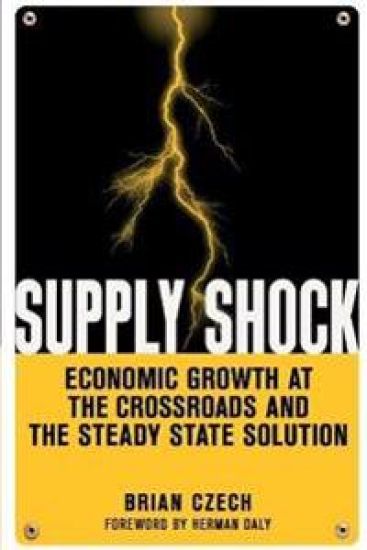
Politicians, economists, and Wall Street would have us believe that limitless economic expansion is the Holy Grail, and that there is no conflict between growing the economy and protecting the environment. Supply Shock debunks these widely accepted myths and demonstrates that we are in fact navigating the end of the era of economic growth, and that the only sustainable alternative is the development of a steady state economy. Starting with a refreshingly accessible, comprehensive critique of economic growth, the author engages readers in an enormous topic that affects everyone in every country. Publishers Weekly favorably compared Brian Czech to Carl Sagan for popularizing their difficult subjects; Supply Shock shows why. Czech presents a compelling alternative to growth based on keen scientific, economic, and political insights including: The "trophic theory of money"The overlooked source of technological progress that prevents us from reconciling growth and environmental protectionBold yet practical policies for establishing a steady state economySupply Shock leaves no doubt that the biggest idea of the twentieth century-economic growth-has become the biggest problem of the twenty-first. Required reading for anyone concerned about the world our children and grandchildren will inherit, this landmark work lays a solid foundation for a new economic model, perhaps in time for preventing global catastrophes; certainly in time for lessening the damages.
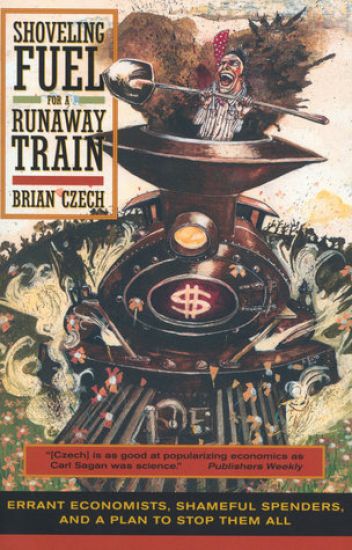
Americans have been conditioned to appreciate, cheer, and serve economic growth. Brian Czech argues that, while economic growth was a good thing for much of American history, somewhere along the way it turned bad, depleting resources, polluting the environment, and threatening posterity. Yet growth remains a top priority of the public and polity. In this revolutionary manifesto, Czech knocks economic growth off the pedestal of American ideology. Seeking nothing less than a fundamental change in public opinion, Czech makes a bold plea for castigating society's biggest spenders and sets the stage for the 'steady state revolution'. Czech offers a sophisticated yet accessible critique of the principles of economic growth theory and the fallacious extension of these principles into the 'pop economics' of Julian Simon and others. He points with hope to the new discipline of ecological economics, which prescribes the steady state economy as a sustainable alternative to economic growth. Czech explores the psychological underpinnings of our consumer culture by synthesizing theories of Charles Darwin, Thorstein Veblen, and Abraham Maslow. Speaking to ordinary American citizens, he urges us to recognize conspicuous consumers for who they are - bad citizens who are liquidating our grandkids' future. Combining insights from economics, psychology, and ecology with a large dose of common sense, Czech drafts a blueprint for a more satisfying and sustainable society. His ideas reach deeply into our everyday lives as he asks us to re-examine our perspectives on everything from our shopping habits to romance. From his perspective as a wildlife ecologist, Czech draws revealing parallels between the economy of nature and the human economy. His style is lively, easy to read, humorous, and bound to be controversial. Czech will provoke all of us to ask when we will stop the runaway train of economic growth. His book answers the question, 'How do we do it?'.
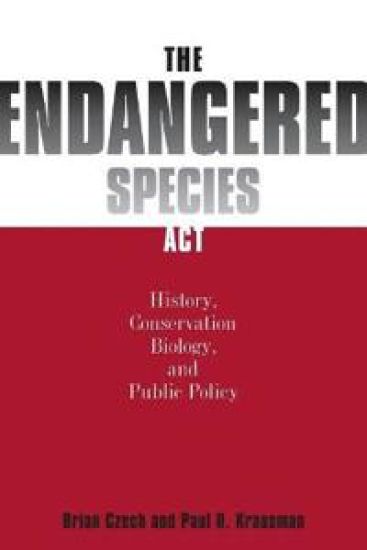
The Endangered Species Act
Brian Czech; Paul R. Krausman
Johns Hopkins University Press
2001
pokkari
Since the 1970s, the Endangered Species Act (ESA), by virtue of its regulatory impact, has been a frequent subject of policy analysis. In this comprehensive history and critique of the ESA, Brian Czech and Paul R. Krausman incorporate the new model of policy design theory to frame a larger discussion about conservation biology and American democracy. Czech and Krausman provide a historical background of endangered species policy that integrates natural history, socioeconomic trends, political movements, and professional developments. Outlining the controversies surrounding the ESA, they find a connection between challenges to species conservation and challenges to democracy. After an assessment of ESA analyses that have been performed from traditional perspectives, they engage policy design theory to review the structural logic of the ESA, analyzing each clause of the legislation for its application of the fundamental elements of democracy. To address the technical legitimacy of ESA, they propose two new genetic considerations-functional genome size and molecular clock speed-to supplement phylogenetic distinctiveness as criteria with which to prioritize species for conservation. Next, they systematically describe the socioeconomic context of ESA by assessing and classifying the causes of species endangerment. A hybrid of policy analysis and ecological assessment, The Endangered Species Act: History, Conservation Biology, and Public Policy will appeal to scholars and students in the fields of natural resource policy and law, conservation biology, political science, wildlife ecology, and environmental history, and to professionals at agencies involved in wildlife conservation.