Kirjojen hintavertailu – 12 859 829 kirjaa ja 27 kauppaa

Kirjailija

Brian D. Hodges

Kirjat ja teokset yhdessä paikassa: 6 kirjaa, julkaisuja vuosilta 2010–2027, suosituimpiin kuuluu Examined. Vertaile teosten hintoja ja tarkista saatavuus suomalaisista kirjakaupoista.

6 kirjaa

Kirjojen julkaisuvuodet: 2010–2027.

Examined

Examined

Brian D. Hodges; Sarah Whyte

McGill-Queen's University Press
2027
Nidottu
Examinations influence not only what we know but who we become as individuals and societies. Yet examination technologies are often fundamentally misaligned with learning, instead prioritizing measurement and quality control – outcomes that artificial intelligence tools are poised to powerfully reinforce. Brian Hodges and Sarah Whyte delve deeply into examination practices and systems, showing that they underpin economic, political, and cultural agendas; drive social engineering; maintain privilege; and control access to opportunity. With a focus on medical education, they critically examine how different types of testing can either foster or hinder meaningful learning. High-stakes, memory-driven exams promote cramming and forgetting and are easily passed by large language models, fuelling long-standing questions about their relevance and validity. Integrating personal experience with insights from education, sociology, history, psychology, and neuroscience to richly inform current debates, Examined argues that the rise of artificial intelligence brings an opportunity to reexamine which tests to retain, discard, or create. Hodges and Whyte highlight the need for transparency and careful deliberation, proposing ways to mitigate examinations’ harmful effects and enhance their ability to cultivate agency, understanding, and community. Emerging technologies will make learning and meaningful assessment at once more important and more vulnerable. Accessible and practical, Examined invites readers to reassess a powerful social technology at a crucial moment for the future of education.
Creating the Health Care Team of the Future

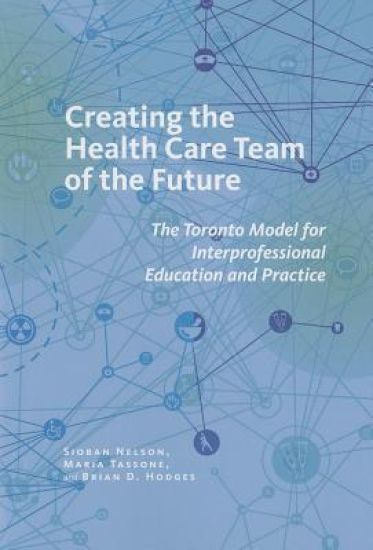
Creating the Health Care Team of the Future

Sioban Nelson; Maria Tassone; Brian D. Hodges

ILR Press
2014
pokkari
One way to significantly improve the delivery of health care is to teach the health professionals who provide care to work together, to communicate with each other across professional boundaries, and to start to think and act like a team that has the patient at its center. The team-based care movement is at the heart of major changes in medical education and will become an element in the new accreditation standards. Through its Centre for Interprofessional Education, the pioneering approach in this area taken by the University of Toronto has attracted international attention. The role of the Centre for IPE, a formal partnership between the University of Toronto and the Toronto Academic Health Sciences Network, is to create a hub for the university and the many teaching hospitals where all core parties can be actively engaged in redesigning this new model of health care. In Creating the Health Care Team of the Future, Sioban Nelson, Maria Tassone, and Brian D. Hodges give a brief background of the Toronto Model and provide a step-by-step guide to developing an IPE program.
Creating the Health Care Team of the Future

Creating the Health Care Team of the Future

Sioban Nelson; Maria Tassone; Brian D. Hodges

ILR Press
2014
sidottu
One way to significantly improve the delivery of health care is to teach the health professionals who provide care to work together, to communicate with each other across professional boundaries, and to start to think and act like a team that has the patient at its center. The team-based care movement is at the heart of major changes in medical education and will become an element in the new accreditation standards. Through its Centre for Interprofessional Education, the pioneering approach in this area taken by the University of Toronto has attracted international attention. The role of the Centre for IPE, a formal partnership between the University of Toronto and the Toronto Academic Health Sciences Network, is to create a hub for the university and the many teaching hospitals where all core parties can be actively engaged in redesigning this new model of health care. In Creating the Health Care Team of the Future, Sioban Nelson, Maria Tassone, and Brian D. Hodges give a brief background of the Toronto Model and provide a step-by-step guide to developing an IPE program.
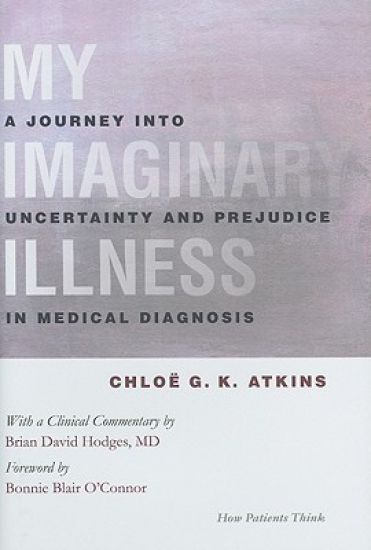
My Imaginary Illness

My Imaginary Illness

Chloe Atkins; Bonnie Blair O'toole; Brian D. Hodges

ILR Press
2010
sidottu
How Patients Think At age twenty-one, Chloë Atkins began suffering from a mysterious illness, the symptoms of which rapidly worsened. Paralyzed for months at a time, she frequently required intubation and life support. She eventually became quadriplegic, dependent both on a wheelchair and on health professionals who refused to believe there was anything physically wrong with her. When test after test returned inconclusive results, Atkins's doctors pronounced her symptoms psychosomatic. Atkins was told not only that she was going to die but also that this was her own fault; they concluded she was so emotionally deranged that she was willing her own death. My Imaginary Illness is the compelling story of Atkins's decades-long battle with a disease deemed imaginary, her frustration with a succession of doctors and diagnoses, her immersion in the world of psychotherapy, and her excruciating physical and emotional journey back to wellness. As both a political theorist and patient, Atkins provides a narrative critique of contemporary medicine and its problematic handling of uncertainty and of symptoms that are not easily diagnosed or known. She convincingly illustrates that medicine's belief in evidence-based practice does not mean that individual doctors are capable of objectivity, nor that the presence of biomedical ethics invokes ethical practices in hospitals and clinics. A foreword by Bonnie Blair O'Connor, who teaches medical students how to listen to patients, and a clinical commentary by Dr. Brian David Hodges, a professor of psychiatry, enrich the book's narrative with practical guidance for medical practitioners and patients alike.