Kirjojen hintavertailu – 12 859 829 kirjaa ja 27 kauppaa
Kirjailija
Brian J. Skinner
Kirjat ja teokset yhdessä paikassa: 9 kirjaa, julkaisuja vuosilta 1979–2015, suosituimpiin kuuluu Visualizing Geology. Vertaile teosten hintoja ja tarkista saatavuus suomalaisista kirjakaupoista.
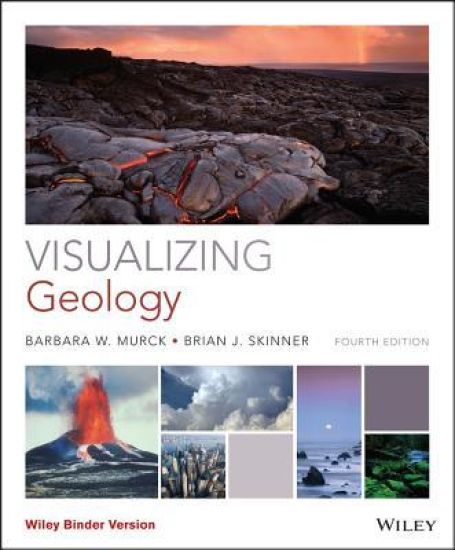
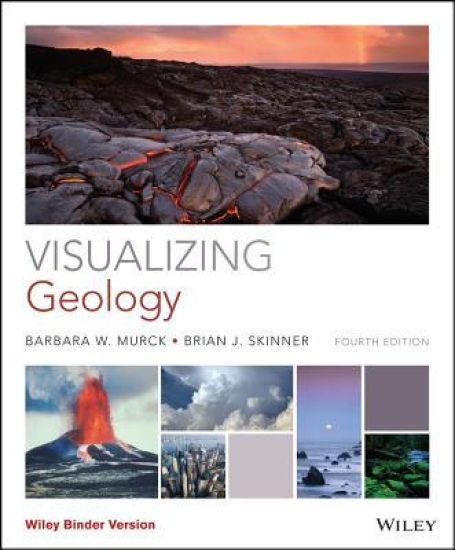
The newly revised Fourth Edition of Visualizing Geology, WileyPLUS NextGen Card and Loose-leaf Set Single Semester delivers an authoritative and thorough exploration of introductory Earth system science and geology in the distinctive style of the Wiley Visualizing series. Students learn about the three grand geologic cycles - tectonic, rock, and water - and how they interact to create and shape the geologic features we see and experience. This single-semester loose-leaf set includes access to the renowned WileyPLUS NextGen digital learning environment, an indispensable pedagogical addition to any classroom.
Visualizing Geology employs uniquely designed visual pedagogy to help students acquire the skills they need to become better learners. Visualizing Geology is a comprehensive, modern book for today's geology course. With current examples, thorough coverage of geologists tools and technology, and a visual design that is accessible without sacrificing content, it is a title that will appeal to a broad range of instructors. Visualizing Geologyimmerses students in course material through visuals (both in print and rich multimedia resources) while organizing complex processes and related course information into easily digestible segments.
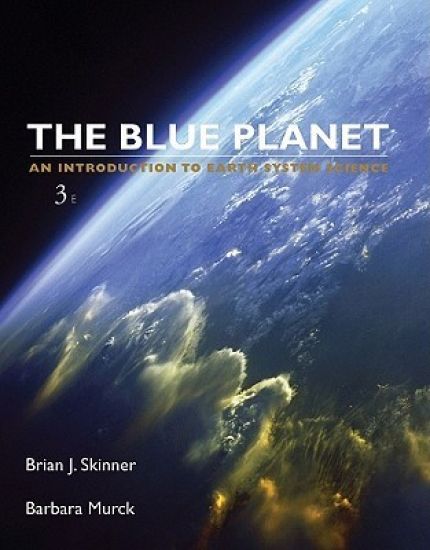
The Blue Planet: An Introduction to Earth System Sciences, 3rd Edition is an innovative text for the earth systems science course. It treats earth science from a systems perspective, now showing the five spheres and how they are interrelated. There are many photos and figures in the text to develop a strong understanding of the material presented. This along with the new media for instructors makes this a strong text for any earth systems science course.
The Third Edition of Blue Planet: An Introduction to Earth System Science treats earth science from a systems perspective, showing how the four spheres (lithosphere, hydrosphere, atmosphere, biosphere) are interrelated. In this edition, significant emphasis is placed on cycling of materials and energy, and interactions among the spheres. The text also places much clearer emphasis on basic science, which can be seen in the reorganization of topics into Energy and Matter chapters, as well as a new "The Basics" feature in each chapter. This edition is also more systematic about documenting human impacts on the various spheres of the Earth system.
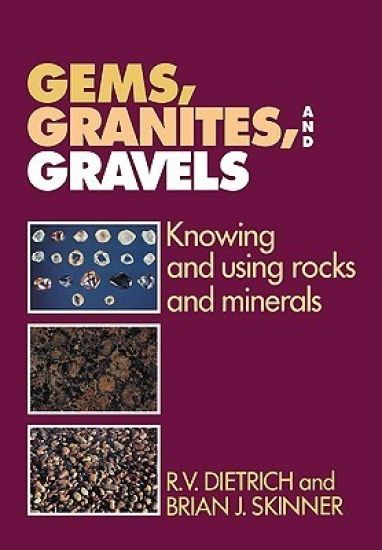
'Every person on earth uses, either directly or indirectly, ten metric tons of minerals each year.' So write Dr R. V. Dietrich and Dr Brian J. Skinner in their new book Gems, Granites, and Gravels. Minerals and mineral products are involved in all aspects of our lives; we depend on them to keep us alive and ensure the continuity of our society. As a consequence, they have been a source of fascination and study throughout human history. In this book, Drs Dietrich and Skinner consider not only the beauty of minerals and rocks, but also their utility and their roles in our everyday well-being. Gems, Granites and Gravels is a valuable introduction to mineralogy and to related specialities such as petrology (the study of rocks), crystallography (the study of crystals), and soil science. Discoveries in these fields are described in a historical context, while the authors explain what minerals and rocks are, how they are distributed around the world, how we depend on them, and where to see the most beautiful specimens of both minerals and rocks. This book will appeal to anyone interested in natural history and curious about rocks and minerals, including rock and mineral collectors, students of geology, and professional geologists.
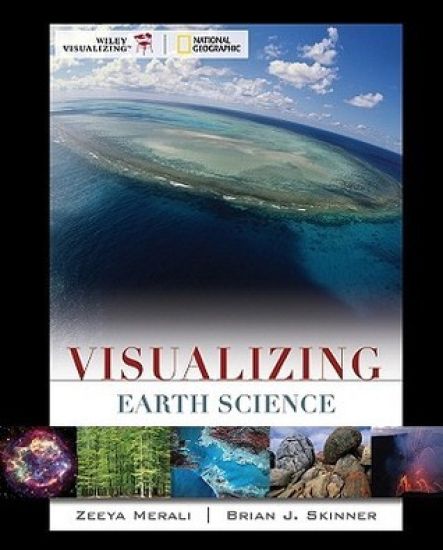
Visualizing Earth Science relies heavily on rich visuals to expand on concepts for students and solidify their understanding of them. This accessible format, coupled with the assumption that students have little knowledge of earth science, allows students to navigate through the material with greater ease - the goal being to help them understand the world around them and interpret what they see in a meaningful, accurate and exciting way. Authors Zeeya Merali and Brian Skinner focus on visual learning in their debut of their first edition, Visualizing Earth Science. This text weaves illustrated timelines throughout to exemplify how concepts fit together and develop over time. Students will quickly learn difficult concepts with this innovative, visual approach. Looking for a more cost-effective way to purchase this text? Check out www.wiley.com/college.wileyflex to learn more
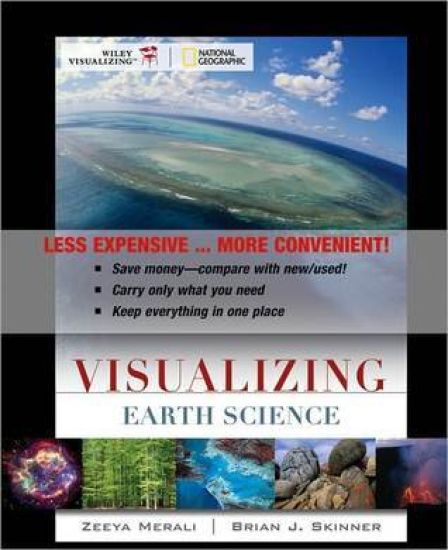
Visualizing Earth Science, Binder Ready Version relies heavily on the rich visuals to expand on concepts for students and solidify their understanding of them. This accessible format, coupled with the assumption that students have little knowledge of earth science, allows students to navigate through the material with greater ease. The goal is to help students understand the world around them and interpret what they see in a meaningful, accurate and exciting way. Authors Zeeya Merali and Brian Skinner focus on visual learning in their debut of their first edition, Visualizing Earth Science, Binder Ready Version. This text weaves illustrated timelines throughout to exemplify how concepts fit together and develop over time. Students will quickly learn difficult concepts with this innovative, visual approach. This text is an unbound, binder-ready version.
Experts agree that the earth will eventually run out of certain low-cost, nonrenewable resources, possibly as early as a century from now. Will the transition to reliance on other, more abundant resources be smooth or discontinuous? Might industrial societies experience a marked decline in living standards—a radically different kind of society from the one we now know? Geologists maintain that once inexpensive high-grade resources are exhausted, economic growth will slow. Economists are more optimistic: they believe that new technologies and materials will be substituted rapidly enough to prevent minor economic dislocations. Toward a New Iron Age? takes an important step toward reconciling these divergent views. It is the most comprehensive study of the economic consequences of resource depletion—in particular, it is a thorough exploration of the prospects for one key metal, copper. The authors draw on geological and engineering data to calculate the resources now available and to assess the feasibility of substituting alternatives. Using linear programming and a range of hypothetical base conditions, they are able to estimate the course, through the next century and beyond, of several crucial factors: the rate at which copper resources will be used and when they will be depleted; how the price of the metal will fluctuate; when alternative materials will be substituted, in what patterns, and at what costs. By the late twenty-first century, the authors believe, low-cost copper will no longer be available. Industrial societies will have to operate on more abundant resources such as iron, silica, and aluminum. They will enter, in short, a New Iron Age.
A contemporary successor to the Louis V. Pirsson and Adolph Knopf editions, providing a guide and reference that explains how rocks occur, their commercial usage, and how to identify them through macroscopic, handspecimen features. Gives complete coverage of rock-forming minerals, rocks and man-made, rock-like materials, as well as meteorites, impactites, grossans, and more. Tables are provided for identifications based on megascopic examinations and simple field tests that require no sophisticated laboratory equipment. Plus, numerous illustrations represent rocks and rock-forming minerals as they appear in nature.