Kirjojen hintavertailu – 12 903 725 kirjaa ja 27 kauppaa

Kirjailija

Brian M. Fagan

Kirjat ja teokset yhdessä paikassa: 32 kirjaa, julkaisuja vuosilta 1975–2026, suosituimpiin kuuluu Ancient Lives. Vertaile teosten hintoja ja tarkista saatavuus suomalaisista kirjakaupoista.

Nimi esiintyy myös muodoissa: Brian M Fagan

32 kirjaa

Kirjojen julkaisuvuodet: 1975–2026.

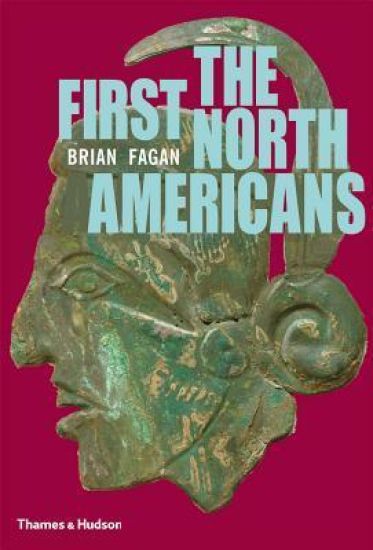
The First North Americans

The First North Americans

Brian M Fagan

THAMES HUDSON LTD
2019
pokkari
Who were the original North American settlers some fifteen thousand years ago, and where and how did they arrive? What kind of landscape did they find and how did their societies develop? This is the compelling and little-known history that Brian Fagan recounts, drawing on cutting edge research in many disciplines, ranging from archaeology and ethnohistory to climatology, chemistry, and physics. Fagan describes the controversies over the first settlement, which probably occurred via Siberia toward the end of the Ice Age, and the debates over the routes used as humans moved south into the heart of the continent. A remarkable diversity of hunter-gatherer societies evolved in the rapidly changing North American environments, and the book explores the ingenious ways in which people adapted to every kind of landscape imaginable, from arctic tundra to open plains and thick woodland.

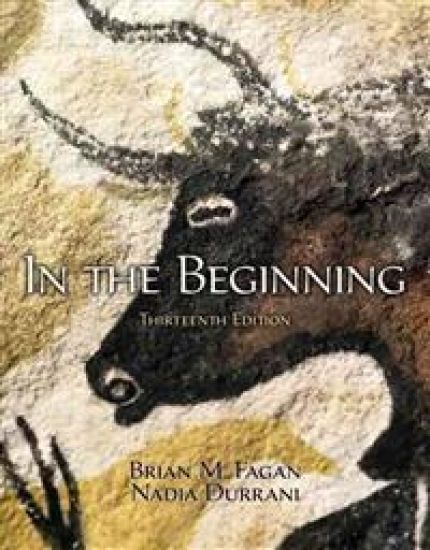
In the Beginning

In the Beginning

Brian M. Fagan; Durrani Nadia

Taylor & Francis Inc
2013
Nidottu
Demonstrates the importance of archaeology today In the Beginning: An Introduction to Archaeology presents the history and methods of archaeology and explores its significance today. The text introduces archeology's basic principles along with numerous examples from all over the world. Authors Brian Fagan and Nadia Durrani provide a comprehensive summary of the field for people who have little or no experience. Features: * Provides A Comprehensive Overview - Readers gain a broad understanding of archaeology, including its interdisciplinary nature, major scientific contributions, international research, and methods and theories. A special chapter covers career opportunities in archaeology. A new organization moves archaeological theory to the beginning, so readers can develop a deeper understanding of this field. * Offers an Engaging Introduction - The jargon-free narrative provides an accessible introduction to the study of archaeology. In the Beginning is now four-color for a livelier and enriching experience. * Explores Significant Historical Events - Seven photo essays titled People of the Past appear throughout the book, covering such luminaries as pharaoh Ramses II and societies like the Cro-Magnons of late Ice Age Europe. Spectacular findings featured in Discovery boxes reflect new developments in archaeology. * Incorporates Fresh Ideas from a New Co-Author - Esteemed colleague, Nadia Durrani, has been brought on board as a co-author. She brings a wealth of field experience in Arabia, Britain, and elsewhere as well as extensive editorial experience as the former Editor of Current World Archaeology, to the team.
In the Beginning

In the Beginning

Brian M. Fagan; Nadia Durrani

Routledge Member of the Taylor and Francis Group
2013
irtolehti
Demonstrates the importance of archaeology today In the Beginning: An Introduction to Archaeology presents the history and methods of archaeology and explores its significance today. The text introduces archeology's basic principles along with numerous examples from all over the world. Authors Brian Fagan and Nadia Durrani provide a comprehensive summary of the field for people who have little or no experience. Features: Provides A Comprehensive Overview – Readers gain a broad understanding of archaeology, including its interdisciplinary nature, major scientific contributions, international research, and methods and theories. A special chapter covers career opportunities in archaeology. A new organization moves archaeological theory to the beginning, so readers can develop a deeper understanding of this field. Offers an Engaging Introduction – The jargon-free narrative provides an accessible introduction to the study of archaeology. In the Beginning is now four-color for a livelier and enriching experience. Explores Significant Historical Events – Seven photo essays titled People of the Past appear throughout the book, covering such luminaries as pharaoh Ramses II and societies like the Cro-Magnons of late Ice Age Europe. Spectacular findings featured in Discovery boxes reflect new developments in archaeology. Incorporates Fresh Ideas from a New Co-Author – Esteemed colleague, Nadia Durrani, has been brought on board as a co-author. She brings a wealth of field experience in Arabia, Britain, and elsewhere as well as extensive editorial experience as the former Editor of Current World Archaeology, to the team.
Writing Archaeology

Writing Archaeology

Brian M. Fagan

Left Coast Press Inc
2010
sidottu
Archaeology’s best known author of popular books and texts distills decades of experience in this well-received guide designed to help others wanting to broaden the audience for their work. Brian Fagan’s no nonsense approach explains how to get started writing, how to use the tools of experienced writers to make archaeology come alive, and how to get your work revised and finished. He also describes the process by which publishers decide to accept your work, and the path your publication will follow after it is accepted by a press. The new edition contains chapters on academic writing and on writing in the digital environment.
Writing Archaeology

Writing Archaeology

Brian M. Fagan

Left Coast Press Inc
2010
nidottu
Archaeology’s best known author of popular books and texts distills decades of experience in this well-received guide designed to help others wanting to broaden the audience for their work. Brian Fagan’s no nonsense approach explains how to get started writing, how to use the tools of experienced writers to make archaeology come alive, and how to get your work revised and finished. He also describes the process by which publishers decide to accept your work, and the path your publication will follow after it is accepted by a press. The new edition contains chapters on academic writing and on writing in the digital environment.
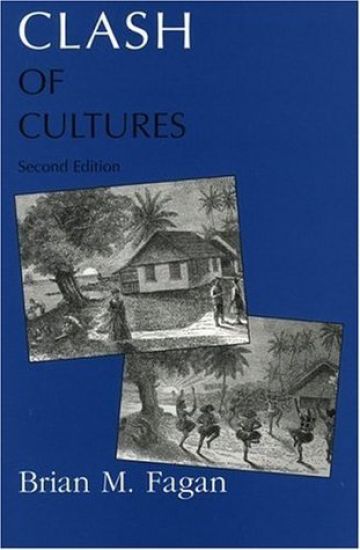
Clash of Cultures

Clash of Cultures

Brian M. Fagan

AltaMira Press,U.S.
1998
nidottu
In Europe it was called the Age of Discovery. To the rest of the world, it often meant slavery, epidemic disease, cultural genocide, and wholesale social and economic changes. What happened in the period when Europe first came in contact with the rest of the world? In this new edition of Brian Fagan's Clash of Cultures, the best-selling author offers a series of fascinating cases on the impact of cultural contact, including cultures such as those of the Huron fur traders, South African Khoi Khoi, Tahitians, Japanese, and Aztecs. Each case provides a description of the pre-European culture, the short-term impacts of European contact, and long-term changes caused by the clash of two cultures. Fagan also explores the many advances in the general literature on this period such as the "people without history," world systems analysis, and the debate over Captain Cook. Ideal for courses in cultural anthropology, world history, historical archaeology, ethnic studies, or area studies, as well as for the general reader.
Snapshots of the Past

Snapshots of the Past

Brian M. Fagan

AltaMira Press,U.S.
1995
nidottu
Archaeology has been a subject of endless fascination to scholars, students and the general public. For the past three decades, Prof. Brian Fagan has been the key narrator of the story of the past for many, through his textbooks, trade books and numerous magazine and journal articles. In recent years, Fagan has reported on the latest news, theories, and controversies in archaeology through his regular Timelines column in Archaeology Magazine. In Snapshots of the Past, Fagan collects many of these vignettes into a single work, leading the reader on a tour through time and space that ranges from the ascent of the human species to the public controversies that concern today's archaeologist. In these 30 brief chapters, the author offers readers a series of "snapshots" of the issues of greatest contemporary interest: the Eve hypothesis, the peopling of the New World, site looting, the translation of Mayan hieroglyphs, the domestication of animals, the impact of feminism on archaeology, the archaeology of slavery, and evidence of human cannibalism, among many others. Included among the articles are several pieces written specifically for this volume, including a description of the recent, spectacular cave art finds at Chauvet Grotto in France. For instructors of archaeology, the book is a handy compilation of brief, interesting cases to engage your students. For serious archaeologists, the book represents a collection of works of one of the important synthesizers of the field. For the avocational archaeologist, the book provides a fascinating, readable update on issues of current concern.
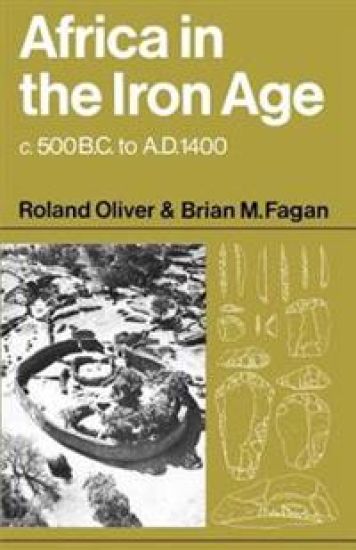
Africa in the Iron Age

Africa in the Iron Age

Roland Oliver; Brian M. Fagan

Cambridge University Press
1975
pokkari
Africa in the Iron Age is a comprehensive and authoritative introduction to African history between about 500 B. C. and A. D. 1400. The authors are not so much concerned with a particular technological revolution as the enormous changes - political, social and economic - that took place during the period 500 B. C.-A. D. 1400 all over the African continent. The book falls into three parts. Early chapters describe conditions about 500 B. C. when North Africa is already in the Bronze Age, Middle Africa is engaged in Stone Age farming and south of the Sahara most men live by hunting and gathering food. Between 500 B. C. and A. D. 1000 life in settled communities becomes normal throughout the continent. Finally, the Iron Age sees the rise of state systems, the development of long-distance trade and the spread of Islam and Monophysite Christianity. Any study of this period has to combine historical and archaeological methods in the search for evidence and in the subsequent interpretation of data. While literary evidence does exist for the period, Iron Age archaeology necessarily supplies most of the evidence examined. Roland Oliver is a leading African historian and the author of several standard books on the subject. Brian Fagan is an acknowledged expert on African Iron Age archaeology.