Kirjojen hintavertailu – 12 903 725 kirjaa ja 27 kauppaa

Kirjailija

Brian O'Connor

Kirjat ja teokset yhdessä paikassa: 14 kirjaa, julkaisuja vuosilta 1999–2026, suosituimpiin kuuluu Wagner. Vertaile teosten hintoja ja tarkista saatavuus suomalaisista kirjakaupoista.

Nimi esiintyy myös muodoissa: Brian O’Connor

14 kirjaa

Kirjojen julkaisuvuodet: 1999–2026.

Wagner

Wagner

Brian O'Connor

PRINCETON UNIVERSITY PRESS
2026
sidottu
Wagner as revolutionary philosopher: a new reading of a trilogy of texts written by the composer in the aftermath of the failed Dresden Uprising Forced into exile to avoid arrest after taking part in the failed Dresden Uprising in 1849, Richard Wagner turned to philosophical writing, producing in rapid succession three theoretical works. In this compelling study, Brian O’Connor traces Wagner’s emergence in these texts as a radical political thinker with a distinctive revolutionary vision. O’Connor describes Wagner’s transformation from publicly engaged commentator to active insurrectionist, showing how revolution’s failure redirected Wagner’s energies toward systematic philosophical reflection. For a crucial period, this theoretical work took precedence over musical composition. At the heart of O’Connor’s account is Wagner’s philosophical imagination. He explores Wagner’s conception of aesthetic spontaneity as a model of individual freedom and his belief in collective artistic creation as the foundation of a liberated society. By situating Wagner’s philosophy within the turbulent political and intellectual context of the time, O’Connor challenges its marginalization in previous accounts, restoring it to its proper place in nineteenth-century political thought. He shows how Wagner reworked ideas drawn from the German philosopher Ludwig Feuerbach into an original and provocative form of aesthetic materialism, and examines the interplay between these ideas and Wagner’s dramatic works. O’Connor also offers a straightforward treatment of the unavoidable subject of Wagner’s antisemitism, as expressed in an essay from 1850 about “Jewishness” in music. O’Connor argues that Wagner’s philosophical writing is not only significant in its own right, but it also offers unique and invaluable insights into his music dramas—particularly the composer’s most celebrated work, the Ring Cycle—illuminating their themes, characters, and revolutionary affinities.
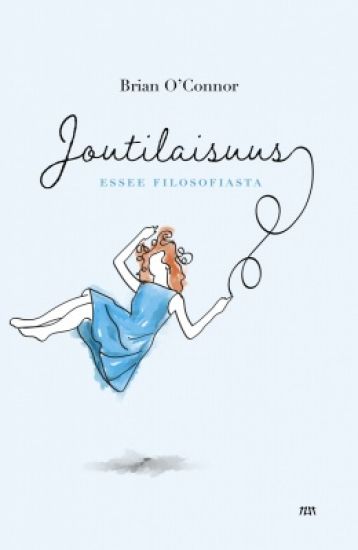
Joutilaisuus

Joutilaisuus

Brian O'Connor

Eurooppalaisen filosofian seura
2022
nidottu

Halvin toimitettuna 33,90 €

Filosofit ovat taajaan asettuneet puurtamisen puolelle toimettomuutta vastaan. Brian O'Connor kuitenkin osoittaa, ettei touhukkuus ole niin alati arvokasta kuin luullaan: lunkistiottamisellekin on vankat filosofiset perusteet.
Negative Dialectics and Event

Negative Dialectics and Event

Vangelis Giannakakis; Brian O’Connor

BLOOMSBURY PUBLISHING PLC
2021
sidottu
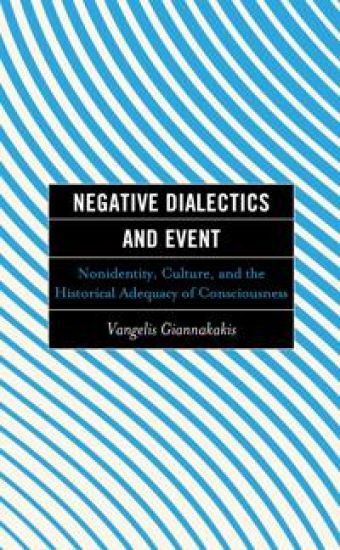
History is replete with false and unfulfilled promises, but also with singular acts of courage, resilience, and ingenuity. These episodes have led to significant changes in the way people think and act in the world, or have set the stage for such transformations in the form of rational expectations in theory and the hopeful anticipations of dialectical imagination. Negative Dialectics and Event: Nonidentity, Culture, and the Historical Adequacy of Consciousness revisits some of Theodor W. Adorno’s most influential writings and theoretical interventions to argue not only that his philosophy is uniquely suited to bring such events into sharp relief and reflect on their entailments, but also that an effective historical consciousness today would be a consciousness awake to the events that interpellate and shape it into existence. More broadly, Vangelis Giannakakis presents a compelling argument in support of the view that the critical theory developed by the first generation of the Frankfurt School still has much to offer in terms of both cultivating insights into contemporary human experience and building resistance against states of affairs that impede human flourishing and happiness.
Idleness

Idleness

Brian O'Connor

Princeton University Press
2020
pokkari
The case for idleness as freedom from usefulness, performance, and the opinion of othersFor millennia, idleness and laziness have been seen as vices. We're all expected to work to survive and get ahead, and devoting energy to anything but labor and self-improvement can seem like a luxury or a moral failure. Far from questioning this conventional wisdom, modern philosophers have entrenched it, viewing idleness as an obstacle to the ethical need people have to be autonomous, to be useful, to contribute to the social good, or simply to avoid boredom. In Idleness, the first book to challenge modern philosophy's portrayal of inactivity, Brian O'Connor argues that the case against an indifference to work and effort is flawed—and that idle aimlessness may instead allow for the highest form of freedom.
Idleness

Idleness

Brian O'Connor

PRINCETON UNIVERSITY PRESS
2018
sidottu
The first book to challenge modern philosophy’s case against idleness, revealing why the idle state is one of true freedomFor millennia, idleness and laziness have been regarded as vices. We're all expected to work to survive and get ahead, and devoting energy to anything but labor and self-improvement can seem like a luxury or a moral failure. Far from questioning this conventional wisdom, modern philosophers have worked hard to develop new reasons to denigrate idleness. In Idleness, the first book to challenge modern philosophy's portrayal of inactivity, Brian O'Connor argues that the case against an indifference to work and effort is flawed--and that idle aimlessness may instead allow for the highest form of freedom. Idleness explores how some of the most influential modern philosophers drew a direct connection between making the most of our humanity and avoiding laziness. Idleness was dismissed as contrary to the need people have to become autonomous and make whole, integrated beings of themselves (Kant); to be useful (Kant and Hegel); to accept communal norms (Hegel); to contribute to the social good by working (Marx); and to avoid boredom (Schopenhauer and de Beauvoir). O'Connor throws doubt on all these arguments, presenting a sympathetic vision of the inactive and unserious that draws on more productive ideas about idleness, from ancient Greece through Robert Burton's Anatomy of Melancholy, Schiller and Marcuse's thoughts about the importance of play, and recent critiques of the cult of work. A thought-provoking reconsideration of productivity for the twenty-first century, Idleness shows that, from now on, no theory of what it means to have a free mind can exclude idleness from the conversation.
Oggi In Italia, Enhanced

Oggi In Italia, Enhanced

Franca Merlonghi; Ferdinando Merlonghi; Joseph Tursi; Brian O'Connor

Heinle
2015
sidottu
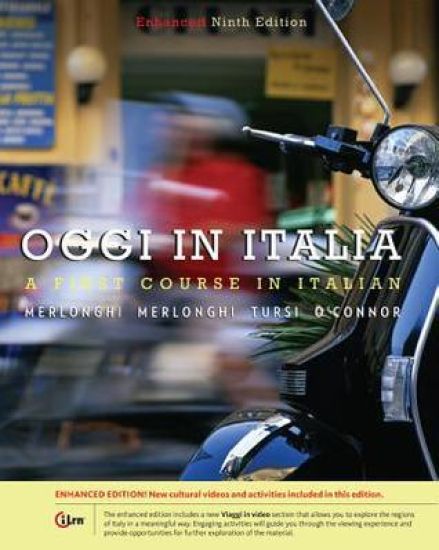
OGGI IN ITALIA is an introductory Italian program featuring a balanced four-skills approach to language learning. OGGI includes various perspectives of Italian culture, ranging from its rich, historical legacy, to current changes affecting the country and culture. This allows students to practice the basics of the language and develop oral communication skills in a variety of contexts while learning about contemporary Italian life and culture.
Adorno

Adorno

Brian O'Connor

Routledge
2012
nidottu
Theodor W. Adorno (1903-69) was one of the foremost philosophers and social theorists of the post-war period. Crucial to the development of Critical Theory, his highly original and distinctive but often difficult writings not only advance questions of fundamental philosophical significance, but provide deep-reaching analyses of literature, art, music sociology and political theory. In this comprehensive introduction, Brian O’Connor explains Adorno’s philosophy for those coming to his work for the first time, through original new lines of interpretation. Beginning with an overview of Adorno’s life and key philosophical views and influences, which contextualizes the intellectual environment in which he worked, O’Connor assesses the central elements of Adorno’s philosophy. He carefully examines Adorno’s distinctive style of analysis and shows how much of his work is a critical response to the various forms of identity thinking that have underpinned the destructive forces of modernity. He goes on to discuss the main areas of Adorno’s philosophy: social theory, the philosophy of experience, metaphysics, morality and aesthetics; setting out detailed accounts of Adorno’s notions of the dialectic of Enlightenment, reification, totality, mediation, identity, nonidentity, experience, negative dialectics, immanence, freedom, autonomy, imitation and autonomy in art. The final chapter considers Adorno’s philosophical legacy and importance today. Including a chronology, glossary, chapter summaries, and suggestions for further reading, Adorno is an ideal introduction to this demanding but important thinker, and essential reading for students of philosophy, literature, sociology and cultural studies.
Adorno

Adorno

Brian O'Connor

Routledge
2012
sidottu
Theodor W. Adorno (1903-69) was one of the foremost philosophers and social theorists of the post-war period. Crucial to the development of Critical Theory, his highly original and distinctive but often difficult writings not only advance questions of fundamental philosophical significance, but provide deep-reaching analyses of literature, art, music sociology and political theory. In this comprehensive introduction, Brian O’Connor explains Adorno’s philosophy for those coming to his work for the first time, through original new lines of interpretation. Beginning with an overview of Adorno’s life and key philosophical views and influences, which contextualizes the intellectual environment in which he worked, O’Connor assesses the central elements of Adorno’s philosophy. He carefully examines Adorno’s distinctive style of analysis and shows how much of his work is a critical response to the various forms of identity thinking that have underpinned the destructive forces of modernity. He goes on to discuss the main areas of Adorno’s philosophy: social theory, the philosophy of experience, metaphysics, morality and aesthetics; setting out detailed accounts of Adorno’s notions of the dialectic of Enlightenment, reification, totality, mediation, identity, nonidentity, experience, negative dialectics, immanence, freedom, autonomy, imitation and autonomy in art. The final chapter considers Adorno’s philosophical legacy and importance today. Including a chronology, glossary, chapter summaries, and suggestions for further reading, Adorno is an ideal introduction to this demanding but important thinker, and essential reading for students of philosophy, literature, sociology and cultural studies.
Threaten to Win

Threaten to Win

Brian O'Connor

Poolbeg Press Ltd
2012
nidottu

Halvin toimitettuna 19,40 €

Lorcan Donovan is an ex-amateur rider in charge of the bloodstock empire of the billionaire American, Jake Weinberger. But behind the glamour of big-money horse deals and the world's great races, all is not as it seems. Jockey Mike Clancy is in the pocket of a ruthless Irish gangster and is stopping Weinberger's great Derby hope from winning. With millions gambled on the result, Donovan becomes a pawn in a vicious game of blackmail, kidnapping and corruption. The race to the finish line becomes a simple race to survive and the only one he can trust is himself.
Adorno's Negative Dialectic

Adorno's Negative Dialectic

Brian O'Connor

MIT Press
2005
pokkari
The purely philosophical concerns of Theodor W. Adorno's negative dialectic would seem to be far removed from the concreteness of critical theory; Adorno's philosophy considers perhaps the most traditional subject of "pure" philosophy, the structure of experience, whereas critical theory examines specific aspects of society. But, as Brian O'Connor demonstrates in this highly original interpretation of Adorno's philosophy, the negative dialectic can be seen as the theoretical foundation of the reflexivity or critical rationality required by critical theory. Adorno, O'Connor argues, is committed to the "concretion" of philosophy: his thesis of nonidentity attempts to show that reality is not reducible to appearances. This lays the foundation for the applied "concrete" critique of appearances that is essential to the possibility of critical theory. To explicate the context in which Adorno's philosophy operates-the tradition of modern German philosophy, from Kant to Heidegger-O'Connor examines in detail the ideas of these philosophers as well as Adorno's self-defining differences with them. O'Connor discusses Georg LucA cs and the influence of his "protocritical theory" on Adorno's thought; the elements of Kant's and Hegel's German idealism appropriated by Adorno for his theory of subject-object mediation; the priority of the object and the agency of the subject in Adorno's epistemology; and Adorno's important critiques of Kant and the phenomenology of Heidegger and Husserl, critiques that both illuminate Adorno's key concepts and reveal his construction of critical theory through an engagement with the problems of philosophy.
Adult Dyslexia

Adult Dyslexia

Gary Fitzgibbon; Brian O'Connor

John Wiley Sons Inc
2002
sidottu
Dyslexia is a condition that is widely misunderstood in the world of work. Adult Dyslexia: A Guide for the Workplace shows why small and large employers should be aware of European laws on anti-discrimination and dyslexia. It provides practical advice on how to identify dyslexics in the workplace, how to create the right environment for them to thrive and how organizations can make the transition from a framework that perceives dyslexia as a problem to one that perceives it as a solution. Throughout the book, real-life case studies illustrate the points being made and a number of invaluable practical resources are available including an appendix of useful organizations, an adult dyslexia screening check list and a seven-step procedure for counselling adult dyslexics. Gary Fitzgibbon and Brian O'Connor have varied and extensive experience of both advising organizations on adult dyslexia issues and providing assessment, counselling and training services to adult dyslexics. Their book is an essential resource for disability specialists, occupational psychologists, counsellors, HR managers, teachers/lecturers of adults and importantly, dyslexics and their families.
Adult Dyslexia

Adult Dyslexia

Gary Fitzgibbon; Brian O'Connor

John Wiley Sons Inc
2002
nidottu
Dyslexia is a condition that is widely misunderstood in the world of work. Adult Dyslexia: A Guide for the Workplace shows why small and large employers should be aware of European laws on anti-discrimination and dyslexia. It provides practical advice on how to identify dyslexics in the workplace, how to create the right environment for them to thrive and how organizations can make the transition from a framework that perceives dyslexia as a problem to one that perceives it as a solution. Throughout the book, real-life case studies illustrate the points being made and a number of invaluable practical resources are available including an appendix of useful organizations, an adult dyslexia screening check list and a seven-step procedure for counselling adult dyslexics. Gary Fitzgibbon and Brian O'Connor have varied and extensive experience of both advising organizations on adult dyslexia issues and providing assessment, counselling and training services to adult dyslexics. Their book is an essential resource for disability specialists, occupational psychologists, counsellors, HR managers, teachers/lecturers of adults and importantly, dyslexics and their families.
Asthma

Asthma

Brian O'Connor

Birkhauser Verlag AG
1999
sidottu
This text features an analysis of the epidemiology of asthma in children and adults, the role of steroids in asthma management and new and novel asthma therapies. The book addresses clinicians and basic scientists with an interest in asthma epidemiology, steroids and future therapies.