

Kirjailija
Brian Price
Kirjat ja teokset yhdessä paikassa: 19 kirjaa, julkaisuja vuosilta 2011–2027, suosituimpiin kuuluu Viva Rockotitlan. Vertaile teosten hintoja ja tarkista saatavuus suomalaisista kirjakaupoista.
19 kirjaa
Kirjojen julkaisuvuodet: 2011–2027.

A cogent reconsideration of Assayas's cinematic oeuvre and what it teaches us about the political today The films of Olivier Assayas are widely celebrated for their complex responses to the many shifts that globalization has introduced in our time. Brian Price contends that they offer a different way of regarding the so-called problem of cultural and political enmeshment that Carl Schmitt and other conservative thinkers fear, including a contention that enmeshment is not a problem at all, in fact, but rather a different mode of social and political organization. Price puts Assayas's films in dialogue not only with Schmitt's theory of the political but also with the history of political philosophy after Schmitt, especially in the work of Hannah Arendt, Jacques Derrida, and Chantal Mouffe, all of whom have attempted to reckon with the friend/enemy dynamic at the core of the political. At the heart of Assayas's cinematic oeuvre, and of this book, is a reflection on what it means to be politically serious, which, Price shows, cannot be reduced to criteria that can simply be applied or repeated. The boundaries between the political and the varied forms of the social demand a sensitivity to change and the unknown, none of which can be accessed in the states of absolute certainty that are derived from crises that do not repeat in the same ways. The messiness and nuances of modern life are held together by moving images, which insist that we know why we value what we demand and seek to protect.
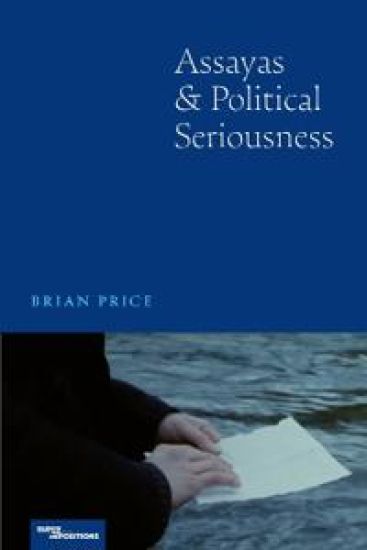
A cogent reconsideration of Assayas's cinematic oeuvre and what it teaches us about the political today The films of Olivier Assayas are widely celebrated for their complex responses to the many shifts that globalization has introduced in our time. Brian Price contends that they offer a different way of regarding the so-called problem of cultural and political enmeshment that Carl Schmitt and other conservative thinkers fear, including a contention that enmeshment is not a problem at all, in fact, but rather a different mode of social and political organization. Price puts Assayas's films in dialogue not only with Schmitt's theory of the political but also with the history of political philosophy after Schmitt, especially in the work of Hannah Arendt, Jacques Derrida, and Chantal Mouffe, all of whom have attempted to reckon with the friend/enemy dynamic at the core of the political. At the heart of Assayas's cinematic oeuvre, and of this book, is a reflection on what it means to be politically serious, which, Price shows, cannot be reduced to criteria that can simply be applied or repeated. The boundaries between the political and the varied forms of the social demand a sensitivity to change and the unknown, none of which can be accessed in the states of absolute certainty that are derived from crises that do not repeat in the same ways. The messiness and nuances of modern life are held together by moving images, which insist that we know why we value what we demand and seek to protect.
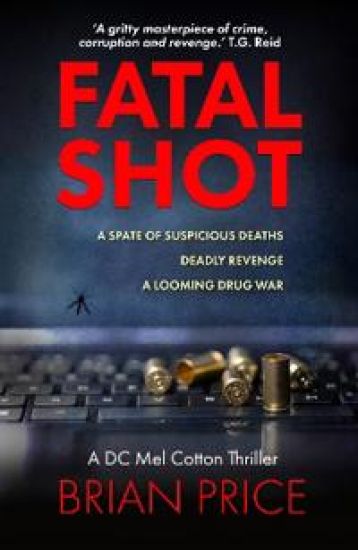

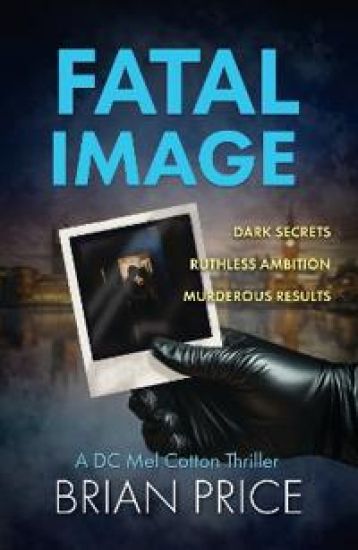


Death stalks MextonWhen a spate of poisonings hits the town of Mexton, DC Mel Cotton and her colleagues are left perplexed. All the deaths seem to be ingeniously planned and the police cannot see anything obvious to connect the victims. Is a vigilante at work? Jenny Pike, reporter for the Mexton Messenger, seems to think there's a link and she's not afraid to publish her controversial theories. All the victims seem to have got away with harming people in some way. Is that the connection? Fear from the EastAlready stretched to the limit, Mel and her colleagues also face another huge challenge. A ruthless Albanian gang has launched a crime wave in the area and someone has murdered a notorious blackmailer. How will the team cope? With a serial poisoner at large, is anyone safe?
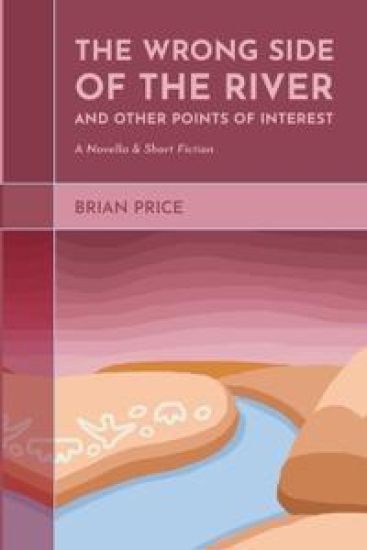
It's almost the end of the world, so what are you going to do about it except keep trying to cross the river, keep wrestling with invasive species, and keep looking for home even if it's on the other side of the universe? Comic, poetic, kind of slippery, and oddly speculative, this collection of short fiction, poetry, and a novella by Great Northern Audio Theatre producer and playwright Brian Price is sure to round out anyone's stockpile of pre-, near-, and/or post-apocalyptic literature.

Advanced C++
Gazihan Alankus; Olena Lizina; Rakesh Mane; Vivek N; Brian Price
Packt Publishing Limited
2019
nidottu
Become an expert at C++ by learning all the key C++ concepts and working through interesting exercisesKey FeaturesExplore C++ concepts through descriptive graphics and interactive exercisesLearn how to keep your development bug-free with testing and debuggingDiscover various techniques to optimize your codeBook DescriptionC++ is one of the most widely used programming languages and is applied in a variety of domains, right from gaming to graphical user interface (GUI) programming and even operating systems. If you're looking to expand your career opportunities, mastering the advanced features of C++ is key. The book begins with advanced C++ concepts by helping you decipher the sophisticated C++ type system and understand how various stages of compilation convert source code to object code. You'll then learn how to recognize the tools that need to be used in order to control the flow of execution, capture data, and pass data around. By creating small models, you'll even discover how to use advanced lambdas and captures and express common API design patterns in C++. As you cover later chapters, you'll explore ways to optimize your code by learning about memory alignment, cache access, and the time a program takes to run. The concluding chapter will help you to maximize performance by understanding modern CPU branch prediction and how to make your code cache-friendly. By the end of this book, you'll have developed programming skills that will set you apart from other C++ programmers. What you will learnDelve into the anatomy and workflow of C++Study the pros and cons of different approaches to coding in C++Test, run, and debug your programsLink object files as a dynamic libraryUse templates, SFINAE, constexpr if expressions and variadic templatesApply best practice to resource managementWho this book is forIf you have worked in C++ but want to learn how to make the most of this language, especially for large projects, this book is for you. A general understanding of programming and knowledge of using an editor to produce code files in project directories is a must. Some experience with strongly typed languages, such as C and C++, is also recommended.
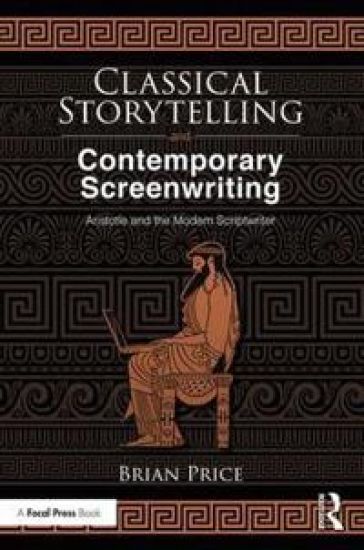
Since we first arrived on the planet, we’ve been telling each other stories, whether of that morning’s great saber-tooth tiger hunt or the latest installment of the Star Wars saga. And throughout our history, despite differences of geography or culture, we’ve been telling those stories in essentially the same way. Why? Because there is a RIGHT way to tell a story, one built into our very DNA. In his seminal work Poetics, Aristotle identified the patterns and recurring elements that existed in the successful dramas of his time as he explored precisely why we tell stories, what makes a good one, and how to best tell them. In Classical Storytelling and Contemporary Screenwriting, Brian Price examines Aristotle’s conclusions in an entertaining and accessible way and then applies those guiding principles to the most modern of storytelling mediums, going from idea to story to structure to outline to final pages and beyond, covering every relevant screenwriting topic along the way. The result is a fresh new approach to the craft of screenwriting—one that’s only been around a scant 2,500 years or so—ideal for students and aspiring screenwriters who want a comprehensive step-by-step guide to writing a successful screenplay the way the pros do it.
Since we first arrived on the planet, we’ve been telling each other stories, whether of that morning’s great saber-tooth tiger hunt or the latest installment of the Star Wars saga. And throughout our history, despite differences of geography or culture, we’ve been telling those stories in essentially the same way. Why? Because there is a RIGHT way to tell a story, one built into our very DNA. In his seminal work Poetics, Aristotle identified the patterns and recurring elements that existed in the successful dramas of his time as he explored precisely why we tell stories, what makes a good one, and how to best tell them. In Classical Storytelling and Contemporary Screenwriting, Brian Price examines Aristotle’s conclusions in an entertaining and accessible way and then applies those guiding principles to the most modern of storytelling mediums, going from idea to story to structure to outline to final pages and beyond, covering every relevant screenwriting topic along the way. The result is a fresh new approach to the craft of screenwriting—one that’s only been around a scant 2,500 years or so—ideal for students and aspiring screenwriters who want a comprehensive step-by-step guide to writing a successful screenplay the way the pros do it.
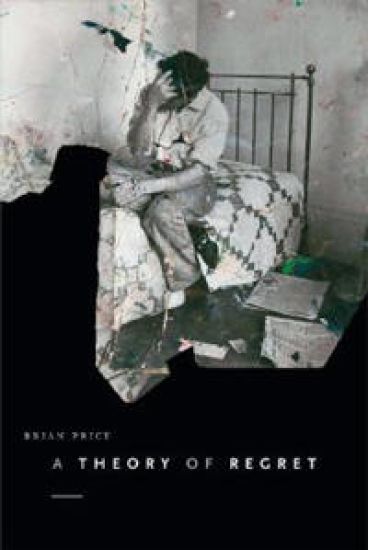
In A Theory of Regret Brian Price contends that regret is better understood as an important political emotion than as a form of weakness. Price shows how regret allows us to see that our convictions are more often the products of our perceptual habits than the authentic signs of moral courage that we more regularly take them to be. Regret teaches us to give up our expectations of what we think should or might occur in the future, and also the idea that what we think we should do will always be the right thing to do. Understood instead as a mode of thoughtfulness, regret helps us to clarify our will in relation to the decisions we make within institutional forms of existence. Considering regret in relation to emancipatory theories of thinking, Price shows how the unconditionally transformative nature of this emotion helps us become more sensitive to contingency and allows us, in turn, to recognize the steps we can take toward changing the institutions that shape our lives.
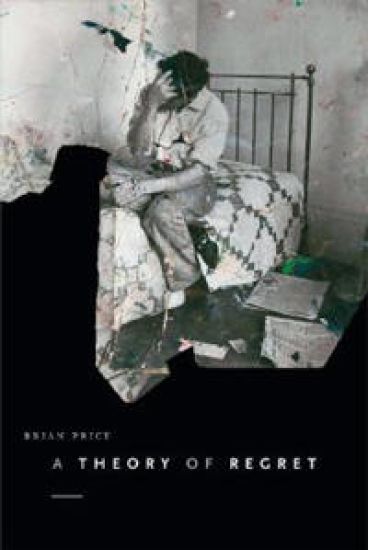
In A Theory of Regret Brian Price contends that regret is better understood as an important political emotion than as a form of weakness. Price shows how regret allows us to see that our convictions are more often the products of our perceptual habits than the authentic signs of moral courage that we more regularly take them to be. Regret teaches us to give up our expectations of what we think should or might occur in the future, and also the idea that what we think we should do will always be the right thing to do. Understood instead as a mode of thoughtfulness, regret helps us to clarify our will in relation to the decisions we make within institutional forms of existence. Considering regret in relation to emancipatory theories of thinking, Price shows how the unconditionally transformative nature of this emotion helps us become more sensitive to contingency and allows us, in turn, to recognize the steps we can take toward changing the institutions that shape our lives.
The French auteur Robert Bresson, director of such classics as Diary of a Country Priest (1951), The Trial of Joan of Arc (1962), The Devil, Probably (1977), and L’Argent (1983), has long been thought of as a transcendental filmmaker preoccupied with questions of grace and predestination and little interested in the problems of the social world. This book is the first to view Bresson’s work in an altogether different context. Rather than a religious-or spiritual-filmmaker, Bresson is revealed as an artist steeped in radical, revolutionary politics. Situating Bresson in radical and aesthetic political contexts, from surrealism to situationism, Neither God nor Master shows how his early style was a model for social resistance. We then see how, after May 1968, his films were in fact a series of reflections on the failure of revolution in France-especially as “failure” is understood in relation to Bresson’s chosen literary precursors, Dostoyevsky and Tolstoy, and Russian revolutionary culture of the nineteenth century. Restoring Bresson to the radical political culture from which he emerged-and to which he remained faithful-Price offers a major revision of the reputation of one of the most celebrated figures in the history of French film. In doing so, he raises larger philosophical questions about the efficacy of revolutionary practices and questions about interpretation and metaphysical tendencies of film historical research that have, until now, gone largely untested.