Kirjojen hintavertailu – 12 903 725 kirjaa ja 27 kauppaa

Kirjailija

Brian R. Chapman

Kirjat ja teokset yhdessä paikassa: 5 kirjaa, julkaisuja vuosilta 2015–2020, suosituimpiin kuuluu The Natural History of the Edwards Plateau. Vertaile teosten hintoja ja tarkista saatavuus suomalaisista kirjakaupoista.

5 kirjaa

Kirjojen julkaisuvuodet: 2015–2020.

The Natural History of the Edwards Plateau

The Natural History of the Edwards Plateau

Brian R. Chapman; Eric G. Bolen

Texas A M University Press
2020
nidottu
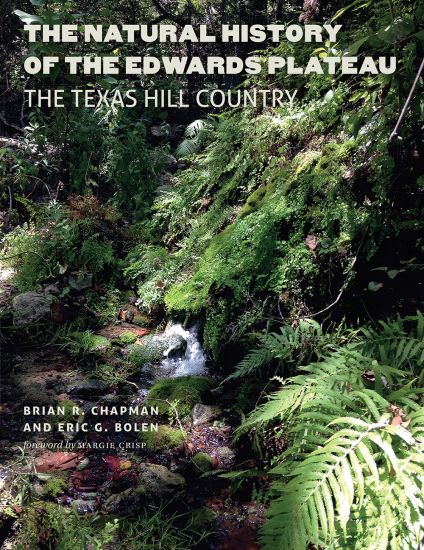
The roughly 24 million acres of that make up the Edwards Plateau, commonly known as the Texas Hill Country, are characterized by rolling highlands, picturesque river canyons, and beautiful springtime wildflowers. Located in the heart of Texas, this region is home to hundreds of natural springs, thousands of limestone caves, and the famous Devil's Sinkhole. Encompassing grasslands, savannas, and woodlands, the Edwards Plateau is a unique and diverse ecological haven. Beginning with the stories of how biologists and naturalists have defined the ecological areas of the great state of Texas over time, The Natural History of the Edwards Plateau explores the formation of the region more than a billion years ago, its diverse ecosystems, and the conservation efforts to keep those ecosystems intact and thriving. With detailed descriptions and vivid pictures of the flora, fauna, and geologic features that make this area so unique, the authors also explore the ways in which people have interacted with the ecosystems over time, from natural spring water used by San Antonio's Pearl Brewing Company to the use of bats for gunpowder and bombing raids. In their exploration of the natural history, veteran ecologists Brian R. Chapman and Eric G. Bolen remain especially conscious of the conservation and management issues that affect the natural resources of the Edwards Plateau region, revealing their deep connection to the state. Bolstered by a glossary, further reading suggestions, and an appendix of scientific terms, this is an educational and essential guide for all Texans and environmental enthusiasts.
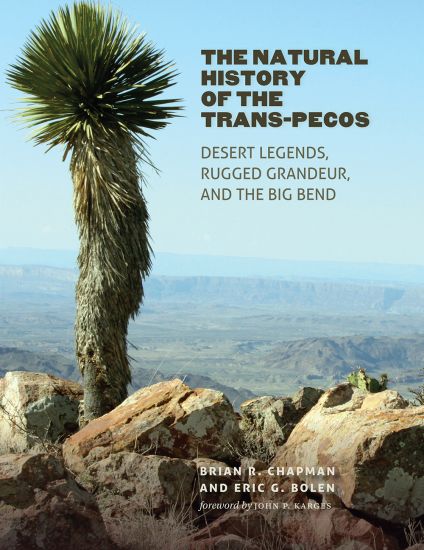
The Natural History of the Trans-Pecos

The Natural History of the Trans-Pecos

Brian R. Chapman; Eric G. Bolen

Texas A M University Press
2020
nidottu
The last frontier in Texas, the Trans-Pecos region is an immense and remote series of desert basins in the western-most part of the state. Columns of rock and stony debris dot the landscape, with various peaks, such as the notable El Capitan, rising from a long-forgotten sea floor. While the acidic and shallow desert soil only allows for scrubby vegetation in many places, what survives is rugged, colorful, and adaptable. Far from just an arid region, however, the Trans-Pecos is also home to grasslands, wetlands, and even woodlands. Animal life varies considerably, from the Black-tailed Jackrabbit and Desert Cicada to Bighorn Sheep, Black Bears, and Mountain Lions. Complete with an introduction chronicling the stories of biologists and naturalists who have explored and defined the ecological areas of Texas over time, The Natural History of the Trans-Pecos explores the formation of the region more than 600 million years ago, the adaptability of its ecosystems, and the conservation efforts to keep these wildly diverse environments flourishing. Detailed descriptions, vivid anecdotes, and vibrant pictures of the features that make this region so unique emphasize the rugged grandeur of the Trans-Pecos.
Texans on the Brink

Texans on the Brink

Brian R. Chapman; William I. Lutterschmidt; John H. Rappole

Texas A M University Press
2019
sidottu
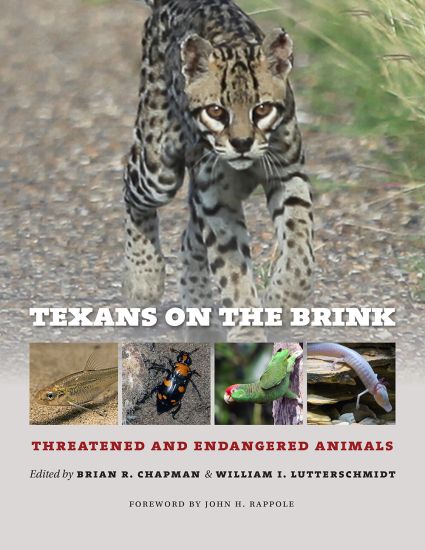
What good is a rattlesnake? What purpose do animals serve? All species play a vital role in their biological communities, and the removal of just one can have a noticeable and catastrophic ripple effect. Yet social and political pressures frequently pit species conservation against economic progress and prosperity, and scientists fear that we may be in the midst of a mass extinction event. Brian R. Chapman and William I. Lutterschmidt make the case that the effort to preserve animals is the responsibility of every Texan and that biodiversity contributes enormous economic value to the citizens of Texas. Texans on the Brink brings together experts on eighty-eight endangered and threatened animal species of Texas and includes brief descriptions of the processes that state and federal agencies employ to list and protect designated species. Species accounts include a description of the species accompanied by a photograph, an easy-to-read account of the biology and ecology of the species, and a description of efforts underway to preserve the species and its required habitat. Sobering examples of species that were once part of the Texas fauna but are now extinct or extirpated are also given to further demonstrate just how vulnerable biodiversity can be. All species require healthy habitats, and every species—even a rattlesnake—provides important services for the biotic communities in which they live. It is imperative to learn as much as we can about these animals if we are to preserve biodiversity successfully in Texas.
The Natural History of Texas

The Natural History of Texas

Brian R. Chapman; Eric G. Bolen; Andrew Sansom

Texas A M University Press
2018
sidottu
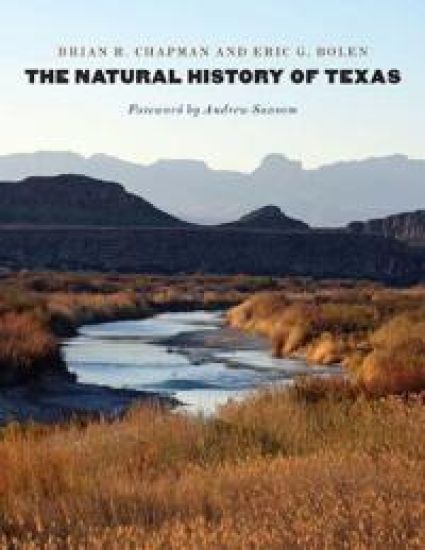
From two veteran ecologists comes a new and sweeping exploration of the natural history of Texas in all its biological diversity and geological variation. Few states, if any, can match Texas for its myriad species, past and present, and its many distinctive landscapes, from prairie grasslands and hardwood forests to coastal lagoons and desert mountains. Beginning with the stories of how biologists and naturalists have over time defined the ecological areas of this very big state, the authors visit each of the eleven regions, including the Texas coast. They describe the dominant flora and fauna of each, explain the defining geologic features, and highlight each region’s unique characteristics, such as carnivorous plants in the Piney Woods and returning black bears in the Trans-Pecos. Throughout, the authors remain especially conscious of the conservation and management issues affecting the natural resources of each region, revealing their deep affection for and knowledge about the state. Bolstered by a glossary, further reading suggestions, a description of state symbols, and an appendix of scientific names, this is an educational and essential volume for all Texans.
Ecology of North America

Ecology of North America

Brian R. Chapman; Eric G. Bolen

John Wiley Sons Inc
2015
sidottu
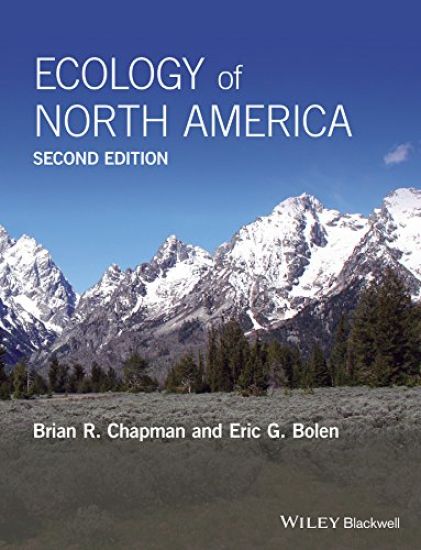
North America contains an incredibly diverse array of natural environments, each supporting unique systems of plant and animal life. These systems, the largest of which are biomes, form intricate webs of life that have taken millennia to evolve. This richly illustrated book introduces readers to this extraordinary array of natural communities and their subtle biological and geological interactions. Completely revised and updated throughout, the second edition of this successful text takes a qualitative, intuitive approach to the subject, beginning with an overview of essential ecological terms and concepts, such as competitive exclusion, taxa, niches, and succession. It then goes on to describe the major biomes and communities that characterize the rich biota of the continent, starting with the Tundra and continuing with Boreal Forest, Deciduous Forest, Grasslands, Deserts, Montane Forests, and Temperature Rain Forest, among others. Coastal environments, including the Laguna Madre, seagrasses, Chesapeake Bay, and barrier islands appear in a new chapter. Additionally, the book covers many unique features such as pitcher plant bogs, muskeg, the polar ice cap, the cloud forests of Mexico, and the LaBrea tar pits. “Infoboxes” have been added; these include biographies of historical figures who provided significant contributions to the development of ecology, unique circumstances such as frogs and insects that survive freezing, and conservation issues such as those concerning puffins and island foxes. Throughout the text, ecological concepts are worked into the text; these include biogeography, competitive exclusion, succession, soil formation, and the mechanics of natural selection. Ecology of North America 2e is an ideal first text for students interested in natural resources, environmental science, and biology, and it is a useful and attractive addition to the library of anyone interested in understanding and protecting the natural environment.